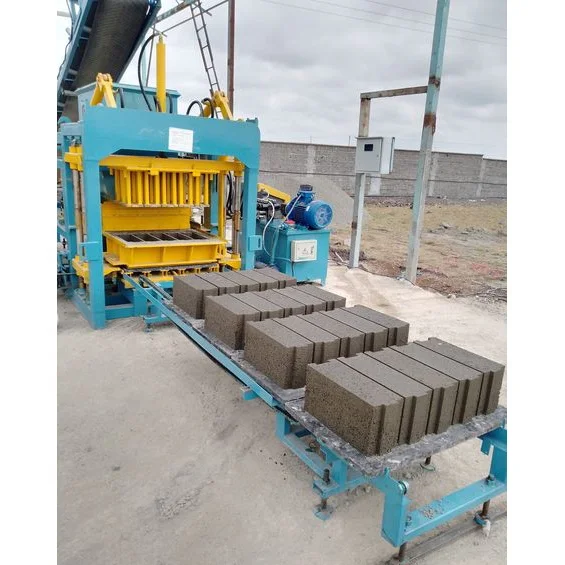
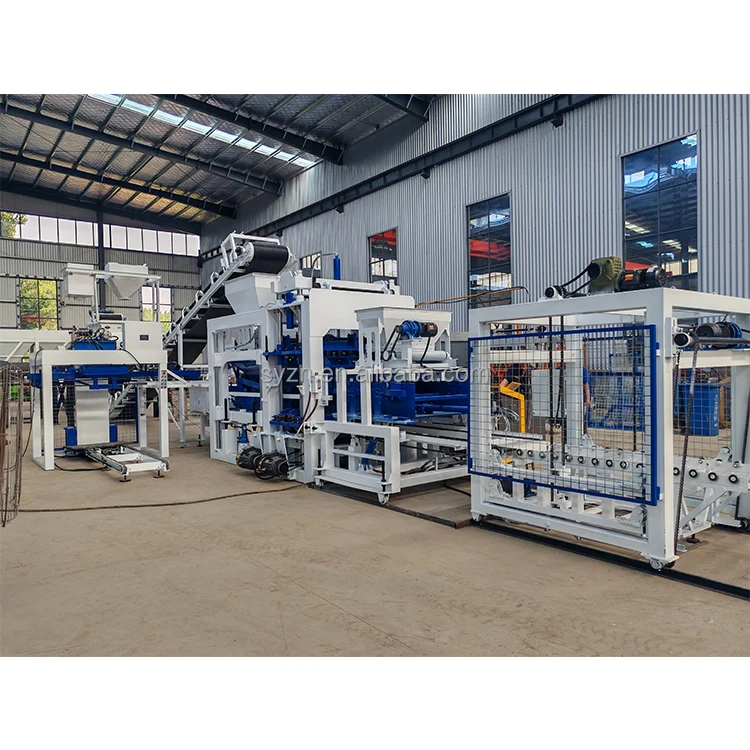
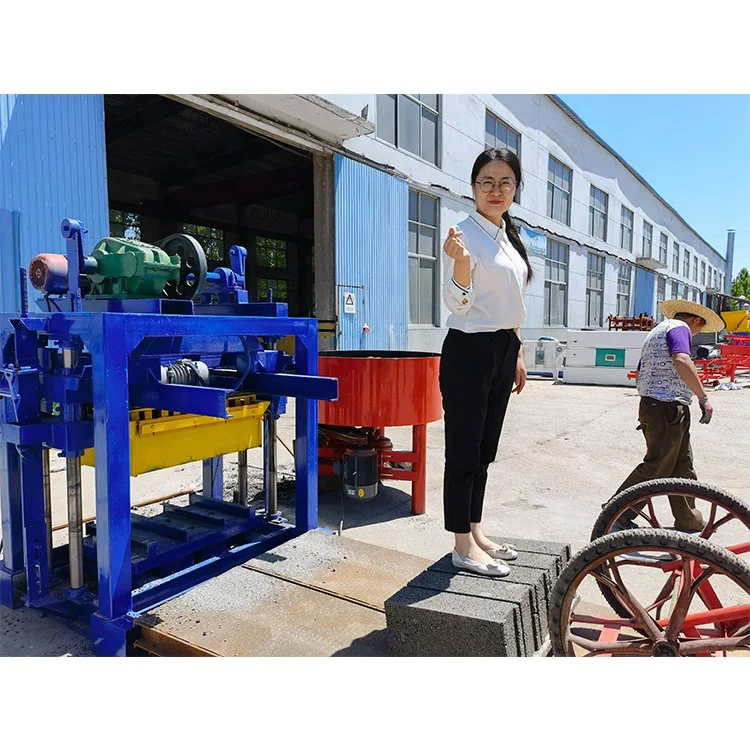
Four-Guide-Pillar Stability — the QTJ4-26 aligns every mould movement through four hardened columns, so block dimensions stay within tolerance across an eight-hour shift.
Technical Specifications
| Parameter |
Value |
| Model |
QTJ4-26 |
| Product Type |
Semi-Automatic Concrete Block Making Machine |
| Overall Dimensions (L×W×H) |
2060×1730×2580 mm |
| Net Weight |
1800 kg |
| Molding Cycle |
26 s |
| Vibration Frequency |
4200 r/min |
| Exciting Power (Vibration Force) |
35.5 kN |
| Rated Power |
14.25 kW |
| Mixer Model |
JQ350 |
| Pallet Size |
850×450×20 mm |
| Automation Level |
Semi-automatic (four guide pillars, automatic mould movement) |
| Output Capacity |
480 pcs/h based on 390×190×190 mm hollow block, 4 pcs/mould |
| Output Capacity |
600 pcs/h based on 400×150×200 mm hollow block, 5 pcs/mould |
| Output Capacity |
2100 pcs/h based on 240×115×53 mm solid brick, 18 pcs/mould |
| Output per 8-Hour Shift |
3800 pcs based on 390×190×190 mm hollow block |
| Output per 8-Hour Shift |
4800 pcs based on 400×150×200 mm hollow block |
| Output per 8-Hour Shift |
17000 pcs based on 240×115×53 mm solid brick |
| Applied Products |
Concrete hollow blocks (8 inch, 6 inch), solid bricks |
| Raw Materials |
Crushed stones, sand, cement, dust, fly ash |
| Voltage & Frequency |
Configurable to site supply (basis to be confirmed) |
| Control System |
Semi-automatic relay logic (basis to be confirmed) |
| Stacking Method |
Manual pallet handling (basis to be confirmed) |
Application Suitability
| Application |
Material or Output |
| Small to medium concrete block plant |
Hollow blocks from crushed stone, sand, and cement |
| On-site block production for contractors |
8 inch and 6 inch hollow blocks using local aggregate |
| Building material distributor adding solid brick |
240×115×53 mm solid bricks from fly ash and sand blends |
| First-time block plant entrepreneur |
Hollow and solid formats on a compact workshop footprint |
Why the "Pcs per Hour" Number Means Nothing Without a Block Format
Every capacity figure we quote names the exact block size and mould cavity count behind it.
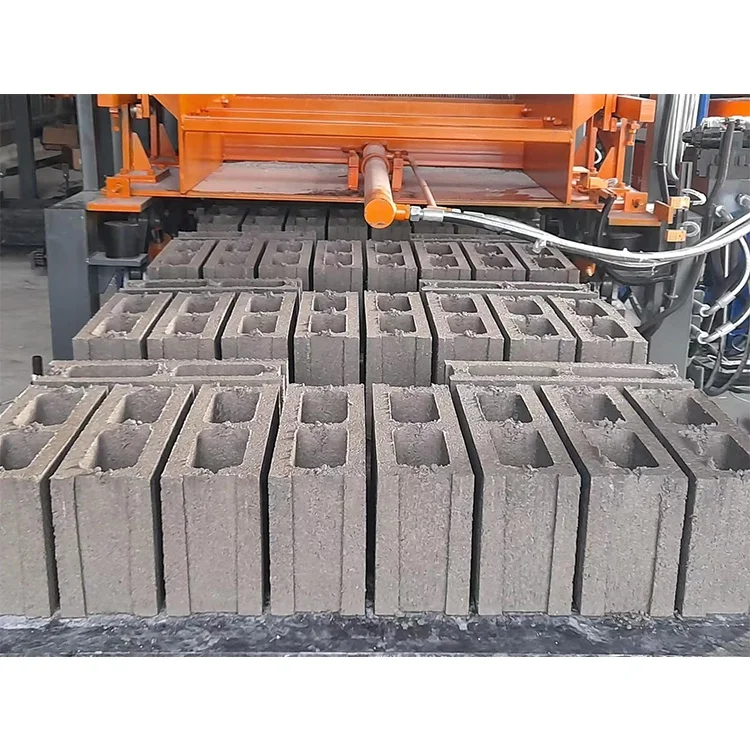
A buyer once ordered a machine rated at a headline output number, only to discover that the figure assumed a small solid brick while his market demanded 8 inch hollow blocks — his real daily production fell to a fraction of the quoted value. I started asking customers to send me their target block drawing before I open the catalogue. With the QTJ4-26 semi-automatic block making machine for sale, the 480 pcs/h figure holds only when running a 390×190×190 mm hollow block on a four-cavity mould; swap to a 400×150×200 mm five-cavity mould and the rate shifts to 600 pcs/h. Without that context, any capacity number is just marketing. [NEED_CITE: block format and cycle time relationship in concrete block production]

Where the QTJ4-26 Sits in the Full Machine Range
Our range covers mobile egg-laying units at the entry level, semi-automatic presses like the QTJ4-26 in the mid tier, and high-capacity fully automatic lines at the top. This semi-automatic block making machine for sale occupies the step where a buyer moves past manual pallet handling but is not yet ready to invest in automatic stacking and cubing. The 2060×1730 mm footprint keeps it inside a standard workshop bay, and the 14.25 kW total draw avoids the need for a dedicated transformer on most sites.
Matching Automation Level to Your Crew Size
On the QTJ4-26, mould movement is automatic while pallet feeding and stacking remain manual. That means two to three operators can run the press comfortably: one at the mixer, one feeding pallets, and one pulling cured blocks off the curing rack. If your labour cost rises or you add a second shift, the machine’s control logic allows a future upgrade to automatic pallet feeders and stackers without replacing the press itself. This path from semi-automatic operation toward higher automation is something buyers working with tight initial budgets find practical. [NEED_CITE: labour allocation in semi-automatic block production lines]
What the Vibration Force and Cycle Time Mean for Block Density
The 35.5 kN exciting power at 4200 r/min compacts the concrete mix into the mould cavity within a 26-second cycle. In practice, that vibration frequency sits in the range suited to crushed-stone and sand mixes with moderate cement content, producing hollow blocks that meet common structural density requirements. The JQ350 pan mixer pairs with this press because its batch volume aligns with the mould cycle — a larger mixer would leave material waiting, while a smaller one would force the press to idle. Pallet size at 850×450 mm is chosen so that a standard forklift can move stacks into the curing area without custom racking.
The Cost of Ignoring Local Aggregate When Choosing a Machine
I once shipped a press configured for clean river sand to a site where the only available aggregate carried high clay content. The mould filled unevenly, cycle times stretched, and daily output dropped noticeably below the capacity the buyer had planned around. The vibration force and mix design must be matched to what you can actually source locally, not to a catalogue default. A machine that performs well with one aggregate profile can underperform sharply with another, and no amount of operator adjustment compensates for a fundamental mismatch between vibration energy and material behaviour. [NEED_CITE: effect of aggregate gradation on block compaction quality]
Why Buyers Source This Model Here
Block machinery is our single focus, so the QTJ4-26 arrives as a matched system — press, JQ350 mixer, pallets, and moulds specified together rather than assembled from separate suppliers. We set the configuration against your actual mix design and target block format, not a standard factory default. Mould drawings are provided before order confirmation so you can verify cavity dimensions against your local market demand. Automation level is selectable, meaning you can start with the semi-automatic block making machine for sale and add pallet automation later. Voltage, frequency, and control language are confirmed in writing before production begins, which prevents the commissioning delays that occur when electrical assumptions are left vague.
Documentation & Verification
- Line layout with capacity calculation stating the exact block format and mould used for each output figure
- Machine specification sheet confirming vibration force, pallet size, and rated power
- Mould drawing and format list matched to your target block dimensions before order
- Voltage and control language confirmation document signed off before production
- Factory test record on your specified block format before dispatch
- Operation and maintenance manual covering mould change and daily inspection intervals
Installation, Commissioning & Support
- Floor space of 2060×1730 mm plus clearance for pallet staging and mixer placement
- Power supply matching confirmed rated voltage and frequency before shipment
- Machine ships with mould mounted; guide pillars inspected and greased at factory
- First-run commissioning includes cycle timing verification on your chosen block format
- Operator training covers mould change procedure and JQ350 mixer batch sequencing
- Wear parts list with reorder intervals for vibration springs and mould liners
Before You Send an Inquiry
Tell us the block formats your market actually buys — hollow, solid, or both — along with the specific dimensions. We also need your local aggregate type and a sample if possible, your site voltage and frequency, and the daily output you are targeting. With that information we can confirm which mould cavities, pallet size, and mixer pairing make sense for your situation.
Frequently Asked Questions
Q: Where does the QTJ4-26 fit compared to automatic and mobile block machines?
A: The QTJ4-26 sits in the semi-automatic tier. Mobile egg-laying machines require no pallets but produce lower output and fewer formats. Fully automatic lines add pallet feeders, stackers, and cubing systems for higher throughput but demand more floor space and investment. The QTJ4-26 gives you format flexibility and consistent compaction without the footprint of a full automatic line.
Q: How is the output capacity calculated, and what does it assume?
A: Each capacity figure is tied to a specific block size and mould cavity count. For example, 480 pcs/h assumes a 390×190×190 mm hollow block on a four-cavity mould with a 26-second cycle. Switching to a different block format changes both cavity count and cycle time, so realistic daily output must be recalculated for your actual product mix.
Q: Can I upgrade the QTJ4-26 from semi-automatic to higher automation later?
A: Yes. The press control logic supports adding an automatic pallet feeder and stacker in a later phase. The mould movement is already automatic, so the upgrade path involves adding handling stations around the press rather than replacing the press itself. This staged approach suits buyers managing initial investment.
Q: What plant space and utilities does the QTJ4-26 require?
A: The machine measures 2060×1730×2580 mm and weighs 1800 kg, fitting inside a standard workshop bay. You need space for the JQ350 mixer, pallet staging, and a curing area sized for 850×450 mm pallets. Voltage and frequency must be confirmed before production so the electrical panel matches your site supply on arrival.

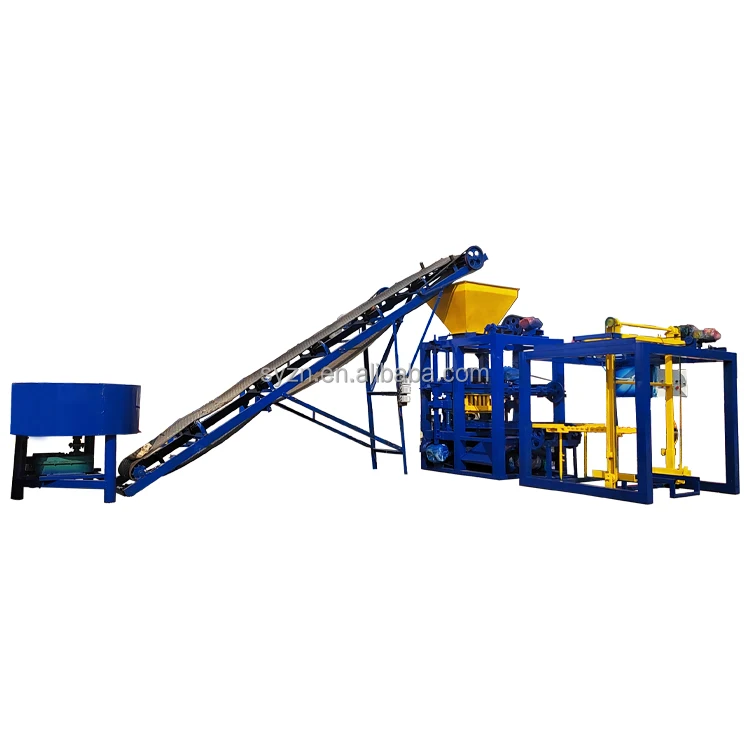
 High quality block machine