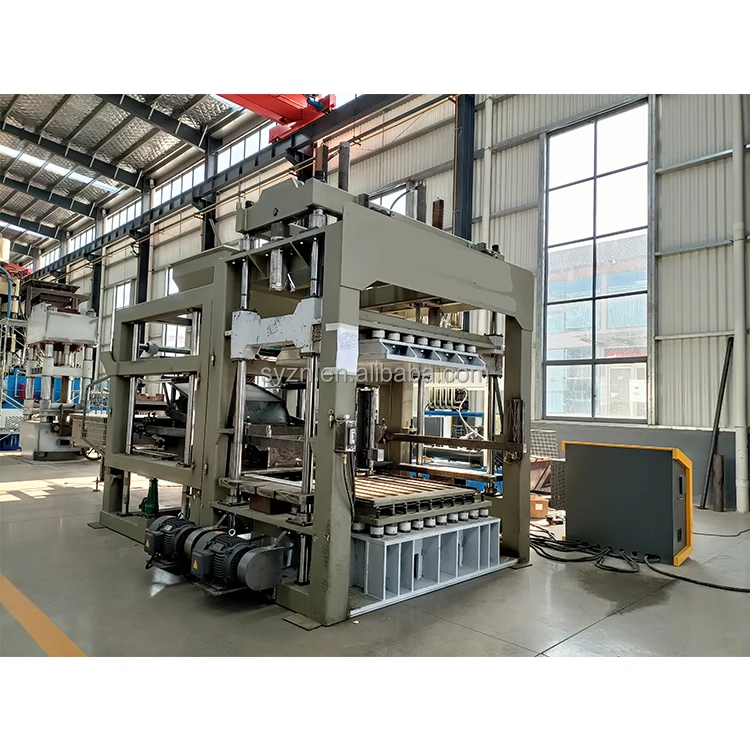
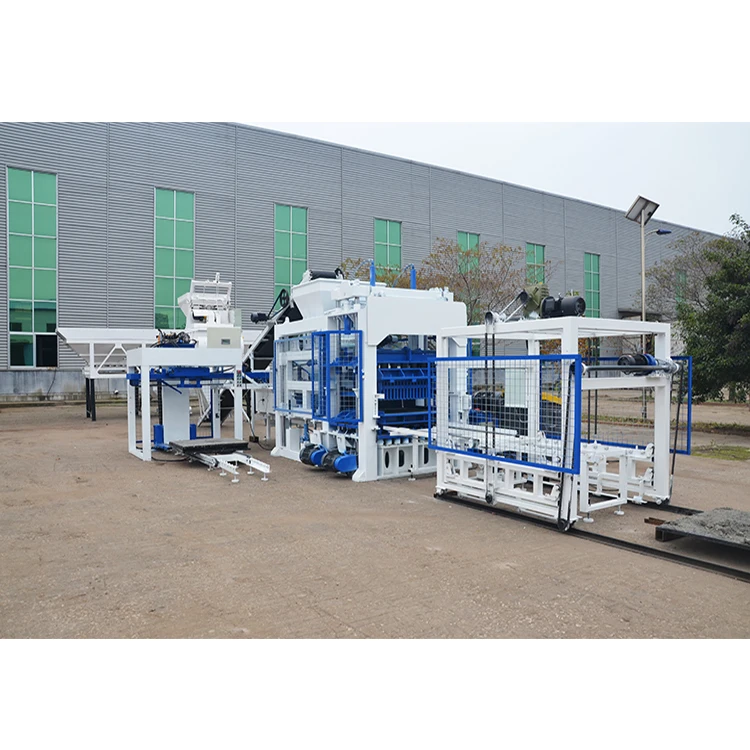
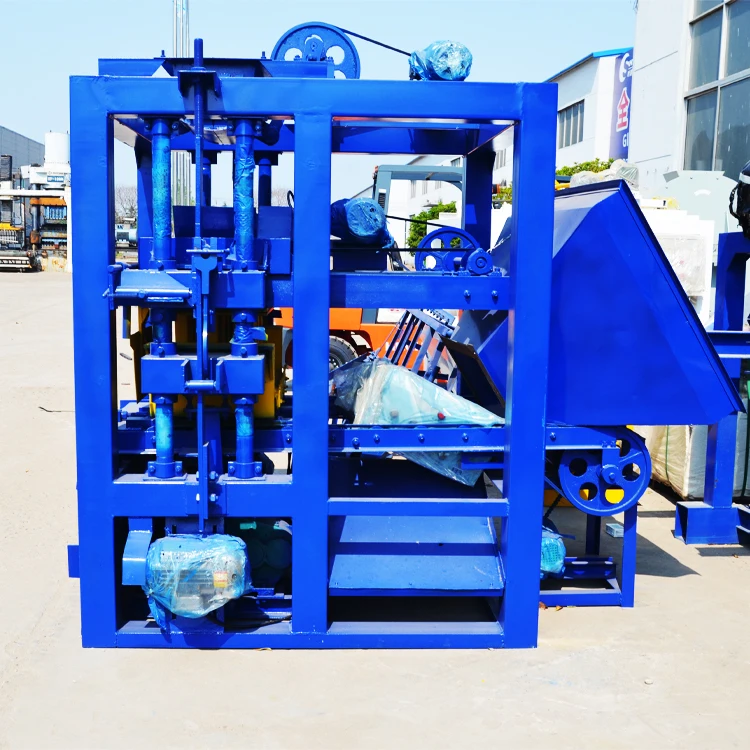
Matched System Integration — The QT4-15A is configured as a complete hydraulic press, mould, pallet and feeder package rather than assembled from separate component suppliers, ensuring cycle times align across stations.
Technical Specifications
| Parameter |
Value |
| Model |
QT4-15A |
| Product Type |
Hydraulic Concrete Block Making Machine |
| Overall Dimensions (L×W×H) |
7100×1600×2610 mm |
| Molding Cycle |
15–25 s |
| Vibration Frequency |
4600 r/min |
| Vibration Force |
40–50 kN |
| Total Power |
18.45 kW |
| Mixer Model |
JQ350 |
| Pallet Size |
850×550×25 mm |
| Net Weight |
3 T |
| Control System |
PLC |
| Applied Products |
paver, solid block, hollow block, curbstone |
| Raw Materials |
crushed stone, sand, cement, dust, fly ash |
| Output Capacity (Hollow block 400×200×200 mm) |
408 pcs/h, 3264 pcs/8 hr |
| Output Capacity (Hollow block 400×150×200 mm) |
510 pcs/h, 4080 pcs/8 hr |
| Output Capacity (Solid brick 240×115×53 mm) |
2100 pcs/h, 17000 pcs/8 hr |
| Hydraulic Station |
included |
| Pallet Feeder |
included |
| Brick Conveyor |
included |
| Block Sweeper |
included |
| Automation Level |
semi-automatic with PLC control |
| Stacking Method |
manual |
| Voltage & Frequency |
configurable to buyer’s site supply (basis to be confirmed) |
| Hydraulic Pressure |
to be confirmed with manufacturer |
| Mould Change Time |
to be confirmed with manufacturer |
Application Suitability
| Application |
Material or Output |
| Hollow block production for residential walls |
crushed stone, sand, cement, fly ash; formats 400×200×200 mm and 400×150×200 mm |
| Solid brick manufacturing for load-bearing structures |
cement, sand, stone dust |
| Paving block production for walkways and yards |
crushed stone, sand, cement with pigment additives |
| Curbstone forming for road and kerb projects |
heavy aggregate mixes with high cement content |
| On-site block production by construction contractors |
locally available aggregates, small-to-medium batch runs |
What "408 Blocks per Hour" Actually Means for Your Plant
That figure holds only when the machine is pressing 400×200×200 mm hollow blocks under ideal cycle conditions.
A concrete block making machine for sale is often advertised with a single headline capacity, but buyers soon discover the number assumes one specific format. Switch to a thicker-walled hollow block or a dense paver, and the molding cycle lengthens — vibration must run longer, hydraulic dwell increases, and the pallet return loop slows. I have watched contractors plan their pour schedule around a catalogue number, only to find their real daily output drops when the block format changes mid-shift. The QT4-15A lists capacity per format so you can size your curing racks, labour and raw material deliveries against the product you actually sell [NEED_CITE: capacity calculation methods for hydraulic block presses].

Where the QT4-15A Sits in the Machine Range
The QT4-15A occupies the mid-tier of the SHIYUE semi-automatic line, bridging the gap between entry-level manual presses and fully automatic stacking systems. Buyers evaluating a concrete block making machine for sale at this level typically need PLC-controlled consistency without the capital outlay of an automatic cubing line. The hydraulic station and pallet feeder are standard, so the machine arrives as a working cell rather than a bare press waiting for add-ons.
Semi-Automatic Versus Full Automation — Knowing the Boundary
At this tier, pallet handling, block stacking and curing rack loading remain manual operations. The PLC governs the press cycle, vibration timing and hydraulic pressure sequence, removing operator guesswork from the forming stage itself. If your daily volume grows beyond what a two-person stacking crew can handle, the path forward is an automatic stacker and cubing module — a decision best made before the foundation is poured, since floor space and pallet circulation must accommodate both modes [NEED_CITE: automation upgrade paths for semi-automatic block lines].
Reading the Numbers That Matter
The vibration force range of 40–50 kN works in tandem with the hydraulic station to compact the mix; too little force on a coarse aggregate leaves voids, while excessive force on a fine fly-ash mix can fracture green blocks. The molding cycle of 15–25 s reflects this balance — denser curbstone mixes sit at the upper end, while lighter hollow blocks cycle faster. Pallet size at 850×550×25 mm dictates how many blocks form per stroke and must match the curing rack dimensions and forklift tine width already on site. Total connected load of 18.45 kW means the plant electrical supply needs a dedicated circuit with adequate breaker rating, especially where the JQ350 mixer runs simultaneously.
The Cost of Skipping the Mix-Machine Match
When vibration force and hydraulic pressure are not tuned to the buyer’s actual aggregate, block density varies across the pallet. Some units pass the drop test while neighbours crumble — and the rejection happens at the construction site, not in the yard. I have seen a volcanic lightweight aggregate slow compaction so much that daily output fell well below the quoted rate, and an entire batch was returned. The mix design conversation must happen before the machine is configured, not after it lands on the dock [NEED_CITE: aggregate compatibility with hydraulic block press vibration settings].
Why Source This Tier Here
Block machinery is the single focus of this production line, so the press, moulds, pallets and feeder are specified together rather than pulled from unrelated catalogues. Configuration is set against your local aggregate and target block format, not a default brochure setting. Mould design covers the hollow, solid, paver and curbstone formats your market demands, with custom drawings available. Automation level is selectable — start semi-automatic with the QT4-15A and plan an upgrade path as volume justifies it. Installation and commissioning support includes operator training so the crew understands cycle tuning from day one.
Documentation & Verification
- Line layout and capacity calculation stating which block format each output figure assumes
- Machine specification sheet with hydraulic pressure and vibration force confirmed for your mix
- Mould drawing and format list matched to your local market dimensions before order
- Voltage, frequency and PLC display language confirmation document prior to production
- Factory test record run on your target block format before dispatch
- Packing photographs and customs documentation support for export shipment
Installation, Commissioning & Support
- Foundation must support 7100×1600 mm footprint with level tolerance for hydraulic station stability
- Dedicated electrical circuit rated for 18.45 kW total load with correct voltage and frequency
- Machine ships partially assembled; pallet feeder and conveyor bolt on at site
- First production run includes cycle tuning against your local aggregate and mix ratio
- Operator training covers PLC parameter adjustment and mould change procedure
- Wear parts list and hydraulic seal kit provided with recommended replacement intervals
Before You Request a Quote
Share your target block formats, the aggregate and cement type available locally, and the daily output you need per format. Include your site voltage and frequency, preferred PLC display language, and the pallet size your existing curing racks accept. If you plan to add automatic stacking later, mention it now so the floor layout leaves room.
Frequently Asked Questions
Q: How is the output capacity calculated and which block format does each figure assume?
A: Each capacity figure on the QT4-15A is tied to a specific block dimension and molding cycle. Hollow blocks at 400×200×200 mm yield 408 pieces per hour, while 400×150×200 mm blocks reach 510 per hour. Solid bricks at 240×115×53 mm produce 2100 per hour. These assume continuous operation with no mould change interruptions.
Q: Where does the QT4-15A sit between semi-automatic and automatic tiers?
A: It is a PLC-controlled semi-automatic press with included pallet feeder, conveyor and sweeper. Stacking and cubing remain manual. Buyers who later need automatic stacking can add those modules, but floor space and pallet circulation planning should account for the upgrade from the start.
Q: What voltage, frequency and PLC language options must be confirmed before shipment?
A: Voltage and frequency must match your site supply — common ranges include 220V/380V/440V at 50 or 60 Hz. PLC display language is set during production and cannot easily be changed on site. Confirm these details before the machine enters assembly to avoid commissioning delays.
Q: How long does mould change take and what formats are realistic in one shift?
A: Mould change time depends on the format and operator familiarity; plan for part of a shift when switching between vastly different moulds. Running two or three compatible formats in a day is realistic if changeover is scheduled during breaks and spare pallets are pre-staged.
Q: What supporting equipment is included versus what needs to be added?
A: The QT4-15A ships with hydraulic station, pallet feeder, brick conveyor and block sweeper. A mixer (JQ350) is listed but confirm inclusion. Automatic stackers, curing racks and raw material batching systems are separate line items that must be specified to complete the production loop.

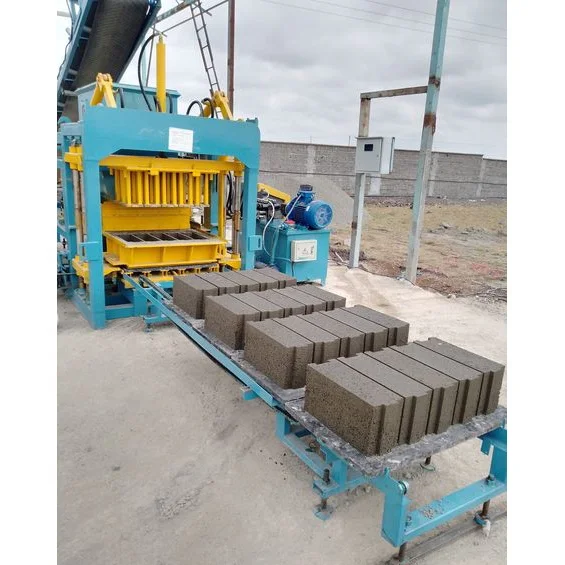
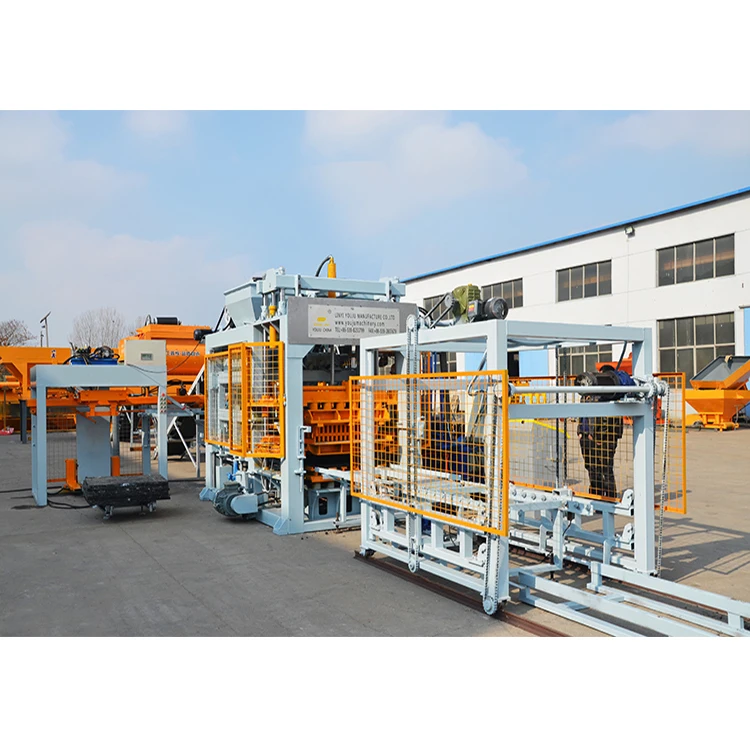 High quality block machine