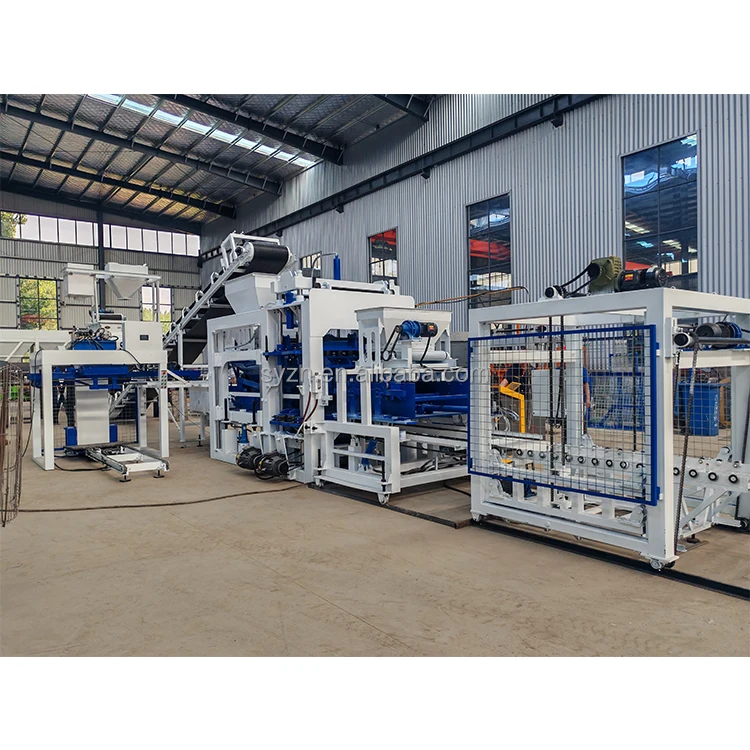
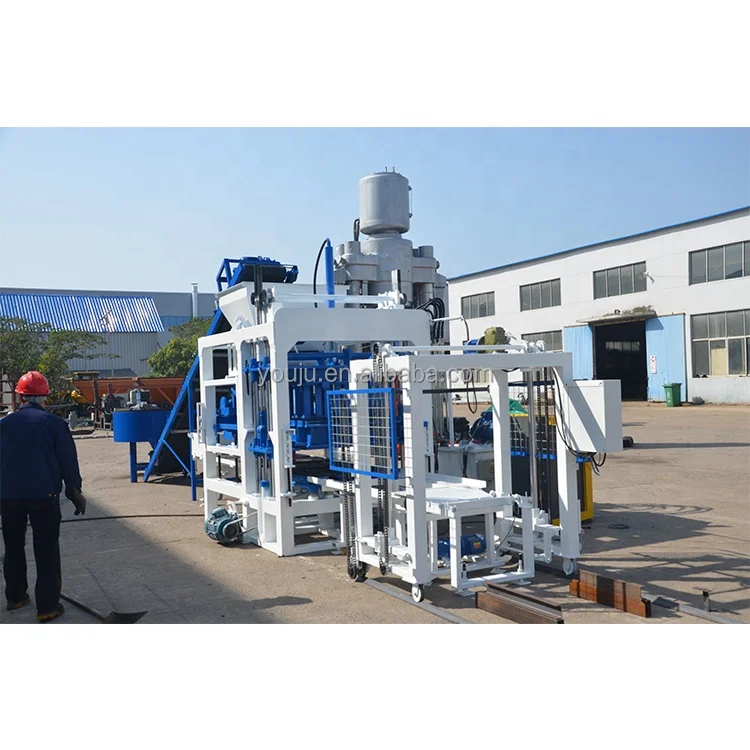
Configuration Matched to Buyer Output — we set the QT4-20 block making machine against your actual mix design, local aggregate and target block format, not a catalogue default.
Technical Specifications
| Parameter |
Value |
| Model |
QT4-20 |
| Product Type |
Semi-Automatic Concrete Block Making Machine |
| Overall Dimensions (L×W×H) |
7100×1600×2610 mm |
| Rated Pressure |
16-21 MPa |
| Main Vibration Form |
Platform Vibration |
| Vibration Frequency |
4600 r/min |
| Pallet Size |
950×500 mm |
| Molding Cycle |
15-25 s (basis to be confirmed per block format and material) |
| Overall Power |
27.5 kW |
| Output Capacity (Hollow brick 400×200×200 mm) |
480-720 pcs/h, 3840-5760 pcs/8hr |
| Output Capacity (Hollow brick 400×150×200 mm) |
600-900 pcs/h, 4800-7200 pcs/8hr |
| Output Capacity (Hollow brick 400×100×200 mm) |
960-1440 pcs/h, 7680-11520 pcs/8hr |
| Output Capacity (Paver blocks 200×100×60 mm) |
1920-2880 pcs/h, 15360-23040 pcs/8hr |
| Output Capacity (Solid blocks 240×115×53 mm) |
3360-5930 pcs/h, 26880-47440 pcs/8hr |
| Control System |
PLC with non-contact proximity switch |
| Hydraulic System |
Hydraulic driven with mechanical assist |
| Mould Format |
Hollow block, solid block, paver, grass growing block, curbstone, standard brick (by changing mould) |
| Automation Level |
Semi-automatic |
| Block Strength |
≥15 MPa (to be verified against buyer’s mix design) |
| Assembly State |
Fixed into container by steel, requires 40ft high container |
| Warranty |
1 year for whole machine (excluding spare parts) |
Application Suitability
| Application |
Material or Output |
| Hollow block production for wall construction |
Sand, cement with fly ash or slag |
| Solid block production for load-bearing walls |
Crushed stone, cement, gangue residue |
| Paving block production for walkways and yards |
Sand, cement, fine aggregate |
| Kerbstone and curb production for road edges |
Coarse aggregate, cement blend |
| Grass growing block for landscaping |
Porous mix with cement binder |
| On-site block production for contractors |
Local river sand or crushed stone |
What the QT4-20 Block Making Machine Manufacturer Leaves Off the Spec Sheet
Capacity figures mean nothing without the block format attached to them.
I once watched a buyer unpack a new block press in South America, fire it up with local river sand, and watch daily output land at half the brochure number. The machine was not broken. The vibration frequency, feed time and moisture tolerance had all been calibrated against standard sand at the factory, while the buyer’s material ran coarser and wetter. When you evaluate a QT4-20 block making machine manufacturer, the first question is not how many blocks per hour, but which block, in which mix, on which pallet [NEED_CITE: aggregate grading standards for concrete block production].

Where This Model Sits in the Full Range
The QT4-20 occupies the entry-to-mid tier of our block machine lineup. It is semi-automatic, meaning the press itself runs on PLC control with hydraulic and vibration forming, while pallet feeding and product stacking still involve manual or assisted handling. Buyers who need a dependable daily output without the capital outlay of a fully automatic line typically land here. The machine accepts mould changes across hollow block, solid block, paver and kerbstone formats, giving a first-time plant the flexibility to test several products before committing to volume.
Planning the Plant Around the Press
A block press does not operate in isolation. Raw material must arrive at the mixer at a rate that matches the molding cycle, and cured pallets must clear the line before fresh ones arrive. With the QT4-20, the 950×500 mm pallet size dictates your curing rack dimensions and forklift capacity. If your existing curing area was built for a different pallet footprint, the mismatch shows up on day one as a bottleneck [NEED_CITE: curing rack and pallet logistics in block plant layout]. We map the full line — feeding, mixing, pressing, curing — before confirming the press configuration, so the machine is never waiting on upstream or downstream stations.
Reading the Numbers That Actually Matter
The rated pressure of 16-21 MPa and platform vibration at 4600 r/min work together to compact the mix into a dense block. Higher pressure alone does not guarantee strength; the vibration must distribute the material evenly before the hydraulic head applies force. The 15-25 second molding cycle varies with block thickness and mix stiffness — a thin paver cycles faster than a tall hollow block. Overall power of 27.5 kW places the machine within reach of standard industrial supply in most markets, though voltage and frequency must be confirmed before production begins.
The Cost of Skipping the Material Report
Buyers who order on catalogue capacity alone often discover the real expense after arrival. A mix the machine was not tuned for produces weak blocks that crack during curing, forcing a material change or a parameter overhaul on site. Voltage left unconfirmed delays commissioning while a transformer is sourced locally. Pallet size mismatched to the buyer’s forklift means manual handling that cancels out the cycle time the buyer paid for [NEED_CITE: common causes of block machine commissioning delays]. These are not defects in the machine — they are gaps in the specification process.
Why Buyers Source This Machine Through Us
Block machinery is our single focus, so the QT4-20 is specified as part of a matched system: press, mould, pallet and handling equipment are sized together. We configure the machine against the buyer’s actual mix design and local aggregate rather than shipping a catalogue default. Mould design covers the formats the buyer’s market sells, including custom drawings when a standard shape does not fit. The semi-automatic configuration leaves room for future automation upgrades without replacing the press. Installation support includes operator training and a wear parts list so the first replacement cycle does not catch the plant off guard.
Documentation & Verification
- Line layout showing capacity per block format for the QT4-20
- Mould drawing and format list included with every quotation
- Voltage, frequency and PLC language confirmed before production
- Factory test record on buyer’s block format before dispatch
- Packing photographs and customs documentation for container loading
Installation, Commissioning & Support
- 7100×1600×2610 mm footprint requires a level concrete foundation
- 27.5 kW total draw needs a dedicated three-phase circuit at confirmed voltage
- Machine arrives fixed by steel in a 40ft high container, dismantled for offloading
- On-site commissioning covers vibration frequency and feed time tuning to local mix
- Operator training on mould change procedure and PLC fault codes
- Wear parts list with hydraulic seal and proximity switch replacement intervals
What We Need From You to Quote Accurately
Send us the block formats your market buys, the daily volume you need to hit, and the raw materials available locally — including a sieve analysis if you are using river sand or crushed stone. Tell us your site voltage, frequency and preferred PLC display language. If you already have curing racks or forklifts, share the pallet dimensions they handle so we match the line to your existing equipment [NEED_CITE: voltage and frequency standards by export market].
Frequently Asked Questions
Q: How is the capacity of the QT4-20 verified and what block format is assumed?
A: Each output figure in our specification table is tied to a specific block dimension — for example, hollow brick 400×200×200 mm yields 480-720 pieces per hour. We do not publish a single "max capacity" number. Before quotation, we confirm your target format and run a factory test on a matching mix to validate the cycle time.
Q: Where does the QT4-20 sit in the full machine range?
A: It is a semi-automatic, mid-tier press. Buyers who need higher daily volume or reduced labour can look at our fully automatic lines with pallet feeding and stacking. The QT4-20 suits first-time plants and contractors who want format flexibility without the investment of a complete automatic system.
Q: What voltage and frequency options are available?
A: Voltage and frequency are configured to your site supply before production begins. Common configurations include 380V/50Hz and 440V/60Hz, but we confirm the exact requirement with your electrical team. The PLC display language is also set to your operator’s preference at this stage.
Q: What mould formats come with the machine and can I add more later?
A: Standard moulds cover hollow block, solid block, paver, grass growing block, curbstone and standard brick. Custom moulds are available to your drawings. Additional moulds can be ordered at any time; the press accepts format changes without structural modification.
Q: What plant footprint and installation conditions does the QT4-20 require?
A: The machine measures 7100×1600×2610 mm and ships in a 40ft high container, fixed by steel. A level concrete pad, a dedicated three-phase circuit at the confirmed voltage, and space for curing racks matched to the 950×500 mm pallet are the main site requirements.

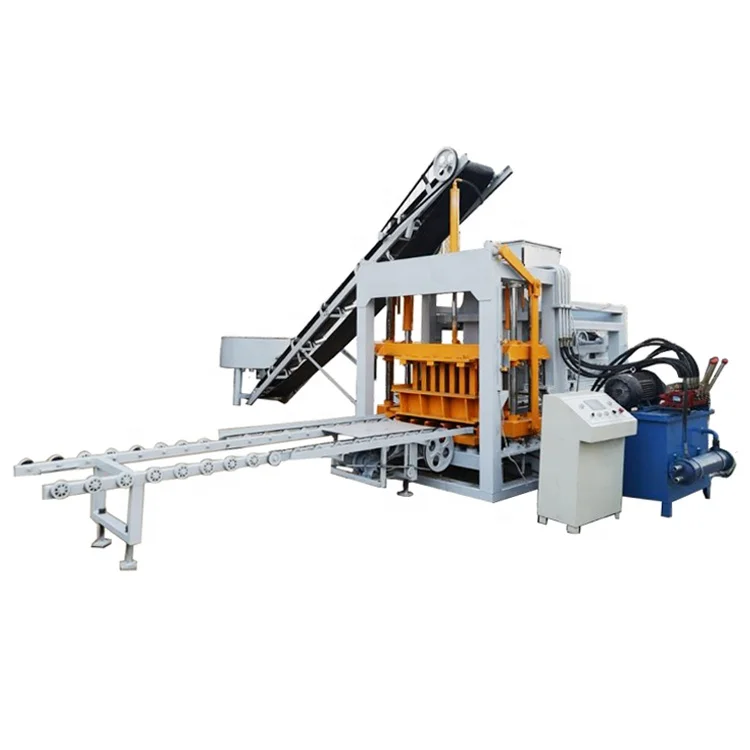
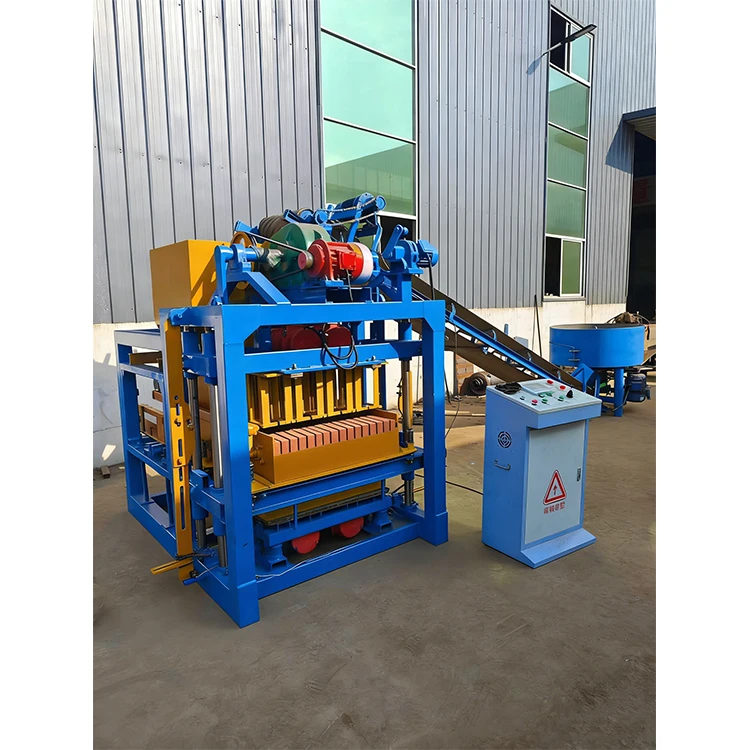 Automatic block machine