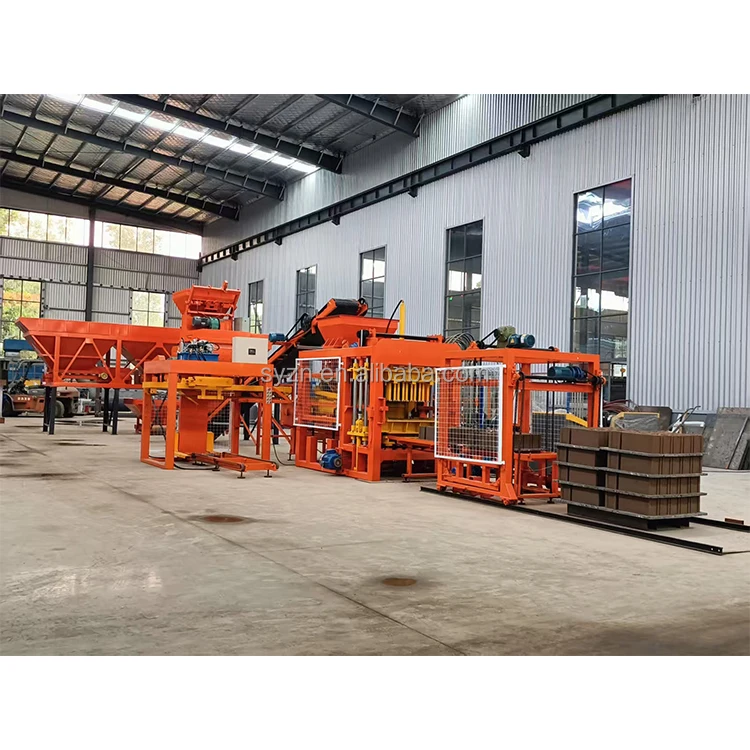
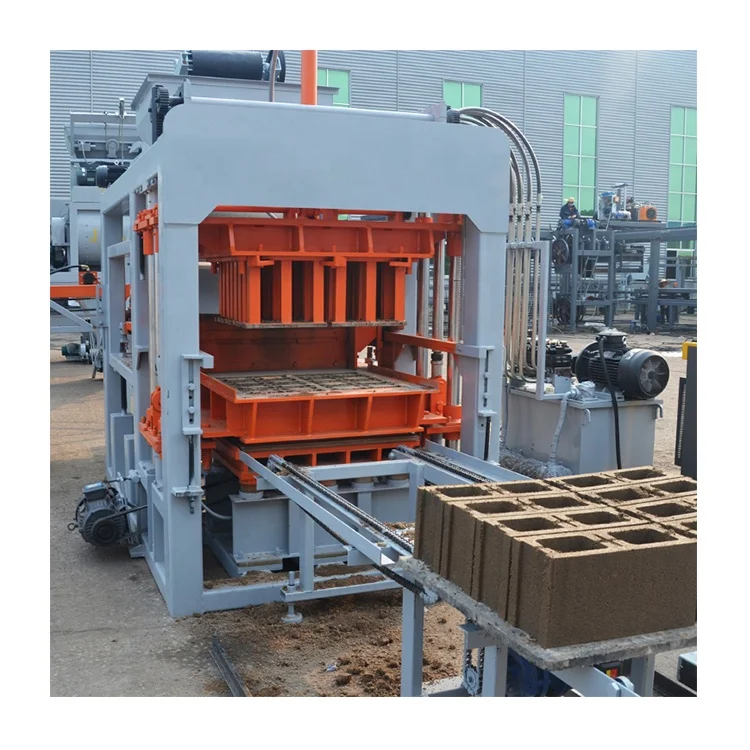
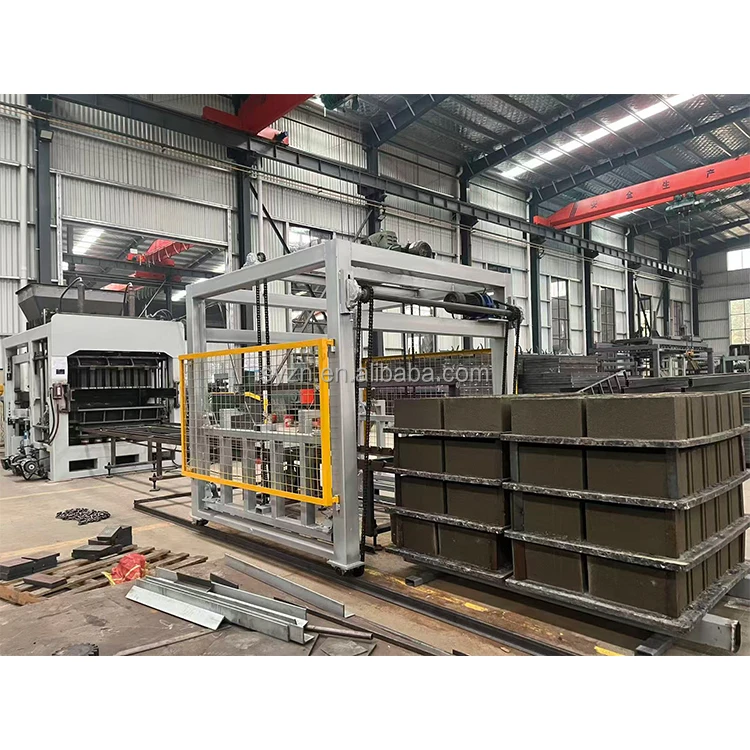
Mid-Tier Automation — the QT4-18 sits between entry-level semi-automatic models and high-capacity lines, letting buyers scale their plant without oversizing the first investment.
Technical Specifications
| Parameter |
Value |
| Model |
QT4-18SHIYUE |
| Product Type |
Automatic Hydraulic Concrete Block Making Machine |
| Overall Dimensions (L×W×H) |
3900 × 1600 × 2300 mm |
| Molding Cycle |
15–25 s |
| Vibration Force |
40–50 kN |
| Rated Power |
24 kW |
| Mixer Model |
JQ350 |
| Pallet Size |
850 × 550 × 25 mm |
| Net Weight |
3 T |
| Applied Products |
Paver, solid block, hollow block, curbstone |
| Raw Materials |
Crushed stones, sand, cement, dust, fly ash |
| Control System |
PLC control system (display language to confirm) |
| Voltage & Frequency |
To confirm per target market electrical standard |
| Hydraulic Pressure |
To confirm per buyer’s mix design |
| Automation Level |
Automatic (pallet feeder, brick conveyor, block sweeper included) |
| Output — Hollow Block 400×200×200 mm |
1200–1680 pcs/h (basis: 400×200×200 mm, 15–20 s cycle) |
| Output — Hollow Block 400×150×200 mm |
1800–2400 pcs/h (basis: 400×150×200 mm, 15–20 s cycle) |
| Output — Solid Brick 240×115×53 mm |
3240 pcs/h (basis: 240×115×53 mm, 15–20 s cycle) |
Application Suitability
| Application |
Material or Output |
| Hollow block production for wall construction |
Crushed stone, sand, cement, fly ash; 400×200×200 mm and 400×150×200 mm formats |
| Solid brick manufacturing for load-bearing structures |
Sand, cement, dust; 240×115×53 mm standard brick |
| Paving block and curbstone for infrastructure projects |
Crushed stone and cement blends; mould change required |
| On-site block production by construction contractors |
Locally sourced aggregates; multiple formats across project phases |
What "Pieces per Hour" Actually Means on a Concrete Block Making Machine
Capacity figures only matter when the block format behind them is stated.
Every concrete block making machine manufacturer quotes an hourly number, but that number shifts the moment you switch from a 400×200×200 mm hollow block to a 240×115×53 mm solid brick. I once saw a Middle Eastern buyer order a machine based on a catalogue capacity figure, only to find his local high-clay aggregate cut actual output nearly in half because the vibration force and cycle time were never adjusted for his material. [NEED_CITE: aggregate properties and their effect on concrete block compaction] The QT4-18 output breakdown above ties each figure to a specific block size and cycle range, so the number you plan your shift around is the number the machine was actually timed against.
Placing the QT4-18SHIYUE on the Full Machine Range
The SHIYUE range runs from small semi-automatic presses through mid-tier automatic machines like the QT4-18SHIYUE and up to high-capacity fully automatic lines with stacking and cubing. This concrete block making machine occupies the middle ground: it includes a pallet feeder, brick conveyor, and block sweeper as a matched package, giving first-time plant owners automatic operation without the footprint and capital of a full cubing line. Buyers stepping up from a manual or egg-laying machine will find the 3900 × 1600 mm footprint fits inside a modest workshop bay.
How Automation Level Changes the Daily Routine
At this tier, the pallet feeder removes the need for an operator to hand-load every pallet, and the brick conveyor carries formed blocks away from the press to a designated off-load point. [NEED_CITE: automation levels in block production lines and labour allocation] The block sweeper cleans the pallet surface before it re-enters the cycle, reducing rejected blocks from residual debris. What this tier does not include is automatic stacking or cubing — those belong to the higher tiers in the range. Buyers who plan to add stacking later should confirm the conveyor discharge height and pallet return path are compatible with future upgrades.
Reading the Specs That Shape Real Output
The 40–50 kN vibration force works together with hydraulic pressure to compact the concrete mix inside the mould. Higher vibration without matching hydraulic pressure produces blocks that are dense on the surface but weak in the core; the opposite gives a smooth finish with low compressive strength. The 15–25 s molding cycle range reflects the difference between a simple hollow block and a dense paver that needs longer compaction. Pallet size — 850 × 550 × 25 mm — dictates how many blocks fit per cycle and whether your existing curing racks and forklift can handle the loaded pallets. The 24 kW rated power covers the press, vibrator, and mixer feed motor together, so the electrical supply must account for start-up surge on top of running load.

The Hidden Cost of Choosing the Wrong Configuration
A pallet size that does not match the curing area means blocks are stacked by hand before they set, negating the automatic pallet feeder you paid for. Voltage confirmed too late — after the machine is already built — can delay commissioning by weeks while transformers or control panels are replaced. [NEED_CITE: voltage and frequency standards by export market] A mould change system that takes most of a shift turns format flexibility into a paper feature. And when the hydraulic station rating is not matched to the buyer’s aggregate hardness, block strength varies from batch to batch, leading to rejected deliveries on site.
Why Buyers Source This Range Here
Block machinery is the single focus, so the QT4-18SHIYUE is specified as one system — press, mould, pallet, and handling — rather than assembled from separate suppliers. Each configuration is set against the buyer’s actual mix design and local aggregate, not a default catalogue setting. Mould design covers the formats the buyer’s market sells, including custom drawings when a project calls for a non-standard block. The automation level is selectable: a buyer can start with the included pallet feeder and conveyor, then add stacking or cubing as demand grows. Installation support includes on-site commissioning and operator training, so the first production run happens with someone who knows the machine standing beside the crew.
Documentation & Verification
- Line layout with capacity calculation stating the block format assumed for the QT4-18SHIYUE
- Machine specification sheet covering hydraulic station rating and vibration force
- Mould drawing and format list for hollow block, solid brick, paver, and curbstone
- Pallet specification confirming 850 × 550 × 25 mm dimensions and material grade
- Factory test record on buyer’s target block format before dispatch
Installation, Commissioning & Support
- Foundation pad sized for 3900 × 1600 mm footprint and 3 T operating weight
- Dedicated 24 kW electrical circuit with voltage and frequency confirmed before production
- PLC display language set to operator preference prior to shipment
- Pallet feeder and conveyor aligned during on-site commissioning with test cycles
- Mould change procedure demonstrated with included formats and custom moulds if ordered
- Wear parts list covering hydraulic seals, vibration springs, and mould liners
Before You Send an Inquiry
To size the QT4-18SHIYUE correctly, share the block formats your market sells most, the daily volume you need per format, and the raw materials available locally — especially aggregate type and clay content. Include your site voltage, frequency, and preferred PLC display language so the electrical and control package matches from day one. If you already have curing racks or forklifts, note their dimensions so the pallet specification is verified against your existing equipment.
Frequently Asked Questions
Q: Where does the QT4-18SHIYUE sit in the full SHIYUE machine range?
A: It occupies the mid-tier automatic position. Below it are semi-automatic models with manual pallet handling; above it are high-capacity lines with automatic stacking and cubing. The QT4-18SHIYUE includes a pallet feeder, brick conveyor, and block sweeper, giving automatic operation within a 3900 × 1600 mm footprint that suits first-time plant owners or contractors upgrading from manual presses.
Q: How is capacity verified per block format?
A: Each output figure is tied to a specific block size and cycle time — for example, 1200–1680 pcs/h assumes 400×200×200 mm hollow blocks at a 15–20 s cycle. Switching to a denser paver or a smaller solid brick changes both the cycle and the pieces per cycle, so the hourly number shifts. We provide a capacity calculation sheet that states the format behind every figure.
Q: What automation is included, and can it be upgraded later?
A: The standard package covers automatic pallet feeding, a brick conveyor, and a block sweeper. Automatic stacking and cubing are not included at this tier but can be evaluated as add-ons. Buyers planning a future upgrade should confirm conveyor discharge height and pallet return path compatibility during the initial configuration stage.
Q: Which block formats can one QT4-18SHIYUE produce?
A: The machine handles hollow blocks, solid bricks, pavers, and curbstones through mould changes. Standard moulds cover common dimensions; custom mould design is available to buyer drawings. Mould change time depends on the system specified — confirm the quick-change option if your production plan calls for frequent format switches within a single shift.
Q: What site utilities does the machine require?
A: The QT4-18SHIYUE draws 24 kW rated power and requires voltage and frequency confirmation before production. A level concrete foundation must accommodate the 3900 × 1600 mm footprint and 3 T weight. PLC display language is configurable, so confirm your operator’s preference early to avoid commissioning delays.

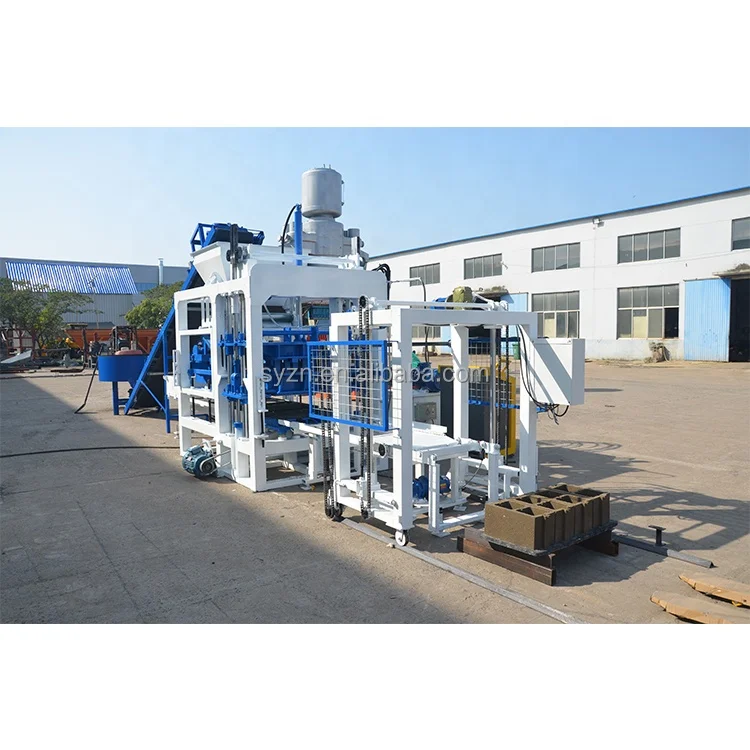
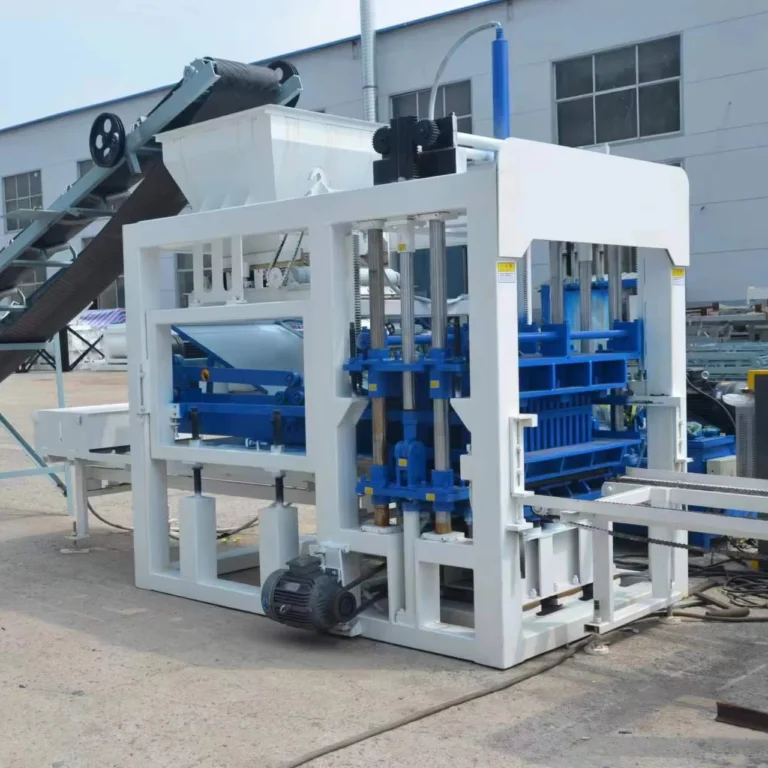 High quality block machine