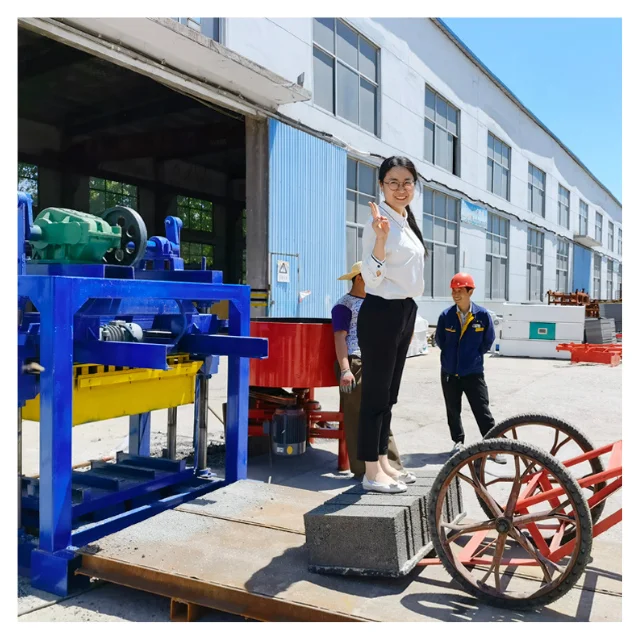
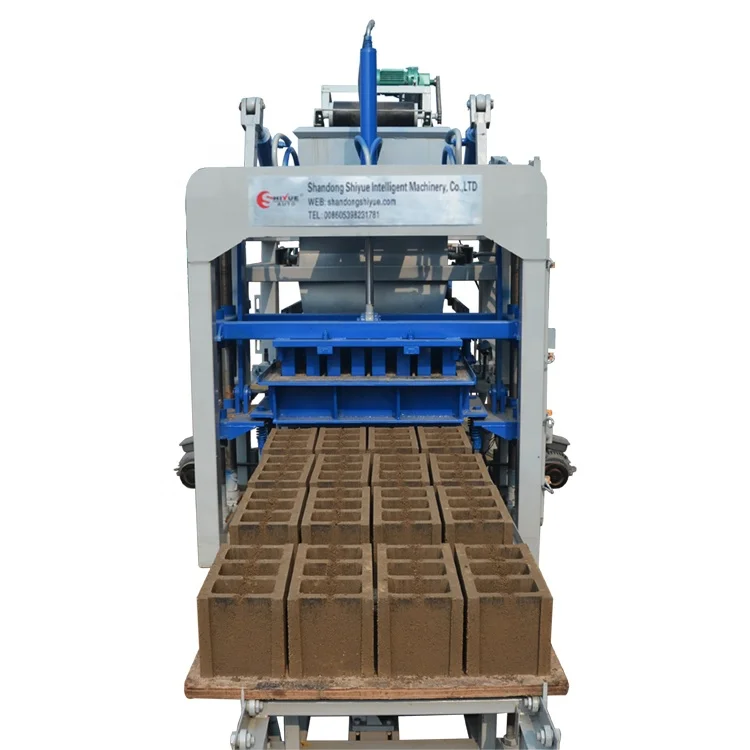
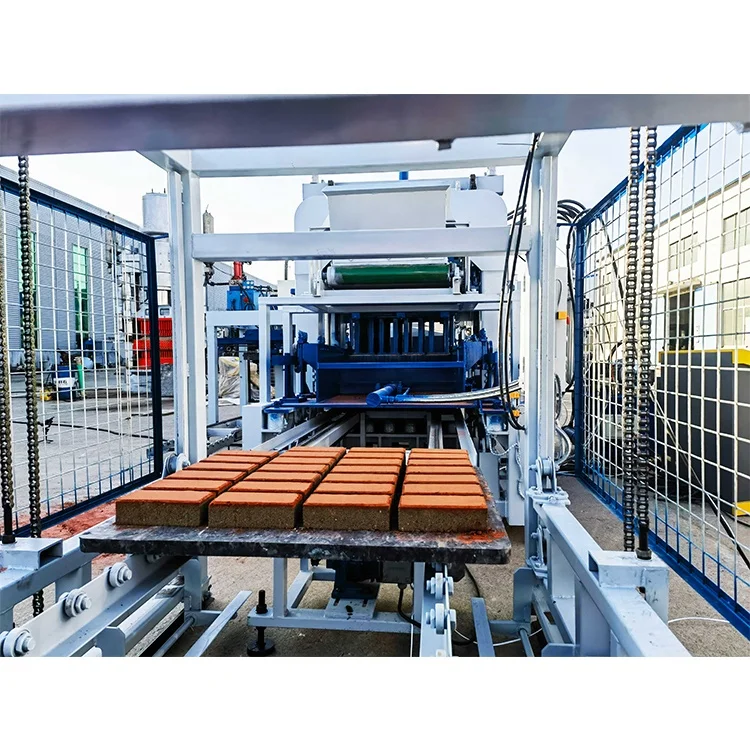
Matched System Design — the QT4-15A is supplied with pallet feeder, conveyor and sweeper as one coordinated line, not a press assembled from separate vendors.
Technical Specifications
| Parameter |
Value |
| Model |
QT4-15A |
| Product Type |
Hydraulic Block Making Machine |
| Overall Dimensions |
7100 × 1600 × 2610 mm |
| Total Weight |
3 T |
| Molding Cycle |
15–25 s |
| Vibration Frequency |
4600 r/min |
| Vibration Force |
40–50 kN |
| Power |
18.45 kW |
| Mixer |
JQ350 |
| Pallet Size |
850 × 550 × 25 mm |
| Control System |
PLC control system |
| Hydraulic Station |
Included |
| Output Capacity |
408 pcs/hr (basis: 400×200×200mm hollow block, 4 pcs/mould) |
| Output Capacity |
510 pcs/hr (basis: 400×150×200mm hollow block, 5 pcs/mould) |
| Output Capacity |
2100 pcs/hr (basis: 240×115×53mm solid brick, 18 pcs/mould) |
| Daily Output |
3264 pcs/8hr (basis: 400×200×200mm hollow block) |
| Daily Output |
4080 pcs/8hr (basis: 400×150×200mm hollow block) |
| Daily Output |
17000 pcs/8hr (basis: 240×115×53mm solid brick) |
| Included Equipment |
Block making machine, hydraulic station, PLC control system, pallet feeder, brick conveyor, block sweeper |
| Free Parts |
Manual hydraulic trolley, spare parts and tools |
Application Suitability
| Application |
Material or Output |
| Hollow block production for wall construction |
Crushed stones, sand, cement, fly ash |
| Solid brick manufacturing for load-bearing structures |
Cement, dust, sand, crushed stones |
| Paver and curbstone production for infrastructure |
Cement, sand, crushed stones with higher vibration force |
| On-site block production for housing projects |
Local aggregate mixed with cement and fly ash |
| Building material distributor format expansion |
Same machine platform across multiple mould formats |
What "Pieces per Hour" Actually Means for a QT4-15A Block Making Machine Manufacturer
Every output figure on this page is tied to the exact block size and mould that produced it — no headline capacity without context.
Catalogue sheets in this industry frequently quote a single cycles-per-hour number without disclosing which block format was used. A buyer comparing machines on that basis may find real daily output far below expectation once production switches to the format the local market actually buys. With the QT4-15A, the 408 pieces per hour figure applies only when pressing 400×200×200mm hollow blocks with a four-cavity mould; swap to a smaller solid brick mould and the hourly count changes entirely. A QT4-15A block making machine manufacturer should present capacity this way from the first conversation, not bury the assumption in fine print. [NEED_CITE: block machine capacity measurement standards by format]

Placing the QT4-15A Within the Complete Machine Range
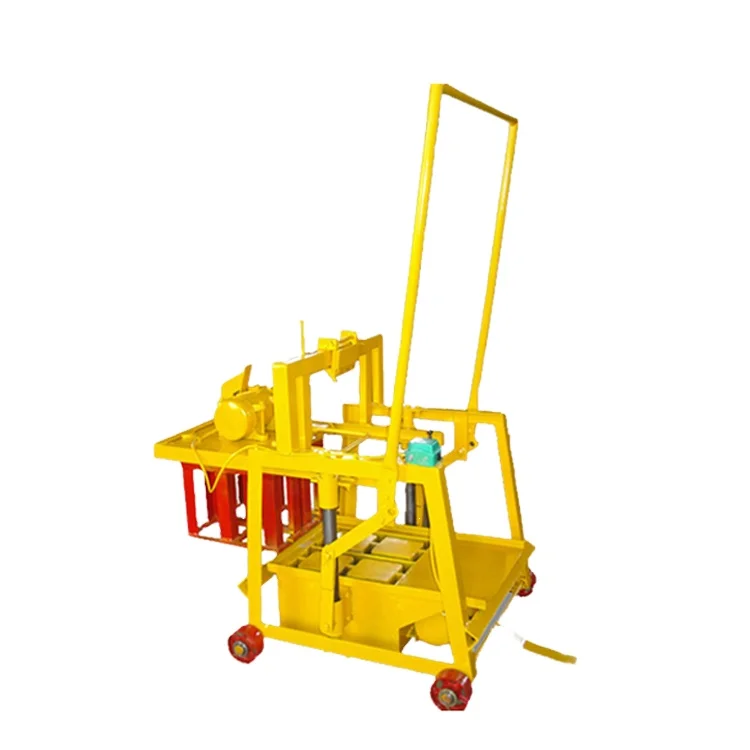
The QT4-15A occupies the mid-tier position in the full block machine lineup. Below it sit mobile egg-laying machines that need no fixed plant but produce lower volumes; above it are high-capacity automatic lines with integrated stacking and cubing. For a buyer surveying options, this model bridges the gap between entry-level equipment and a fully automated production facility.
Semi-Automatic Today, Automatic Tomorrow
A plant starting on the QT4-15A can run with manual pallet handling at the discharge end while the PLC manages the pressing cycle. When daily volume grows, the same platform accepts automatic stacking and curing rack handling modules without replacing the press itself. This upgrade path means the initial investment in a QT4-15A block making machine manufacturer relationship is not wasted when capacity needs shift upward [NEED_CITE: automation upgrade compatibility in block production lines].
Hydraulic Pressure and Vibration: Why Both Numbers Matter
The 40–50 kN vibration force and the hydraulic station work together during the 15–25 second molding cycle. Vibration alone compacts the mix; hydraulic pressure locks that compaction into a stable green block before the mould lifts. If vibration force is high but hydraulic pressure is low, blocks crack on demoulding. If pressure dominates without enough vibration, the mix never reaches full density. The 850×550×25mm pallet size is specified to carry the pressed block through curing without warping — a pallet that is too thin will bow under stack weight, and one that is too wide will not fit the buyer’s existing forklift or curing rack.
The Hidden Cost of a Machine Configured for the Wrong Mix
When a block press leaves the factory tuned for a specific aggregate blend and arrives at a site where only river sand or volcanic ash is available, the vibration frequency and hydraulic timing no longer match the material’s flow characteristics. Blocks come out crumbly or too dense, and the operator spends shifts adjusting settings that were never designed for that feedstock. This mismatch is one of the most common reasons a new plant fails to reach stated capacity within the first quarter of operation [NEED_CITE: raw material compatibility in concrete block production].
Why Source from This QT4-15A Block Making Machine Manufacturer
Block machinery is the sole production focus, so the press, mould, pallet and feeder are engineered as one system rather than sourced from unrelated workshops. The 18.45 kW power rating and JQ350 mixer are matched to the 40–50 kN vibration envelope, avoiding the bottleneck of an undersized mixer starving a larger press. Configuration is set against the buyer’s actual mix design and target block format — not a default catalogue page. Every quotation includes a wear parts and mould list so the timing and cost of the first replacement are known before the machine ships. Voltage, frequency and PLC display language are confirmed during production to prevent commissioning delays at destination.
Documentation & Verification
- Line layout showing capacity calculated per block format for the QT4-15A
- Machine specification sheet listing hydraulic pressure, vibration force and pallet dimensions
- Mould drawing and format list covering hollow, solid, paver and curbstone options
- Voltage and PLC display language confirmation recorded before assembly
- Factory test record on buyer’s chosen block format prior to dispatch
- Packing photographs and customs documentation support for shipment
Installation, Commissioning & Support
- Foundation plan sized for the 7100×1600×2610mm footprint and 3T operating weight
- Power supply matched to the 18.45 kW total load with dedicated circuit requirements
- Machine dismantled into main frame, hydraulic station and PLC cabinet for container loading
- On-site reassembly with vibration force and hydraulic pressure calibrated to local aggregate
- PLC display language and control parameters verified with operators during commissioning
- Wear parts list and mould maintenance schedule provided at handover
Starting the Conversation
Before sizing a QT4-15A or recommending a different tier in the range, we need to understand the target block format, expected daily volume and the aggregate available at your site. Share your local voltage and frequency so the electrical system is built correctly the first time. If you already have curing racks and forklifts, send the dimensions so the pallet size aligns with your existing handling equipment.
Frequently Asked Questions
Q: How do I know whether the QT4-15A or a larger model fits my daily volume target?
A: Compare your required daily output against the format-specific figures — for example, 3264 hollow blocks per eight-hour shift at 400×200×200mm. If your target falls between tiers, the next model up may offer a shorter cycle time or a larger mould cavity count. We provide a capacity table per format to make this comparison straightforward.
Q: Which block formats can the QT4-15A produce, and what cycle time applies to each?
A: The machine produces hollow blocks, solid bricks, pavers and curbstones by changing the mould. Cycle time ranges from 15 to 25 seconds depending on block size and mix design. Each format carries its own output figure, and the quotation states which mould is included so there is no ambiguity about expected throughput.
Q: Can I begin with the QT4-15A semi-automatic setup and add automation later?
A: Yes. The PLC control system is standard, forming the foundation for future pallet stacking and cubing modules. When volume grows, automation components can be added without replacing the press or the hydraulic station, preserving the original investment.
Q: What voltage options exist, and is the PLC language configurable?
A: Voltage and frequency are confirmed during the quotation stage to match the destination market’s grid. The PLC display language is set before assembly so operators see instructions in a language they read on the first day of production, avoiding commissioning delays.

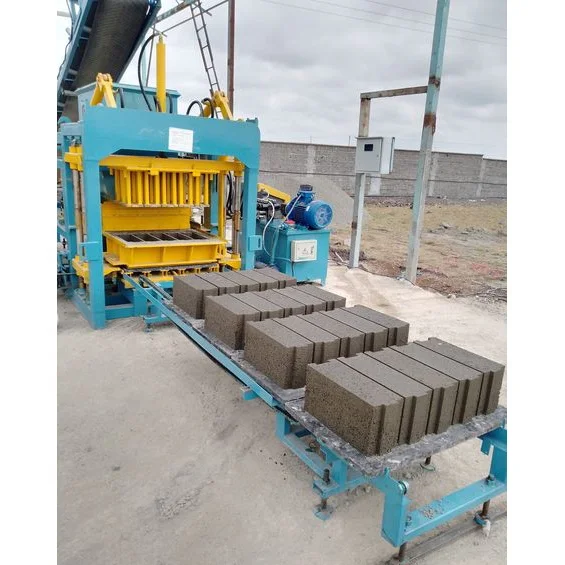
 High quality block machine