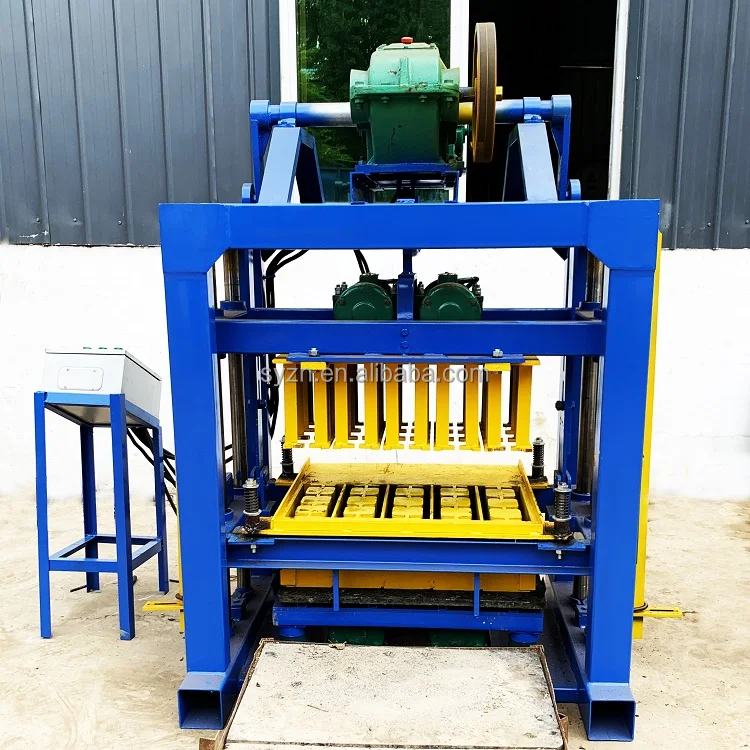
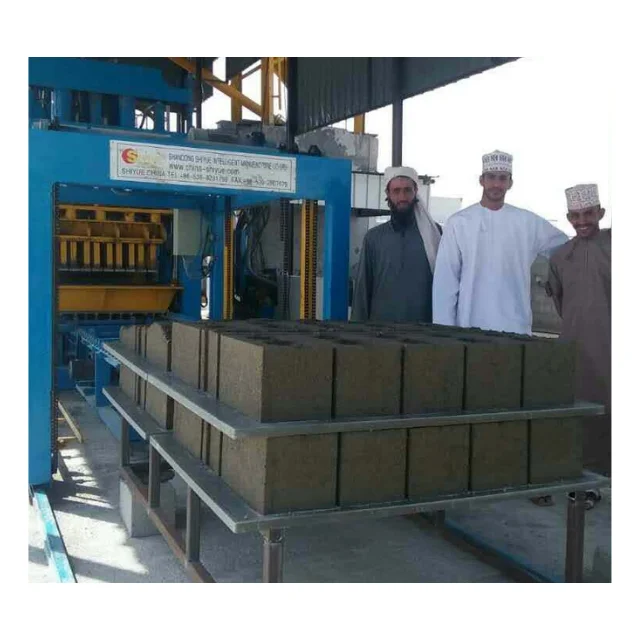
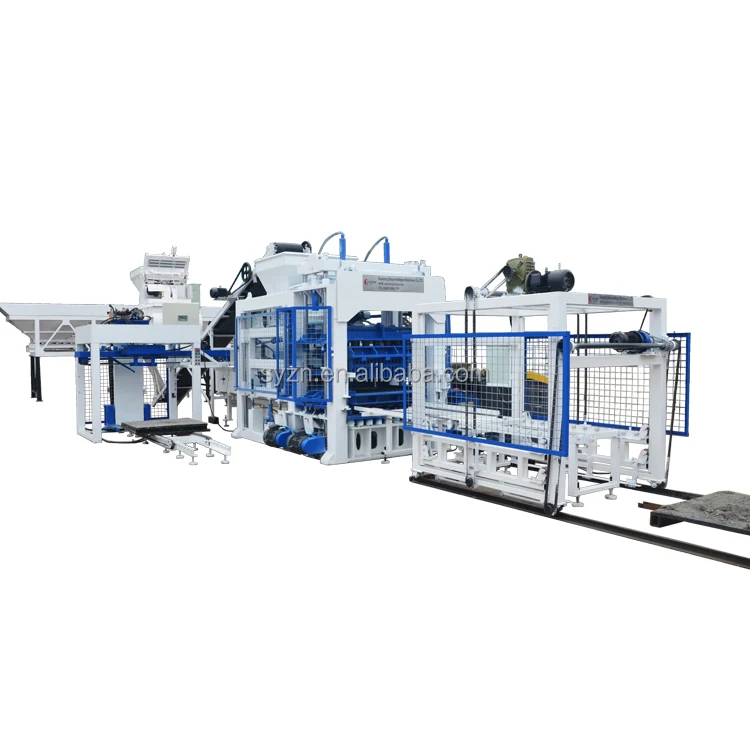
Mid-tier Stationary Range — the QT4-15 block machine bridges workshop-scale output and full automatic lines, configured against your actual mix design and local aggregate before shipment.
Technical Specifications
| Parameter |
Value |
| Model |
QT4-15 |
| Product Type |
Stationary Concrete Block Making Machine |
| Host Machine Power |
27.5 kW |
| Vibration Force |
40 kN |
| Moulding Cycle |
15 s (basis to be confirmed per block format) |
| Pallet Size |
1020 × 570 mm |
| Host Machine Dimension |
7100 × 1600 × 2610 mm |
| Host Machine Weight |
5 T |
| Mixer Model |
JS500 |
| Voltage |
380V (frequency and phase configurable to site supply) |
| Control System |
Computer controlled directional vibration with frequency and brake |
| Feeding System |
Hopper with swing-type cutting device |
| Vibration Method |
Table and mould vibrating together; low-frequency feeding, high-frequency vibrating |
| Motor |
Siemens Motor |
| Water Consumption |
Approx. 4 T per day (general reference) |
| Workers Required |
3 – 4 (basis to be confirmed by automation level) |
| Workshop Area |
Approx. 150 m² |
Application Suitability
| Application |
Material or Output |
| Hollow block production for load-bearing walls |
Crushed stone, cement, sand, water |
| Solid block manufacturing for partition walls |
Fly ash, cement, river sand |
| Paving block for walkways and yards |
Gravel, cement, pigment additives |
| Ecological brick for retaining structures |
Construction waste aggregate, cement |
What "15-Second Cycle" Actually Means for Your Daily Output
A cycle time figure only becomes meaningful when tied to the specific block format and mix you intend to run.
Capacity sheets for the QT4-15 block machine manufacturer often quote a 15-second moulding cycle. In a workshop running a standard hollow block with well-graded aggregate, that cadence is achievable. Switch to a denser paving block or a porous brick with a different water-cement ratio, and the cycle stretches because the vibration table needs longer to reach full liquefaction. I have watched lines stall mid-shift because the quoted cycle assumed a mix the buyer could not source locally, forcing a material substitution that the original settings never accounted for [NEED_CITE: mix design impact on vibration cycle in concrete block production]. The capacity calculation document must name the block format, dimensions, and assumed material gradation for every output figure on the sheet.

Where the QT4-15 Sits Across the Range
The QT4-15 occupies a mid-tier position among stationary concrete block making machines, sitting above small egg-laying units that produce blocks directly on the ground without pallets, and below high-capacity automatic lines that run with minimal operator intervention. Buyers evaluating their first block plant often land on this model because it delivers consistent output without the capital outlay of a fully automated cubing and stacking system. Replacement buyers moving up from mobile machines also find the footprint manageable within existing workshop bays, provided the curing area and forklift fleet match the 1020 × 570 mm pallet format.
Matching the Press to the Rest of the Line
A press does not operate in isolation. The JS500 mixer must discharge into the hopper at a rate that prevents the press from idling between batches, and the pallet feeder must deliver boards fast enough to keep up with the 15-second target cycle. When the pallet size, curing rack spacing, and forklift capacity are all confirmed before the machine goes into production, the QT4-15 block machine manufacturer can ship a line that connects without on-site improvisation. I have seen situations where the pallet dimensions were chosen without regard to the curing rack the buyer already owned, resulting in boards that overhung the rack slots and required a second handling step [NEED_CITE: pallet and curing rack compatibility in block production].
Reading the Specs That Matter on the Floor
The 40 kN vibration force and the table-plus-mould combined vibration method work together to fully liquefy the concrete inside the mould box, which directly affects the density and compressive strength of the finished block. If the vibration force is insufficient for a particular aggregate size, the core of the block remains loosely packed and fails strength tests. The Siemens motor provides the sustained torque needed for continuous vibration without overheating across a full shift. The swing-type hopper cutting device distributes material evenly into the mould cavity, reducing the variation in block weight from one cycle to the next. Voltage confirmation at 380V is a starting point; frequency and phase must be locked in against the buyer’s site supply before the motor windings are wound, or the machine risks running at the wrong speed from day one.
The Cost of Skipping the Voltage and Language Check
Arriving on site to find that the PLC display language is unreadable to the operator delays commissioning by days while a software update is sourced. Voltage mismatches go further — a machine wound for 50 Hz running on a 60 Hz supply spins faster than designed, accelerating wear on hydraulic pumps and vibration motors. Frequency and phase should be confirmed at the inquiry stage, not after the container is loaded. These details seem minor against the headline price of the line, but they account for most of the commissioning delays I have encountered on export installations [NEED_CITE: voltage and frequency standards by export market].
Why Buyers Specify From This Range
Block machinery is the single focus of this production facility, so the QT4-15 is supplied as a matched system — press, mould, pallet, and handling equipment are specified together rather than assembled from separate vendors. Configuration is set against the buyer’s actual mix design and local aggregate, not a catalogue default. Mould design covers the formats the buyer’s market sells, with custom drawings accepted for non-standard block profiles. Automation level is selectable, allowing a buyer to start with manual pallet handling and add automatic stacking later as production volume grows. Installation support includes on-site commissioning with operator training, so the crew running the machine on day one understands mould change procedures and daily maintenance checks.
Documentation & Verification
- Line layout and capacity calculation stating the exact block format behind each output figure
- Machine specification sheet listing matched mould, pallet, and JS500 mixer as one system
- Voltage, frequency, and PLC display language confirmation signed off before production
- Factory test record using the buyer’s target block format with packing photographs
- Hydraulic and electrical schematic for local maintenance reference
Installation, Commissioning & Support
- Workshop floor of at least 150 m² with a level concrete slab rated for the 5 T host machine weight
- Dedicated 380V circuit with confirmed frequency and phase matching the Siemens motor nameplate
- Host machine shipped as a single unit with bolt-on hopper and vibration table for rapid assembly
- First-run parameter calibration against the buyer’s actual aggregate and cement type before full production
- Mould change procedure training covering locking mechanism and vibration table reset for new block formats
- Wear parts list identifying hydraulic seals and vibration springs with recommended replacement intervals
What to Include in Your Inquiry
To move from the range overview to a firm configuration, we need your target block format and dimensions, the daily output you are aiming for, and a sample or description of the aggregate available locally. Site details that shape the proposal include workshop area and ceiling height, the voltage and frequency at your facility, and the language your operators need on the control display. If you already have pallets, mixers, or curing racks on site, share their specifications so the line can be built around them.
Frequently Asked Questions
Q: How is the QT4-15’s output capacity calculated, and which block format is assumed?
A: Output capacity is calculated by multiplying the number of blocks per mould by the number of cycles achievable in an hour, but the moulding cycle varies with block format and mix design. A hollow block may achieve the 15-second target while a dense paving block requires a longer vibration phase. The capacity calculation document provided with each quotation states the exact block format, dimensions, and assumed material behind every figure, so you can compare against your actual production targets.
Q: Where does the QT4-15 sit compared to semi-automatic and fully automatic models?
A: The QT4-15 sits in the mid-tier of the stationary range. It offers higher and more consistent output than mobile egg-laying machines while requiring less capital and floor space than a fully automatic line with cubing and stacking. Buyers often choose it as a first stationary plant or as a capacity addition to an existing workshop, with the option to upgrade automation level as production volume grows.
Q: What supporting equipment is included or optional with this model?
A: The standard package pairs the host machine with a JS500 mixer and the 1020 × 570 mm pallet system. Pallet feeding, stacking, and curing rack handling equipment can be added depending on the automation level selected. The proposal lists each station as part of one matched system so the press is not left waiting for material or pallets between cycles.
Q: What is the workshop footprint and installation requirement for the QT4-15 line?
A: The host machine measures 7100 × 1600 × 2610 mm and weighs 5 T, requiring a level concrete floor within a workshop of approximately 150 m². A dedicated 380V power circuit with confirmed frequency and phase is needed before the Siemens motor is connected. Ceiling height must allow clearance for the hopper loading height and any overhead pallet handling equipment specified in the line layout.

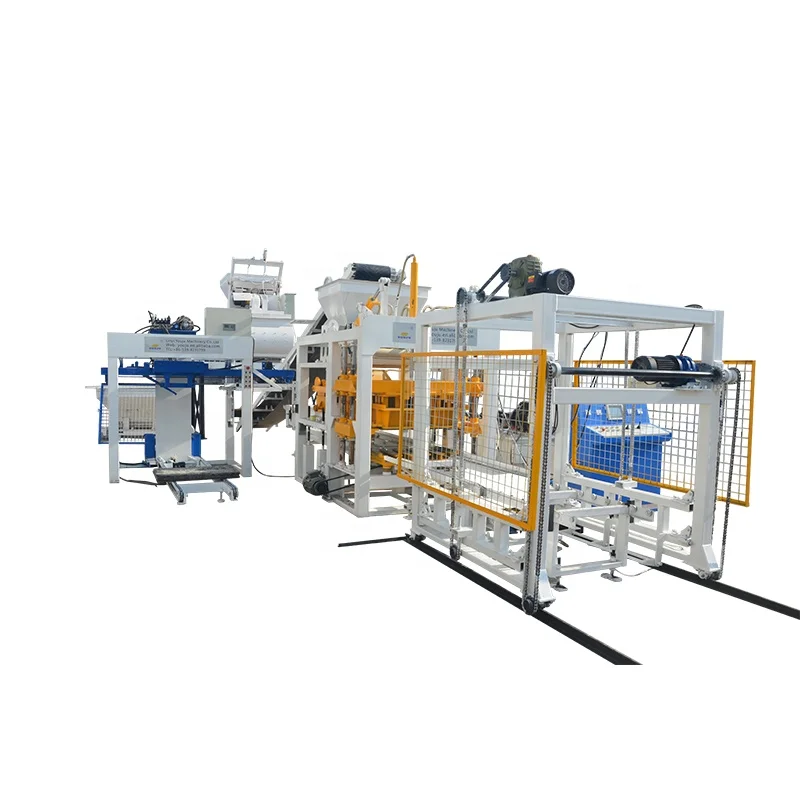
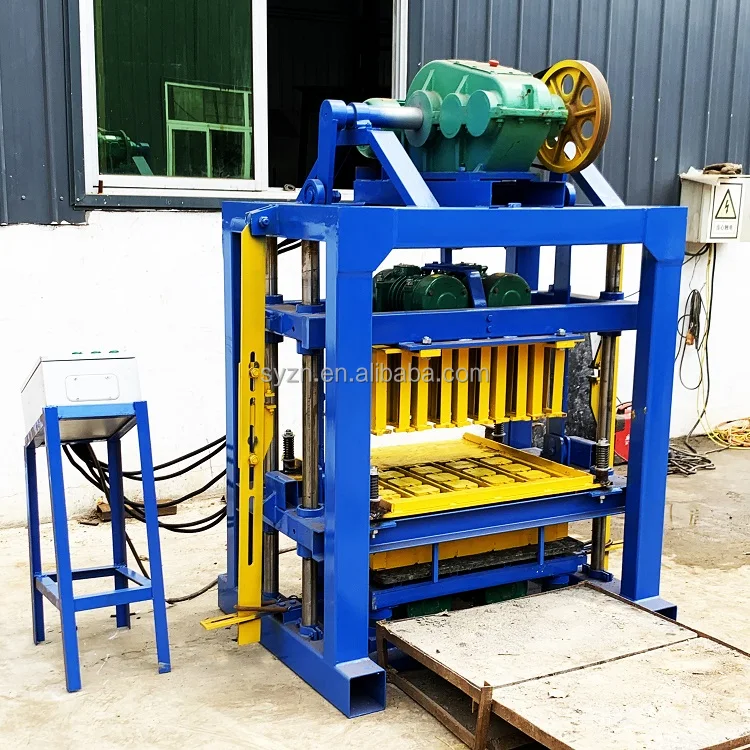 Stationary block machine