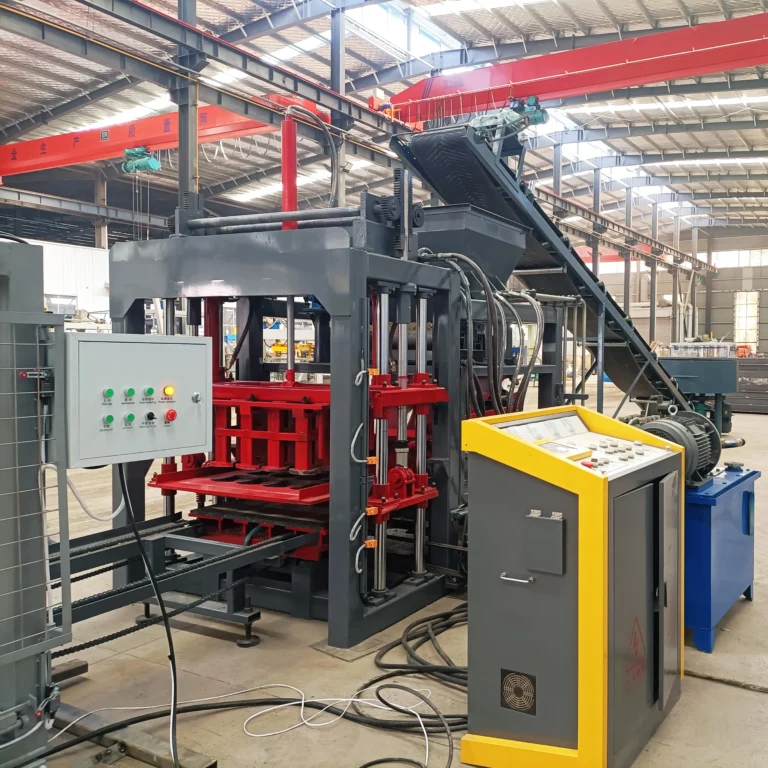
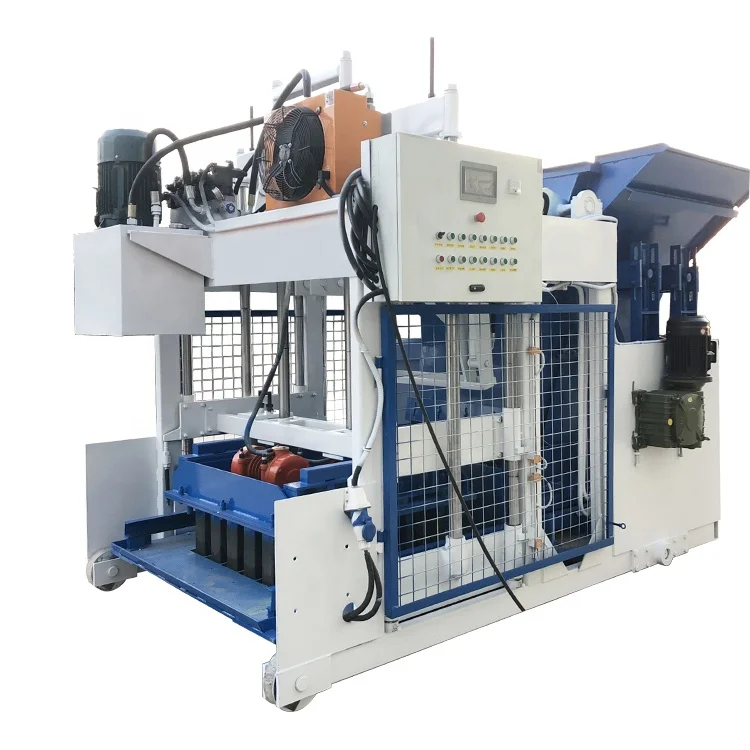
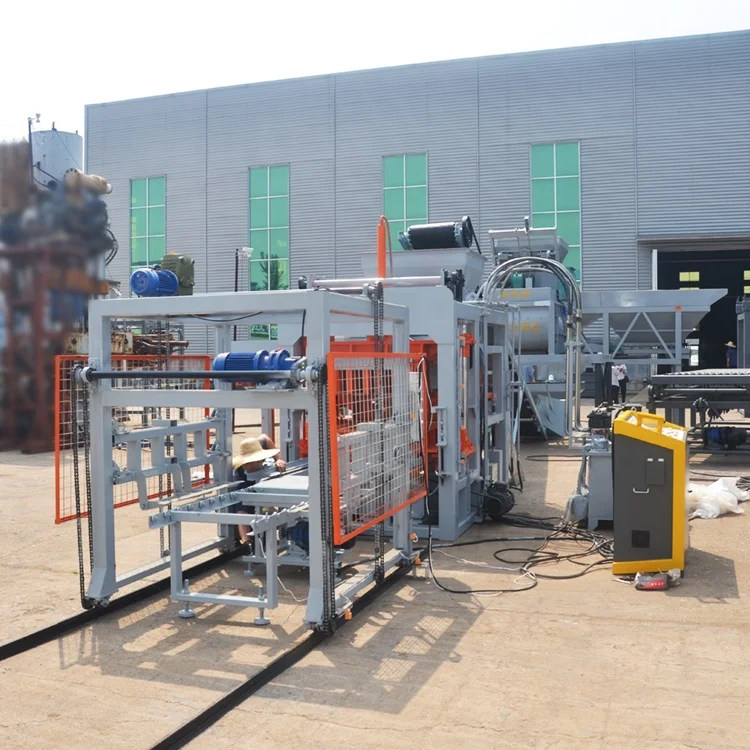
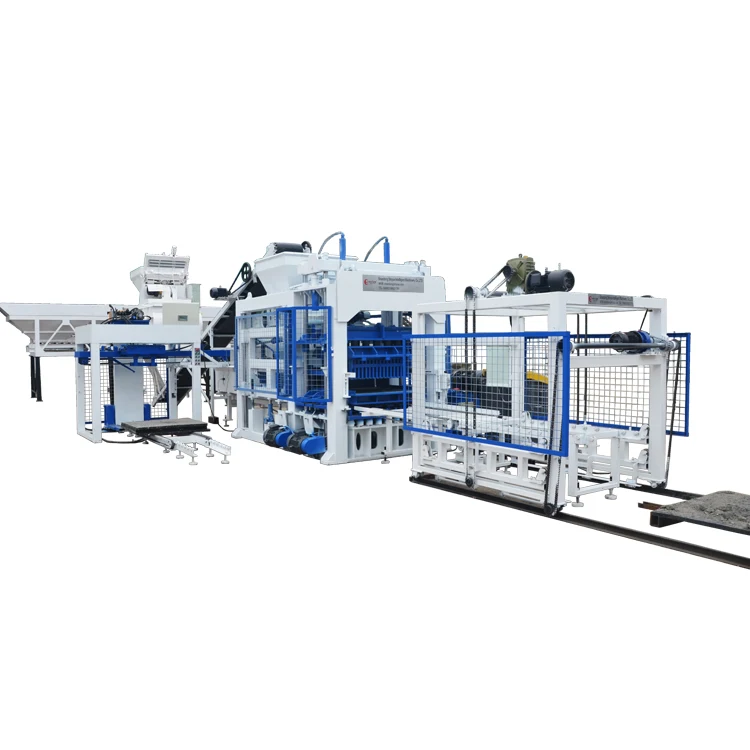
Specified as one matched system — rather than quoting isolated press cycles, the line layout states the block format behind every output figure so buyers can plan curing space, pallets, and shifts around the real daily volume they will actually sell.
Technical Specifications
| Parameter |
Value |
| Model |
QT4-15A |
| Product Type |
Hydraulic Concrete Block Making Machine |
| Overall Dimensions (L×W×H) |
7100 × 1600 × 2610 mm |
| Molding Cycle |
15–25 s (adjustable by block format and mix) |
| Vibration Frequency |
4600 r/min |
| Exciting Power (Vibration Force) |
40–50 kN |
| Total Power |
18.45 kW |
| Mixer Model |
JQ350 |
| Pallet Size |
850 × 550 × 25 mm |
| Total Weight |
3 T |
| Applied Products |
Paver, solid block, hollow block, curbstone |
| Raw Materials |
Crushed stone, sand, cement, dust, fly ash |
| Output (Hollow Block 400×200×200 mm) |
4 pcs/mould, 408 pcs/hr, 3264 pcs/8hr |
| Output (Hollow Block 400×150×200 mm) |
5 pcs/mould, 510 pcs/hr, 4080 pcs/8hr |
| Output (Solid Brick 240×115×53 mm) |
18 pcs/mould, 2100 pcs/hr, 17000 pcs/8hr |
| Automation Level |
Semi-automatic |
| Stacking Method |
Automatic stacker included in line |
| Hydraulic Pressure |
To be confirmed per mix design |
| Voltage & Frequency |
To be confirmed per target market |
| Control System |
PLC or MCC (to be specified) |
Application Suitability
| Application |
Material or Output |
| Housing project hollow block supply |
Hollow blocks 400×150×200 mm or 400×200×200 mm from crushed stone and cement |
| On-site solid brick production |
Solid bricks 240×115×53 mm from sand, fly ash, and cement |
| Municipal paving and kerbstone work |
Pavers and curbstones from crushed stone and cement |
| Small-to-medium block plant start-up |
Semi-automatic line with room to upgrade automation tiers later |
What "Cycles Per Hour" Leaves Out When Sizing a QT4-15 Block Making Machine Manufacturer
Real daily output only exists when the block format, mix design, and pallet cycle are stated together.
Many quotations list a single hourly figure without naming the block size it assumes. When a buyer installs the press and runs a different format, the actual output drops and the curing rack sits half empty. I have watched this gap cancel out an entire shift’s production on the first week of commissioning [NEED_CITE: capacity calculation standards for concrete block machinery]. The QT4-15 block making machine manufacturer capacity figures above each carry a specific block dimension and an eight-hour shift assumption, so the number means something before the first pallet leaves the press.

Where the QT4-15 Sits in the Full Machine Range
The QT4-15 occupies the semi-automatic tier in Shiyue’s lineup, meaning the host press runs with PLC or MCC control while pallet feeding and stacking can be configured to match the buyer’s labour plan. Buyers starting a first plant often choose this tier because the initial capital outlay stays contained, yet the press frame and hydraulic circuit are sized to accept fully automatic pallet return and cubing later without replacing the core machine.
Matching the Line Around the Press
A press is only as productive as the station feeding it. The JQ350 mixer and raw material conveyor are specified so that the mixing cycle does not become the bottleneck when the host press cycles at the faster end of its 15–25 s range. The automatic stacker at the exit end removes fresh pallets at the same cadence, preventing a queue that would otherwise force the operator to pause the press. This matched cadence across stations is what keeps the quoted output reachable during a real shift [NEED_CITE: block line station synchronization principles].
How Vibration Force, Pressure, and Pallet Size Shape Block Density
The 40–50 kN vibration force works together with hydraulic pressure to compact the mix into the mould cavity. When local aggregate is coarse or the sand fraction is low, vibration alone may not settle the material evenly, and hydraulic pressure must compensate to maintain consistent density. The 850 × 550 × 25 mm pallet size is chosen to fit standard curing rack slots and forklift fork widths, so pallets move from press to rack to truck without manual repositioning. Molding cycle adjustments between 15 and 25 s allow the operator to extend compaction time when the mix is slower to consolidate, rather than accepting weaker blocks just to keep up with a fixed cycle clock.
The Cost of Overlooking Voltage and Control Language Before Production
Confirming voltage, frequency, and PLC display language after the machine is built usually means rewiring the control cabinet on site or shipping a replacement HMI unit overseas. Both paths delay commissioning by weeks and leave a new plant idle while local electricians improvise [NEED_CITE: voltage and frequency standards by export market]. Selecting these parameters during the quotation stage takes a single email but prevents the entire installation team from standing around a silent press.
Why Buyers Source the Full Line From One Specification Point
Block machinery is Shiyue’s single focus, so the press, mould, pallet, and handling equipment are specified as one system rather than assembled from separate vendors whose cycle times never quite align. Each configuration is set against the buyer’s actual mix design and local aggregate, not a catalogue default that may not match what the nearest quarry supplies. Mould design covers the formats the buyer’s market sells, with custom drawings available when a non-standard paver or kerbstone profile is needed. The automation level is selectable, allowing a buyer to begin with semi-automatic operation and add full pallet return and cubing as volume grows. Installation support includes operator training so the crew can run the line independently before the service engineer leaves the site.
Documentation & Verification
- Line layout and capacity calculation stating the block format assumed for each output figure
- Machine specification sheet confirming vibration force, hydraulic pressure, and pallet size as a matched set
- Mould drawing and format list showing which block profiles are covered
- Voltage and control language confirmation record signed before production begins
- Factory test record on the buyer’s specified block format before dispatch
Installation, Commissioning & Support
- Foundation pad leveled to 7100 × 1600 mm footprint with anchor bolt pockets matching the press frame
- Dedicated circuit sized for 18.45 kW total load with voltage and frequency confirmed before wiring
- Press and stacker dismantled for container loading and reassembled on site with alignment verified
- Molding cycle tuned to the buyer’s mix during first run, adjusting between 15 and 25 s as needed
- Operator training covers pallet loading, mould change procedure, and daily vibration table inspection
- Wear parts list with hydraulic seal and vibration block identifiers for first reorder
What to Include With Your Inquiry
To size the QT4-15 line accurately, share the target block formats and the daily volume each format requires. Include the locally available aggregate type and gradation so the mix can be matched to the vibration and pressure settings. Confirm the site voltage, frequency, and preferred PLC display language so the control cabinet is wired correctly before the machine leaves the factory.
Frequently Asked Questions
Q: How do I verify the real daily output for the block formats my market sells?
A: Request a capacity calculation document that lists each block format, the mould cavity count, and the assumed cycle time. Compare those figures against an eight-hour shift rather than a single hourly number, and confirm that the mixer and stacker can sustain the same cadence without becoming the bottleneck.
Q: Which automation tier should I start with and how do I upgrade later?
A: The semi-automatic tier lets you begin production with controlled capital outlay while the press frame remains compatible with automatic pallet return and cubing modules. Upgrading later means adding handling stations rather than replacing the core press and hydraulic circuit.
Q: How is pallet size chosen to fit my existing curing area and forklift?
A: The 850 × 550 × 25 mm pallet size aligns with standard curing rack slots and common forklift fork widths. Confirming your rack dimensions and forklift capacity before the order ensures pallets move smoothly from press to rack to delivery truck.
Q: What voltage and control language options are available for my market?
A: Voltage and frequency are configurable to match the target market’s grid, and the PLC or HMI display language is confirmed before production. Locking these details in at the quotation stage prevents commissioning delays after the machine arrives on site.
Q: How does the QT4-15 compare to higher output tiers in the Shiyue range?
A: Higher tiers add larger mould tables and faster cycle automation for buyers who have already established market demand. The QT4-15 serves as the entry point for first plants or replacement machines where semi-automatic operation and moderate daily volume match the investment plan.

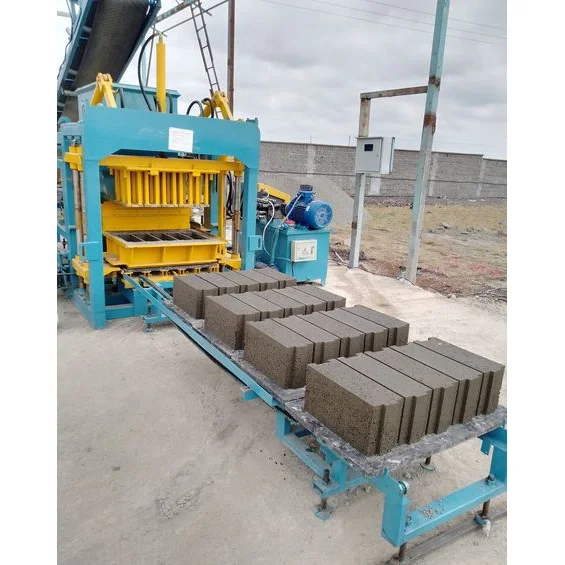
 High quality block machine