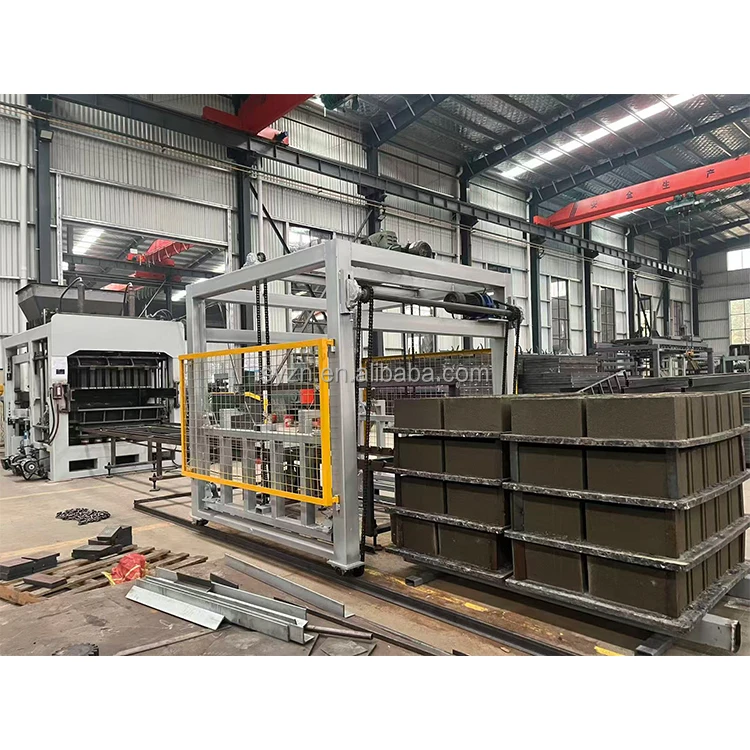
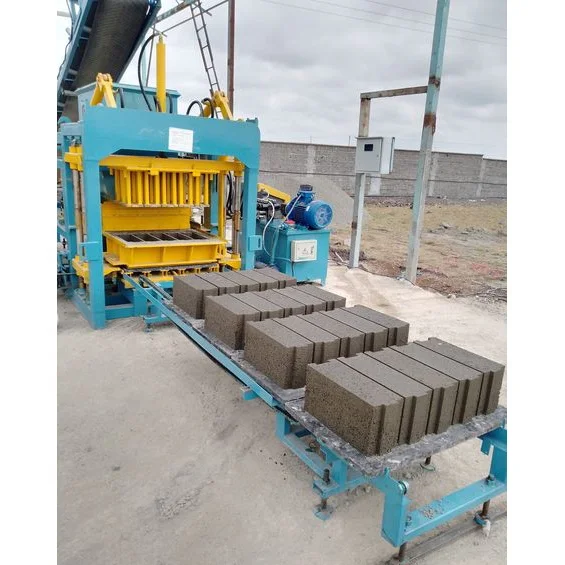
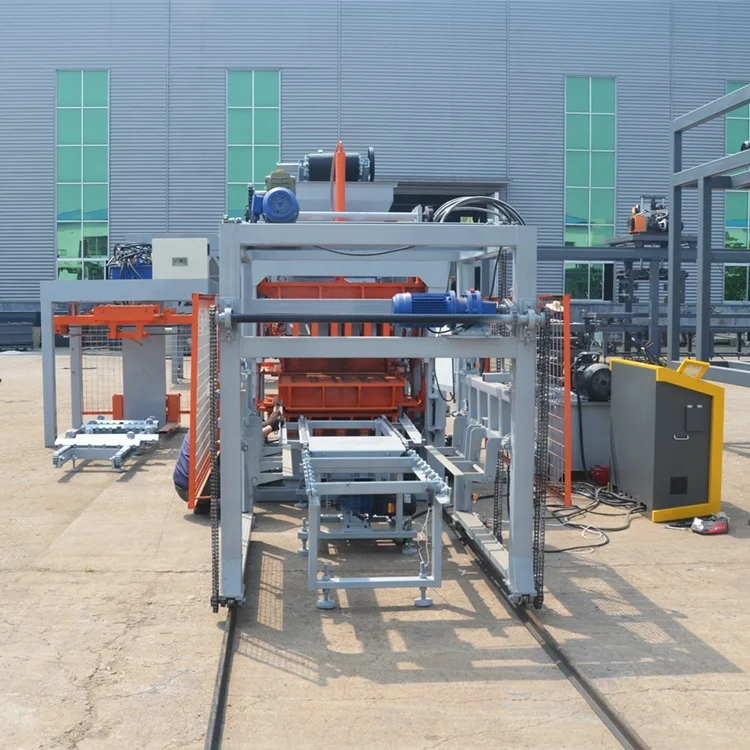
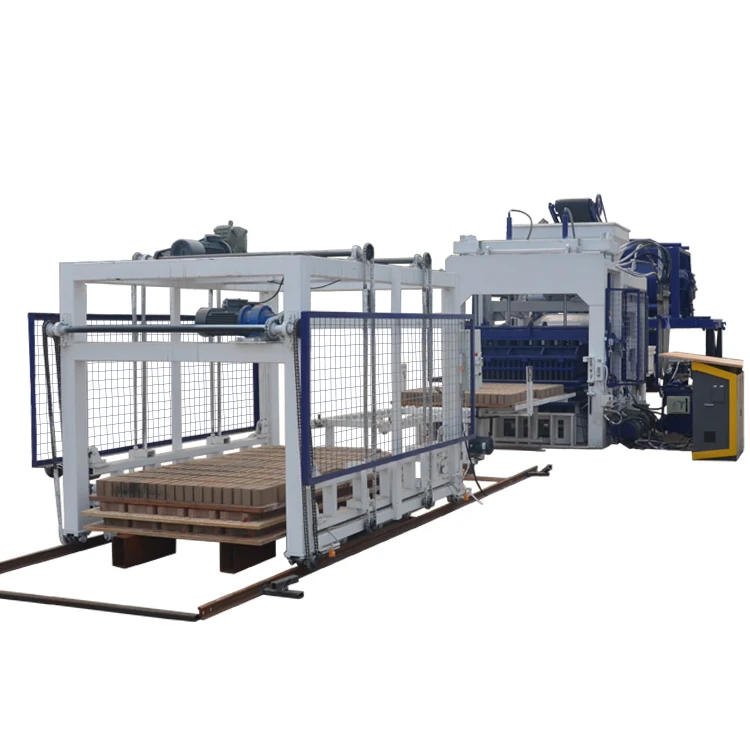
Mid-Tier Automatic Positioning — The QT4-15 fills the gap between semi-automatic egg-layers and high-capacity lines, delivering PLC-controlled production with a footprint suited to growing block plants expanding from manual operations.
Technical Specifications
| Parameter |
Value |
| Model |
QT4-15 |
| Product Type |
Hydraulic Concrete Block Making Machine |
| Control System |
PLC / Computer-controlled, fully automatic |
| Vibration Mode |
Multiaxis synchronizer vibration, vertically downward |
| Hydraulic System |
High thermal efficiency, low heat productivity |
| Mixer System |
Multiaxis forced mixer |
| Guide Bearing |
Long-period over-length guide bearing for upper mould and mould box alignment |
| Rack Construction |
High-strength steel with special welding technique, vibration shock resistant |
| Automation Level |
Fully automatic |
| Molding Cycle |
15–20s |
| Hollow Block Capacity (400×200×200mm) |
4 pcs/mould, 7200–9600 pcs/8hr (basis: 15–20s cycle) |
| Hollow Block Capacity (400×150×200mm) |
5 pcs/mould, 8640–11520 pcs/8hr (basis: 15–20s cycle) |
| Hollow Block Capacity (400×100×200mm) |
8 pcs/mould, 11520–15360 pcs/8hr (basis: 15–20s cycle) |
| Paving Block Capacity (200×100×60mm) |
16 pcs/mould, 23040–30720 pcs/8hr (basis: 15–20s cycle) |
| Solid Brick Capacity (240×115×53mm) |
28 pcs/mould, 47400–53700 pcs/8hr (basis: 15–20s cycle) |
| Warranty |
1 year for whole machine (excluding spare parts) |
| Voltage & Frequency |
Configurable to buyer’s local grid (basis to be confirmed) |
| Pallet Size |
Matched to block format and curing area (basis to be confirmed) |
| Hydraulic Pressure |
Verify against manufacturer catalog (basis to be confirmed) |
| Vibration Force |
Verify against manufacturer catalog (basis to be confirmed) |
Application Suitability
| Application |
Material or Output |
| Hollow Block Production |
Building walls, multi-cellular brick production using crushed stone, cement, and local aggregate |
| Solid Brick Production |
Masonry construction using cement, sand, fly ash, and stone dust |
| Paving Block Production |
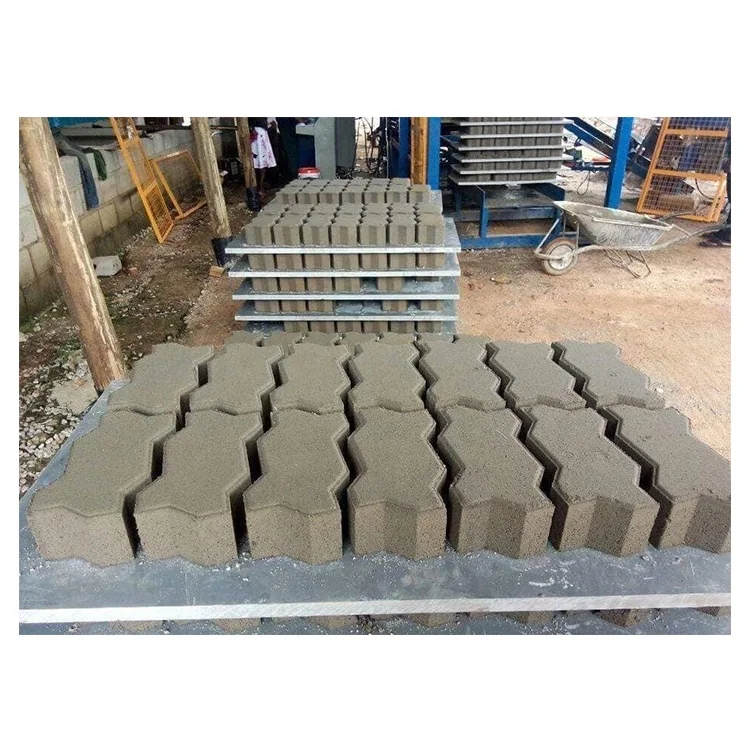
Roads, walkways, and parking areas using high-strength concrete mixes |
| On-Site Construction |
Development and housing project contractors producing blocks locally |
| Block Plant Expansion |
Entrepreneurs and manufacturers upgrading from semi-automatic to fully automatic operation |
What "9600 Pieces per Day" Actually Means for Your Plant
Capacity figures only matter when tied to a specific block format and molding cycle.
The QT4-15 block machine manufacturer literature often highlights headline numbers, but a buyer sourcing a concrete block making machine for sale needs to know which block size that number assumes. A 400×200×200mm hollow block yields 7200–9600 pieces per 8-hour shift based on a 15–20s molding cycle, while a 400×100×200mm hollow block yields 11520–15360 pieces over the same period. The difference is substantial, and it affects everything from raw material procurement to curing area sizing. [NEED_CITE: block format impact on daily output planning]
Positioning the QT4-15 in the Shiyue Range
The QT4-15 occupies the mid-tier automatic position within the complete Shiyue block machine range. It sits above semi-automatic and mobile egg-laying machines, which require manual pallet handling and offer lower daily volumes, but below high-capacity automatic lines designed for large-scale commercial block plants. This positioning makes it suitable for buyers who have outgrown manual operations but are not yet ready for the investment and footprint of a top-tier line.
Automation Level and Labor Configuration
Fully automatic PLC-controlled operation distinguishes the QT4-15 from semi-automatic tiers, reducing labor dependency while maintaining batch-to-batch consistency. The system handles pallet feeding, block molding, and stacking coordination, though the exact automation configuration — including whether automatic stacking and cubing are included — must be confirmed during the quotation stage. Buyers upgrading from manual pallet handling will notice a significant reduction in operator workload. [NEED_CITE: automation level impact on labor requirements in block production]
Vibration, Hydraulic Pressure, and Block Strength
The multiaxis synchronizer vibration system applies vertical downward force, ensuring consistent block compaction across formats from hollow blocks to paving blocks. However, vibration force alone does not guarantee block strength — it must be matched to the buyer’s mix design and local aggregate characteristics. The high thermal efficiency hydraulic system provides the pressure needed for dense compaction, but if the buyer’s raw material has high clay content or unusual moisture levels, the standard configuration may produce blocks that fail strength tests after curing. The multiaxis forced mixer system is adaptable to varying raw materials, but a trial mix using the buyer’s actual aggregate should be conducted before finalizing the machine configuration.

The Cost of Skipping the Voltage Conversation
Voltage, frequency, and PLC display language are often left unconfirmed until after shipment, leading to commissioning delays when the machine arrives on site. The QT4-15 concrete block making machine for sale can be configured for different electrical standards, but if the buyer’s local grid operates at a voltage or frequency not specified in the order, the machine will not run without costly transformer installations or motor replacements. Similarly, if the PLC display language does not match the operator’s working language, troubleshooting becomes slower and error-prone. These issues are preventable if confirmed before production begins. [NEED_CITE: electrical specification mismatches in exported machinery]
Why Source the QT4-15 from Shiyue
Shiyue focuses exclusively on block machinery, meaning the QT4-15 is specified as part of a matched system — machine, mould, pallet, and handling equipment — rather than assembled from separate suppliers. The configuration is set against the buyer’s actual mix design and local aggregate, not a catalogue default. Mould design and supply cover the formats the buyer’s market sells, including custom drawings for non-standard block types. The automation level is selectable, allowing a buyer to start semi-automatic and upgrade as production grows. Installation and commissioning support includes operator training, and mould and wear parts support is available after the machine is running.
Documentation & Verification
- Line layout and capacity calculation stating the block format assumed for each QT4-15 output figure
- Machine specification sheet confirming voltage, frequency, PLC display language, and pallet size
- Mould drawing and format list covering every block type the buyer’s market sells
- Factory test record and packing photographs showing the exact QT4-15 ordered was built and loaded
- Hydraulic and electrical schematic for on-site maintenance and troubleshooting
Installation, Commissioning & Support
- Foundation requirements based on QT4-15 rack construction and vibration shock resistance specifications
- Dedicated electrical circuit matching confirmed voltage, frequency, and power draw of the hydraulic system
- Machine arrives dismantled for container shipment; on-site assembly includes rack alignment and guide bearing calibration
- First commissioning run verifies molding cycle timing and block compaction across all ordered mould formats
- Operator training covers PLC control interface, mould change procedure, and daily maintenance of hydraulic and vibration components
- Wear parts list includes hydraulic seals, guide bearings, and mould wear items specific to the QT4-15 configuration
What We Need to Configure Your QT4-15
To provide an accurate quotation and line layout, we need your target block formats, daily output requirements, local raw material composition, and site conditions including curing area dimensions and existing forklift specifications. Confirm your local voltage, frequency, and preferred PLC display language to avoid commissioning delays. If you have existing upstream or downstream equipment — mixers, conveyors, or stacking systems — share their specifications so the QT4-15 can be integrated without bottlenecks.
Frequently Asked Questions
Q: How does the QT4-15 compare to semi-automatic models below and higher-capacity lines above?
A: The QT4-15 sits in the mid-tier automatic position, offering fully automatic PLC-controlled production at an output level suited to growing block plants. It delivers higher daily volumes than semi-automatic machines without the investment and footprint of high-capacity lines designed for large-scale commercial operations.
Q: Which block format and molding cycle are the published output numbers based on?
A: Every output figure is tied to a specific block size and a 15–20s molding cycle. For example, 400×200×200mm hollow blocks yield 7200–9600 pieces per 8-hour shift, while smaller formats produce higher counts. The capacity calculation document provided with your quotation states the format assumed for each number.
Q: Can I start with a semi-automatic QT4-15 and upgrade automation later?
A: Yes, the automation level is selectable. A buyer can start with semi-automatic pallet handling and upgrade to fully automatic stacking and cubing as production grows. The upgrade path is discussed during the quotation stage so the machine is built with future expansion in mind.
Q: What electrical and control specifications are confirmed before shipment?
A: Voltage, frequency, and PLC display language are confirmed during the order process to match the buyer’s local grid and operator requirements. This prevents commissioning delays caused by electrical mismatches or language barriers when the machine arrives on site.

 High quality block machine