High-Capacity Tier Anchor — The QT12-15 anchors the top output tier of our automatic block machine range, sized for buyers planning a first full plant or replacing smaller semi-automatic lines with matched press, mould, pallet and handling equipment.
Technical Specifications
| Parameter |
Value |
| Model |
QT12-15 |
| Product Type |
Automatic Hydraulic Block Making Machine |
| Overall Dimensions (L×W×H) |
9350 × 2520 × 2950 mm |
| Total Weight |
12000 kgs |
| Total Power |
50.7 kW |
| Rated Hydraulic Pressure |
21 MPa |
| Main Vibration Form |
Platform Vibration |
| Vibration Frequency |
2800–4500 r/min |
| Vibration Acceleration |
15–20 g |
| Exciting Force |
120 kN |
| Fixed Brick Height Range |
50–200 mm |
| Pallet Size |
1350 × 850 mm |
| Molding Cycle |
15–25 s |
| Storage Hopper Volume |
0.4 m³ |
| Feeding Device Volume |
0.31 m³ |
| Control System |
PLC controlled (display language configurable) |
| Voltage & Frequency |
Configurable (to be confirmed before production) |
| Hollow Block Capacity (390×190×190 mm) |
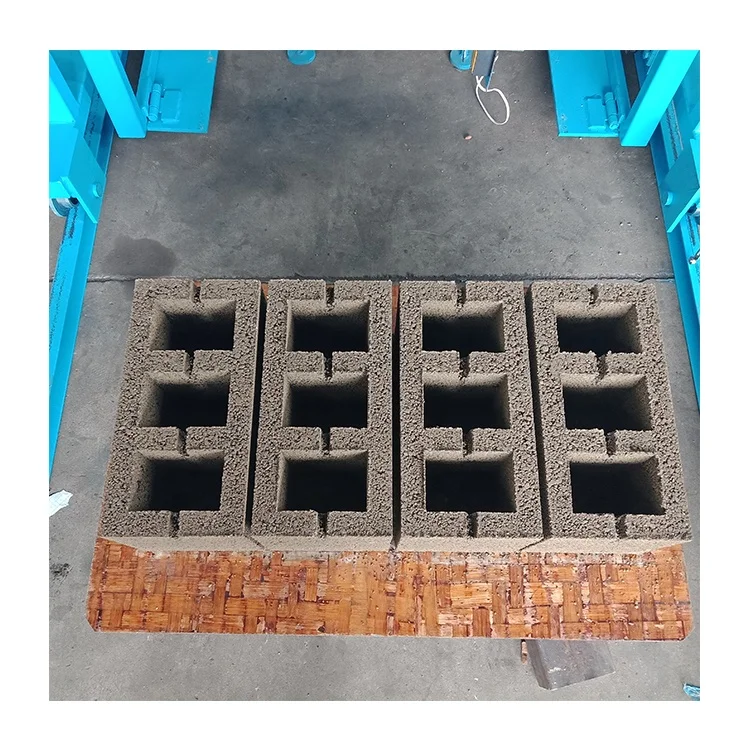
12 pcs/mould, cycle 20–25 s, 1720–2160 pcs/h, 13700–17200 pcs per 8h day |
| Porous Block Capacity (240×115×90 mm) |
35 pcs/mould, cycle 20–25 s, 5040–6300 pcs/h, 40300–50400 pcs per 8h day |
| Standard Block Capacity (240×115×53 mm) |
62 pcs/mould, cycle 15–17 s, 13100–14800 pcs/h, 105000–119000 pcs per 8h day |
| Compatible Line Equipment |
PL1200 batching machine, JS500 or JS750 mixer, 8m conveyor belt, stacker |
| Mould Type |
Cartridge type welding mould, manganese steel carburized and quenched |
| Frame Structure |
Gantry frame type, super steel, shock resistant |
| Material Feeding |
Net wave swing type feeding device, independent foundation driving type storage |
Application Suitability
| Application |
Material or Output |
| High-output hollow block plants |
Concrete, fly ash, and crushed stone mixes for 390×190×190 mm load-bearing units |
| Porous and perforated brick production |
Cement-bound aggregate for 240×115×90 mm lightweight infill blocks |
| Standard solid brick lines |
Dense aggregate or sand-cement blends for 240×115×53 mm masonry units |
| Paving block and interlocking brick projects |
High-pressure molded concrete for vehicular and pedestrian surface formats |
| On-site contractor production |
Project-scale hollow and solid blocks for housing and development sites |
Why "Cycle per Hour" Tells Only Part of the Story
Every output figure must be tied to a specific block format, mould count, and cycle time — otherwise daily production falls far short of expectation.
Many quotations list a single hourly number without revealing which block format that figure assumes. A buyer expecting 14000 hollow blocks per shift may instead receive a capacity rated on small solid bricks, leaving the curing yard half empty and the labour crew standing by. The QT12-15 Automatic Block Making Machine for Concrete addresses this by stating output per format: hollow block, porous block, and standard solid brick each carry their own cycle time and daily total. I once watched a contractor in Southeast Asia take delivery of an Automatic Block Making Machine manufacturer quote rated only on standard bricks; when the local market demanded hollow blocks, daily volume dropped by half and the curing racks never filled [NEED_CITE: capacity calculation practices across block machinery quotations].
Placing the QT12-15 on the Output Tier Map
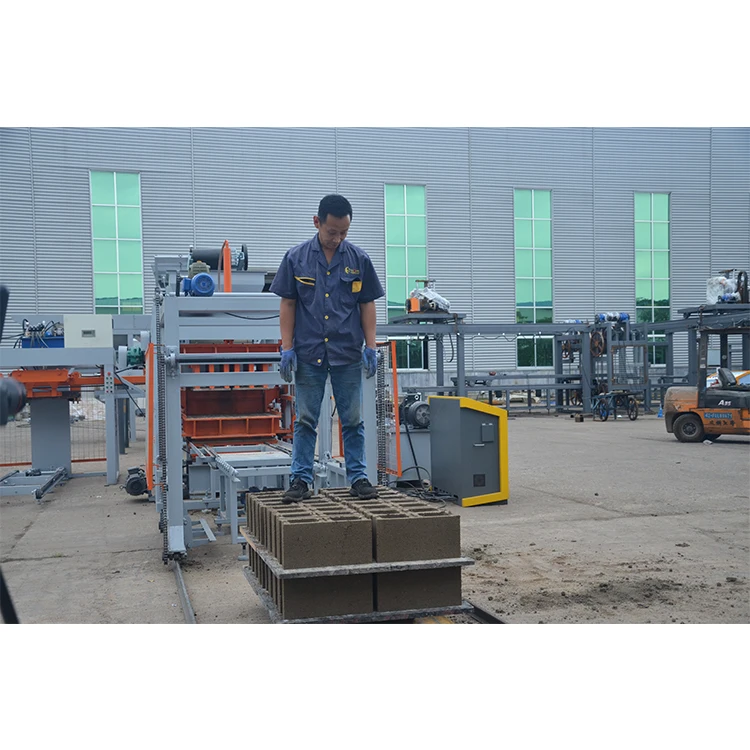
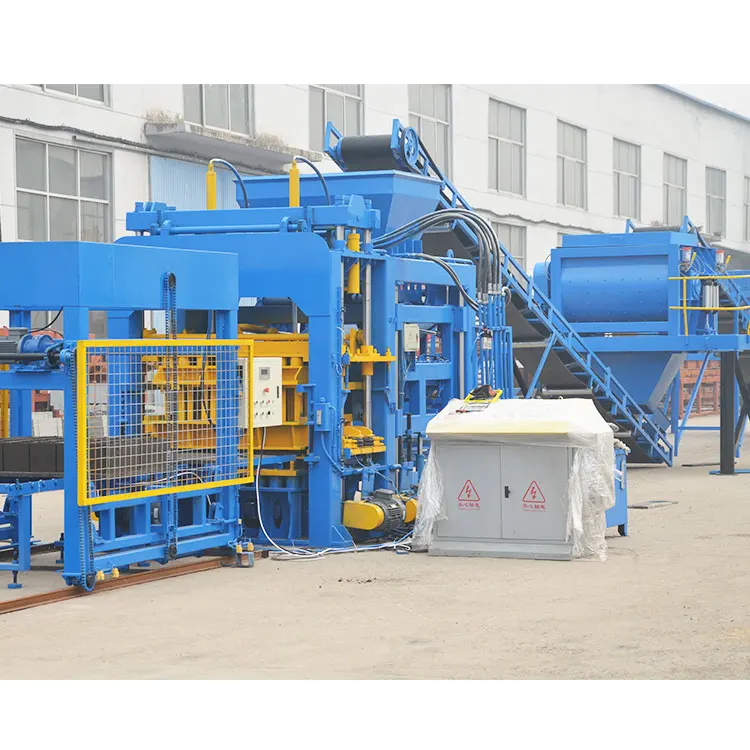
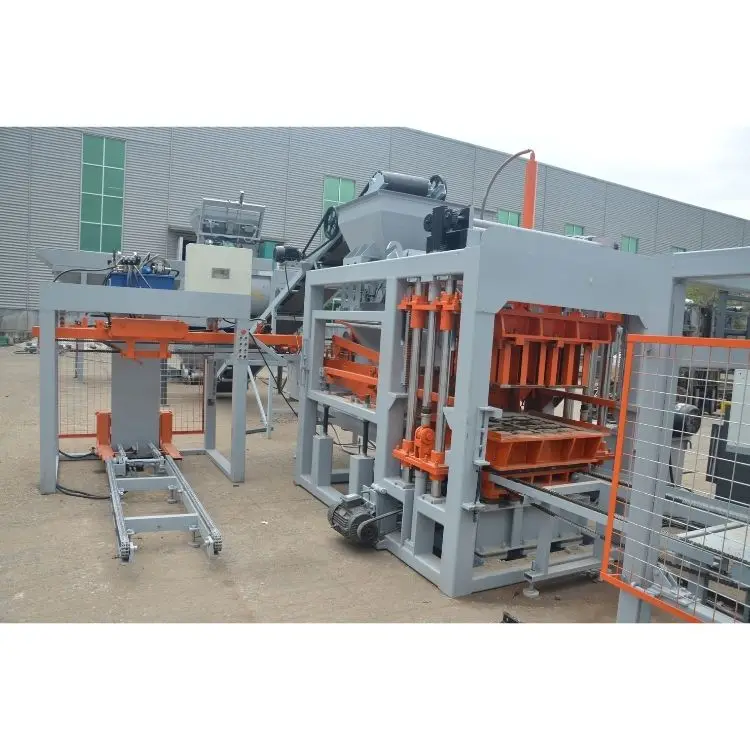
Before narrowing down, a buyer needs to see where the QT12-15 sits within the full automatic block machine range. This model occupies the high-capacity tier, suited to plants targeting daily volumes beyond what semi-automatic or smaller automatic presses deliver. Its gantry frame and 1350 × 850 mm pallet size signal a line that expects dedicated mixing, conveying, and stacking stations rather than hand-fed operation. Buyers moving up from a mobile egg-laying unit or a workshop-scale semi-automatic press will find the investment step corresponds to a plant footprint that includes a batching machine, twin-shaft mixer, and automatic pallet circulation.
Line Equipment That Keeps the Press Fed
A press rated at the QT12-15 level cannot afford idle cycles waiting for material. The compatible PL1200 batching machine and JS500 or JS750 mixer ensure raw material arrives on the 8-metre conveyor belt at a rate the 0.4 m³ storage hopper can absorb without bottleneck. The net wave swing feeding device distributes concrete evenly across the mould cavity, reducing density variation from one pallet to the next. When the entire line — from aggregate bins to stacker — is specified as one matched system, cycle times align and the press operates at its stated capacity rather than waiting on upstream delays [NEED_CITE: block production line synchronization principles].
Reading the Specs That Shape Block Quality
Hydraulic pressure and vibration force together determine the density and compressive strength of every block leaving the press. The QT12-15 delivers 21 MPa rated hydraulic pressure alongside 120 kN exciting force, a combination that compacts low-slump concrete into load-bearing hollow blocks without surface spalling. Vibration frequency adjustable from 2800 to 4500 r/min lets the operator match the resonance to different mould formats — higher frequencies for thin-walled porous blocks, lower frequencies for dense paving units. The cartridge-type manganese steel mould, carburized and quenched, resists abrasive wear from fly ash and crushed stone, extending the interval between mould replacements. Pallet size at 1350 × 850 mm must match the curing area dimensions and forklift capacity already on site; ordering a mismatched pallet leaves the buyer either rebuilding the curing yard or purchasing new handling equipment.

The Hidden Cost of Skipping the Mix-Design Question
Specifying an Automatic Block Making Machine manufacturer without first confirming the buyer’s local aggregate and mix design leads to predictable failures. If the machine is configured for washed river sand but the site only has crushed volcanic rock, the feeding device struggles, block edges chip, and the operator spends each shift adjusting water ratios by hand. Strength targets miss, curing times extend, and the stacking crew handles breakage rather than finished product. I have seen entire project timelines slip because the initial quotation assumed a material the buyer could not source locally [NEED_CITE: aggregate variability effects on concrete block molding].
What Sets This QT12-15 block machine for sale Apart
Block machinery is the sole focus here, so the QT12-15 is supplied as a complete matched system — press, mould, pallet, and handling — rather than assembled from separate vendors. Configuration is set against the buyer’s actual block format, local aggregate, and target daily output, not a catalogue default. Mould design covers every format the buyer’s market sells, and custom drawings are available for non-standard dimensions. Automation level is selectable, allowing a plant to start with semi-automatic pallet handling and add automatic stacking later. Installation support includes operator training on the PLC interface, and mould and hydraulic wear parts are listed in the documentation pack for first-replacement planning.
Documentation & Verification
- Line layout and capacity calculation stating the exact block format assumed for each QT12-15 output figure
- Machine specification sheet confirming voltage, frequency, and PLC display language before production
- Mould drawing and format list showing all block types with cycle time per format
- Factory test record on the buyer’s specified block format, with packing photographs
- CE declaration where applicable to the destination market
- Hydraulic and electrical schematic for local maintenance planning
Installation, Commissioning & Support
- Foundation plan sized to the 9350 × 2520 mm footprint, with anchor bolt positions for the gantry frame
- Electrical circuit rated for 50.7 kW total power, with voltage and frequency locked before shipment
- Factory pre-assembly verified so on-site erection follows a documented sequence
- PLC control commissioning with display language set to the operator’s preference
- Mould change procedure trained on the cartridge-type system to minimize format changeover time
- Wear parts list covering manganese steel mould liners and hydraulic seals for first-year maintenance
- Pallet handling and stacking station calibrated to match the 1350 × 850 mm pallet size
Before You Request a Quote
To size the QT12-15 correctly, share the target block formats, daily output goal, and the local aggregate available at your site. Confirm your plant’s voltage, frequency, and preferred PLC display language so commissioning proceeds without electrical rework. Let us know the curing area dimensions and existing forklift capacity to ensure pallet and stacking equipment align from day one.
Frequently Asked Questions
Q: How is the QT12-15 capacity calculated for each block format?
A: Every output figure states the block dimensions, mould cavity count, and cycle time range. For example, 390×190×190 mm hollow blocks run 12 pieces per mould at a 20–25 second cycle, yielding 13700–17200 pieces per eight-hour shift. No single blended number is used.
Q: Where does the QT12-15 sit compared to smaller automatic or semi-automatic models?
A: It anchors the high-capacity tier, requiring a full line — batching, mixing, conveying, stacking — rather than hand-fed operation. Buyers currently running semi-automatic or mobile presses step up to this tier when daily volume targets exceed what a single-operator station can sustain.
Q: What plant footprint does a complete QT12-15 line require?
A: Beyond the 9350 × 2520 mm press footprint, plan for a PL1200 batcher, JS500 or JS750 mixer, 8-metre conveyor, pallet return system, curing racks sized to the 1350 × 850 mm pallet, and stacker discharge area.
Q: How do I confirm electrical and control specifications before shipment?
A: Voltage, frequency, and PLC display language are confirmed during the quotation stage and locked before production. The specification sheet and factory test record document the agreed settings.
Q: Can the mould be customized for non-standard local block dimensions?
A: Yes. Custom mould drawings are produced to the buyer’s format requirements, with cycle time and cavity count recalculated so the capacity table reflects the actual block being manufactured.

 Semi automatic block