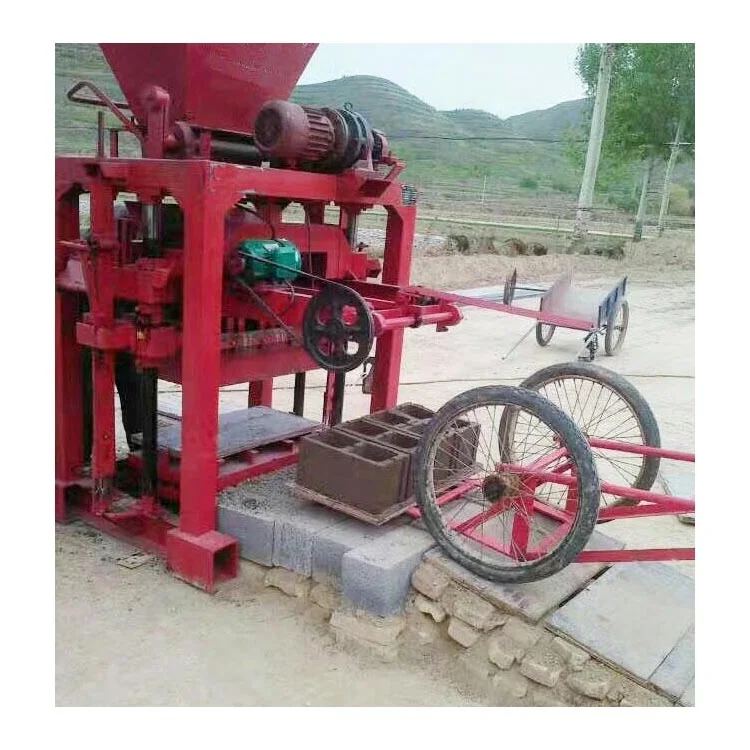
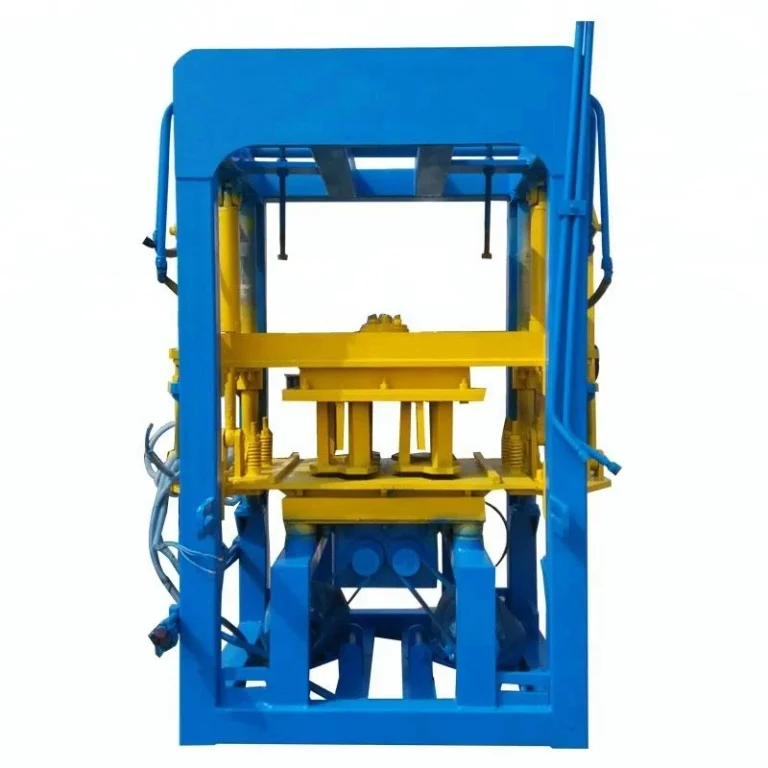
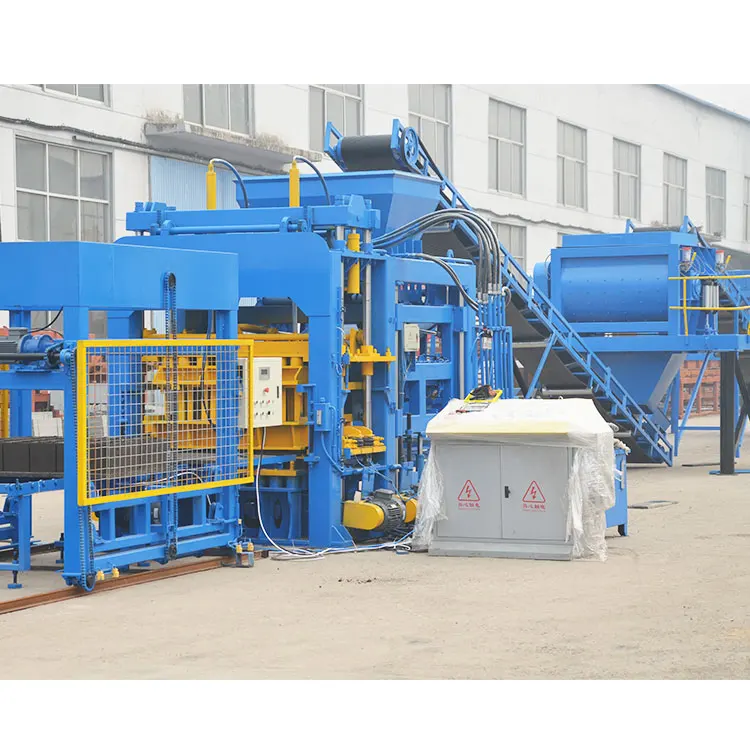
Full-Range Positioning — The QT6-15 block making machine manufacturer offers a mid-tier automatic press where capacity figures are stated per block format, not hidden behind a single headline number.
Technical Specifications
| Parameter |
Value |
| Model |
QT6-15 |
| Product Type |
Automatic Concrete Block Making Machine |
| Molding Way |
Vibration and hydraulic pressing |
| Rated Pressure |
21 MPa |
| Molding Cycle |
15 s – 20 s |
| Pallet Size |
900 × 700 mm |
| Main Machine Weight |
6000 kg |
| Hollow Block Output (400×200×200 mm, 6 pcs/pallet) |
1440 pcs/h, 11 520 pcs/8 h |
| Paving Brick Output (200×100×60 mm, 21 pcs/pallet) |
5040 pcs/h, 40 320 pcs/8 h |
| Solid Brick Output (240×115×53 mm, 32 pcs/pallet) |
7680 pcs/h, 61 440 pcs/8 h |
| Automation Options |
Simple line (mixer, conveyor, stacker) or full line (cement silo, screw conveyor, cement scale, batching machine, pallet loader, block & pallet separator) |
| Supported Formats |
Hollow blocks, solid bricks, paving bricks, curbstones, interlocking bricks |
| Raw Materials |
Cement, sand, fly ash, stone powder, slag |
| Voltage & Frequency |
Customizable to local grid (confirm exact options before order) |
| Control System |
PLC-based (confirm brand, model, and display language) |
| Assembly State |
Partially dismantled for container loading; top cylinder removed due to transport height |
| Warranty |
1 year, excluding wearing parts |
Application Suitability
| Application |
Material or Output |
| Hollow block production for residential and commercial walls |
Cement, sand, fly ash, crushed stone |
| Paving brick manufacturing for walkways and driveways |
Cement, stone powder, slag blends |
| Solid brick runs for load-bearing masonry |
Cement, sand, aggregate mixes |
| Kerbstone and interlocking brick for municipal projects |
Cement, sand, coarse aggregate |
| On-site block production by building contractors |
Locally sourced sand, crusher dust, cement |
What "1,440 Blocks per Hour" Actually Means
Output only matters when you know the format behind the number.
When I first sourced block machines for a construction group, a supplier quoted a headline figure that sounded impressive until we realised it assumed hollow blocks. The moment we switched to paving bricks the real daily total shifted. The concrete block machine for sale here lists separate capacities for hollow blocks at 1 440 pcs/h, paving bricks at 5 040 pcs/h, and solid bricks at 7 680 pcs/h — each tied to a specific pallet pattern and block dimension. This transparency prevents the common shock of a shortfall between quoted and actual daily tonnage [NEED_CITE: common mismatch between quoted and realised block plant output].

Where the QT6-15 Sits Across the Machine Tiers
The QT6-15 occupies the middle of the automatic range. Below it, semi-automatic machines reduce capital outlay but require manual pallet handling, raising labour cost per block. Above it, higher-tier automatic presses add larger pallet sizes and faster cycles, demanding bigger curing areas and deeper foundations. For buyers surveying options before committing, the QT6-15 offers a balance: rated 21 MPa hydraulic pressure with vibration pressing, and a pallet size of 900 × 700 mm that fits standard forklift tines and curing rack bays already common in mid-volume plants.
Scalability From Simple Line to Full Automatic
A first-time entrepreneur may start with the simple configuration — mixer, belt conveyor, manual stacker — keeping initial investment modest while the local market develops. As demand grows, the same QT6-15 block making machine manufacturer can supply the full line add-ons: cement silo, screw conveyor, weigh batcher, pallet loader, and block-pallet separator. The press itself remains unchanged; only the upstream and downstream stations expand. This modular path prevents the costly mistake of over-building a plant on day one, then discovering the local market cannot absorb the extra output [NEED_CITE: typical block plant scale-up stages in Southeast Asia].
Pressure, Vibration, and Pallet Size — Why They Matter Together
The 21 MPa rated pressure works in tandem with the vibration system to compact the mix. Higher pressure alone does not guarantee block strength; the vibration frequency must match the aggregate gradation. A coarse crusher-dust mix needs different vibration energy than a fine fly-ash blend, which is why confirming the local material before finalising the vibration force rating is essential. Equally, the 900 × 700 mm pallet dictates how many blocks form per cycle — six hollow blocks, twenty-one paving bricks, or thirty-two solid bricks — and that pallet must travel from press to curing rack without manual re-stacking. If the curing area is designed for a different pallet footprint, the buyer faces either wasted floor space or a costly pallet exchange programme.
The Hidden Cost of Unconfirmed Electrical Specs
Early in my career I shipped a press to a site with a 415 V grid while the machine was wired for 380 V. The motor burnt out on the first day, and a replacement took three weeks to arrive. Voltage and frequency must be confirmed before production begins — not after the machine lands. The same applies to PLC display language; operators who cannot read the control screen make parameter errors that show up as inconsistent block density. Always request written confirmation of voltage, frequency, and HMI language in the purchase documentation [NEED_CITE: electrical standard mismatches in exported industrial machinery].
Why Source This Range Here
Block machinery is our single focus, so the QT6-15 is specified as one matched system — press, moulds, pallets, and handling — rather than assembled from separate suppliers. Configuration starts from your actual mix design and target format, not a catalogue default. Custom mould drawings are available when your market sells a non-standard block. Automation level is selectable, so you can begin semi-automatic and add full line stations later. Installation support includes operator training on the specific PLC fitted to your machine. Factory test records are captured on your chosen block format before dispatch.
Documentation & Verification
- Line layout showing the block format assumed in the capacity calculation
- Machine spec sheet listing hydraulic pressure, vibration force, and cycle per format
- Mould drawing and format list confirming included and optional moulds
- Voltage, frequency, and PLC display language written confirmation
- Factory test record on your selected block format before shipment
- Packing photographs and customs documentation support
Installation, Commissioning & Support
- Foundation plan matched to the 6 000 kg main machine weight and vibration load
- Dedicated power circuit sized for confirmed voltage and frequency before machine arrival
- Top hydraulic cylinder re-assembled on site after container-height dismantling
- PLC parameter set-up for your local aggregate and target block density
- Operator training covering mould change, pallet loading, and daily maintenance routines
- Wear parts and mould replenishment list provided at commissioning
What to Share With Your Enquiry
To size the line accurately, provide the block formats your market demands, the daily volume you plan to reach, and the local aggregate types available. Include your site’s grid voltage and frequency so the motor and control panel can be specified correctly. If you already operate forklifts or curing racks, share the pallet dimensions they accommodate — this avoids a mismatch when the 900 × 700 mm pallets arrive.
Frequently Asked Questions
Q: How does QT6-15 output differ across block formats?
A: Hollow blocks at 400×200×200 mm yield 1 440 pcs/h (6 per pallet), paving bricks at 200×100×60 mm yield 5 040 pcs/h (21 per pallet), and solid bricks at 240×115×53 mm yield 7 680 pcs/h (32 per pallet). Each figure assumes continuous operation at the stated cycle time with matched mould and pallet.
Q: Where does the QT6-15 sit between semi-automatic and full automatic tiers?
A: It is a mid-tier automatic press. Semi-automatic models lower upfront cost but need manual pallet handling. Higher automatic tiers add larger pallets and faster cycles, requiring bigger curing space. The QT6-15 balances output with a footprint suited to growing plants.
Q: Can I start with a simple line and add automation later?
A: Yes. The simple configuration includes mixer, conveyor, and stacker. Later you can add cement silo, batching machine, pallet loader, and separator without replacing the press. The QT6-15 block making machine manufacturer supplies each upgrade module as a separate package.
Q: What electrical details must I confirm before production?
A: Provide your site voltage, frequency, and preferred PLC display language. The motor winding and control panel are built to these values. Written confirmation before fabrication avoids on-site rewiring and commissioning delays.
Q: Does the quotation cover pallet handling and stacking?
A: The simple line covers mixer, conveyor, and manual stacker. Full automatic options include pallet loader, block-pallet separator, and cubing station. Specify your preferred automation level so the scope of delivery matches your labour plan.

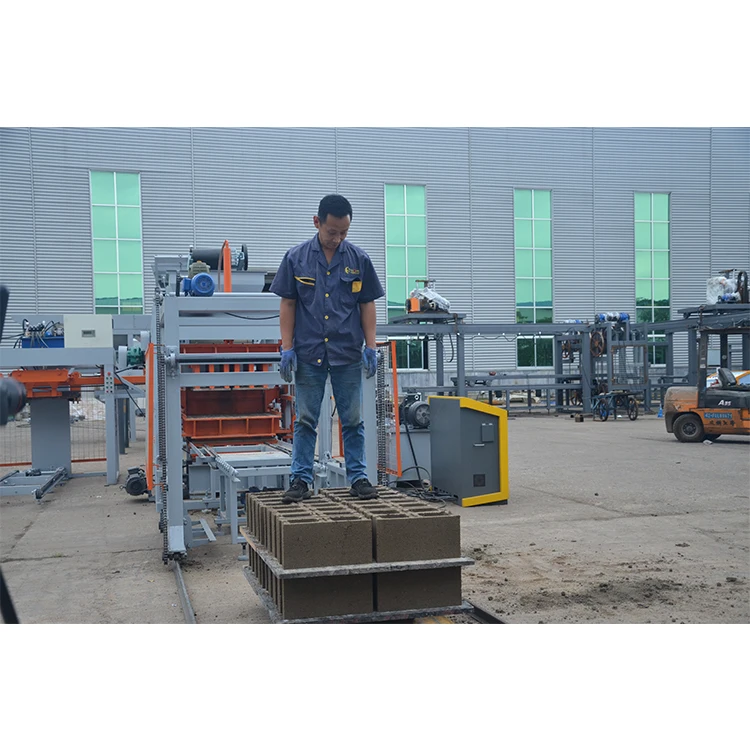
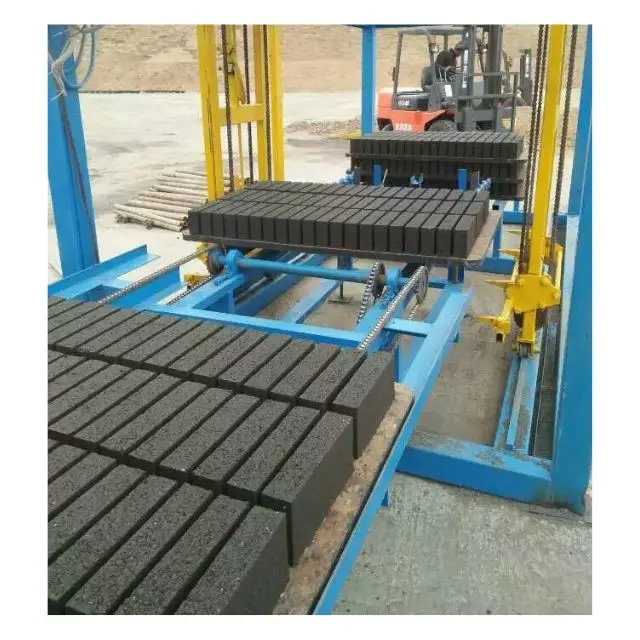 Semi automatic block