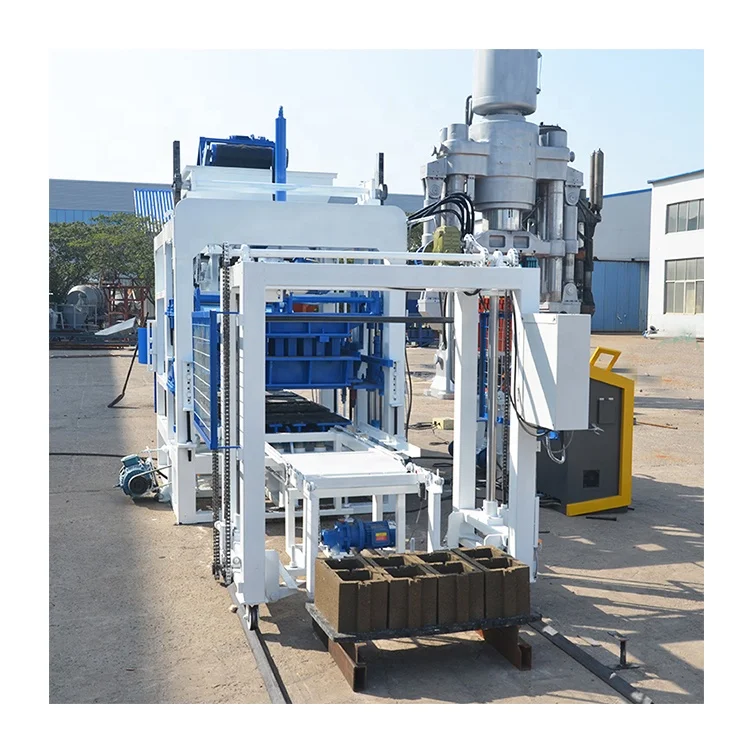
Matched System Specified — every output figure below ties directly to a named block format, mould cavity count, and cycle range, so the QT10-15 is evaluated as a complete press-and-handling package rather than a standalone number.
Technical Specifications
| Parameter |
Value |
| Model |
QT10-15 |
| Product Type |
Automatic Concrete Block Making Machine |
| Control System |
PLC control cabinet |
| Hydraulic System |
Independent integrated hydraulic station |
| Vibration Mode |
Vertical station mode resonance, automatic FM-AM |
| Mould Change |
Simple replacement of mould for multi-function production |
| Component List |
Pallet feed machine, block making machine, storage hopper, conveyor, hydraulic unit, PLC control cabinet |
| Cycle Time (400×200×200mm hollow block) |
15–20 s |
| Output (400×200×200mm hollow block, 10 pcs/mould) |
1,800–2,400 pcs/h, 14,400–19,200 pcs/8 h shift |
| Cycle Time (400×150×200mm block) |
15–20 s |
| Output (400×150×200mm block, 12 pcs/mould) |
2,160–2,880 pcs/h, 17,280–23,040 pcs/8 h shift |
| Cycle Time (240×115×53mm solid brick) |
15–20 s |
| Output (240×115×53mm solid brick, 62 pcs/mould) |
8,928–11,160 pcs/h, 71,424–89,280 pcs/8 h shift |
| Cycle Time (200×100×60mm paving block) |
20–25 s |
| Output (200×100×60mm paving block, 27 pcs/mould) |
5,184–6,480 pcs/h, 41,472–51,840 pcs/8 h shift |
| Cycle Time (225×112.5×60mm interlocking brick) |
20–25 s |
| Output (225×112.5×60mm interlocking brick, 24 pcs/mould) |
4,032–5,040 pcs/h, 32,256–40,320 pcs/8 h shift |
| Automation Level |
Automatic |
| Warranty |
1 year for whole machine (excluding spare parts) |
| Assembly State |
Factory-assembled, dismantled for container shipment |
| Payment Terms |
30% T/T deposit, 70% balance before delivery |
Application Suitability
| Application |
Material or Output |
| Hollow block production for structural walls |
Crushed stone, sand, cement, water — 400×200×200mm format, 10 cavities |
| Standard solid brick for load-bearing masonry |
Local aggregate blended with cement — 240×115×53mm format, 62 cavities |
| Paving block for driveways and walkways |
Fine aggregate and pigment mix — 200×100×60mm format, 27 cavities |
| Interlocking brick for retaining walls |
Coarse aggregate and cement — 225×112.5×60mm format, 24 cavities |
| Multi-format concrete product plants |
Mould swap across hollow, solid, paving, and interlocking within one shift |
What "Pieces per Hour" Really Means on a QT10-15 Line
A capacity number without a block format is just a marketing placeholder — here every figure is anchored to a specific mould and cycle window.
I have watched buyers sign off on a quoted hourly rate, then watch the first production week fall far short because the quoted figure assumed a hollow block while they were actually running pavers. On the QT10-15, the difference between a 400×200×200mm hollow block at 15–20 seconds and a 200×100×60mm paving block at 20–25 seconds shifts daily output substantially over an eight-hour run. The automatic concrete block making machine manufacturer must state which format each capacity figure assumes, otherwise the buyer is planning a curing yard around a number that never materialises [NEED_CITE: block format assumptions in capacity quoting].

Where the QT10-15 Sits in the Full Machine Range
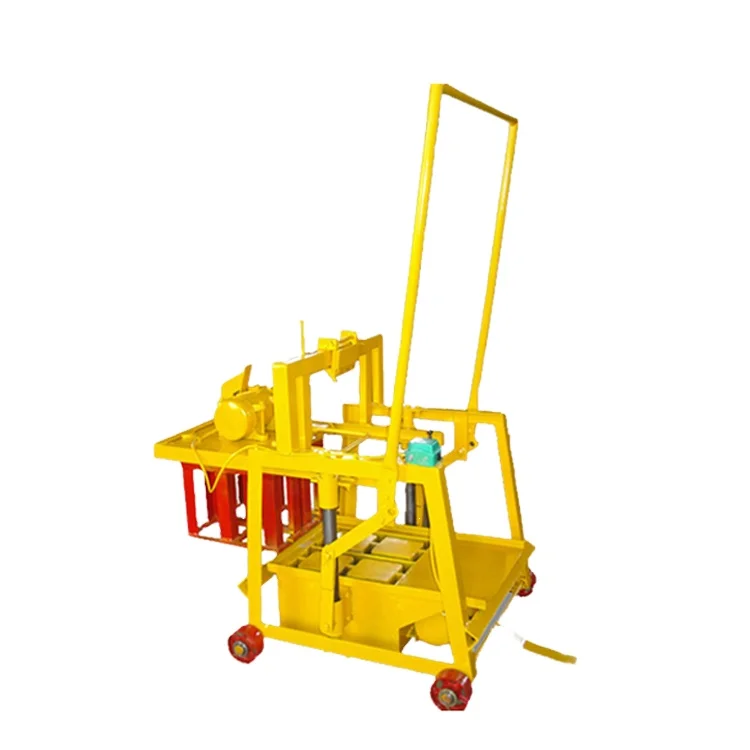
The Shiyue lineup spans mobile egg-laying units for on-site work, semi-automatic presses for smaller workshops, and fully automatic high-capacity lines like this one. The QT10-15 occupies the upper automatic tier, aimed at plants that need consistent eight-hour shifts across multiple formats. Buyers evaluating their first fixed plant or replacing an older semi-automatic press can use this model as the reference point for what a complete automatic line demands in footprint and auxiliary equipment.
Matching Automation Tier to Your Actual Output Requirement
Choosing between a semi-automatic model and the QT10-15 depends less on budget and more on whether your curing area, forklift fleet, and labour plan can absorb the output of a fully automatic line. A semi-automatic press leaves pallet handling and stacking to operators; the QT10-15 automates pallet feeding and integrates with downstream stacking. If your site is not ready to move that volume of wet blocks off the line each hour, the higher tier simply creates a bottleneck at the curing rack [NEED_CITE: curing area sizing for automatic block lines].
How Vibration, Pressure, and Mix Design Intersect on the Press
The vertical station mode resonance system with automatic FM-AM adjusts vibration frequency and amplitude during the compaction stroke, which matters when you switch from a lightweight hollow block to a dense paving format. The independent hydraulic station sits apart from the main vibration zone, reducing oil contamination from concrete dust and extending seal life. Cycle times of 15–20 seconds for hollow and solid formats versus 20–25 seconds for pavers reflect the additional compaction energy needed for higher-density products. Mould change involves straightforward mechanical replacement rather than hydraulic recalibration, keeping format switches within a fraction of a shift when the operator is trained.
The Cost of Skipping the Aggregate Sample Before You Order
I once supported a site where the buyer ordered a high-capacity automatic press based on catalogue numbers, then fed it river sand with a clay content far above what the vibration profile was set for. The blocks cracked during curing and the mould liners wore through in weeks. Had the aggregate sample been tested before the hydraulic pressure and vibration frequency were locked in, the machine could have been configured to match. This is why sending a local material sample before finalising the QT10-15 configuration prevents costly re-commissioning after arrival [NEED_CITE: aggregate testing for block mix design].
Why Buyers Source This Automatic Concrete Block Making Machine Manufacturer
Shiyue treats the press, mould, pallet, and handling equipment as one specified system rather than separate purchases bolted together. Configuration is set against the buyer’s actual mix design and target block format instead of a default catalogue page. Mould design covers the formats the local market demands, including custom drawings when standard cavity layouts do not fit. Automation level is selectable, allowing a plant to begin with a simpler pallet-handling arrangement and add stacking later. Installation support includes operator training so the crew understands mould change procedure and PLC navigation from day one.
Documentation & Verification
- Line layout showing pallet flow from feeder through press to stacking zone for the QT10-15 footprint
- Capacity calculation sheet listing output per block format with mould cavity count and cycle assumption
- Mould drawing package confirming cavity dimensions and wear liner material for each ordered format
- Hydraulic and electrical schematic matching the independent station and PLC cabinet actually shipped
- Voltage, frequency, and PLC display language confirmation signed off before production begins
- Factory test record running the buyer’s specified block format before dismantling for container loading
Installation, Commissioning & Support
- Foundation plan sized for the QT10-15 press weight and vibration isolation requirements
- Dedicated electrical circuit matching confirmed voltage and frequency before the PLC cabinet is energised
- Machine arrives dismantled for container shipment and is reassembled on-site with factory guidance
- First-run commissioning includes vibration frequency and hydraulic pressure adjustment to the buyer’s mix
- Operator training covers PLC navigation, mould change sequence, and daily greasing points on the press
- Wear parts list identifies mould liners, hydraulic seals, and vibration springs with reorder part numbers
Before You Request a Quote
To position the QT10-15 correctly within the range, share the block formats your market actually buys, the daily volume you plan to run, and the aggregate sources available near your site. Include your local voltage and frequency so the PLC cabinet and motor starters are built to match. If you already operate curing racks and forklifts, note the pallet dimensions you are using so the feeder and handling system align without modification.
Frequently Asked Questions
Q: How does QT10-15 output differ between hollow blocks, solid bricks, and paving blocks?
A: Each format has a distinct cycle window and mould cavity count. A 400×200×200mm hollow block runs at 15–20 seconds with 10 cavities, while a 200×100×60mm paver runs at 20–25 seconds with 27 cavities. Daily output shifts accordingly, so planning should always reference the specific format you intend to produce most.
Q: Where does this model sit compared to semi-automatic and mobile options?
A: The QT10-15 is in the high-capacity automatic tier, designed for fixed plants running full shifts. Semi-automatic models suit lower volumes where manual pallet handling is acceptable, and mobile egg-laying machines work for on-site production without a fixed curing yard. The right choice depends on your daily target and site infrastructure.
Q: What plant footprint does a QT10-15 automatic line need?
A: Beyond the press itself, you need space for raw material storage, the pallet feed machine, a curing area sized for eight hours of output, and room for forklift circulation. The line layout document provided before order maps each station so you can verify your site dimensions against the actual equipment footprint.
Q: Can automation level be upgraded after the QT10-15 is installed?
A: The system allows progression from simpler pallet handling to full automatic stacking and cubing. The PLC cabinet and hydraulic station are specified to accommodate later additions, so upgrading does not require replacing the core press. Discuss the upgrade path during initial configuration to ensure the electrical and hydraulic capacity is reserved.
Q: What is the investment gap between this tier and smaller workshop machines?
A: The difference extends beyond the press price to include pallet inventory, curing yard size, and electrical supply capacity. A smaller semi-automatic model reduces initial outlay but requires more manual labour per shift. Buyers should compare total operating cost across the first year rather than the machine price alone [NEED_CITE: total cost of ownership for block plant tiers].

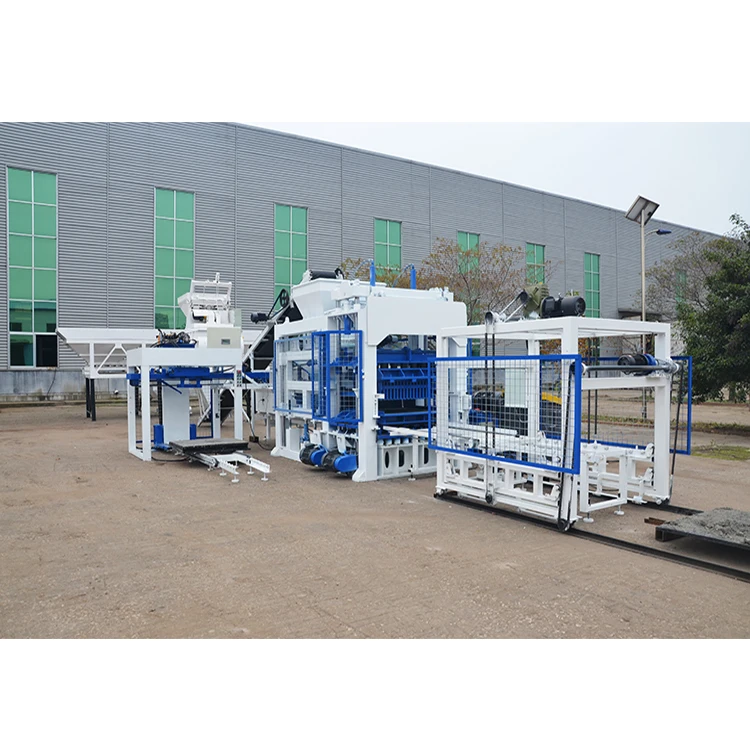
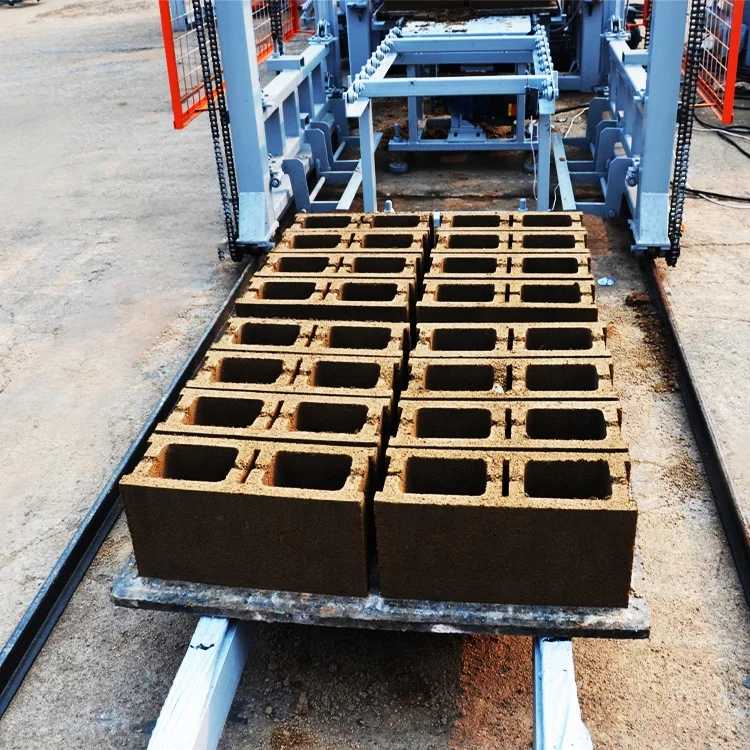 High quality block machine