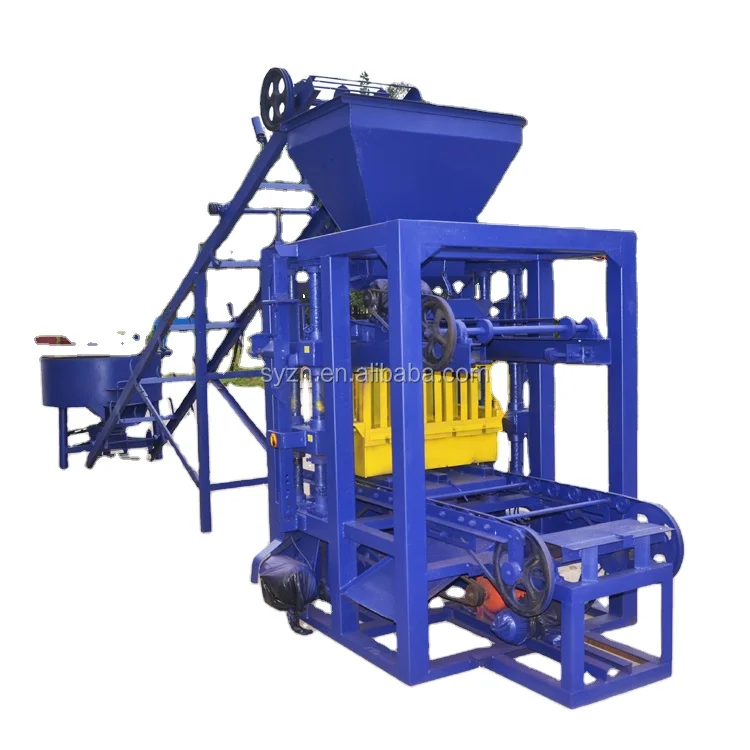
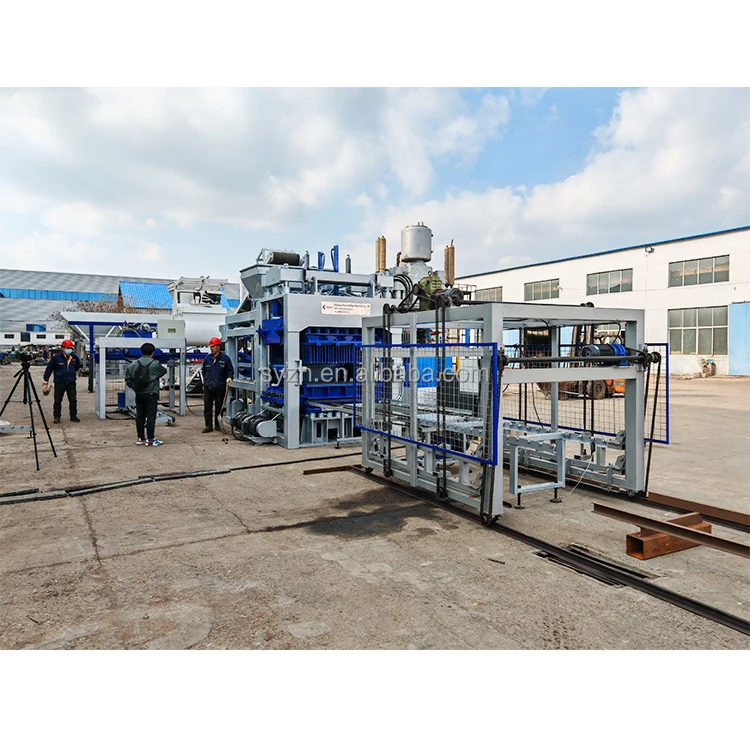
Matched System Design — the QT10-15 is specified as a complete block line where press, mould, pallet and handling are sized together rather than assembled from separate suppliers, so cycle times match across stations.
Technical Specifications
| Parameter |
Value |
| Model |
QT10-15 |
| Product Type |
Automatic Cement Block Making Machine |
| Control System |
PLC control cabinet |
| Hydraulic System |
Independent integrated hydraulic station |
| Automation Level |
Automatic |
| Mould Change System |
Simple replacement for multi-function production |
| Cycle Time (400×200×200mm hollow block) |
15–20 s |
| Cycle Time (400×150×200mm hollow block) |
15–20 s |
| Cycle Time (240×115×53mm solid brick) |
15–20 s |
| Cycle Time (200×100×60mm paving block) |
20–25 s |
| Cycle Time (225×112.5×60mm paving block) |
20–25 s |
| Output (400×200×200mm hollow block) |
1,800–2,400 pcs/hour (basis: 10 pcs per cycle) |
| Output (400×150×200mm hollow block) |
2,160–2,880 pcs/hour (basis: 12 pcs per cycle) |
| Output (240×115×53mm solid brick) |
8,928–11,160 pcs/hour (basis: 62 pcs per cycle) |
| Output (200×100×60mm paving block) |
5,184–6,480 pcs/hour (basis: 27 pcs per cycle) |
| Output (225×112.5×60mm paving block) |
4,032–5,040 pcs/hour (basis: 24 pcs per cycle) |
| Core Components |
Pallet feed machine, block making machine, storage hopper, conveyor, hydraulic unit, PLC control cabinet |
| Rated Power |
(basis to be confirmed) |
| Voltage & Frequency |
(basis to be confirmed) |
| Pallet Size |
(basis to be confirmed) |
| Overall Dimensions |
(basis to be confirmed) |
| Warranty |
1 year (excluding spare parts) |
| Standards |
CE declaration available where applicable |
Application Suitability
| Application |
Material or Output |
| Hollow block production |
Cement, crushed stone, sand and aggregate mixes for 400×200×200mm and 400×150×200mm formats |
| Solid brick production |
Dense concrete mixes for 240×115×53mm standard bricks |
| Paving block production |
Fine aggregate and pigment mixes for 200×100×60mm and 225×112.5×60mm formats |
| Multi-format block manufacturing |
Mould-change capable production across hollow, solid, paving and interlocking formats on a single line |
| Contractor on-site and plant production |
Automatic-tier output for first-time plants and capacity upgrades within an existing facility |
Why "Pieces per Hour" Means Nothing Without a Format Attached
Real daily output depends on which block format you actually run, not the highest cycle figure on a quotation.
Many buyers in this segment discover after commissioning that the capacity number they were quoted assumed a small, fast-cycling paving brick, while their market runs mostly hollow blocks at a slower cycle. The gap between expectation and reality can be significant enough to affect raw material ordering, curing space allocation and delivery commitments to construction sites. The QT10-15 capacity figures above are therefore stated per format, with mould quantity and cycle time for each, so a buyer comparing this automatic block making machine manufacturer range against other tiers can see exactly where the numbers come from [NEED_CITE: block format assumptions in machinery capacity quotations].

Where the QT10-15 Sits in the Full Range
The Shiyue machine line covers semi-automatic presses for small workshop volumes, mobile and egg-laying units for site production without a fixed plant, and fully automatic stations like the QT10-15 at the higher end. This model belongs to the high-capacity automatic tier, intended for buyers whose daily output requirement and market breadth justify the investment in PLC control, automatic pallet feeding and integrated hydraulic systems. A first-time entrepreneur with a single format and a modest curing yard may find the semi-automatic tier a more proportional starting point, while a plant owner already running a smaller automatic line will see the QT10-15 as a capacity step-up that keeps the same block formats but raises throughput per shift.
How Automation Level Shapes the Rest of the Line
Choosing the QT10-15 as your automatic block making machine manufacturer selection means the surrounding stations — pallet feeding, stacking, curing rack handling — must be specified at the same cadence. If the press cycles every 15–20 seconds but the pallet return loop is undersized, the press sits idle and the quoted output is never reached. The emphasis at this tier is not the press alone but the line as a matched system, where raw material feed, mixing and cubing keep pace without manual intervention. Buyers upgrading from semi-automatic operation will notice the difference most in pallet handling and stacking, tasks that previously required two or three operators per shift [NEED_CITE: pallet handling bottlenecks in block plant upgrades].
What the Specs Actually Mean on the Factory Floor
The independent integrated hydraulic station is mounted away from the press vibration zone, which matters because hydraulic valve spools exposed to constant high-frequency vibration wear prematurely and introduce inconsistent pressing force. The PLC control cabinet runs the full production sequence from feed through vibration to pallet discharge, reducing operator dependency and keeping cycle times within the 15–25 second range across formats. The mould change system uses simple replacement rather than tooling-intensive adjustment, meaning a format switch from hollow block to paving block does not cancel out an entire shift — a practical concern for plants that serve multiple construction projects simultaneously. Pallet size, while listed as to be confirmed, must be checked against the curing area and forklift the buyer already has before production begins, because a mismatch here forces either a costly forklift change or reduced stacking density in the curing yard.
The Cost of Specifying the Wrong Tier
A buyer who chooses a machine one tier below their actual volume requirement will discover the constraint not at the press but at the stacking and curing end, where hand-stacking becomes a bottleneck and overtime costs erode margins. Conversely, selecting a tier far above current market demand ties capital in unused automation and a larger plant footprint than necessary. The pain points repeat across markets: mould change taking most of a shift, pallet handling not included in the original quotation, voltage and PLC language confirmed too late for commissioning to proceed on arrival. Every one of these is avoidable if the configuration conversation happens before the order is placed rather than after the machine lands at the port [NEED_CITE: common commissioning delays in imported block machinery].
Why Buyers Place This Machine in Their Line
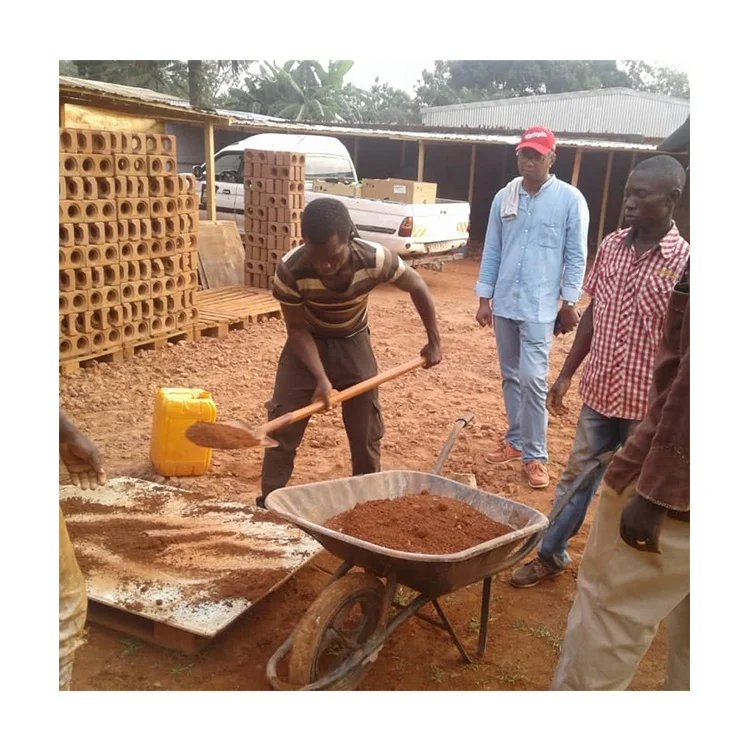
Block machinery is the single focus here, so the QT10-15 is not assembled from a press supplier, a separate mould maker and a third-party conveyor vendor — the entire line is specified as one system. Configuration is set against the buyer’s actual mix design and local aggregate rather than a catalogue default, which matters when a Middle Eastern site discovers their aggregate has a high clay content and vibration parameters must be adjusted. Mould design covers the formats the buyer’s market sells, including custom drawings for non-standard formats. The automation level is selectable within the range, so a buyer can commission the QT10-15 in a semi-automatic configuration and upgrade stacking and cubing later as market volume grows. Installation support includes operator training, and the factory test record is generated on the buyer’s target block format before dispatch.
Documentation & Verification
- Line layout and capacity calculation stating output per block format for the QT10-15
- Machine specification sheet covering hydraulic pressure, vibration force and PLC configuration
- Mould drawing and format list confirming every block shape the buyer’s market requires
- Voltage, frequency and PLC display language confirmation document before production
- Factory test record run on the buyer’s target format before dispatch
- Operation and maintenance manual with wear parts and mould replacement list
Installation, Commissioning & Support
- Foundation plan matching the QT10-15 footprint and vibration isolation requirements
- Dedicated electrical circuit sized to the confirmed rated power and voltage specification
- Machine dismantling for container loading with reassembly supervision on site
- First-run commissioning with cycle time verification on each target block format
- Operator training covering PLC interface, mould change procedure and daily maintenance points
- Wear parts and hydraulic seal list supplied with initial shipment for early replacements
What to Prepare Before Inquiry
Buyers evaluating the QT10-15 within this automatic block making machine manufacturer range should have a few specifics ready: the target block formats and daily output required per format, the local raw material and aggregate characteristics including moisture and clay content, and the existing or planned curing area dimensions. Confirming the site voltage and frequency, along with the preferred PLC display language, at inquiry stage prevents commissioning delays later. If the buyer already operates pallets and forklifts, their sizes should be shared so the pallet feed and stacking stations are specified to match.
Frequently Asked Questions
Q: How do I verify the real daily output of the QT10-15 for my specific block format?
A: Request a capacity calculation sheet that states the assumed block format, mould quantity per cycle and cycle time. Compare those figures against your shift length and curing capacity rather than relying on a single headline number that may assume a different format entirely.
Q: Where does the QT10-15 sit compared to semi-automatic or higher-tier automatic lines?
A: It occupies the high-capacity automatic tier, suitable for plants needing multi-format flexibility with PLC control and automatic pallet feeding. Buyers with lower volume or a single format may find the semi-automatic tier proportional, while those targeting continuous high-volume output may look at a higher tier with integrated cubing.
Q: When should I confirm voltage, frequency and PLC language options?
A: At inquiry stage, before the production order is released. The QT10-15 PLC cabinet and electrical components are configured to the buyer’s site specifications, and late confirmation delays both factory testing and on-site commissioning after arrival.
Q: What is included beyond the block press itself in the QT10-15 quotation?
A: The standard scope covers the pallet feed machine, storage hopper, conveyor, hydraulic unit and PLC control cabinet. Automatic stacking, curing rack handling and cubing are configurable additions; confirm which stations are included so that hand-stacking does not become an unplanned bottleneck.
Q: What is the typical lead time and how is the QT10-15 prepared for shipment?
A: Lead time involves a production and factory test period followed by container loading with machine dismantling for transport. Confirm dispatch timing and packing details at quotation stage so that shipping schedules and port arrival estimates align with the project deadline.

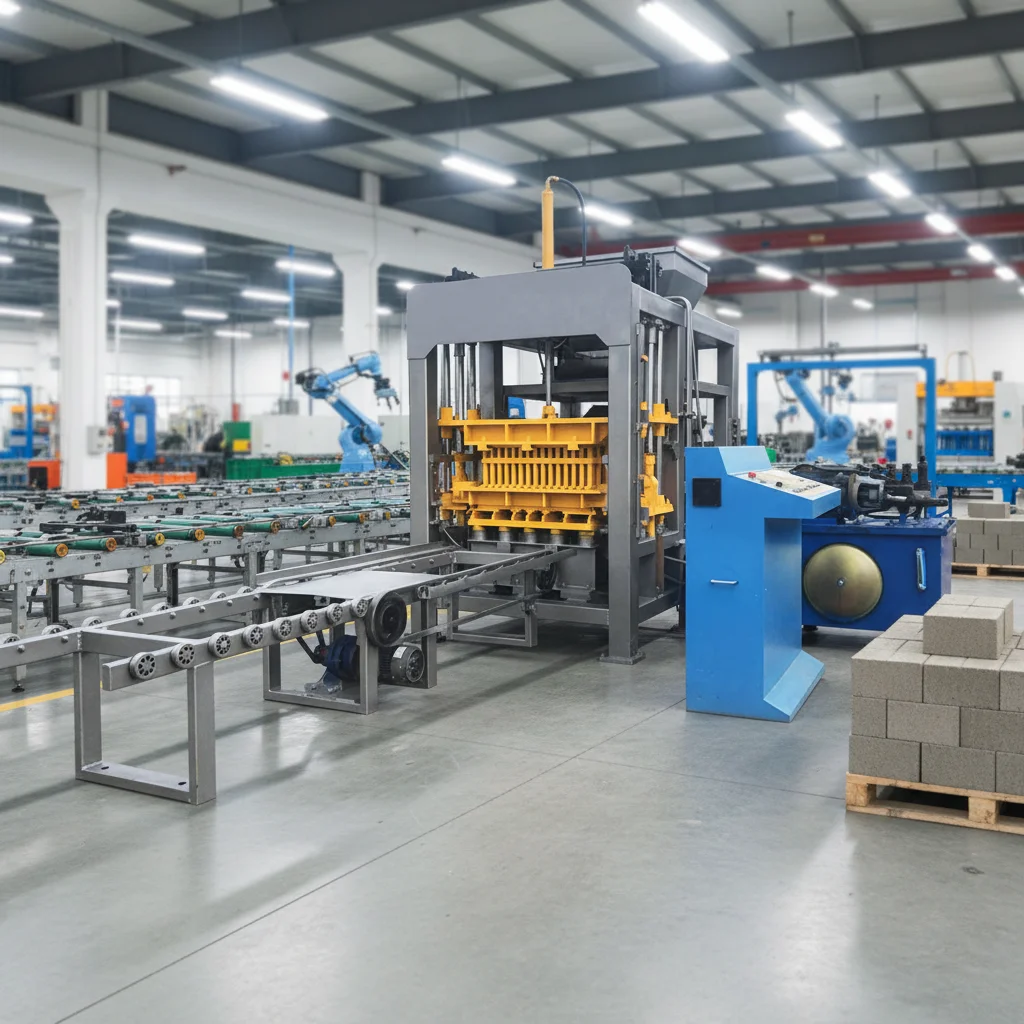
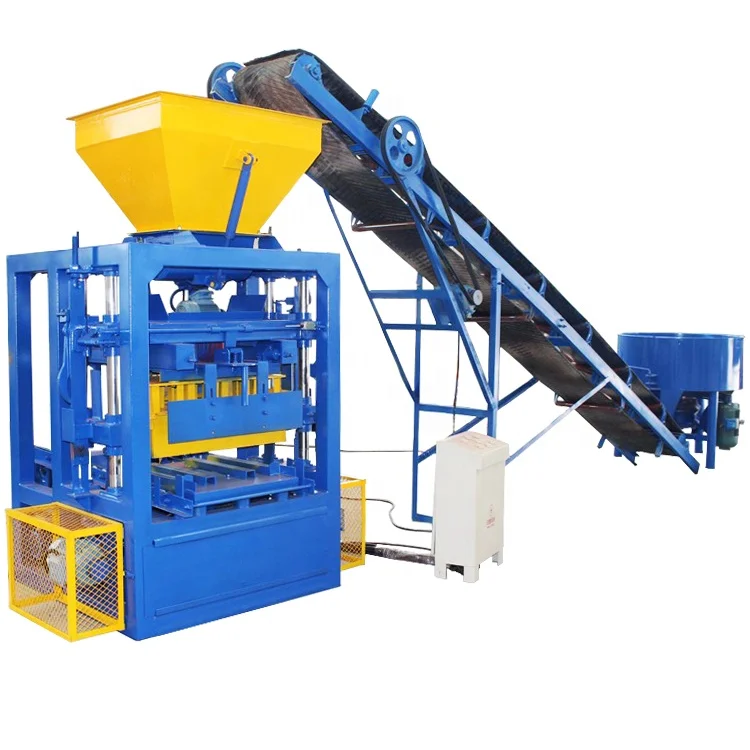 High quality block machine