Matched system supply — machine, mould, pallet and mixer specified together so the QTJ4-26 performs as expected on your local aggregate and block format.
Technical Specifications
| Parameter |
Value |
| Model |
QTJ4-26 |
| Product Type |
Concrete Block Making Machine |
| Overall Dimensions (L×W×H) |
2060×1730×2580 mm |
| Molding Cycle |
26 s |
| Vibration Frequency |
4200 r/min |
| Vibration Force |
35.5 kN |
| Rated Power |
14.25 kW |
| Mixer Model |
JQ350 |
| Pallet Size |
850×450×20 mm |
| Net Weight |
1800 kg |
| Automation Level |
Semi-automatic, four guide pillars |
| Applied Products |
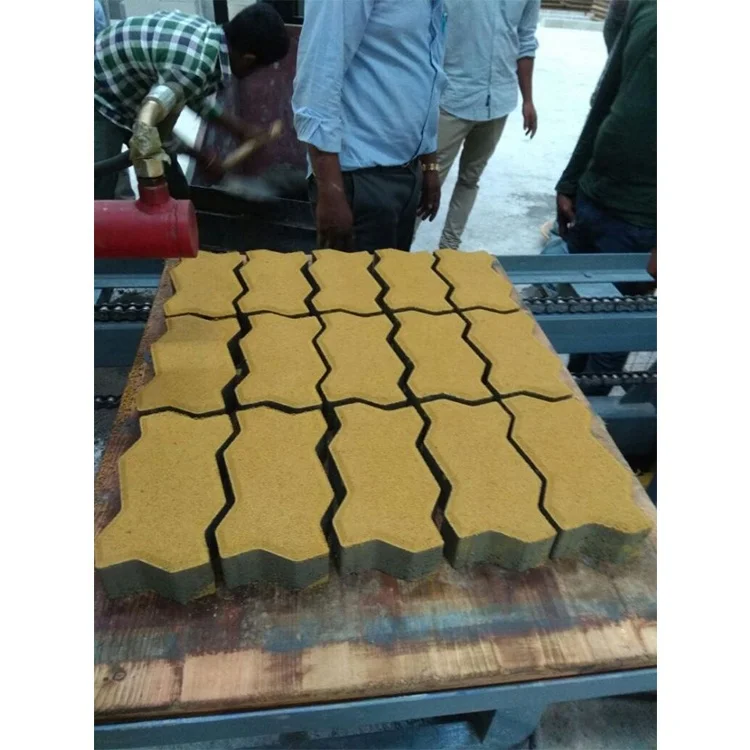
Hollow block (8 inch, 6 inch), solid brick, interlocking brick |
| Raw Materials |
Crushed stones, sand, cement, dust, fly ash |
| Output Capacity |
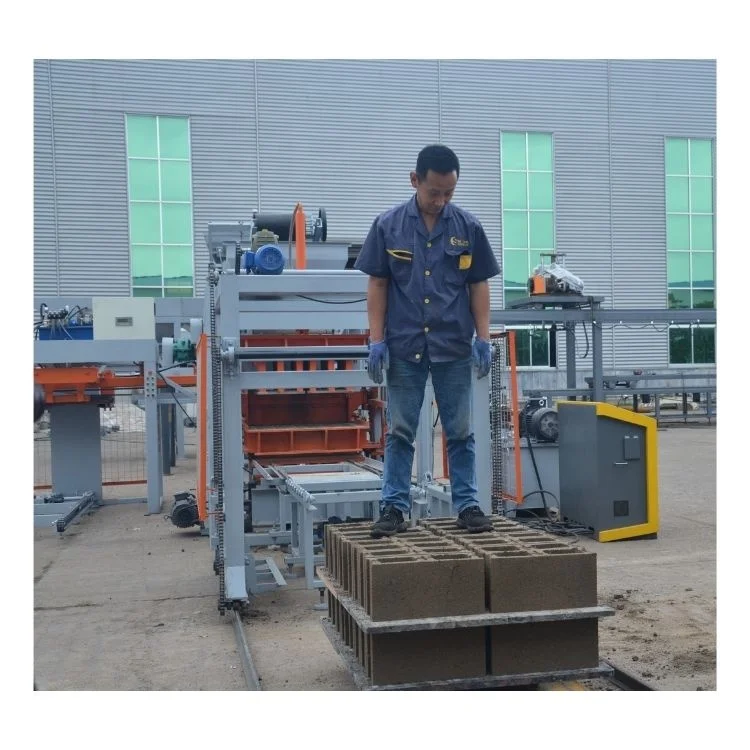
480 pcs/h (basis: 390×190×190 mm hollow block, 4 pcs/mould) |
| Output Capacity |
600 pcs/h (basis: 400×150×200 mm hollow block, 5 pcs/mould) |
| Output Capacity |
2100 pcs/h (basis: 240×115×53 mm solid brick, 18 pcs/mould) |
| Voltage & Frequency |
Configurable to buyer’s site requirement |
Application Suitability
| Application |
Material or Output |
| Small-to-medium block production plants |
Hollow blocks, solid bricks, interlocking bricks from local aggregates |
| On-site production for construction contractors |
Hollow blocks from crushed stone, sand and cement to cut transport costs |
| Entrepreneurs setting up a first block plant |
Semi-automatic hollow and solid brick production with upgrade path |
| Building material distributors |
Multiple formats including 8 inch hollow block and standard solid brick |
Why "480 Pieces per Hour" Means Nothing Without the Format
Capacity is tied to the mould, not the press.
Sellers quote a single hourly figure as if it covers every block type the machine can make. In my years in Linyi, I have watched buyers receive a QTJ4-26 block machine manufacturer specification sheet showing 2100 pieces per hour, then feel misled when their actual hollow block output was closer to 480. The difference is the mould: 18 solid bricks per cycle versus 4 hollow blocks. Neither figure is wrong, but quoting only the highest number hides the real production reality. The QTJ4-26 block machine manufacturer capacity must always be read against the exact block format you intend to produce [NEED_CITE: block format and cycle time relationship in semi-automatic production].

Where the QTJ4-26 Fits in the Full Machine Range
The QTJ4-26 occupies the entry-to-mid tier. Semi-automatic operation with four guide pillars keeps the initial investment manageable while removing the heaviest manual steps from the operator. Buyers who need consistent daily hollow block output without the footprint and capital of a fully automatic stacking line usually land here. The machine can later be paired with additional pallet handling and stacking equipment as volume grows.
Deciding Between Semi-Automatic and Fully Automatic
The choice depends on daily volume and available labour. A fully automatic line handles pallet feeding, stacking and cubing without operator intervention, which makes sense for plants running multiple shifts. The QTJ4-26 asks the operator to manage pallet movement manually, a reasonable trade-off when output targets are moderate and the crew is small. If your curing area is limited and you cannot justify a full stacking system yet, the semi-automatic tier keeps overhead low while still delivering uniform block density [NEED_CITE: labour and automation level considerations for block plants].
Vibration, Pressure and the 26-Second Cycle
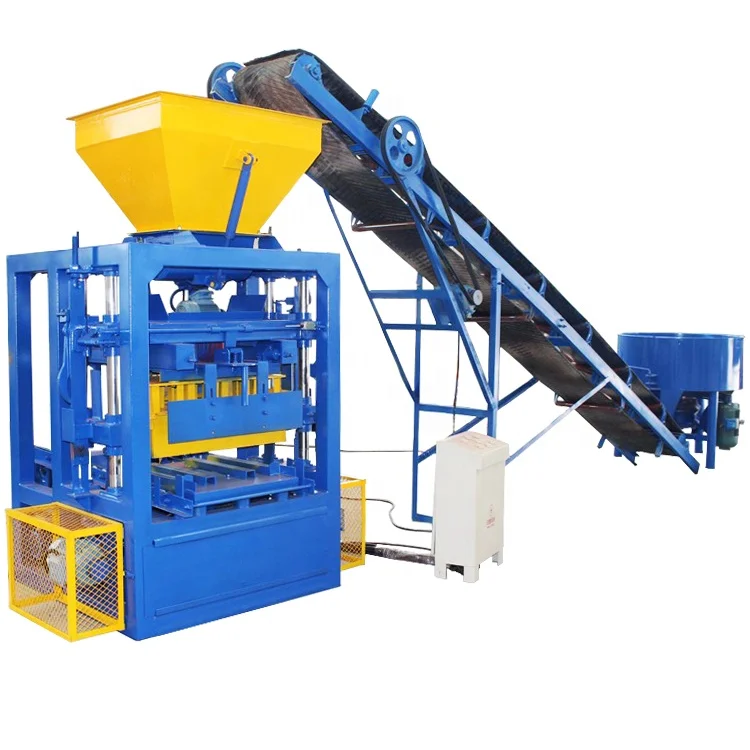
The dual vibration motors sit directly under the mould, generating vertical vibration at 4200 r/min and 35.5 kN of exciting force. This frequency compacts the mix from below while the upper mould applies pressing force, producing blocks with uniform density throughout. The 26-second cycle is the time the machine holds this combined action before the mould lifts. Shorter cycles risk under-compaction, particularly with mixes high in stone dust or fly ash. The 850×450×20 mm pallet size is matched to this vibration pattern so that energy transfers evenly across the full moulding area, rather than concentrating in the centre and leaving weak edges.
The Cost of Skipping the Site Survey
When voltage, frequency and control language are left unconfirmed, the QTJ4-26 arrives on site and cannot be powered up until a transformer or panel swap is arranged. I have seen machines sit in containers for weeks because the buyer’s site ran on a frequency the standard motor was not wound for. Beyond the delay, repeated cold starts on mismatched voltage degrade the motor winding over time, shortening service life before production even begins [NEED_CITE: electrical mismatch damage to industrial motors].
Why Buyers Choose This Source for the QTJ4-26
Block machinery is the sole product focus, meaning the QTJ4-26 is supplied as a matched system rather than a press paired with a random mixer and pallets. The configuration is set against the buyer’s actual mix design and local aggregate, not a default catalogue setting. Mould design covers the formats the buyer’s market sells, with custom drawings available. Automation level is selectable, so a buyer can begin with the semi-automatic QTJ4-26 and add pallet handling later. Installation support includes operator training so the crew understands cycle timing, mould change procedure and daily maintenance before the first production run.
Documentation & Verification
- Line layout and capacity calculation stating the exact block format behind each output figure
- Machine specification sheet with confirmed voltage, frequency and control language
- Mould drawing and format list matching the buyer’s local block dimensions
- Pallet specification confirming size, material and load rating for the curing area
- Factory test record with photographs taken before packing and dispatch
- Operation and maintenance manual in the confirmed language
Installation, Commissioning & Support
- Foundation pad sized for the 2060×1730 mm footprint and 1800 kg net weight
- Dedicated power circuit matched to the confirmed voltage and 14.25 kW rated draw
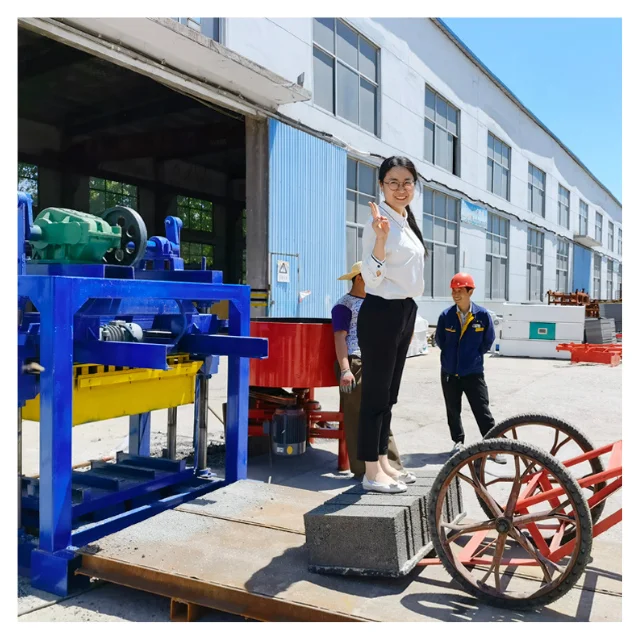
- Machine shipped as a single unit with mixer and pallets for straightforward site assembly
- First-run commissioning with cycle time and vibration adjustment for the buyer’s mix
- Operator training covering mould change on the four-pillar guide system
- Wear parts and mould list supplied so replacements can be ordered before stock runs out
What to Include in Your Inquiry
To size the QTJ4-26 correctly, share the block formats your market demands, your target daily output per format, and the raw materials available locally including aggregate type and moisture content. Confirm your site voltage and frequency, the control panel language you need, and the curing space and handling equipment already in place.
Frequently Asked Questions
Q: How is QTJ4-26 output capacity calculated and which block format does each figure assume?
A: Output is calculated from the molding cycle of 26 seconds and the number of cavities per mould. For 390×190×190 mm hollow blocks with 4 cavities, output is 480 pieces per hour. For 240×115×53 mm solid bricks with 18 cavities, output is 2100 pieces per hour. Each figure is valid only for its stated format.
Q: Where does the QTJ4-26 sit in the full machine range and when should a buyer step up?
A: It sits in the semi-automatic tier suited to small and medium plants. Buyers should consider a fully automatic model when daily volume requires multiple shifts, when labour cost makes manual pallet handling uneconomical, or when consistent stacking quality is critical for the curing and dispatch workflow.
Q: What voltage and frequency options are available and how is control language confirmed?
A: Voltage and frequency are configured to the buyer’s site supply before production begins. Control language for any indicators or displays is confirmed at the same stage. Both are documented in writing and signed off so the machine is ready to power up on arrival.
Q: What plant footprint does the QTJ4-26 require with mixer and pallet handling?
A: The machine itself measures 2060×1730 mm. Adding the JQ350 mixer, pallet storage area and curing rack space typically requires a larger working zone. Buyers should provide site dimensions so a layout can be drafted showing material flow from mixing through to curing.
Q: Which mould formats are available and how long does a mould change take?
A: Available formats include 8 inch and 6 inch hollow blocks, standard solid bricks and interlocking bricks. Custom moulds can be designed to buyer drawings. Mould change is performed on the four-pillar guide system; exact changeover time depends on operator familiarity and should be confirmed during commissioning training.

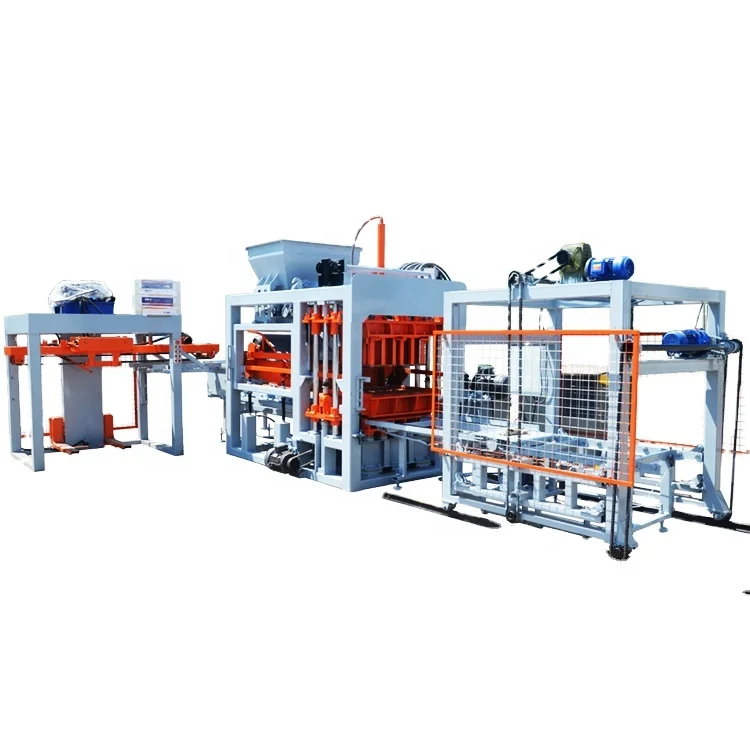 High quality block machine