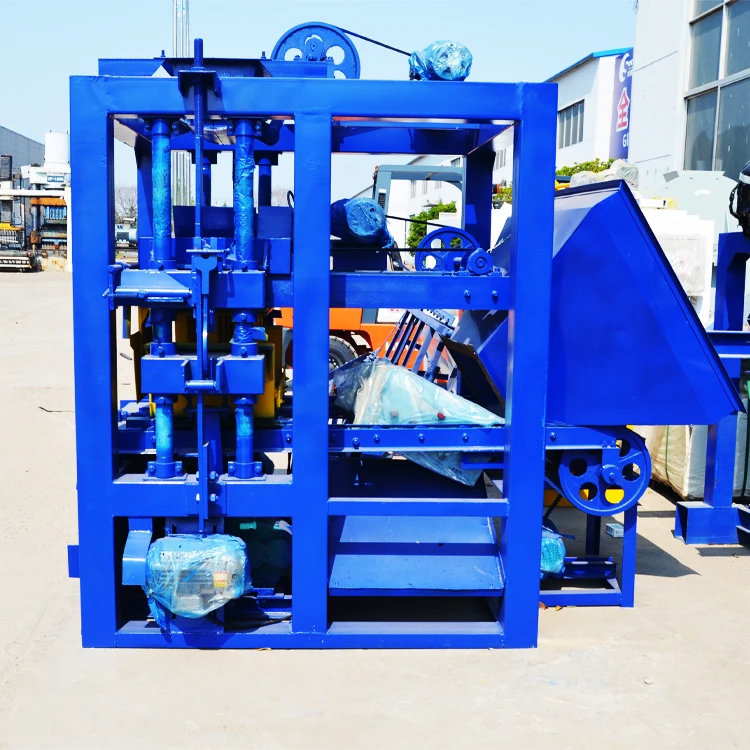
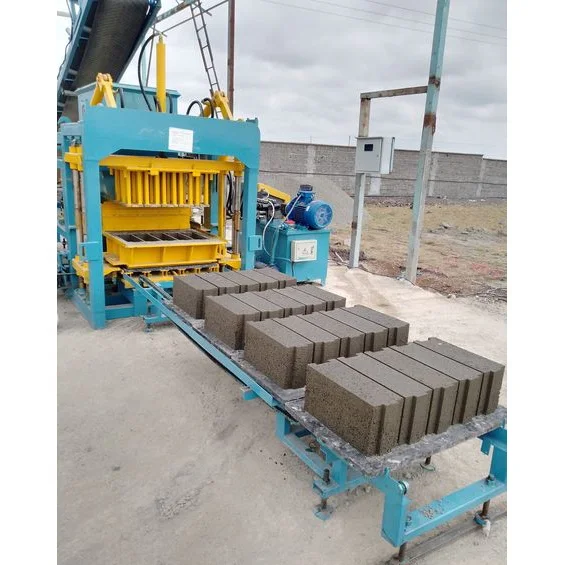
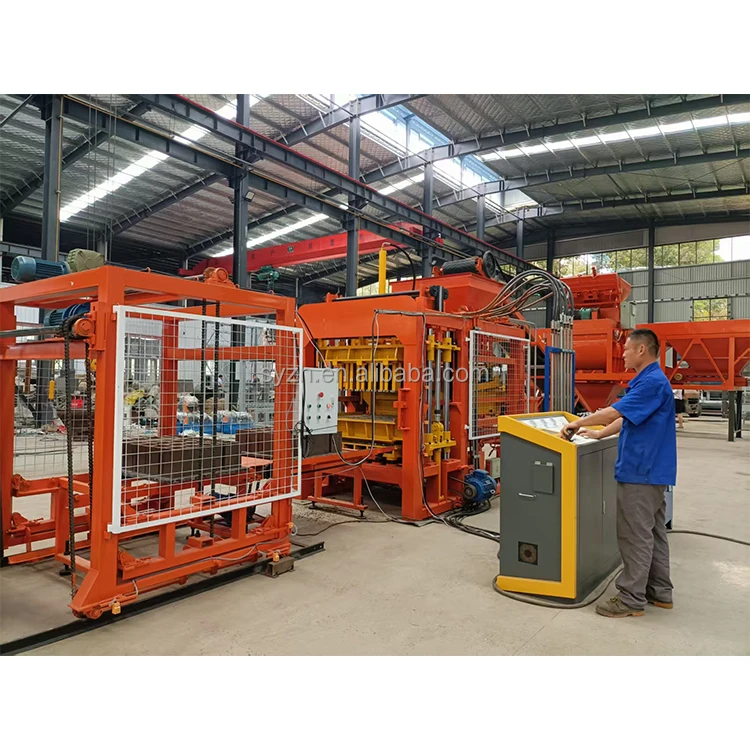
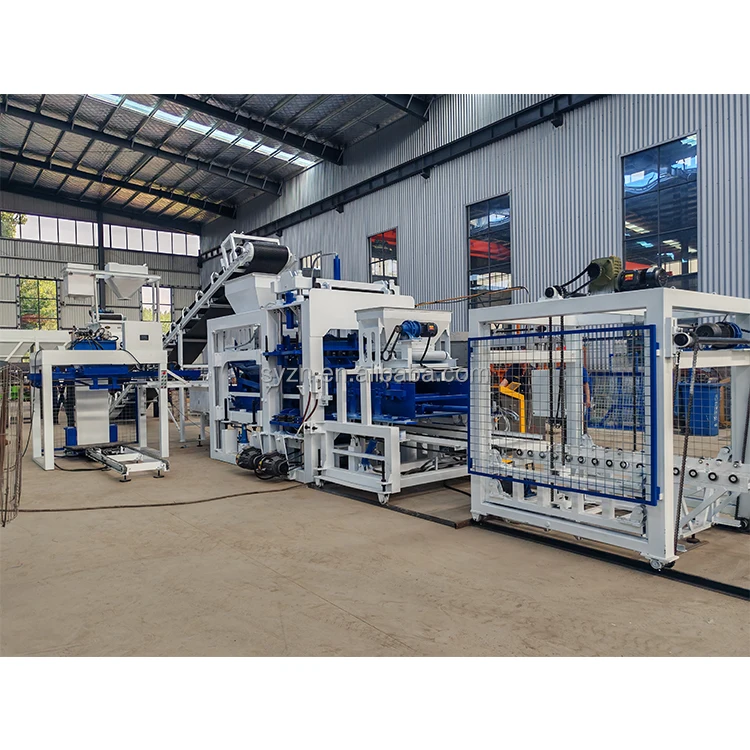
Block machinery as a single focus — The QMY6-25 mobile egg-laying block machine sits in the Shiyue range configured as one matched system with its moulds, hydraulic turning mechanism, and supporting mixer options rather than assembled from separate suppliers.
Technical Specifications
| Parameter |
Value |
| Model |
QMY6-25 |
| Product Type |
Mobile Egg-laying Concrete Block Making Machine |
| Molding Capacity |
6 pcs/mold |
| Hydraulic Pressure |
16 MPa |
| Vibration Form |
Mold Vibration |
| Molding Cycle |
20s–25s (basis not stated in source — confirm block format, material, and thickness) |
| Turning Method |
Hydraulic |
| Total Power |
9.6 kW |
| Total Mass |
2.5 Tons |
| Voltage & Frequency |
Customizable electric motors voltage (source value — verify against manufacturer catalog) |
| Mould Format |
Interchangeable moulds for various block formats |
| Automation Level |
Automatic mobile (egg-laying) |
| Supporting Equipment Options |
JS500 double shaft mixer, JQ500 / JQ750 pan mixer, wheel loader, block clamper |
Application Suitability
| Application |
Material or Output |
| On-site hollow block production |
Crushed stone, sand, cement, and water mixed to local aggregate gradation |
| Solid block manufacturing for housing projects |
Local quarry aggregate with cement binder, cured on prepared ground |
| Paving block production for site contractors |
Fine aggregate and cement mixes, laid directly on a concrete floor |
| Entrepreneur-led local block supply |
Variable raw materials sourced regionally, output sold to nearby construction sites |
What "20 to 25 Seconds per Cycle" Actually Means on Site
The molding cycle only translates into daily output when the block format, mix design, and ground conditions are all defined first.
Many mobile egg-laying block machine manufacturers quote a single cycle time that sounds impressive until the buyer arrives on site. A 20-second cycle on a small solid block with a clean sand mix behaves very differently from the same machine running a large hollow block with high-clay aggregate. I have seen contractors in West Africa calculate their daily revenue based on a headline cycle number, only to find that their local sand required longer vibration to achieve adequate density. [NEED_CITE: aggregate clay content and vibration time requirements for concrete block density]

Where the QMY6-25 Fits in the Shiyue Range
The QMY6-25 occupies the mobile egg-laying tier, designed for production directly on a prepared concrete floor without fixed pallet circulation. Below it in investment sits nothing — this is the entry point for mechanized block production. Above it, the semi-automatic stationary lines add pallet feeding and manual stacking, while the full automatic plants bring in curing rack handling and cubing systems. For a construction contractor producing blocks on a housing project or an entrepreneur launching a first operation in markets like Tanzania or Côte d’Ivoire, this mobile egg-laying block machine manufacturer offers the lowest site preparation requirement of any tier.
Production Without a Fixed Plant Footprint
Because the QMY6-25 lays blocks directly onto the ground and moves forward after each cycle, the curing area doubles as the production floor. This eliminates the need for pallets entirely — a significant reduction in both capital outlay and daily handling labour. The trade-off is that ground preparation becomes critical: the surface must be level concrete capable of bearing 2.5 Tons of machine mass plus the weight of wet blocks. [NEED_CITE: ground-bearing requirements for mobile egg-laying block production] The 9.6 kW total power requirement means most sites can run the machine from a standard industrial generator without a dedicated transformer.
Reading the Specs That Matter for Block Density
The 16 MPa hydraulic pressure and mold vibration form work together to compact the concrete mix. Hydraulic pressure alone determines the initial compression force applied to the mold, while vibration settles the aggregate particles into a dense arrangement. If the vibration frequency does not match the particle size distribution of the local aggregate, the pressure cannot compensate — the blocks emerge with inconsistent density and lower compressive strength. This is why configuring a mobile egg-laying block machine requires knowing the buyer’s specific sand and stone source before finalizing the vibration settings. The interchangeable mould system allows format changes, but each new mould demands its own cycle time and pressure confirmation to maintain block quality across formats.
When the Wrong Configuration Follows You to Site
A mobile unit that arrives with motors wound for the wrong voltage does not simply underperform — it fails to start, sits idle while replacement motors are sourced internationally, and the project deadline passes. Similarly, a mixer selected without considering the local aggregate’s moisture absorption can deliver inconsistent batches that force the operator to adjust water content manually every hour. [NEED_CITE: voltage and frequency standards by export market] These are not warranty issues; they are specification failures that occur before the machine leaves the factory.
Why Buyers Source This Tier from Shiyue
Block machinery as a single focus means the QMY6-25, its moulds, and the recommended JS500 or JQ750 mixer are specified as a matched set rather than sourced separately. The configuration is set against the buyer’s actual mix design and target block format, not a catalogue default. Mould design covers the formats the buyer’s local market sells, with custom drawings available. The automation level is fixed at automatic mobile, but a buyer who later needs pallet-based production can move to a semi-automatic stationary line within the same range. Installation support includes operator training on mold change procedures and cycle time adjustment per format.
Documentation & Verification
- Line layout showing the production and curing area required for the QMY6-25 footprint
- Capacity calculation stating the block format assumed for each daily output figure
- Mould drawing and format list showing every block type the machine can produce
- Voltage and control language confirmation matched to the buyer’s local grid before production
- Factory test record and packing photographs taken before container loading
Installation, Commissioning & Support
- Level concrete floor required to bear the 2.5 Ton machine mass and wet block load during curing
- Power supply must deliver 9.6 kW at the confirmed voltage and frequency for the destination country
- Machine ships assembled with hydraulic turning mechanism protected; site unloading requires a forklift or crane
- First-day commissioning includes vibration frequency matching to the buyer’s local aggregate sample
- Operator training covers mold change sequence, cycle adjustment, and daily hydraulic system checks
- Wear parts list identifies mold liners and hydraulic seals with recommended replacement intervals
Before You Request a Quote
Provide the specific block formats your local market demands — hollow, solid, paving, or a combination — along with the target daily output for each format. Share a sample analysis or description of your available sand and stone aggregate, including any known clay or silt content. Confirm your site’s available voltage, frequency, and whether you will operate from grid power or a generator.
Frequently Asked Questions
Q: What block formats can the QMY6-25 produce and what is the realistic daily output per format?
A: The QMY6-25 uses interchangeable moulds for hollow blocks, solid blocks, and paving blocks. Realistic daily output depends on the specific block dimensions, your local aggregate characteristics, and the confirmed molding cycle for each format. We provide a capacity calculation that states the assumed block format for every output figure before you commit to an order.
Q: Where does the QMY6-25 sit compared to semi-automatic and automatic stationary lines?
A: The QMY6-25 is the mobile egg-laying tier — it produces directly on a concrete floor without pallets or a fixed plant. Semi-automatic stationary lines add pallet feeding and require a dedicated building. Automatic lines include stacking and curing rack handling. The mobile tier offers the lowest investment and site preparation of the entire Shiyue range.
Q: Can the voltage, frequency, and motor specification be confirmed for my country before ordering?
A: Yes. Motor voltage and frequency are customizable and must be confirmed against your local grid or generator specification before production begins. This prevents commissioning delays on arrival and ensures the 9.6 kW total power draw matches your site’s electrical capacity.
Q: What supporting equipment is needed to run the QMY6-25 on site?
A: A JS500 double shaft mixer or JQ500/JQ750 pan mixer handles batching. A wheel loader feeds the mixer and moves aggregate. A block clamper assists with handling finished products once cured. The specific mixer selection depends on your daily volume target and the moisture characteristics of your local aggregate.
Q: What ground preparation does an egg-laying mobile operation require?
A: The production and curing area must be a level concrete slab capable of supporting 2.5 Tons of machine mass plus wet block weight. The surface flatness directly affects block dimensional consistency. No fixed foundations or pallet circulation systems are needed, which reduces initial site investment compared to stationary plant setups.

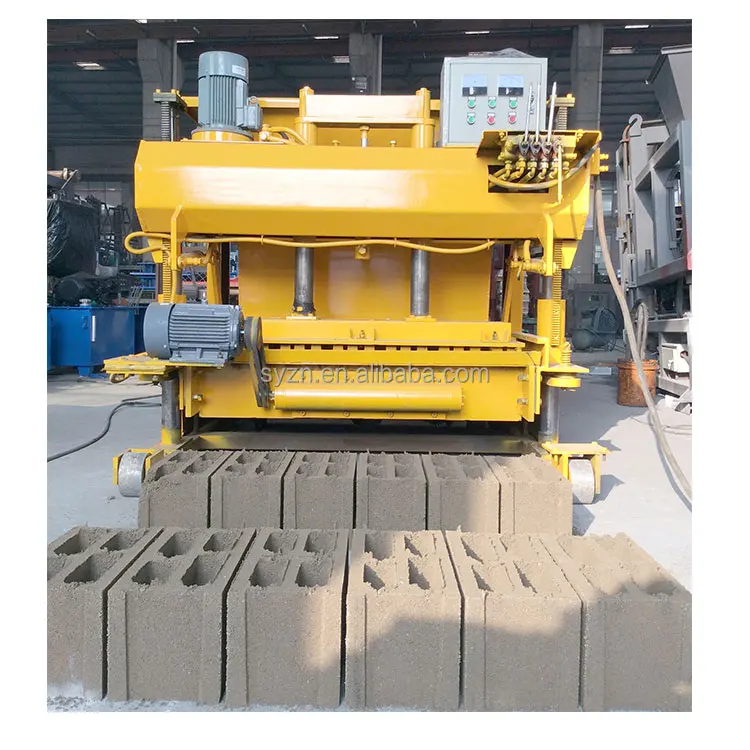
 High quality block machine