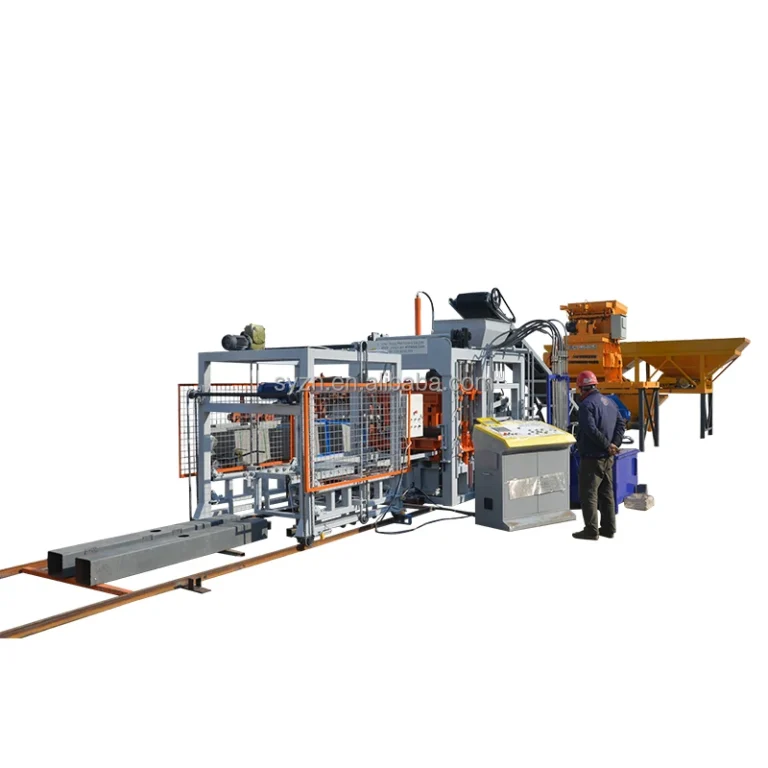
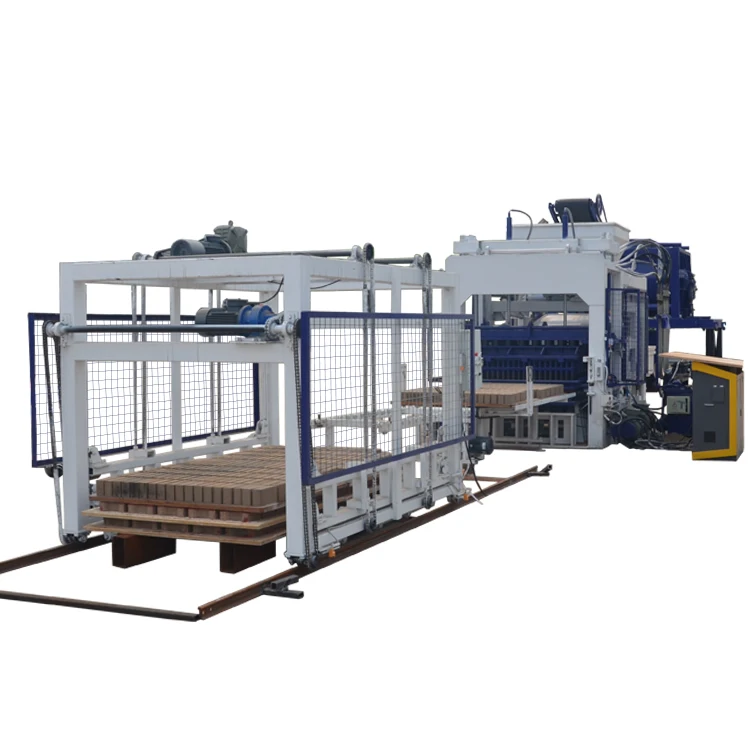
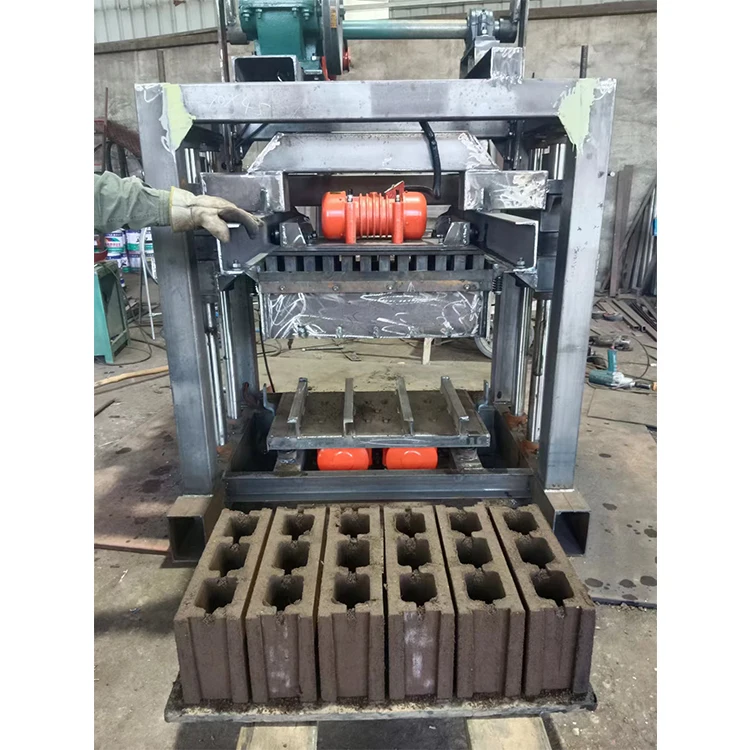
Matched System Configuration — the QT4-15A hydraulic block making machine, its moulds, pallets, and handling stations are engineered as a single coordinated line rather than assembled from disconnected suppliers, ensuring vibration force, hydraulic pressure, and pallet dimensions align from the first production cycle.
Technical Specifications
| Parameter |
Value |
| Model |
QT4-15A |
| Product Type |
Hydraulic Block Making Machine |
| Overall Dimensions (L×W×H) |
7100 × 1600 × 2610 mm |
| Molding Cycle |
15–25 s |
| Vibration Frequency |
4600 r/min |
| Vibration Force |
40–50 KN |
| Rated Power |
18.45 kW |
| Mixer Model |
JQ350 |
| Pallet Size |
850 × 550 × 25 mm |
| Net Weight |
3 T |
| Control System |
PLC control system |
| Automation Level |
Semi-automatic (pallet feeder, brick conveyor, block sweeper) |
| Output Capacity |
408 pcs/hr based on 400×200×200 mm hollow block, 4 pcs/mould |
| Output Capacity |
510 pcs/hr based on 400×150×200 mm hollow block, 5 pcs/mould |
| Output Capacity |
2100 pcs/hr based on 240×115×53 mm solid brick, 18 pcs/mould |
| Applied Products |
Paver, solid block, hollow block, curbstone |
| Raw Materials |
Crushed stones, sand, cement, dust, fly ash |
| Voltage & Frequency |
Configurable to target market (basis to be confirmed) |
| Hydraulic Pressure |
Dependent on block format and material (basis to be confirmed) |
| Mould Change Time |
Dependent on block format and material (basis to be confirmed) |
| Standards |
CE declaration where applicable |
Application Suitability
| Application |
Material or Output |
| Hollow block production for residential wall systems |
Crushed stone, sand, and cement at 400×200×200 mm or 400×150×200 mm format |
| Solid brick manufacturing for masonry and infill |
Fly ash, dust, and cement blends at 240×115×53 mm format |
| Paver and interlocking brick for driveways and walkways |
Aggregate-rich mix designs with pigment additives |
| Curbstone production for road and landscaping projects |
High-strength concrete mixes with coarse aggregate |
| On-site block production by construction contractors |
Locally sourced sand and crushed stone with portable batching |
| First-plant setup by entrepreneurs entering block manufacturing |
Standard cement-aggregate ratios with semi-automatic handling |
What "408 Pieces per Hour" Actually Means for Your Plant
Capacity figures only matter when tied to the exact block format you sell.
I have watched buyers sign off on a Hydraulic Block Making Machine for sale based on a headline cycle time, then discover on commissioning day that the quoted throughput assumed a hollow block they do not even stock. The QT4-15A lists three distinct outputs — 408 pieces per hour for 400×200×200 mm hollow blocks, 510 for 400×150×200 mm hollow blocks, and 2100 for 240×115×53 mm solid bricks — because each format fills the mould cavity differently and demands a different vibration duration. When a supplier quotes a single number without naming the format, your daily planning starts from a false baseline [NEED_CITE: block format assumptions in capacity quotations across the industry]. Always ask for the per-format breakdown before comparing machines.

Where the QT4-15A Sits in the Full Machine Range
Buyers evaluating a Hydraulic Block Making Machine for sale often struggle to place a medium-output model between entry-level manual presses and high-capacity fully automatic lines. The QT4-15A occupies that middle tier: it includes PLC control, a pallet feeder, and a brick conveyor as standard, removing the most labor-intensive handling steps without requiring the investment in automatic stacking and cubing that a full automatic line demands. For an entrepreneur setting up a first block plant or a contractor producing on-site, this tier delivers consistent block quality with a smaller initial footprint.
Matching the Machine to Your Local Aggregate
A vibration force of 40–50 KN and a hydraulic station work together to compact the mix, but the result depends entirely on what is inside the mould. Early in my career on the assembly floor in Linyi, we shipped a unit to a West African site where the buyer used volcanic scoria instead of standard river sand. The振动力 and hydraulic pressure settings we had validated on our test floor produced blocks that crumbled at the edges. We spent four days on-site adjusting pressure curves before the output met strength requirements. That is why I now ask every buyer for photos and sieve analysis of their local aggregate before finalizing the QT4-15A configuration [NEED_CITE: aggregate variability and its effect on block compressive strength]. The machine can handle crushed stone, sand, fly ash, and cement dust, but the hydraulic and vibration parameters must be set against your specific mix.
How Vibration Force and Hydraulic Pressure Shape Block Density
The 4600 r/min vibration frequency and 40–50 KN vibration force determine how tightly aggregate particles pack inside the mould cavity, while the hydraulic station applies the sustained pressure that locks that packing in place. If vibration is too low for a coarse aggregate mix, voids remain and block weight drops below the target. If hydraulic pressure is set too high for a lightweight fly ash blend, the mix squeezes out before it stabilizes, producing flash on the block edges. The QT4-15A’s PLC control system allows the operator to store different pressure-vibration profiles for each mould format, so switching from hollow blocks to pavers does not mean starting the tuning process from scratch. The 15–25 second molding cycle range reflects this flexibility: denser paver formats sit at the upper end, while lighter hollow blocks cycle faster. The 850×550×25 mm pallet size must also be checked against your curing racks and forklift capacity, because pallets that do not match existing handling equipment create a bottleneck the press itself cannot solve.
The Cost of Overlooking Pallet and Voltage Details
A buyer who confirms pallet size after shipment arrives may find that standard 850×550×25 mm pallets do not fit the curing racks already welded on-site, forcing a rack rebuild that delays production by weeks. Similarly, voltage and frequency confirmed too late can mean the motor windings are wrong for the local grid, and the PLC display language may default to one the operators cannot read [NEED_CITE: electrical specification mismatches in exported machinery]. These are not theoretical problems — they show up repeatedly in post-arrival commissioning calls and they turn a straightforward installation into a multi-week troubleshooting exercise.
Why Buyers Source This Tier from SHIYUE
Block machinery is our single focus, so the QT4-15A is not a press shipped in isolation; the mould, pallet, feeder, and conveyor are specified as a matched set. We configure hydraulic and vibration settings against your actual mix design and target block format, not a catalogue default. Moulds are available for every format the machine supports — hollow, solid, paver, curbstone — and custom mould designs can be produced from buyer drawings. The automation level is selectable, so a buyer can start with the semi-automatic QT4-15A and add automatic stacking or cubing stations later as volume grows. Installation support includes on-site commissioning and operator training so your crew is producing saleable blocks before our technician leaves.
Documentation & Verification
- Line layout drawing showing QT4-15A footprint with pallet feeder and conveyor clearances
- Capacity calculation sheet listing output per block format assumed
- Mould drawing and format list included with every quotation
- Pallet specification confirming 850×550×25 mm dimensions and load rating
- Voltage and PLC display language confirmation signed before production
- Factory test record on buyer’s block format before dispatch
Installation, Commissioning & Support
- Foundation pad sized for 7100×1600 mm footprint with anchor bolt template provided
- Dedicated 18.45 kW power circuit with voltage and frequency matched to site supply
- Machine shipped as a single main frame with pallet feeder and conveyor bolted separately for container loading
- PLC parameters for vibration force and hydraulic pressure tuned on your mix during commissioning
- Operator training covers mould change procedure and PLC profile storage for each block format
- Wear parts list and mould maintenance schedule handed over with the operation manual
Before You Request a Quote
To size the QT4-15A correctly for your plant, share the block formats you sell today and any you plan to add, your target daily output per format, and photos or sieve data for your local aggregate. Let us know your site voltage and frequency, the PLC display language your operators need, and the pallet dimensions your existing curing area and forklift can accommodate. If you have upstream batching or downstream stacking equipment already in place, tell us the make and model so the QT4-15A line layout connects without gaps.
Frequently Asked Questions
Q: Where does the QT4-15A sit compared to semi-automatic and fully automatic tiers in output and investment?
A: The QT4-15A is the medium-output tier. It includes PLC control, a pallet feeder, and a brick conveyor, removing the most labor-intensive steps without the investment in automatic stacking and cubing that a full automatic line requires. Buyers who outgrow entry-level manual presses but are not ready for a complete automatic plant typically land here.
Q: What is the realistic daily output for the block format I actually sell?
A: Output depends entirely on format. The QT4-15A produces 408 pieces per hour for 400×200×200 mm hollow blocks, 510 for 400×150×200 mm hollow blocks, and 2100 for 240×115×53 mm solid bricks. Multiply the relevant figure by your planned shift hours and subtract mould change and maintenance time for a realistic daily number.
Q: What plant footprint and utility requirements should I plan for at this tier?
A: The machine itself measures 7100×1600×2610 mm, but you must add space for the pallet feeder, brick conveyor, mixer, and raw material staging. A dedicated circuit rated for 18.45 kW is required, and voltage plus frequency must be confirmed before production begins.
Q: Can I start with the QT4-15A and upgrade to higher automation later?
A: Yes. The QT4-15A is designed as a semi-automatic core that accepts additional handling stations. Automatic stacking and cubing modules can be added to the line as your volume grows, without replacing the press or the PLC control system.
Q: Which mould formats are available and how long does a mould change take?
A: Standard moulds cover hollow block, solid brick, paver, and curbstone formats, with custom mould designs available from buyer drawings. Mould change time depends on the format and operator familiarity; we train your crew during commissioning and the PLC stores profiles for each mould to reduce recalibration.

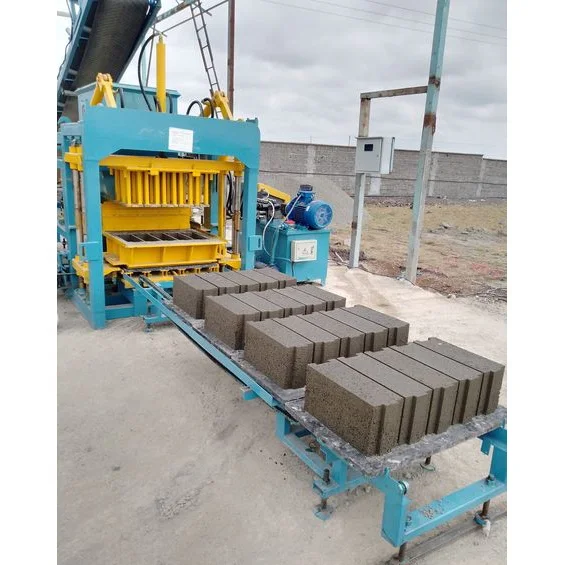
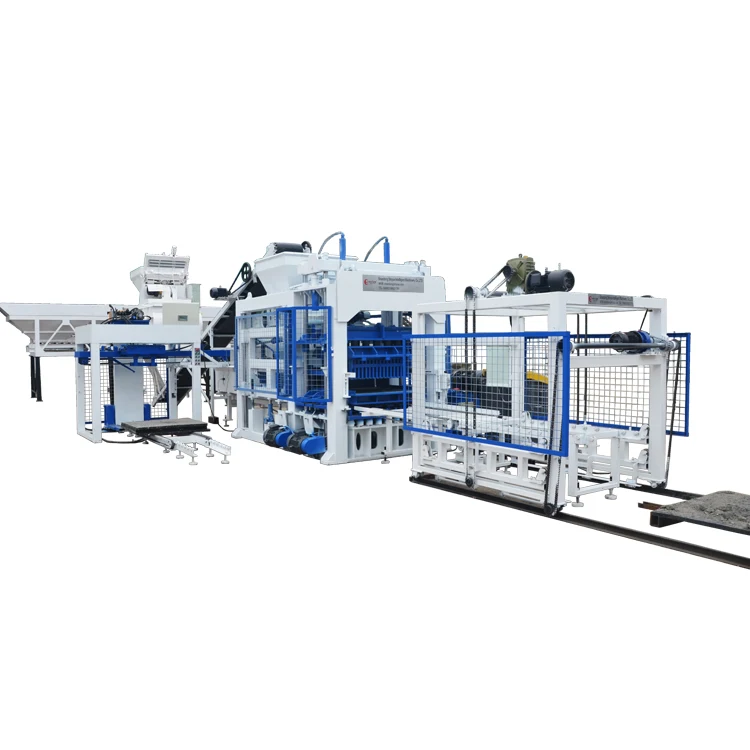 High quality block machine