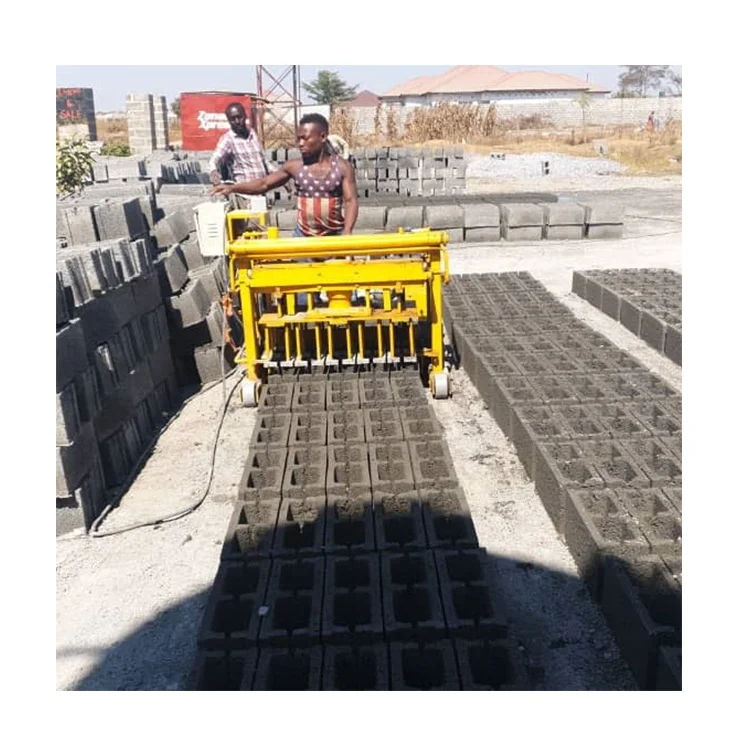
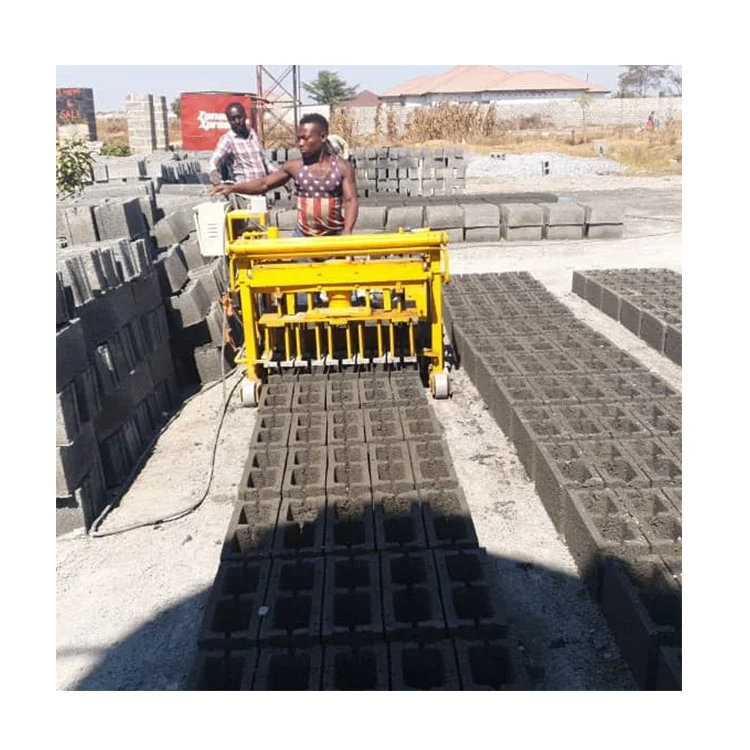
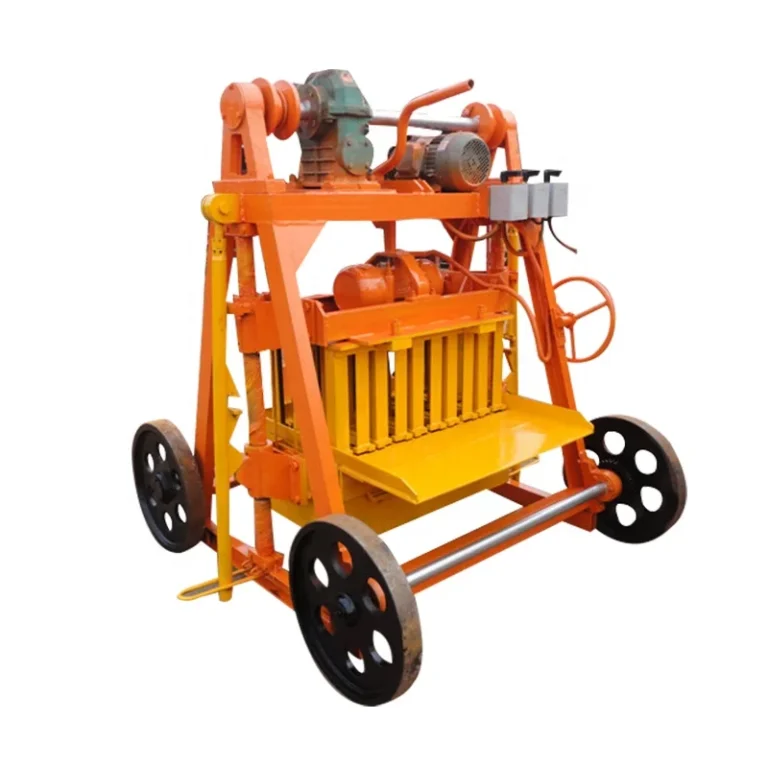
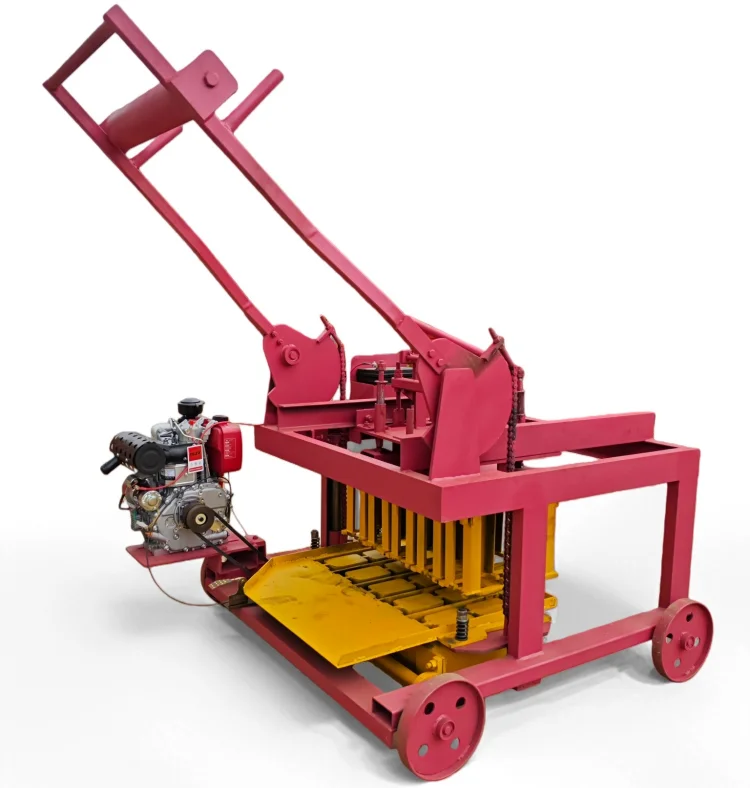
Single Focus Machinery — Block machine, mould, pallet and handling specified as one matched system rather than assembled from separate suppliers, starting with the QMR4-45 entry-level mobile unit.
Technical Specifications
| Parameter |
Value |
| Model |
QMR4-45 |
| Product Type |
Mobile Block Making Machine |
| Overall Dimensions (L×W×H) |
1100 x 950 x 2100 mm |
| Net Weight |
810 kgs |
| Power Source Options |
Diesel Engine / Petrol Engine / Electric Motor |
| Molding Cycle |
30-45 s |
| Output Capacity |
2560 pcs/day (basis not stated in source — confirm block format / material / thickness) |
| Pallet Requirement |
No pallet required (egg-laying operation) |
| Mobility |
Movable on site |
| Automation Level |
Manual / small-scale mobile operation |
| Basic Equipment Included |
JZC350 Diesel Concrete Mixer or JQ350 Diesel Concrete Mixer (Electric Generating Unit); Trolley |
| Warranty |
1 Year |
Application Suitability
| Application |
Material or Output |
| On-site hollow block production for housing projects |
Crushed stone, sand, cement, fly ash mixes |
| Solid brick manufacturing at remote construction sites |
Local aggregate and cement blends |
| Paver brick production for infrastructure contractors |
High-density concrete mixes |
| Entry-level fly ash brick plant setup |
Fly ash, lime, gypsum, and sand combinations |
What "2560 Pieces per Day" Leaves Out for a mobile block making machine manufacturer
Capacity numbers mean nothing without the block format behind them.
When I started doing factory testing, I learned that a machine’s rated cycle time often assumes ideal conditions — perfect aggregate moisture, standard cement ratio, and a specific block thickness. For the QMR4-45 mobile block making machine, the quoted output assumes a particular format that must be confirmed before you commit. I have seen buyers order based on a daily figure, only to find their local fly ash颗粒偏粗 and含水率高 stretches the molding cycle, cutting real output in half. [NEED_CITE: how aggregate particle size and moisture content affect concrete block cycle times]
Power Source Flexibility for Off-Grid Sites
The QMR4-45 offers diesel, petrol engine, or electric power configurations. This flexibility matters when your project site lacks reliable grid access or when local voltage standards differ from standard industrial supply. A diesel-powered unit eliminates dependency on electrical infrastructure, while electric variants reduce fuel costs where stable power exists. The choice affects not just operating expense but also which concrete mixer configuration arrives with your machine.
No-Pallet Operation Eliminates Hidden Infrastructure
Traditional block machines require pallets for every cycle — you buy them, store them, move them through curing areas, and eventually replace them. The QMR4-45 egg-laying design deposits blocks directly onto a prepared ground surface, removing pallet purchase, handling labor, and curing-area footprint from your startup calculation. This matters most for entrepreneurs building their first block plant or contractors producing temporarily at a remote site where pallet logistics would otherwise dominate the operation. [NEED_CITE: pallet handling costs as a percentage of total block production expense]
Cycle Time, Vibration, and Block Density
The 30-45 second molding cycle range reflects the time needed for the vibration system to compact concrete into the mould cavity and release the formed block. Shorter cycles apply to thinner solid bricks; longer cycles suit thicker hollow blocks where full compaction requires sustained vibration. The net weight of 810 kgs provides the mass needed for effective vibration transfer without excessive frame movement. Mould format coverage — hollow, solid, paver, concrete, and fly ash brick — means you can produce multiple product types from one machine frame, but each format change requires manual mould swap and cycle time recalibration. The included JZC350 or JQ350 mixer ensures your concrete arrives at the hopper with consistent workability, which directly affects whether the machine achieves its rated cycle time or stretches beyond it.

The Cost of Skipping Ground Preparation
Egg-laying machines deposit wet concrete blocks directly onto the ground. If that surface is uneven, soft, or poorly drained, blocks settle before curing completes, producing dimensional inconsistency and breakage. I have seen contractors rush site prep, then blame the machine for cracked output. The QMR4-45 requires a level, compacted surface — often a concrete pad or well-tamped gravel base — before production begins. Skipping this step turns your mobile advantage into a scrap problem. [NEED_CITE: ground preparation standards for egg-laying block machine operation]
Why Buyers Choose Shiyue for Mobile Block Production
Block machinery is our single focus, so the QMR4-45 arrives as a matched system: machine, mould, mixer, and trolley specified together rather than sourced separately. We configure against your actual mix design and local aggregate, not a catalogue default. Mould design covers the formats your market sells, with custom drawings available for shapes outside our standard range. Automation level remains selectable — you can start with this manual mobile unit and step up to semi-automatic or automatic lines later without abandoning your initial investment. Installation support includes operator training so your crew understands cycle time, mould change procedure, and daily maintenance from day one.
Documentation & Verification
- Factory test record run on your specified block format before dispatch
- Machine specification sheet with power source and mixer configuration confirmed
- Mould drawing and format list showing included and optional block shapes
- Operation and maintenance manual with wear parts list for first replacement planning
- Voltage and control language confirmation for electric variant to avoid commissioning delays
Installation, Commissioning & Support
- Level, compacted ground surface required for no-pallet egg-laying operation
- Dedicated electrical circuit needed for electric variant per local voltage and frequency standards
- Machine arrives assembled; mixer and trolley require on-site connection
- First production run with operator training on cycle time adjustment and mould change procedure
- Wear parts list and mould maintenance schedule provided for ongoing operation
- Daily inspection of vibration system and hydraulic connections recommended
What We Need to Quote Accurately
Tell us which block format you plan to produce, your target daily output for that specific size, and the raw materials available locally — including aggregate type, cement source, and any fly ash or admixtures. Share your site conditions: available power supply or need for diesel operation, ground surface type, and curing area dimensions. This lets us confirm whether the QMR4-45 fits your project or whether stepping up to a semi-automatic line better serves your volume target.
Frequently Asked Questions
Q: What block format is behind the quoted 2560 pieces per day output?
A: The daily output figure assumes a specific block size and material mix that must be confirmed for your application. Cycle time varies with block thickness, aggregate particle size, and moisture content. We provide a capacity calculation stating the exact format and mix design behind our quoted number, so you can verify real daily production before ordering.
Q: Diesel, petrol, or electric — how do I choose the right power source?
A: The choice depends on site utility availability and local fuel costs. Diesel suits remote sites without grid access. Electric reduces operating expense where stable power exists but requires voltage and frequency confirmation to avoid commissioning delays. Petrol engines offer a middle ground for smaller operations with intermittent power needs.
Q: Which mould formats are included as standard with the QMR4-45?
A: The machine frame supports hollow block, solid block, paver brick, concrete block, and fly ash brick moulds. Standard inclusion varies by quotation — some configurations ship with one or two formats, while others include a full set. Custom mould designs are available to buyer drawings for shapes outside the standard range.
Q: What ground preparation does no-pallet egg-laying operation require?
A: The production surface must be level, compacted, and well-drained to prevent blocks from settling or cracking before curing completes. A concrete pad or tamped gravel base typically works. The curing area footprint depends on your daily output and how long blocks remain in place before being moved to storage.
Q: Where does the QMR4-45 sit in the Shiyue machine range?
A: It is the entry point of our mobile range — manual operation, no pallet required, suitable for on-site production or first-time plant setup. Buyers needing higher volume, consistent batch-to-batch output, or reduced labor typically move to semi-automatic or automatic stationary lines with pallet handling and stacking systems.

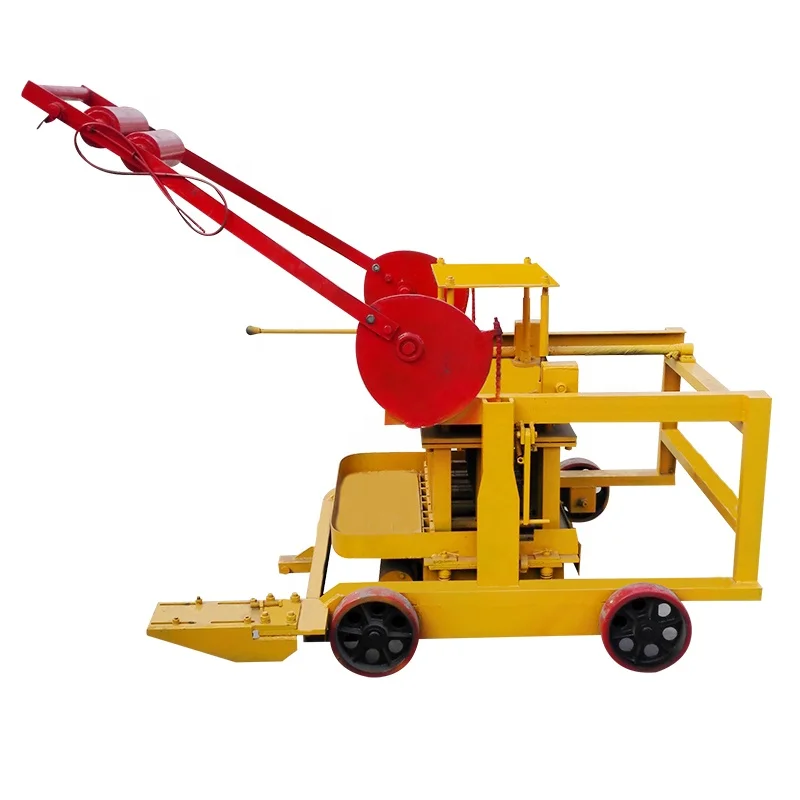
 Mobile block machine