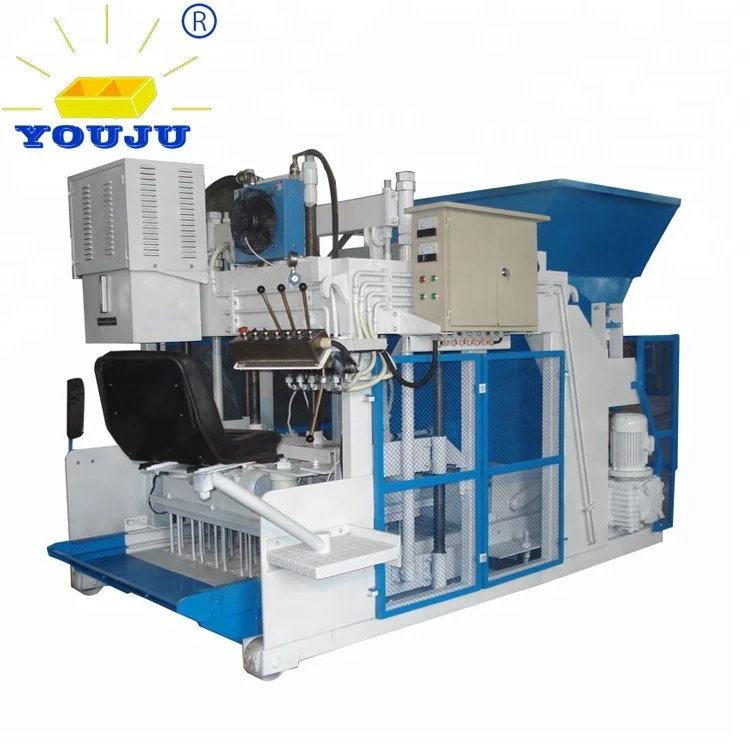
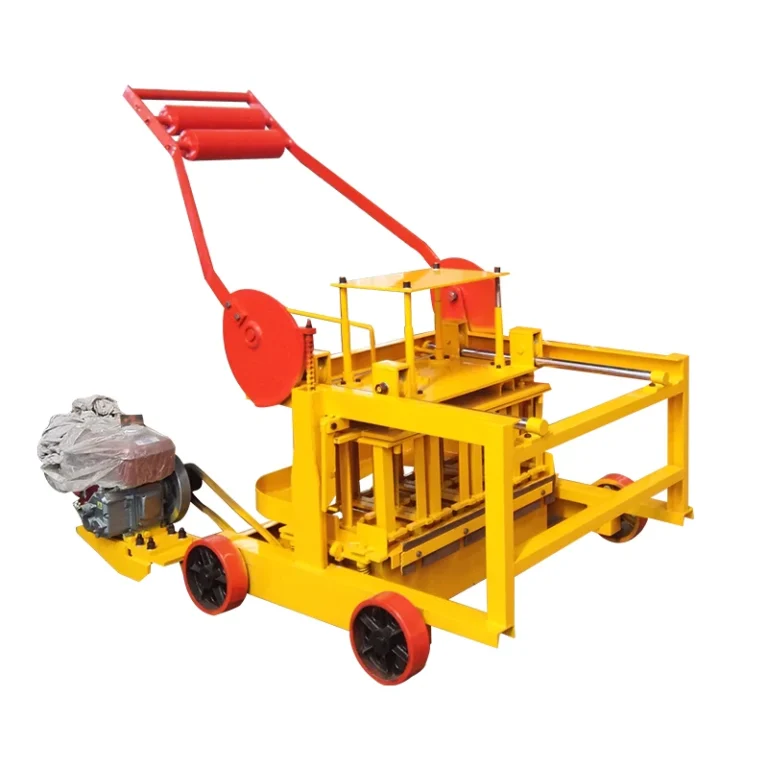
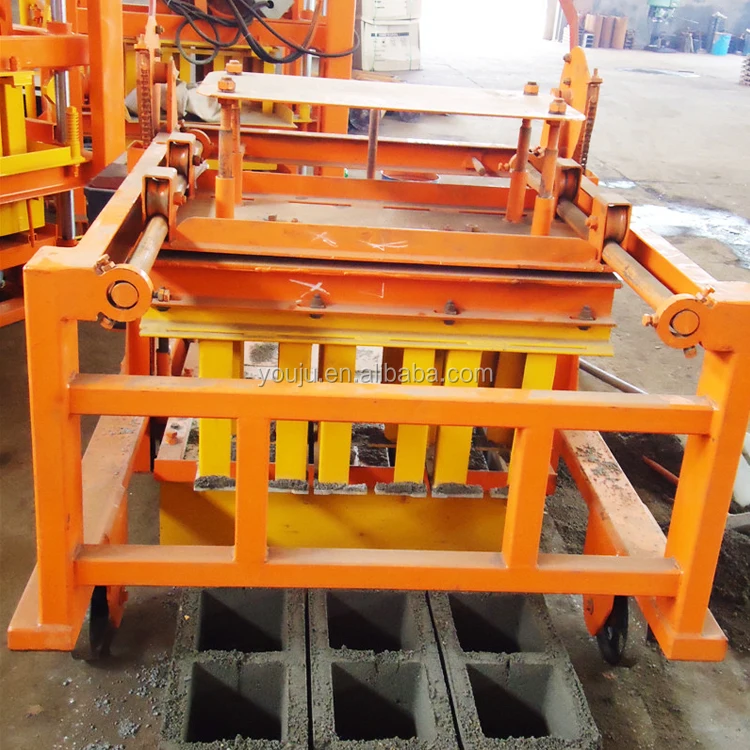
Complete Block Line Integration — we configure the QMJ4-45 and its moulds as one matched mobile system against your on-site aggregate, so block density stays consistent without a fixed plant or pallet logistics.
Technical Specifications
| Parameter |
Value |
| Model |
QMJ4-45 |
| Product Type |
Mobile Egg Laying Block Making Machine |
| Molding Quantity |
4 pcs/mould (400×200×200mm hollow block) |
| Molding Cycle |
40–45 s |
| Vibration Frequency |
2400 r/m |
| Vibration Method |
Mold vibration |
| Total Power |
6 kW |
| Power Source |
Diesel / Petrol engine |
| Demold Method |
Manual |
| Turning Method |
Manual |
| Automation Level |
Manual operation, egg-laying (no fixed pallet system) |
| Pallet Requirement |
Not required (blocks laid directly on ground) |
| Control System |
Manual (no PLC) |
| Output Capacity (400×200×200mm hollow block) |
3000 pcs/day (8-hour shift, 4 pcs/mould, 40–45s cycle) |
| Output Capacity (400×150×200mm hollow block) |
3500 pcs/day (8-hour shift, 5 pcs/mould, 40–45s cycle) |
| Output Capacity (400×120×200mm hollow block) |
4500 pcs/day (8-hour shift, 6 pcs/mould, 40–45s cycle) |
| Certification |
CE (referenced via image; certificate number not stated) |
| Warranty |
One year guarantee for the whole machine |
Application Suitability
| Application |
Material or Output |
| On-site hollow block production for housing projects |
Crushed stone, sand, cement, water |
| Small-scale cement block making without a fixed plant |
River sand, gravel, cement blend |
| Remote or temporary construction sites |
Local aggregate with cement binder |
| DIY block production for development contractors |
Standard concrete mix for hollow formats |
What "3000 Blocks per Day" Actually Means on a Job Site
Capacity only matters when you know exactly which block format and shift length the number assumes.
A mobile egg laying block machine manufacturer quoting a single daily figure without naming the block size sets buyers up for disappointment on day one. If you planned around a headline number but your market buys 120mm hollow blocks, your actual output sits in a completely different range. I have watched contractors base their entire pour schedule on an optimistic throughput claim, only to find the machine delivers that rate on a format they never intended to sell [NEED_CITE:]. The QMJ4-45 page states the premise for every capacity figure: 8-hour shift, specific mould count, 40–45 s cycle, and the exact hollow block dimensions. No hidden assumptions, no unpleasant surprises when the first week ends.

Why the Complete Machine Range Starts Here
The QMJ4-45 sits at the entry point of the mobile block machine range, aimed at buyers who need production without fixed infrastructure. As a mobile egg laying block machine manufacturer, we position this model for contractors who move between project sites and cannot justify a stationary plant. The diesel or petrol engine removes grid dependency entirely, while the egg-laying design means you never order, store, or replace pallets.
Where Mobile Production Fits in the Broader Line
Stepping up from the QMJ4-45, the range moves through semi-automatic stationary machines requiring pallets and curing racks, then into fully automatic lines with stacking and cubing. This mobile egg laying block machine manufacturer helps buyers place themselves on that spectrum before narrowing down. If your site has no electricity, no curing space, and a deadline measured in weeks, the QMJ4-45 is where the range begins [NEED_CITE:].
Reading the Specs That Decide Block Quality
The 2400 r/m vibration frequency and mould vibration method work together to consolidate the concrete mix inside the cavity. Higher vibration frequency with adequate amplitude forces air out and pulls aggregate into tight contact, producing a denser block wall. The 6 kW total power must cover both the vibration motor and the mould lifting mechanism, so neither function starves the other during a cycle. Mould vibration, rather than table vibration, means the energy concentrates on the block form itself, which matters when you are laying directly on uneven ground. The manual demold and manual turning design keeps the machine simple enough for crews with no prior block-making experience, but it does mean cycle time depends partly on operator speed.
The Cost of Skipping the Format Conversation
When a buyer orders a mobile machine without confirming which hollow block heights the local market actually purchases, they often discover the standard mould produces only one size. Switching formats then means waiting for a replacement mould, paying freight, and losing production days while the machine sits idle [NEED_CITE:]. Some contractors also overlook that egg-laying machines require a flat, compacted ground surface. Pouring blocks on soft soil leads to cracked bottom edges and rejection at the building inspection.
Why Source This Machine from a Single-Focus Manufacturer
Block machinery is the only product category here, so the QMJ4-45 is not a catalogue add-on but the result of focused development. Machine, mould, and power source are specified as one matched system rather than assembled from separate suppliers. The diesel and petrol engine options are confirmed against your site conditions before production starts. Mould design covers the three hollow block heights your market demands, with output per format stated honestly. Installation guidance includes ground preparation advice specific to egg-laying operation. Operator training addresses the manual cycle rhythm so your crew reaches rated throughput from the first shift.
Documentation & Verification
- Factory test record on your specified hollow block format before dispatch
- Mould drawing and format list confirming 200mm, 150mm, and 120mm block heights
- Machine specification sheet with diesel or petrol engine option confirmed
- Operation and maintenance manual covering manual demold and turning procedures
- CE declaration where applicable for your import market requirements
- Packing photographs showing dismantling state for container loading
Installation, Commissioning & Support
- Flat compacted ground area required for egg-laying operation without pallets
- Diesel or petrol engine eliminates grid connection and transformer requirements
- Machine arrives with mould mounted; first cycle run with your local aggregate
- Operator training covers 40–45 s manual cycle rhythm and mould change steps
- One-year warranty covering vibration motor and structural components
- Spare mould availability for additional hollow block formats ordered separately
What We Need to Move Forward
Tell us which hollow block dimensions your market sells and your target daily output per format. Share whether your site has any grid access or if the diesel/petrol engine is the only option. Confirm the local aggregate type so we can match vibration settings to your mix [NEED_CITE:].
Frequently Asked Questions
Q: How is daily output calculated, and which block format does each figure assume?
A: Every output figure states the block dimensions, mould cavity count, shift length, and cycle time. For example, 3000 pieces per day assumes 400×200×200mm hollow blocks, 4 cavities per mould, an 8-hour shift, and a 40–45 second cycle. Different block heights change the cavity count and therefore the daily total.
Q: Can the machine operate without grid electricity?
A: Yes. The QMJ4-45 uses a 6 kW diesel or petrol engine as its power source, so it runs independently of any electrical grid. This makes it suitable for remote construction sites, temporary project locations, or regions where grid voltage and frequency are unreliable. Engine option is confirmed before production.
Q: What block formats and mould sizes are supported?
A: The machine supports three hollow block heights with corresponding moulds: 400×200×200mm at 4 cavities, 400×150×200mm at 5 cavities, and 400×120×200mm at 6 cavities. Mould change is manual. Additional formats or custom mould designs to buyer drawings are available on request.
Q: Is any pallet or curing rack system needed?
A: No. The egg-laying design deposits blocks directly onto the ground surface as the machine moves forward, eliminating pallet consumption entirely. You need a flat, compacted area for laying, but no pallets, no pallet feeding system, and no curing racks are required.
Q: What installation support and spare mould availability are provided?
A: The machine arrives with the selected mould mounted and a factory test record. We supply an operation and maintenance manual covering manual demold and turning procedures. Spare moulds and wear parts are available for reorder. On-site commissioning guidance covers ground preparation and first-cycle adjustment to your local aggregate.

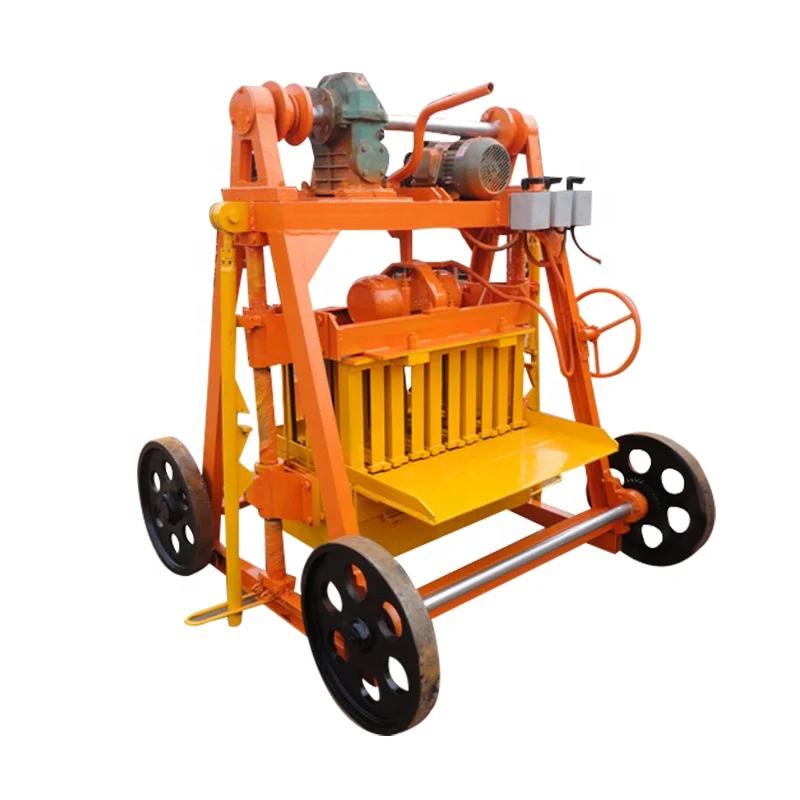
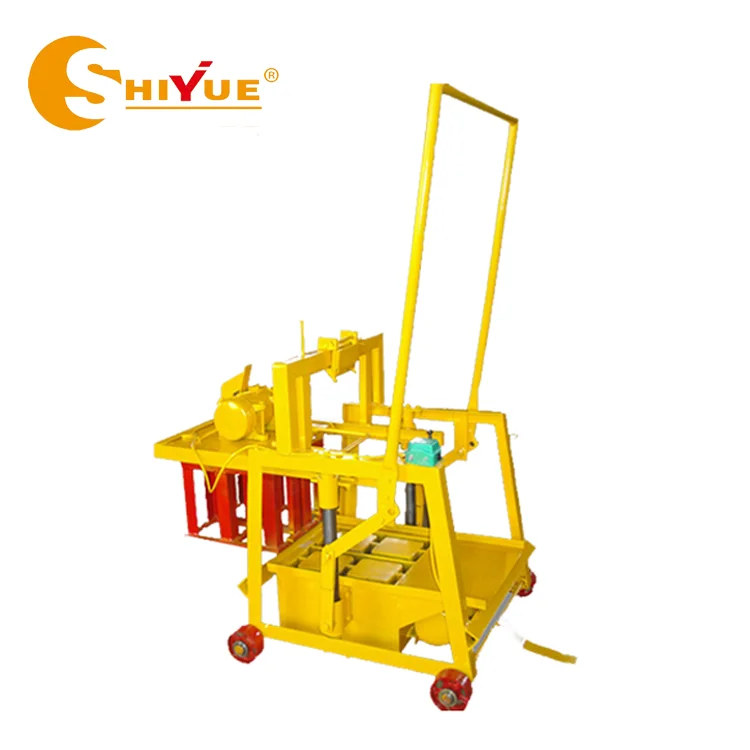 Mobile block machine