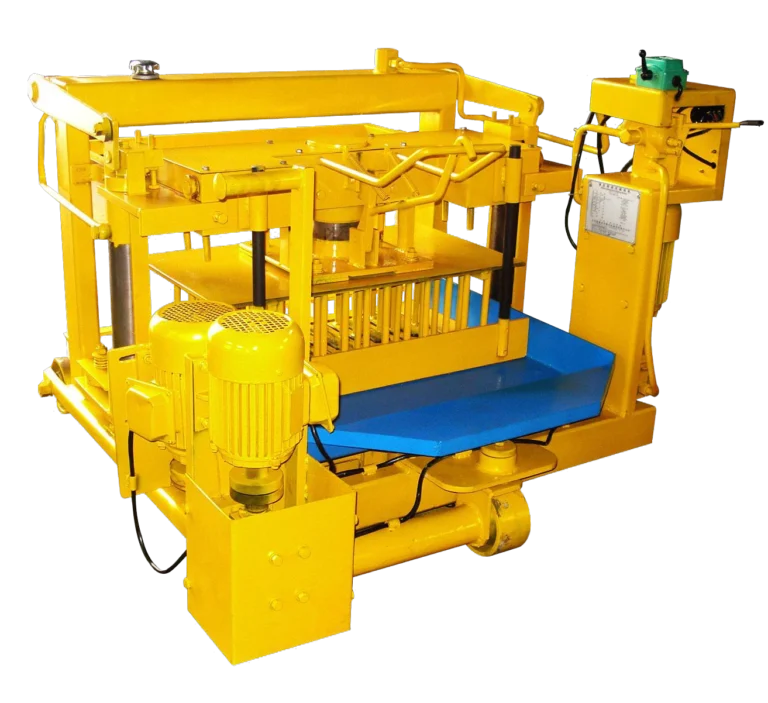
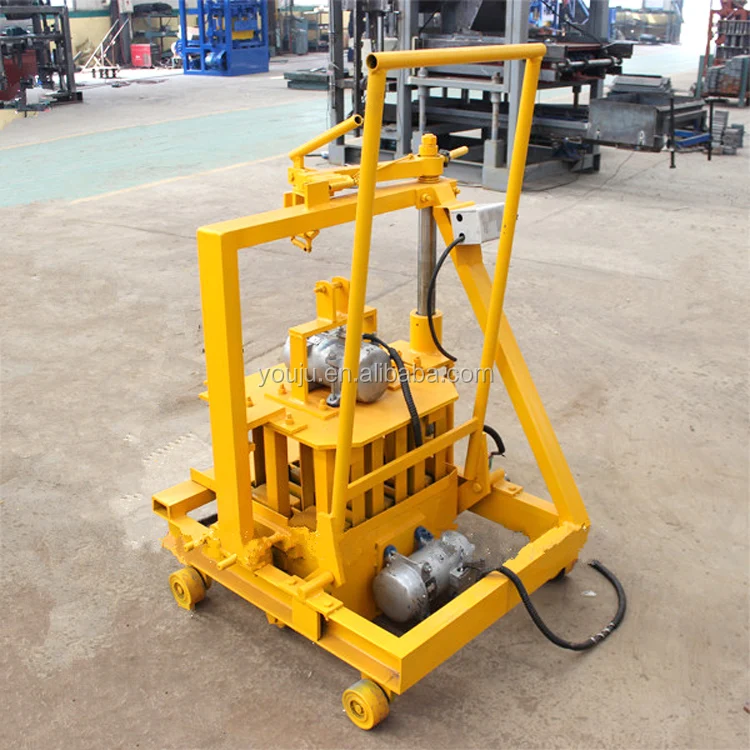
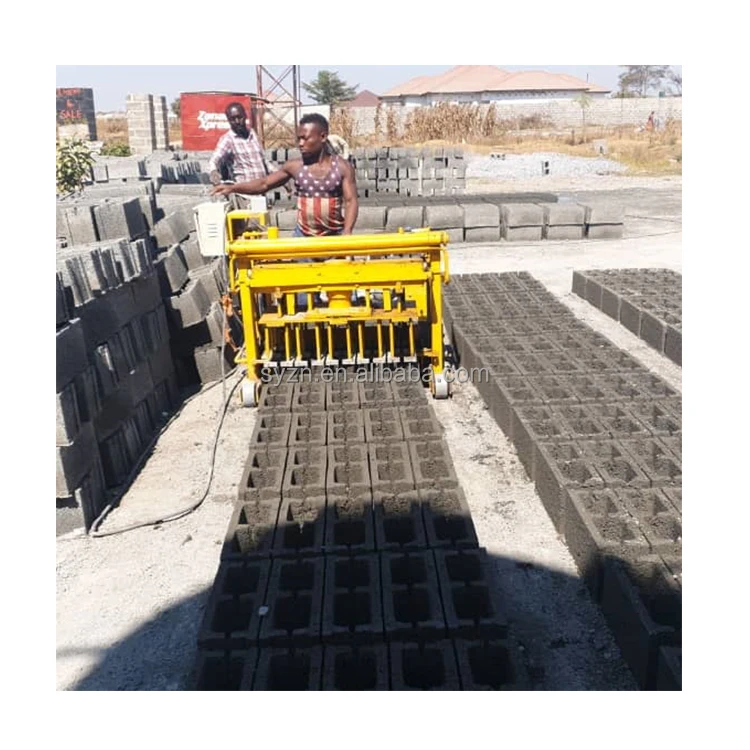
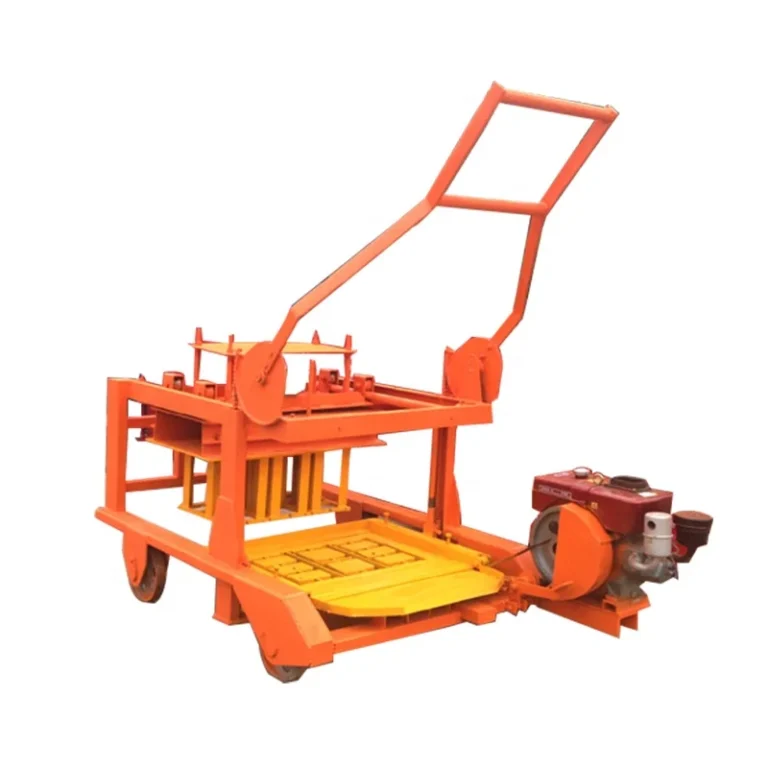
Matched System Design — the QMJ2-45 mobile block machine, its moulds, and pallet-free stacking are specified together so on-site output matches the buyer’s local aggregate and block format.
Technical Specifications
| Parameter |
Value |
| Model |
QMJ2-45 |
| Product Type |
Mobile Block Making Machine |
| Type |
Mobile / Egg-laying |
| Operation |
Manual |
| Pressure Type |
Hydraulic Pressure |
| Power Source |
Engine (diesel or other, utility requirement to be confirmed) |
| Pallet Requirement |
None (pallet-free egg-laying design) |
| Labor Requirement |
1 to 3 workers |
| Mould Change |
Supports multiple hollow brick formats through mould change |
| Cycle Time |
25-30s (basis not stated in source — confirm block format and material) |
| Output: 400×200×200mm Hollow Brick |
2 pcs/mould, 160 pcs/hour, 1280 pcs/8hr |
| Output: 400×150×200mm Hollow Brick |
3 pcs/mould, 240 pcs/hour, 4800 pcs/8hr (source value — verify against manufacturer catalog) |
| Output: 400×100×200mm Hollow Brick |
4 pcs/mould, 320 pcs/hour, 2560 pcs/8hr |
| Automation Level |
Manual |
| Stacking Method |
Manual (no pallets, egg-laying) |
Application Suitability
| Application |
Material or Output |
| On-site hollow block production at building sites |
Crushed stone, river sand, and cement mixes laid directly on prepared ground |
| First block plant for entrepreneurs with limited capital |
Hollow bricks in 400×200×200mm, 400×150×200mm, and 400×100×200mm formats |
| Remote project locations without grid power |
Engine-powered operation producing hollow blocks where fixed plants are not feasible |
| Building material distributors serving scattered sites |
Mobile production moved between job sites as demand shifts |
Why "Pieces per Hour" Means Nothing Without the Block Format
Every output figure for the QMJ2-45 is tied to a specific hollow brick dimension — because a single cycle count hides the real story.
I have watched contractors arrive at a job site expecting a certain daily volume, only to find the machine was quoted on the smallest block format while their market actually sells the largest. The cycle time stays the same, but the pieces per mould drop from four to two, and the daily total falls to less than half. This Mobile Block Making Machine manufacturer always states capacity per format so you know what you are actually getting before the machine leaves the factory [NEED_CITE: capacity quoting standards for block making machinery].

Where the QMJ2-45 Sits in the Full Block Machine Range
The QMJ2-45 is the entry point of the SHIYUE mobile block machine lineup. It occupies the smallest footprint and lowest investment tier, designed for buyers who need hollow block production without committing to a fixed plant. Above it, the range steps through semi-automatic stationary machines with pallet systems and then into fully automatic lines with batching, stacking, and cubing. Understanding where this model sits helps a buyer decide whether the manual, pallet-free approach meets current needs or whether stepping up to a higher tier makes sense for the volume and labour conditions on site.
Pallet-Free Egg-Laying and What It Removes from Your Cost Sheet
Because the QMJ2-45 lays blocks directly onto the ground and moves forward after each cycle, there is no pallet investment, no pallet return system, and no pallet storage area to plan for. For a first-time block producer or a contractor working a single building site, that eliminates an entire category of handling equipment and the labour that goes with it. The trade-off is that curing happens in place on the ground, so the site surface must be level and prepared before production starts [NEED_CITE: ground preparation requirements for egg-laying block machines].
Reading the Specs That Actually Determine Block Quality
Hydraulic pressure and vibration force work together to compact the concrete mix inside the mould cavity. If pressure is too low for the aggregate size in your local sand, the block walls will be porous and weak regardless of how long you vibrate. The QMJ2-45 uses hydraulic pressure to drive compaction, and the correct setting depends on the mix design you will actually run — not a catalogue default. Cycle time of 25-30 seconds is a starting point; thicker-walled hollow bricks in the 400×200×200mm format may need the upper end of that range, while the 400×100×200mm format with thinner walls can cycle faster. The manual mould change system lets you switch between these formats, but the time it takes to swap moulds should be factored into your daily schedule so it does not consume a significant portion of a shift. Labour requirement of 1 to 3 workers covers feeding the mix, operating the machine, and moving the finished blocks to the curing area.
The Hidden Cost of Skipping the Mix Design Conversation
When a mobile block machine is configured for a standard mix that the buyer cannot actually source locally, the result is either weak blocks or an expensive material substitution after the machine has already arrived. I once saw a site in Latin America where the river sand had a much higher moisture content than the sand used during factory testing. The vibration could not compact the wetter mix properly, and daily output dropped well below expectation because every cycle produced blocks that failed the strength check. The machine was not faulty — the parameters were set for a different material [NEED_CITE: effect of aggregate moisture on block compaction]. Asking about your local sand, cement type, and aggregate gradation before finalising machine settings avoids this problem entirely.
Why Buyers Source This Range Here
Block machinery is the single focus of this operation, so the QMJ2-45 is not assembled from unrelated components but specified as a matched unit with its moulds and handling approach. Configuration is set against the buyer’s actual mix design and target block format rather than a default catalogue line. Mould design covers the hollow brick sizes your market sells, with custom drawings available when a local format falls outside the standard range. The automation level is selectable across the broader SHIYUE range, meaning a buyer can start with this manual mobile unit and step up to semi-automatic or automatic stationary lines as production volume grows. Installation and commissioning support includes operator training so the crew knows how to adjust cycle times and vibration settings for the specific mix on site.
Documentation & Verification
- Line layout and capacity calculation stating output per hollow brick format
- Mould drawing and format list confirming available sizes and custom options
- Machine specification sheet with hydraulic and vibration settings matched to your mix
- Factory test record run on your target block format before dispatch
- Operation and maintenance manual covering mould change and daily checks
Installation, Commissioning & Support
- Level ground preparation required for egg-laying operation across the production area
- Engine-powered unit removes dependency on fixed electrical supply at remote sites
- Manual mould change procedure trained on site with your target hollow brick formats
- Hydraulic pressure and vibration settings adjusted during commissioning to match your local aggregate
- Wear parts and mould inventory list provided for first replacement planning
- Operator training covers cycle timing, mix consistency checks, and daily maintenance routines
What to Include in Your Inquiry
Tell us which hollow brick formats sell in your market and what daily volume you need to hit. Share your local sand and aggregate type along with any site constraints — ground conditions, available curing space, and whether grid power exists or engine operation is required. If you are comparing this mobile unit against a stationary line, describe your expected production growth so we can map where the QMJ2-45 fits and when a step-up would make sense.
Frequently Asked Questions
Q: How is output capacity stated per block format, and what should I realistically plan for daily?
A: Each output figure for the QMJ2-45 is tied to a specific hollow brick dimension — for example, the 400×200×200mm format yields 2 pieces per mould cycle. Realistic daily planning must account for mould change time, mix preparation, and ground conditions, not just the theoretical hourly rate.
Q: Where does the QMJ2-45 sit in the range, and when should I consider a semi-automatic machine?
A: This model is the entry tier — manual, pallet-free, and engine-powered for on-site use. When your daily volume consistently exceeds what 1 to 3 workers can sustain, or when your market demands more formats than a mobile unit can efficiently switch between, stepping to a semi-automatic stationary machine becomes the logical move.
Q: What block formats and mould options are available?
A: Standard moulds cover 400×200×200mm, 400×150×200mm, and 400×100×200mm hollow bricks. Custom mould design to buyer drawings is available for formats your local market requires but that fall outside these three sizes.
Q: Can the machine operate without grid power?
A: Yes. The QMJ2-45 is engine-powered, making it suitable for remote construction sites where no fixed electrical supply is available. The specific engine type and fuel requirement should be confirmed during the inquiry stage.
Q: What upgrade path exists if my production volume grows?
A: The SHIYUE range extends from this manual mobile unit through semi-automatic stationary machines with pallet systems up to fully automatic lines with batching, stacking, and cubing. Your next step depends on target output, available space, and labour conditions.

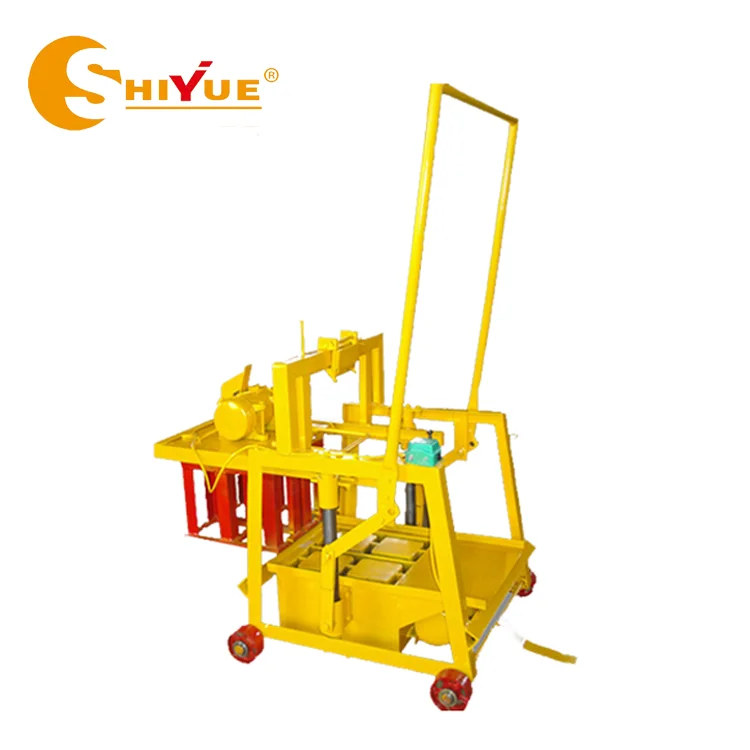
 Mobile block machine