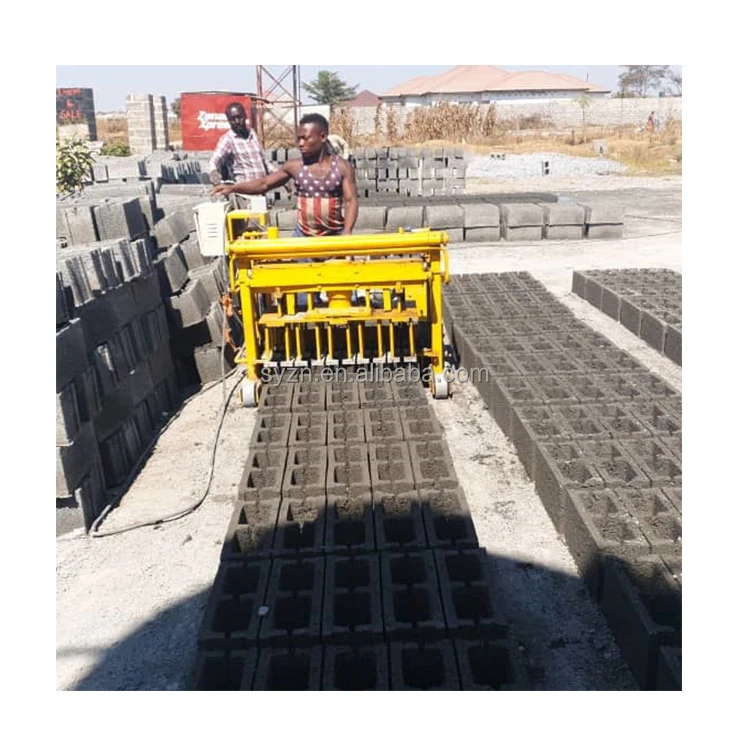
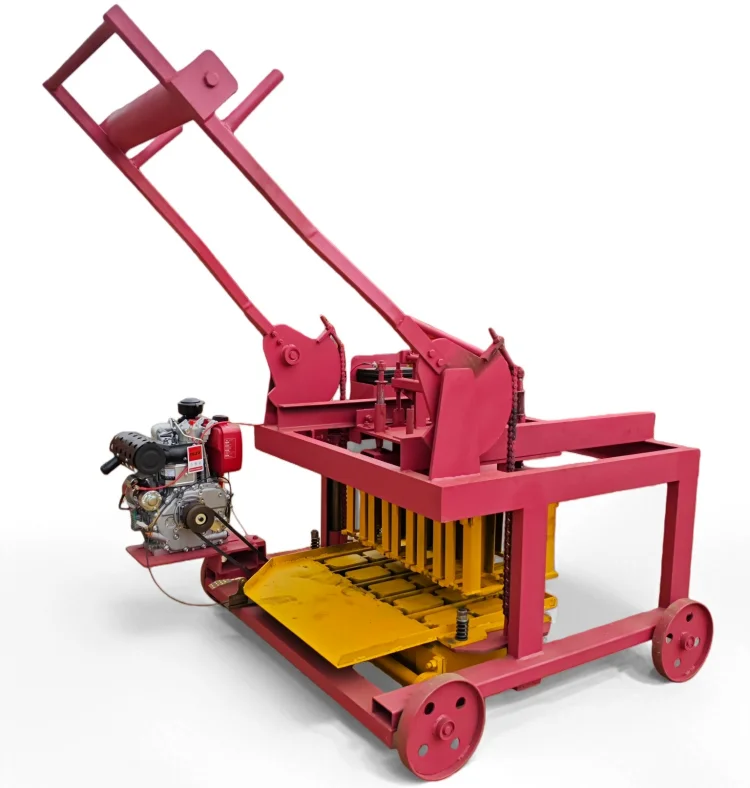
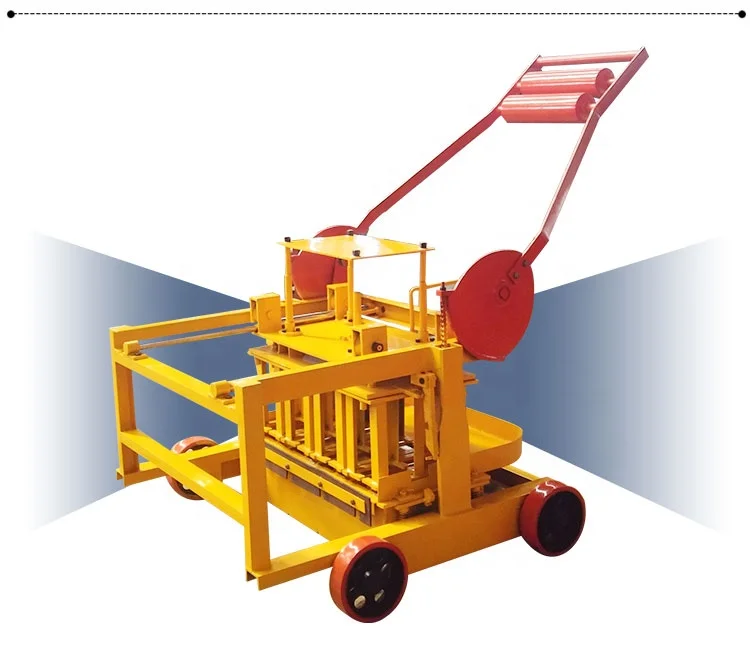
Matched System Design — the QMJ4-45 egg laying block machine, mould, and engine are specified as one working unit rather than sourced separately.
Technical Specifications
| Parameter |
Value |
| Model |
QMJ4-45 |
| Product Type |
Egg Laying Block Making Machine |
| Molding Capacity |
4 pcs/mould for 400×200×200mm hollow block |
| Molding Cycle |
40–45 s |
| Vibration Frequency |
2400 r/m |
| Compaction Method |
Mold vibration |
| Demold Method |
Manual |
| Turning Method |
Manual |
| Total Power |
6 kW |
| Power Source |
Diesel / Petrol engine |
| Automation Level |
Manual operation |
| Pallet Requirement |
No pallets required (egg-laying type) |
| Productivity (400×200×200mm) |
approx. 3000 pcs/day over an 8-hour shift |
| Productivity (400×150×200mm) |
approx. 3500 pcs/day over an 8-hour shift |
| Productivity (400×120×200mm) |
approx. 4500 pcs/day over an 8-hour shift |
| Standards |
CE declaration |
Application Suitability
| Application |
Material or Output |
| On-site hollow block production |
Cement, crushed stone, sand, and water mix |
| Small-scale cement block manufacturing |
Local aggregate with cement binder |
| Contractor-led housing projects |
400×200×200mm, 400×150×200mm, 400×120×200mm hollow blocks |
| Remote or temporary job sites |
Off-grid locations using diesel or petrol engine |
Why "4000 Blocks per Day" Means Nothing Without the Format
Every output figure on this page is tied to a specific hollow block dimension and an 8-hour shift.
I spent years watching test runs on small mobile presses in Linyi workshops, and the pattern is always the same: a brochure claims a headline daily number, the buyer sets up on site, and the actual count falls well short. The reason is almost always that the quoted capacity assumed the smallest block in the mould range while the buyer intended to run the largest. With the QMJ4-45 egg laying block machine for sale, the 3000-piece figure applies only to 400×200×200mm hollow blocks at a 40–45 second cycle. Switch to a 400×120×200mm format and the count rises because the mould holds more cavities, not because the machine runs faster [NEED_CITE: block format impact on daily output calculations]. Stating capacity without the format is not an estimate — it is a guess.

Engine-Powered Operation Where the Grid Does Not Reach
The QMJ4-45 egg laying block machine for sale runs on a diesel or petrol engine rather than a grid-tied electric motor, which changes where it can work. Remote housing developments, rural infrastructure projects, and temporary job sites often have no reliable three-phase power available during the construction phase. An engine-driven press removes that constraint entirely. The operator fuels up in the morning and begins producing blocks on the same ground where the walls will go up, eliminating transport from a distant fixed plant.
Egg-Laying Design That Removes the Pallet Cost
Because this QMJ4-45 egg laying block machine for sale lays blocks directly onto a prepared concrete floor, there is no pallet inventory to purchase, no pallet return loop to manage, and no pallet-related labor to schedule. For a first-time block producer, the pallet cost alone can represent a significant portion of the initial setup budget [NEED_CITE: pallet investment share in small block plant budgets]. Egg-laying operation also means fewer moving parts in the handling chain — no pallet feeder, no pallet return conveyor, no stacking station — so there is less to maintain when you are working far from a service workshop.
What the Vibration Frequency and Molding Cycle Actually Control
The 2400 r/m vibration frequency is the force that consolidates the concrete mix inside the mould cavity. On a manual egg-laying machine, vibration must do all the compaction work because there is no hydraulic ram applying a second stage of pressure. A frequency in this range is standard for small-format hollow block production and is sufficient when the mix design is matched to the machine — meaning the aggregate grading, cement ratio, and moisture content have been chosen to flow under vibration and then hold shape at demold. The 40–45 second molding cycle includes fill, vibration, and manual demold. Shortening this cycle by rushing the demold step leads to edge collapse, especially on the larger 400×200×200mm format where the block walls are thinner relative to height. I have seen a contractor lose an entire day’s production by cutting the cycle to 30 seconds on a mix with high fines content — every block slumped before it could cure [NEED_CITE: relationship between vibration time and block green strength].
What Happens When the Mix Does Not Match the Machine
Buyers who source aggregate locally often assume any sand-and-stone blend will work in a mobile press. When the fines content is too high or the moisture is off, the block leaves the mould looking acceptable but collapses within minutes as gravity overcomes the weak green strength. On an egg-laying machine this is especially costly because there are no pallets to carry a slumped block to a reject area — the block simply sits on the ground where it was laid, and the operator must break it up and re-mix. The fix is not a machine adjustment but a mix correction, and it must happen before the first production run, not after [NEED_CITE: aggregate grading requirements for egg-laying block machines].
Why Buyers Source the QMJ4-45 From a Single-Focus Supplier
Block machinery is the only product category we build, which means the QMJ4-45 engine, mould, and vibration system are developed and tested as one matched set rather than assembled from unrelated vendor components. Moulds are designed for the hollow block formats that sell in your local market, and custom drawings can be produced to your specification if your region demands a non-standard size. Automation level is not relevant on this manual machine, but the same single-supplier approach applies if you later expand to a semi-automatic or fully automatic line — the pallets, mixers, and handling equipment will be specified to match. Every machine ships with a factory test record, packing photographs, and documentation in the language your operators will read.
Documentation & Verification
- Machine specification sheet listing engine type and vibration frequency confirmed to your order
- Mould drawing and format list showing all available hollow block sizes before shipment
- Capacity calculation document stating the block format assumed for each daily output figure
- Factory test record with photographs taken during your machine’s production run
- CE declaration and operation manual in the language you confirm at order stage
Installation, Commissioning & Support
- Prepare a level concrete ground surface with adequate curing area for daily output volume
- Confirm diesel or petrol fuel specification with the engine supplier before first start-up
- Receive machine in a single crate with mould bolted to the frame for quick site assembly
- First production run supervised to verify mix design against local aggregate and cement
- Operator training covers molding cycle, mould change procedure, and daily maintenance checklist
- Wear parts list provided at order so spare mould liners and vibration bushings arrive with the machine
What We Need to Size This Machine Correctly
Tell us which hollow block format your market buys most — dimensions, wall thickness, and whether you need solid or hollow cores. Share the aggregate you plan to use, including source and grading if available, so we can confirm the mix will work under mold vibration at 2400 r/m. If your site has no grid power, specify whether diesel or petrol is easier to source locally so the correct engine is fitted before dispatch.
Frequently Asked Questions
Q: How is daily output verified and what block format does the capacity figure assume?
A: Every output number we publish is tied to a specific hollow block dimension and an 8-hour shift. The 3000-piece figure applies to 400×200×200mm blocks, while the 4500-piece figure applies to 400×120×200mm blocks. We provide a written capacity calculation with your quotation so there is no ambiguity about format assumptions.
Q: Is a diesel or petrol engine included, and what fuel specification is required on-site?
A: The engine is included in the machine package. You confirm at order stage whether diesel or petrol suits your site fuel supply. We match the engine to your choice and provide the manufacturer’s fuel specification sheet so your site team stocks the correct grade before the machine arrives.
Q: What ground conditions are needed for egg-laying operation without pallets?
A: The surface must be a level concrete slab or well-compacted hardstand. Uneven ground causes blocks to lean during demold and cure. The curing area adjacent to the production path must be large enough to hold a full day’s output without overlapping, so plan the layout before the first run.
Q: Which mould formats are available and how long does a mould change take?
A: Standard moulds cover 400×200×200mm, 400×150×200mm, and 400×120×200mm hollow blocks. Custom formats can be designed to your drawings. Mould change is a manual bolt-off, bolt-on procedure that a trained operator completes within a single shift break, keeping downtime proportional to the format switch.
Q: What spare parts should be ordered with the first machine?
A: We recommend ordering spare vibration bushings, mould liner inserts, and engine consumables such as air filters and spark plugs or fuel injectors depending on engine type. A wear parts list is included in the quotation so you can decide quantities based on your distance from the nearest supply point.

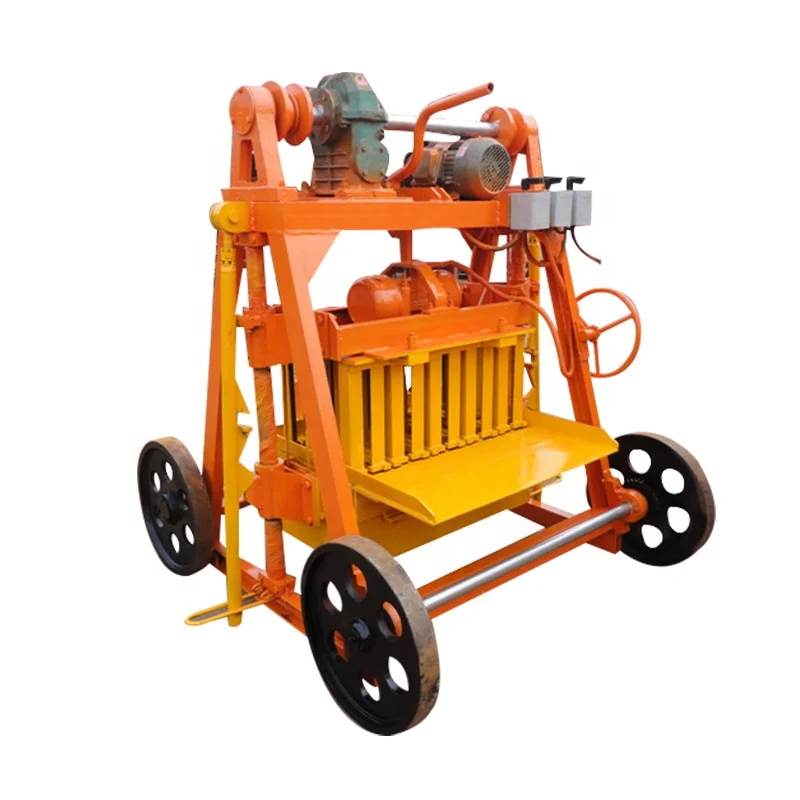
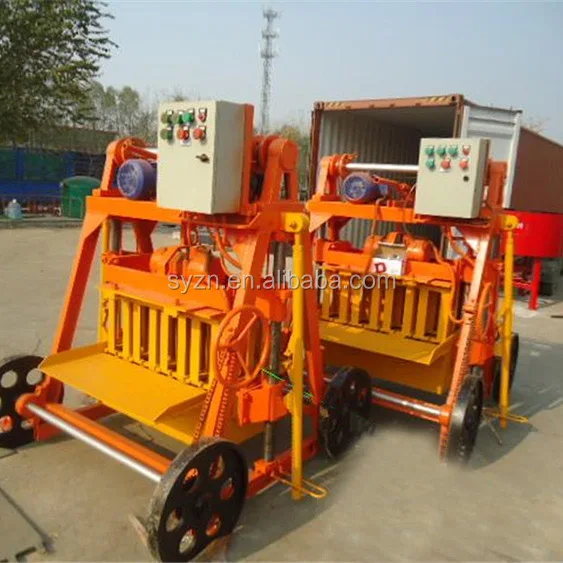 Mobile block machine