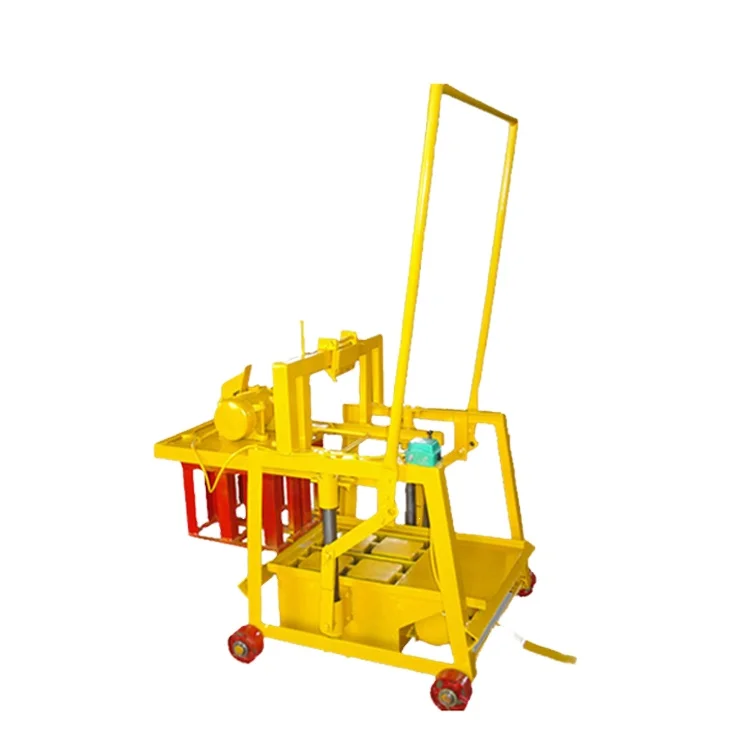
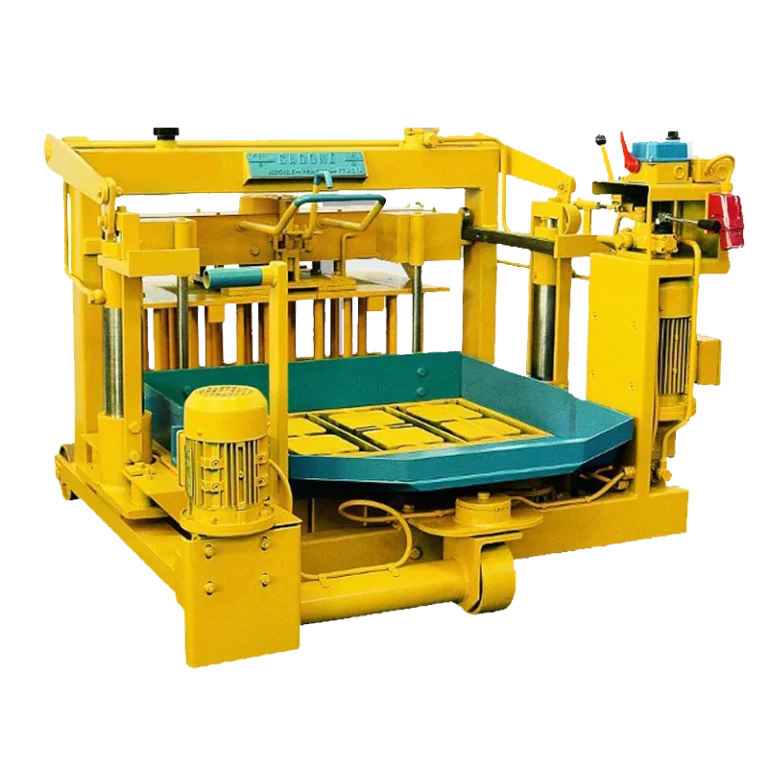
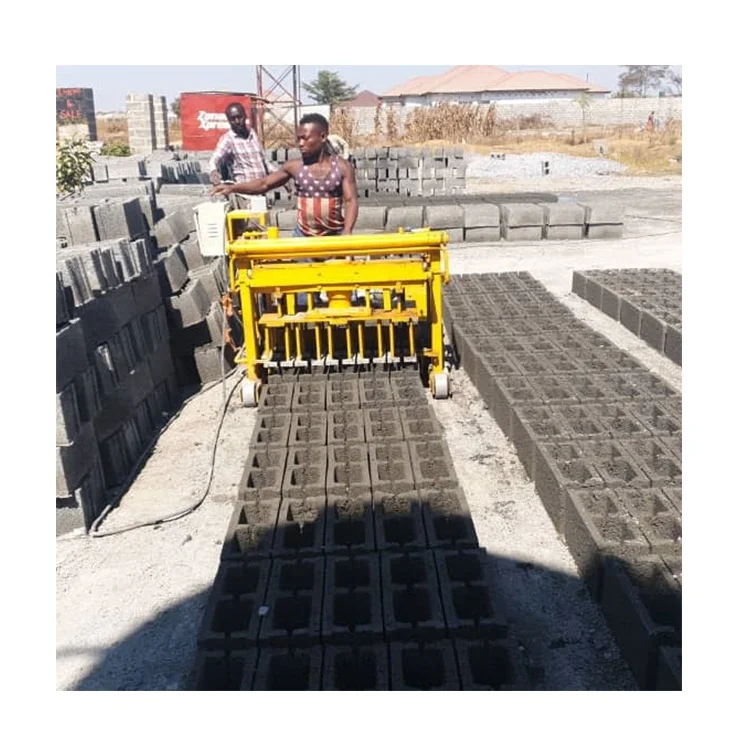
Matched System Design — the QMY4-30 mobile block machine is specified with its moulds, power supply and control language as one coordinated package rather than a standalone press.
Technical Specifications
| Parameter |
Value |
| Model |
QMY4-30 |
| Product Type |
Mobile Pallet-free Block Making Machine |
| Hydraulic Method |
Mould vibration |
| Demold Method |
Hydraulic |
| Molding Cycle |
25–30 s |
| Total Power |
5.95 kW |
| Output Capacity |
480 pcs/h (based on 400×200×200 mm hollow block, 4 pcs/mould) |
| Output Capacity |
600 pcs/h (based on 400×150×200 mm hollow block, 5 pcs/mould) |
| Output Capacity |
840 pcs/h (based on 400×100×200 mm hollow block, 7 pcs/mould) |
| Daily Output (8 hr) |
3,840 pcs (based on 400×200×200 mm hollow block) |
| Daily Output (8 hr) |
4,800 pcs (based on 400×150×200 mm hollow block) |
| Daily Output (8 hr) |
6,720 pcs (based on 400×100×200 mm hollow block) |
| Pallet Requirement |
Pallet-free (mobile egg-laying type) |
| Automation Level |
Manual operation with hydraulic assist |
| Block Format Compatibility |
Hollow blocks in multiple wall thicknesses |
| Voltage & Frequency |
To be confirmed with buyer before production |
| Control System |
To be confirmed with buyer before production |
Application Suitability
| Application |
Material or Output |
| On-site building contractor production |
Hollow blocks from locally sourced crushed stone, sand and cement |
| Remote housing project in hilly or desert terrain |
Pallet-free egg-laying blocks without fixed plant infrastructure |
| Small-scale cement hollow block plant |
Multiple wall-thickness formats on a single machine |
| Mining or industrial site block supply |
Dense hollow blocks for perimeter walls and internal partitions |
| Coastal area construction |
Blocks produced and cured in place, eliminating transport breakage |
What "480 Pieces per Hour" Actually Means for a Mobile Block Machine
The hourly figure only holds true when the block format, cycle time and mix design are all stated together.
A mobile block machine manufacturer will often quote a single output number in brochures, but that number is tied to a specific mould — in this case four cavities producing a 400×200×200 mm hollow block. Switch to a thinner wall block with seven cavities and the same press can deliver noticeably more pieces per hour, yet the total volume of concrete processed stays roughly similar. Without knowing which format the quote assumes, a contractor planning a housing project can easily find daily production falling well short of what the site schedule demands [NEED_CITE: common mismatch between quoted cycle output and real daily production in mobile block plants].

Where the QMY4-30 Sits in the Full Range
The QMY4-30 occupies the entry tier of our mobile block machine range. It is designed for buyers who need blocks produced exactly where they build, without investing in pallets, curing racks or a fixed factory building. The pallet-free egg-laying concept means every block is deposited directly onto a flat concrete floor and left to cure in place, which removes an entire category of handling equipment from the budget. For a contractor working a remote housing development or a mining camp perimeter, that simplicity is often more valuable than raw speed.
When to Stay Mobile and When to Step Up
A mobile block machine manufacturer typically offers several output tiers above this level. Semi-automatic stationary lines introduce pallet circulation, automatic stacking and controlled curing — features that raise daily volume but also demand a dedicated building, three-phase power of a higher rating and a curing area large enough to hold several days of output. The decision comes down to project length and format variety. If the site will produce blocks for twelve months or more in a single format, a stationary line usually delivers better consistency. If the work moves between locations or the format list changes from month to month, the QMY4-30 retains its advantage through mobility and low infrastructure demand [NEED_CITE: factors influencing the crossover point between mobile and stationary block production].
Reading the Specs That Matter on Site
The 25–30 second moulding cycle is the rhythm around which everything else is organised. At the lower end of that range, the hydraulic demolding must release a fully formed block without cracking the thin webs of a hollow format, so vibration force and hydraulic pressure have to be balanced against the specific aggregate gradation the buyer will actually feed into the mixer. The 5.95 kW total power figure covers both the vibration motor and the hydraulic pump; on a remote site running from a diesel generator, that load must be factored into the generator sizing alongside the mixer and any water pump. Mould vibration — as opposed to table vibration — concentrates energy directly into the cavity walls, which helps achieve uniform density across multi-cavity moulds where the outer cavities might otherwise compact less than the centre ones. Because this is a pallet-free machine, the floor surface itself becomes part of the production system: a smooth, level concrete pad is essential or blocks will settle unevenly and develop dimensional drift before the cement has set.
The Hidden Cost of Skipping Ground and Power Checks
When a mobile egg-laying machine arrives on a site with a compacted earth floor instead of a finished concrete pad, the first week of output can show unacceptable thickness variation across every block, forcing the crew to reject an entire batch. Similarly, if the local generator cannot sustain the combined start-up surge of the vibration motor and hydraulic pump, the press will stall mid-cycle and leave partially compacted blocks stuck inside the mould. These are not machine faults — they are site-condition mismatches that could have been resolved during the pre-shipment conversation [NEED_CITE: on-site failures traced to power and ground preparation gaps].
Why Source This Machine Through a Single-System Supplier
Block machinery is our only product line, so the QMY4-30 is never shipped as an isolated press bolted together from separate catalogues. Every configuration is set against the buyer’s actual mix design, local aggregate and target block format before production begins. Mould design and supply cover the formats the buyer’s market actually sells, including custom drawings when standard sizes do not match local building codes. The automation level is selectable, meaning a buyer can begin with manual pallet-free operation and later add a stationary line without learning an entirely different control philosophy. Installation guidance, operator training and mould wear-part support are included so that the first replacement cycle does not leave the machine idle.
Documentation & Verification
- Capacity calculation stating the block format and cycle time assumed for each QMY4-30 output figure
- Machine specification sheet with confirmed voltage, frequency and control language for the destination market
- Factory test record showing actual cycle time and block density on the buyer’s specified mix
- Mould format list and cavity drawing confirming which hollow block sizes ship with the press
- Operation and maintenance manual covering daily checks on the hydraulic demold and vibration assembly
Installation, Commissioning & Support
- A smooth, level concrete pad is required as the egg-laying surface; rough ground causes block dimensional drift
- Power supply must sustain the 5.95 kW total load plus mixer and pump start-up surge
- Machine ships as a single mobile unit; no heavy foundation or anchor bolts are needed
- First-run commissioning verifies moulding cycle and block density against the agreed mix design
- Operator training covers hydraulic demolding sequence, mould change procedure and daily vibration motor inspection
- Mould wear-part list provided at delivery so the first reorder can be planned before production starts
What We Need to Size the Right Configuration
To prepare a configuration proposal for the QMY4-30, please share the hollow block formats your market requires, the daily output target and the shift pattern you plan to run. We also need the local voltage and frequency, the control panel language preference and a description of the aggregate you intend to use — including any high-clay or high-moisture material that may affect compaction. If the site has existing mixing or material-handling equipment, list those units so we can match the press cycle to your upstream capacity.
Frequently Asked Questions
Q: How is the QMY4-30 capacity verified, and which block format does the hourly figure assume?
A: Every output figure we quote is tied to a specific block format, cavity count and moulding cycle. For the QMY4-30, 480 pieces per hour assumes a 400×200×200 mm hollow block with four cavities and a 25–30 second cycle. A factory test record is prepared before dispatch showing actual cycle time and block density on the buyer’s agreed mix.
Q: Where does the mobile pallet-free tier sit in the full Shiyue machine range, and when should a buyer step up?
A: The QMY4-30 is the entry tier for mobile production. It suits short-to-medium projects or remote sites where a fixed plant is not practical. When daily volume requirements grow beyond what a single shift can deliver, or when the buyer needs automatic stacking and curing control, stepping to a semi-automatic stationary line becomes the better investment.
Q: What installation conditions does a mobile egg-laying machine need on arrival?
A: The machine needs a smooth, level concrete floor to lay blocks directly. Power must cover the 5.95 kW press load plus the mixer and any water pump. Raw material staging should sit close to the press to keep manual feeding distance short, and a clear curing area must be marked off so freshly produced blocks are not disturbed during the initial set.
Q: Which moulds are included as standard, and can custom formats be added?
A: Standard moulds cover common hollow block wall thicknesses in the 400 mm length range. Custom cavity layouts and non-standard block dimensions can be designed from buyer drawings. Each mould ships with a format list and cavity drawing so the buyer knows exactly which sizes the QMY4-30 will produce on delivery.

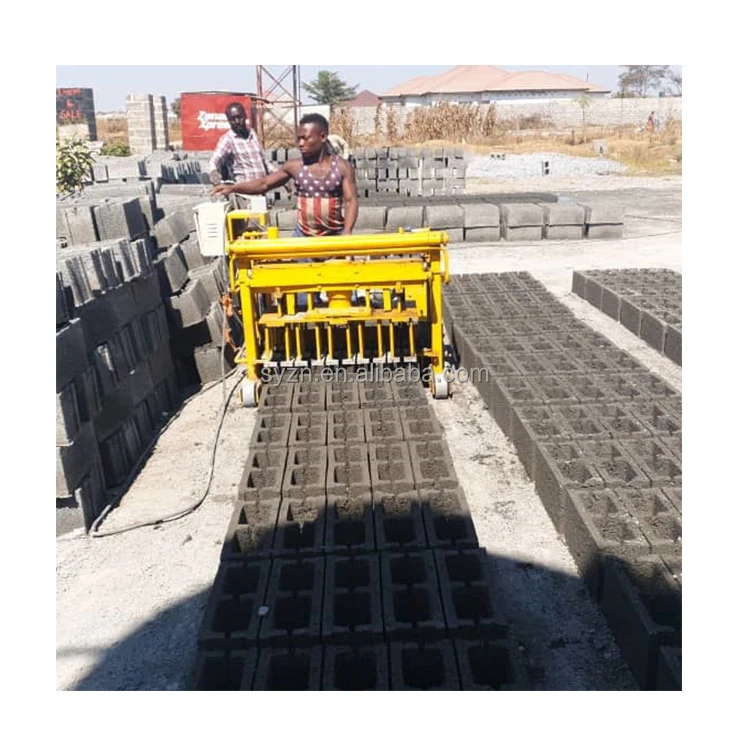
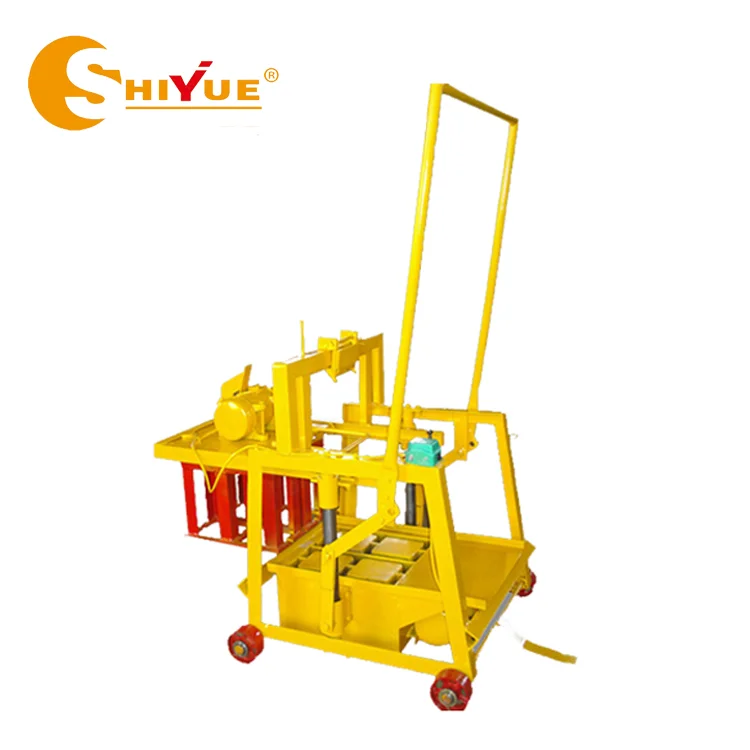 Mobile block machine