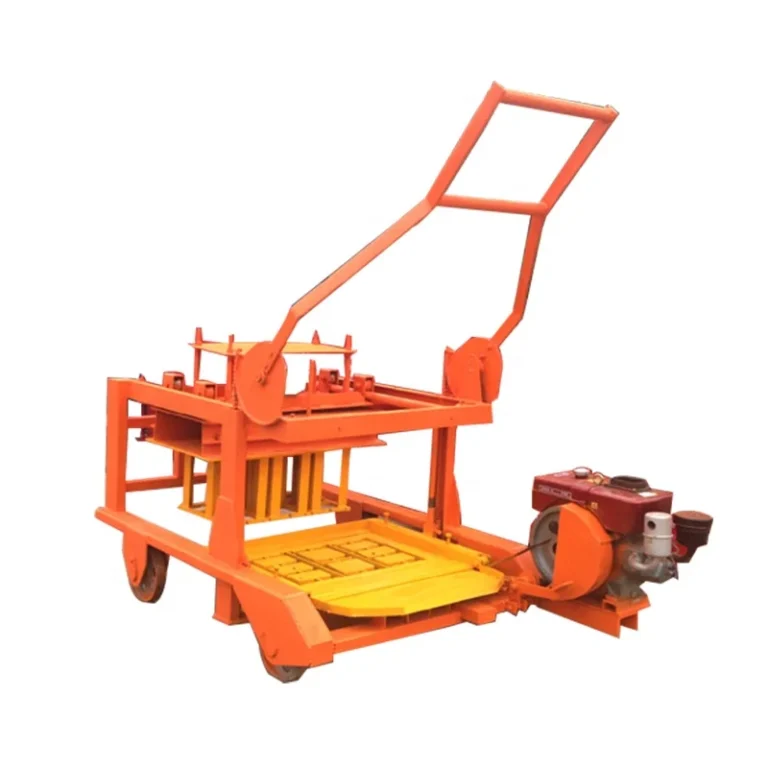
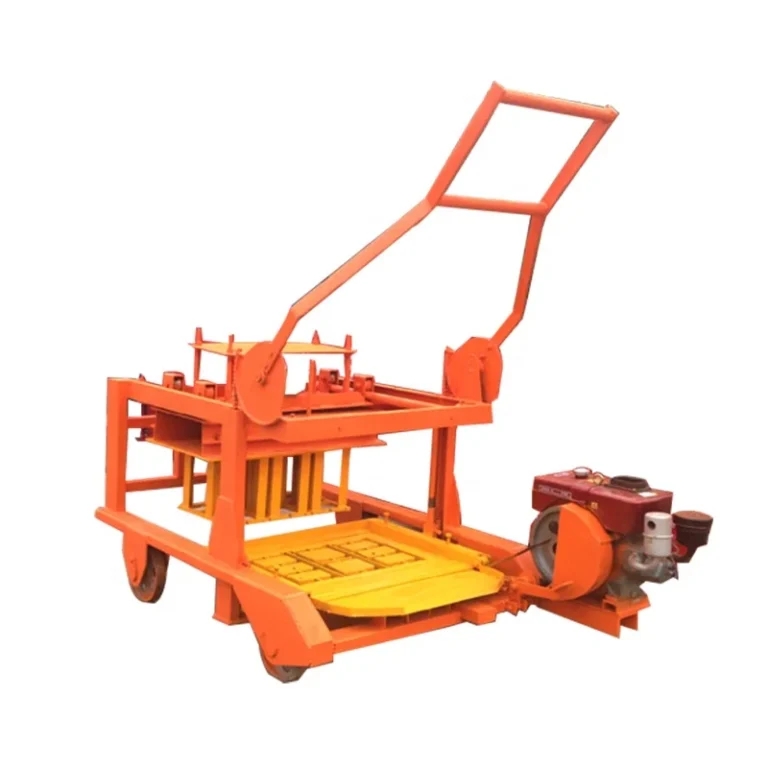
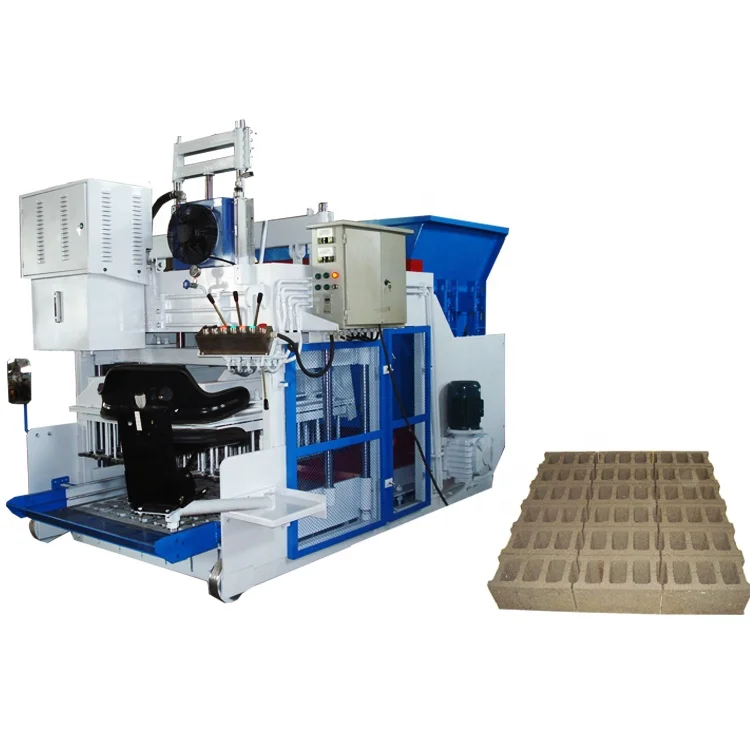
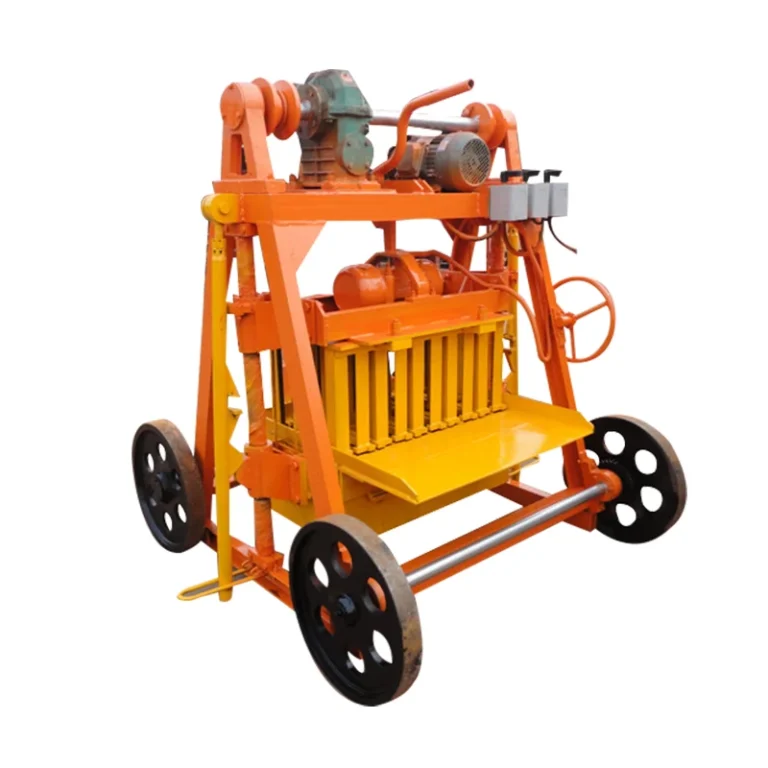
Complete system matching — the QMJ2-45 mobile block machine, its hollow brick moulds, and pallet-free operation are specified together as one coordinated production setup rather than sourced from separate suppliers, ensuring output expectations match what the machine actually delivers on your site.
Technical Specifications
| Parameter |
Value |
| Model |
QMJ2-45 |
| Product Type |
Mobile Concrete Block Making Machine |
| Machine Type |
Manual mobile egg-laying block machine |
| Mould Format |
Hollow brick, multiple sizes via mould change |
| Cycle Time |
25–30 s per mould |
| Output (400×200×200 mm hollow brick) |
2 pcs/mould, 160 pcs/h, 1,280 pcs per 8-hour shift |
| Output (400×150×200 mm hollow brick) |
3 pcs/mould, 240 pcs/h, 1,920 pcs per 8-hour shift (basis not stated in source) |
| Output (400×100×200 mm hollow brick) |
4 pcs/mould, 320 pcs/h, 2,560 pcs per 8-hour shift |
| Pallet Requirement |
None (egg-laying / pallet-free operation) |
| Labor Requirement |
1–3 workers |
| Mobility |
Hand-pushed, free movement on prepared ground |
| Automation Level |
Manual |
| Mould Change |
Supported, allows multiple hollow brick formats |
| Certification |
ISO 9001:2000, CE |
Application Suitability
| Application |
Material or Output |
| On-site hollow brick production for housing projects |
Local sand, crushed stone and cement mixes laid directly on compacted ground |
| Small-scale block production in limited workspace |
Hollow bricks from 100 mm to 200 mm width without pallet storage area |
| Remote or off-grid building sites |
Manual operation where grid power and pallet logistics are unavailable |
| Entrepreneur-led first block plant |
Low-investment hollow brick production with minimal supporting equipment |
| Development and housing project contractors |
Blocks produced directly at the construction site as the build progresses |
What "1,280 Blocks per Shift" Actually Means on Your Ground
The output figure only holds when the block format, cycle time, and mix design are all stated together.
A single headline capacity number hides the format it assumes. When a mobile block machine manufacturer quotes 1,280 blocks per shift, that figure is tied to a 400×200×200 mm hollow brick at a 25–30 second cycle. Switch to a narrower 100 mm brick and the same machine produces 2,560 pieces in the same shift. I have seen buyers compare machines on a single number and end up disappointed because the format behind that number was never discussed. That mismatch shows up on the first production day, not in the brochure [NEED_CITE: capacity calculation standards for concrete block machinery].

Where the QMJ2-45 Fits on the Machine Range
The QMJ2-45 sits at the entry point of the mobile block machine manufacturer range, aimed at buyers who need hollow brick production without investing in a fixed plant, pallet circulation system, or three-phase power infrastructure. It occupies the space below semi-automatic stationary machines and fully automatic lines, offering a production footprint measured in a few square metres of prepared ground rather than a dedicated factory bay.
Pallet-Free Operation and What It Removes from Your Budget
Egg-laying design means the machine deposits each mould of wet concrete directly onto the ground and moves forward to the next position. No pallets are needed, which eliminates the capital outlay for hundreds of production pallets, the storage area those pallets demand when not in use, and the daily labour of moving pallets between the press, the curing zone, and the return conveyor. For a first-time block producer, pallet-free operation keeps the initial setup to the machine itself and a patch of levelled ground [NEED_CITE: pallet handling logistics in small-scale block production].
Reading the Specs That Matter on a Manual Mobile Machine
Vibration force and hydraulic pressure dominate the spec sheets of stationary presses, but on a hand-pushed egg-laying machine the parameters that govern daily output are different. The cycle time of 25–30 seconds per mould sets the pace; any mix that sticks in the mould or requires extended vibration pushes that cycle longer and cuts shift output. The mould change system determines format flexibility — the QMJ2-45 supports multiple hollow brick widths from a single chassis, so you can respond to market demand without buying a second machine. Labour requirement of 1–3 workers covers one operator feeding the mix, one guiding the machine, and one finishing the laid blocks; going below that headcount slows the cycle.
The Cost of Skipping the Mix Test Before You Order
I had a buyer in West Africa who ordered a QMJ2-45 based on the 400×200×200 mm capacity figure. His local sand had a high clay content that made the mix too sticky for a clean mould release. The 25-second cycle stretched past 40 seconds, and daily output fell well below the quoted 1,280 pieces. We spent a night on the phone adjusting his vibration timing and water ratio, but the right move would have been to send a sample of his sand before the machine shipped. When the mix does not suit the machine’s mould release characteristics, no amount of on-site adjustment fully recovers the lost capacity [NEED_CITE: effect of aggregate clay content on concrete block cycle time].
Why Buyers Source This Machine from a Single-Focus Manufacturer
Block machinery is the only product line, so the QMJ2-45, its hollow brick moulds, and the operating procedure are developed as one system rather than assembled from unrelated components. Configuration starts with the buyer’s actual block format and local aggregate, not a catalogue default. Mould design covers the hollow brick sizes the buyer’s market demands, with custom moulds available from buyer drawings. The manual automation level is a deliberate entry point — a buyer can start with the QMJ2-45 and move to a semi-automatic stationary machine later without learning a new supplier’s ecosystem. Installation support includes operator training so the 1–3 worker crew produces consistent blocks from the first week.
Documentation & Verification
- Line layout showing ground area required per block format and curing path
- Capacity calculation sheet stating block dimensions and cycle time behind each output figure
- Mould drawing and format list confirming included and optional hollow brick sizes
- Factory test record demonstrating cycle time on the buyer’s specified format
- Operation and maintenance manual with mix ratio guidance per block size
- CE declaration and ISO 9001:2000 compliance documents for customs clearance
Installation, Commissioning & Support
- Levelled and compacted ground surface required across the production and curing area for the QMJ2-45’s hand-pushed movement
- No fixed electrical connection needed for manual operation; electric motor variant requires confirmed voltage and frequency
- Machine shipped assembled with mould mounted; first mould change demonstrated on site during commissioning
- Initial production run supervised to set cycle time and mix ratio for the buyer’s local aggregate
- Operator training covers mould change procedure, mix consistency judgment, and block finishing technique
- Wear parts list provided with recommended replacement intervals for mould liners and vibration components
- Ongoing support for additional mould format orders matched to the buyer’s evolving market demand
What We Need from You to Size This Machine Correctly
To configure the QMJ2-45 for your project, share the hollow brick dimensions your local market requires and the daily volume you need to sustain. A sample of your sand or aggregate lets us verify the mix before the machine ships. If you are considering an electric motor variant, confirm your site’s voltage and frequency so commissioning is not delayed on arrival.
Frequently Asked Questions
Q: How is daily output calculated and which block format does each figure assume?
A: Each output figure is tied to a specific hollow brick size and a 25–30 second mould cycle. The 400×200×200 mm format yields 1,280 pieces per 8-hour shift, while the 400×100×200 mm format yields 2,560 pieces in the same period. We provide a capacity calculation sheet that states the exact format behind every number before you commit to the order.
Q: Does the QMJ2-45 require any power source or is it fully hand-operated?
A: The standard configuration is manual with no external power requirement, making it suitable for remote sites without reliable grid access. An electric motor variant is available where power is present, in which case voltage and frequency must be confirmed before production to ensure the motor matches your local supply.
Q: Which hollow brick moulds are included and how long does a mould change take?
A: The included mould format is confirmed during the proposal stage based on your local market demand. Additional hollow brick sizes can be ordered and are designed to fit the same machine chassis. Mould change is performed on site with basic tools and, once the crew is trained, takes a short portion of a shift.
Q: What curing method is recommended when blocks are laid directly on the ground?
A: Egg-laying blocks cure in place on the compacted ground surface. Water curing by sprinkling is the standard method, and the curing area must be protected from direct sun and heavy rain during the initial set. Ground preparation and curing coverage are covered during installation support.
Q: Can additional mould formats be ordered later for different block sizes?
A: Yes, additional moulds are designed and manufactured to match the block sizes your market requires, including custom dimensions from your drawings. Each new mould is tested on the QMJ2-45 before shipment to confirm cycle time and block dimensions.

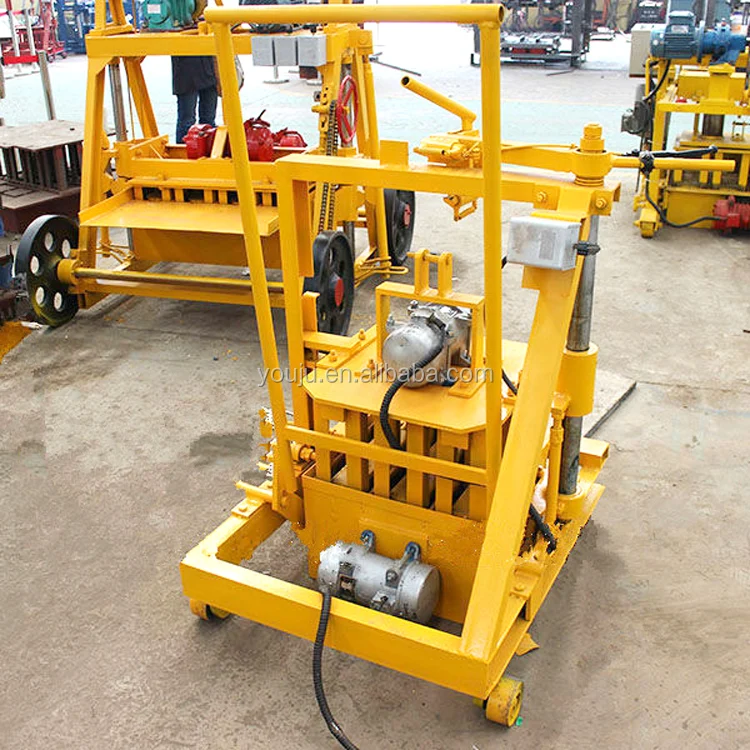
 Mobile block machine