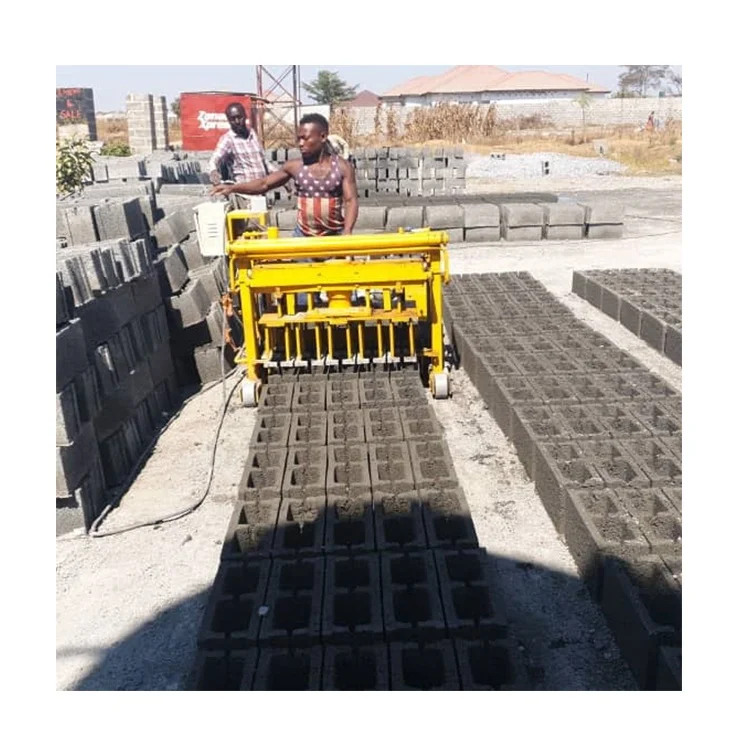
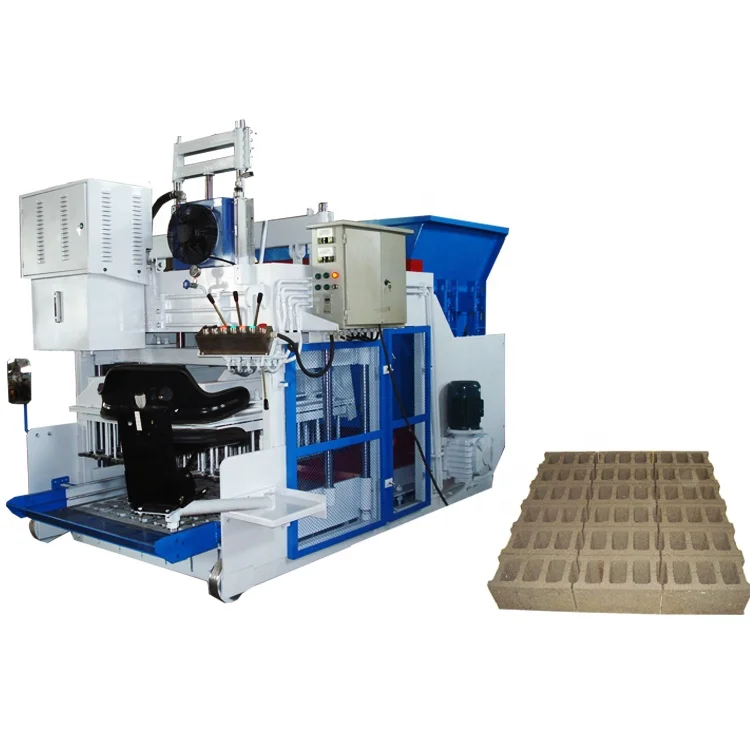
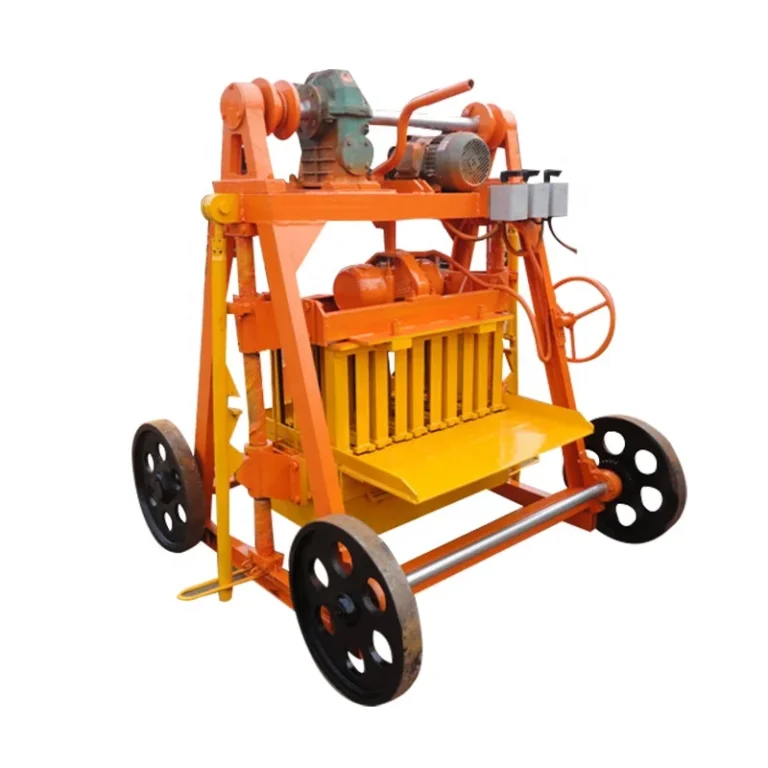
Entry-Mobile Range — configured for the buyer’s actual block format and local aggregate, not a catalogue default.
Technical Specifications
| Parameter |
Value |
| Model |
QMJ4-45 |
| Product Type |
Mobile Egg Layer Block Making Machine |
| Machine Type |
Movable / Egg-laying (no fixed plant required) |
| Vibration System |
Twice vibrations of molding core |
| Moulding Cycle |
30–45 s (basis to be confirmed per block format and material) |
| Output Capacity (400×200×200 mm hollow block) |
4 pcs/mould · 320 pcs/h · 2,600 pcs/8 hr |
| Output Capacity (400×150×200 mm block) |
5 pcs/mould · 400 pcs/h · 3,200 pcs/8 hr |
| Output Capacity (400×100×200 mm block) |
7 pcs/mould · 560 pcs/h · 4,480 pcs/8 hr |
| Automation Level |
Manual operation |
| Control System |
Manual (no PLC) |
| Pallet Requirement |
Not required (blocks laid directly on ground) |
| Power Source |
Electric (voltage & frequency to be confirmed before production) |
| Assembly State |
Fully assembled, mobile unit |
| Mould Heat Treatment |
Carburization technology |
| Certification |
ISO 9001:2000, CE |
Application Suitability
| Application |
Material or Output |
| On-site block production at construction and housing project sites |
Solid and hollow concrete blocks laid directly on compacted ground |
| Small-scale and startup block production |
Blocks in formats 400×200×200, 400×150×200, 400×100×200 mm |
| Mobile production across multiple dispersed job sites |
Machine moved between locations without pallet infrastructure |
| Limited-capital block manufacturing |
Manual operation with no pallet purchase or handling system |
What "4,480 Blocks per Day" Actually Assumes
Every capacity figure here is tied to a specific block format — no generic hourly number is presented without its product assumption.
I have seen buyers in Shandong compare mobile egg layer block making machine quotes by a single hourly output and then discover, after arrival, that the figure was based on the smallest solid block while their market demands 200 mm hollow blocks. The real daily yield drops noticeably when the format changes, and the vibration cycle must be lengthened for thicker walls to achieve adequate compaction. [NEED_CITE: typical variation in block machine cycle time by format and wall thickness] Matching the quoted capacity to the format you actually sell prevents that gap between expectation and output.

How the Movable Egg Layer Concept Removes Fixed-Plant Barriers
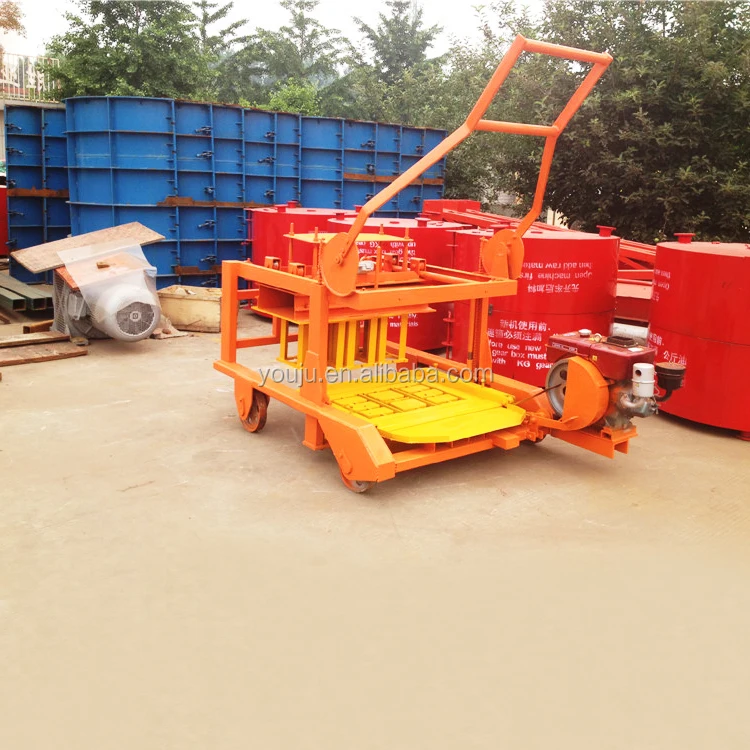
The QMJ4-45 mobile egg layer block making machine lays blocks directly onto the ground as it moves forward, eliminating the need for pallets entirely. This means no pallet purchase, no pallet storage area, and no labour cycle dedicated to pallet feeding and retrieval. For a contractor producing blocks on a housing project site or an entrepreneur starting a block operation with limited capital, the absence of pallet infrastructure removes a significant portion of the upfront investment and the physical footprint a stationary line would demand.
Where Double Vibration Meets On-Site Aggregate Reality
The twice-vibration molding core was introduced to address density inconsistency that single-vibration predecessors produced, particularly when local aggregate contains fines or variable moisture. In my experience working with contractors in Shandong, I have seen egg layer machines of this class struggle when the sand-to-cement ratio was not adjusted for local material behaviour — the outer vibration compacted the surface but the core remained porous. [NEED_CITE: effect of vibration frequency and duration on concrete block density] The double-vibration approach targets both the mold wall and the core simultaneously, producing more uniform strength across the block cross-section when the mix design is matched to available aggregate.
Cycle Time, Mould Carburization, and What Changes When You Switch Formats
The 30–45 second moulding cycle range reflects the spread across different block formats and wall thicknesses: a 100 mm solid block cycles faster than a 200 mm hollow block because the concrete volume per mould is smaller and compaction reaches full density in fewer vibration seconds. The carburization heat treatment applied to each mould extends service life under abrasive mixes containing crushed stone or recycled aggregate. When switching between formats, the operator changes the mould box — a manual process that takes a portion of a shift the first time but shortens with practice. The key is ensuring the replacement mould matches the block dimensions your local market requires, not just the three standard formats listed in the specification sheet.
The Cost of Arriving on Site Without Voltage Confirmation
One of the most common commissioning delays I encounter with manually operated block machines is a voltage and frequency mismatch discovered on the day of first start-up. The buyer assumed 380V/50Hz would be supplied as default, or the local grid operates at a frequency the motor was not wound for. The machine arrives fully assembled, ready to produce — but the motor hums without reaching operating speed, or the vibration force falls short of what the mix requires for proper compaction. [NEED_CITE: voltage and frequency standards by export market] Confirming electrical specifications before production begins is a single conversation that prevents weeks of idle equipment and re-commissioning expense.
Why Sourcing from a Block-Machinery-Only Manufacturer Matters
Block machines and their moulds, pallets, and supporting handling equipment are the single focus at Shandong Shiyue Intelligent Machinery. For the QMJ4-45, that means the machine is configured against the buyer’s actual mix design and target block format rather than shipped as a catalogue default. Mould drawings and format lists are supplied so buyers can verify dimensions match their market before production starts. The documentation package includes a capacity calculation that states which block format each output figure assumes. Voltage, frequency, and control language are confirmed before the machine enters production. Installation support with operator training covers the first production runs so the crew understands cycle timing, mix consistency, and ground preparation for egg-laying operation.
Documentation & Verification
- Capacity calculation document stating output per block format for the QMJ4-45
- Mould drawing and format list confirming block dimensions match your market
- Voltage and frequency confirmation record signed off before production
- Factory test record on your specified block format before dispatch
- Operation and maintenance manual with wear parts list at delivery
Installation, Commissioning & Support
- Fully assembled QMJ4-45 arrives ready to operate — no on-site mechanical assembly required
- Voltage and frequency confirmed against local grid before motor is wound and shipped
- Ground surface must be level and compacted for consistent egg-laying block placement
- First-run commissioning includes mix adjustment to local aggregate and cycle time tuning
- Operator training covers manual mould change procedure and vibration timing by format
- Wear parts list and mould replacement schedule provided for ongoing maintenance planning
Before You Request a Quote
To size this mobile egg layer block making machine correctly for your project, share the block formats your market sells and the daily output you need per format. Let us know what aggregate and cement are available locally, including any moisture or fines characteristics, so the vibration parameters can be set before the machine ships. Confirm your site’s voltage and frequency so the electrical system matches your grid on arrival.
Frequently Asked Questions
Q: How is hourly capacity calculated, and which block format does each figure assume?
A: Each output figure is stated per block format with the mould cavity count and cycle time that produce it. The 2,600 blocks per eight-hour shift assumes 400×200×200 mm hollow blocks at four per mould; the 4,480 figure assumes 400×100×200 mm solid blocks at seven per mould. Always match the quoted capacity to the format your market actually buys.
Q: What voltage and frequency options are available for my country’s grid?
A: The motor and electrical components are configured to your site’s voltage and frequency before production begins. Confirm these specifications during the quotation stage so the machine arrives ready for immediate start-up without rewinding or transformer requirements on site.
Q: Does this egg layer require pallets, and what ground conditions are needed?
A: No pallets are needed. The QMJ4-45 lays blocks directly onto the ground as it moves. The surface must be level and adequately compacted so blocks maintain dimensional accuracy and do not settle unevenly during the initial curing period before they gain sufficient green strength.
Q: What is the mould change procedure, and how long does a format switch take?
A: Mould change is a manual process involving removal of the current mould box and installation of the replacement. The first change takes longer as the operator becomes familiar with alignment and fastening. Subsequent changes shorten with practice. Custom mould designs are available to buyer drawings.
Q: Which block formats can this machine produce beyond the three listed?
A: The three formats in the specification sheet are standard offerings. Additional formats and custom dimensions are available through mould design to buyer drawings. Confirm your market’s block requirements during the inquiry stage so the correct mould is supplied with the machine.

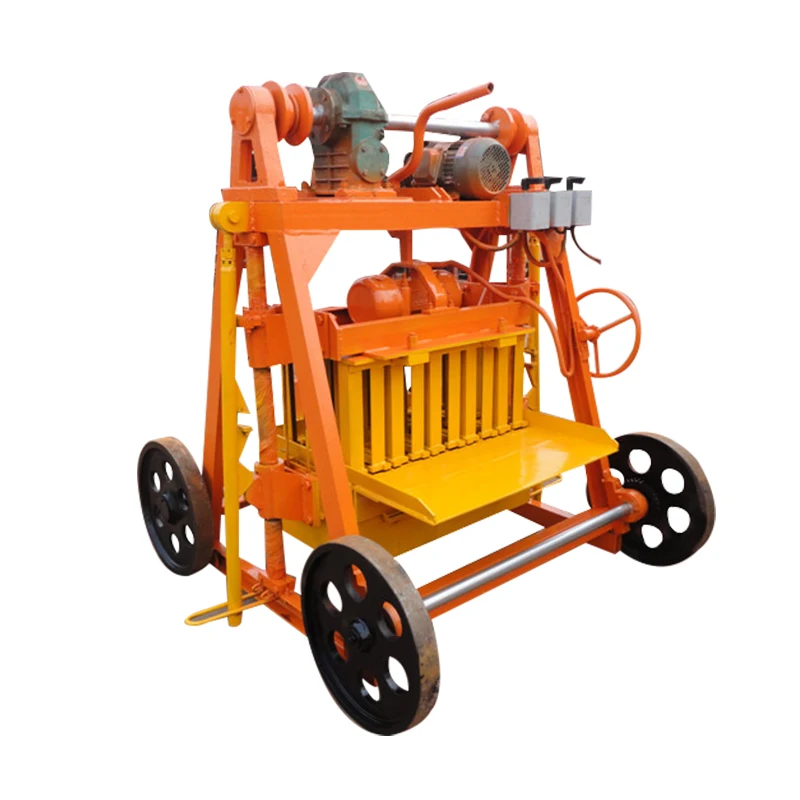
 Mobile block machine