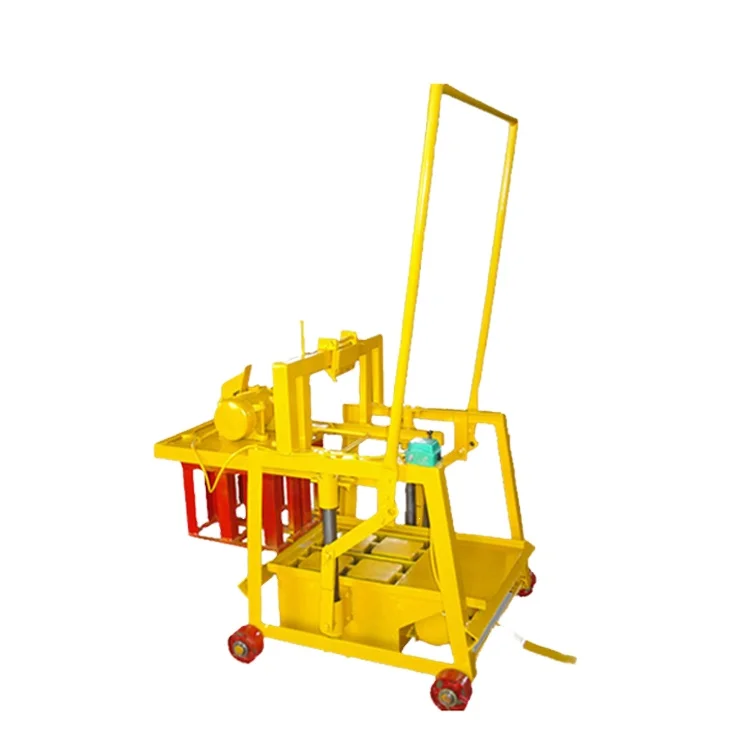
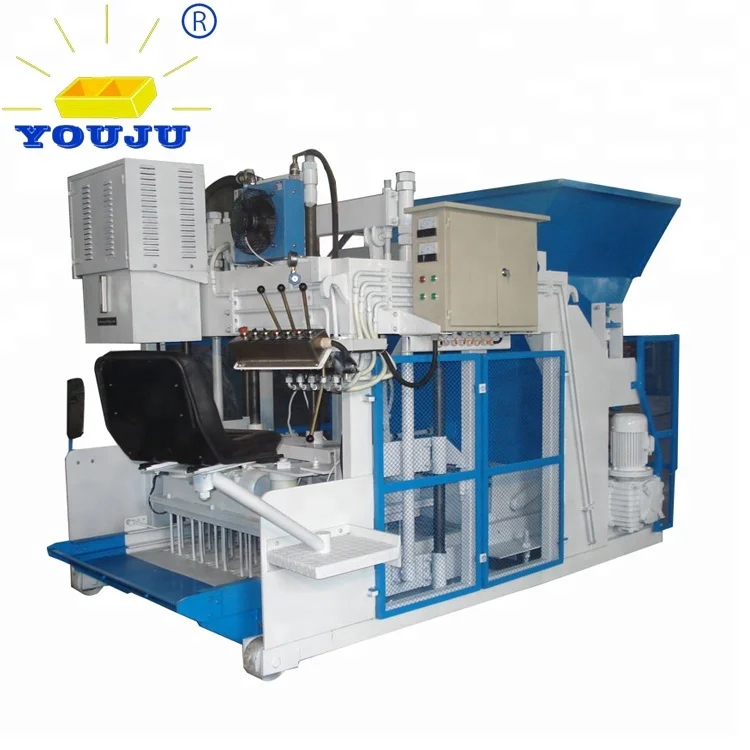
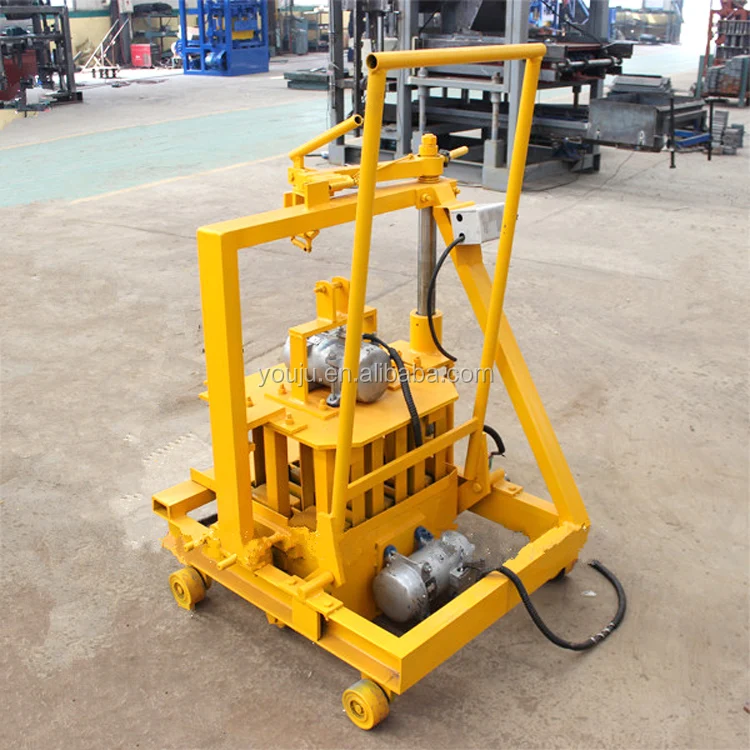
Matched System Design — The QMY4-30 is positioned as the entry tier of our range, specified as one coordinated unit rather than a catalogue default, helping buyers place themselves on the investment and footprint scale before narrowing down.
Technical Specifications
| Parameter |
Value |
| Model |
QMY4-30 |
| Product Type |
Mobile Egg Laying Concrete Block Making Machine |
| Machine Type |
Mobile egg-laying (palletless) |
| Mould Vibration Method |
Mould vibration with hydraulic demolding |
| Molding Cycle |
25–30 seconds (basis not stated in source — confirm block format / material / thickness) |
| Total Power |
5.95 kW |
| Voltage & Frequency |
Configurable (basis not stated in source — confirm voltage, frequency and phase) |
| Control System |
Available options pending confirmation (basis not stated in source — confirm manual / semi-auto / PLC) |
| Pallet Requirement |
None (egg-laying / palletless operation) |
| Mould Format Examples |
400×200×200 mm / 400×150×200 mm / 400×100×200 mm |
| Output Capacity |
480 pcs/h based on 400×200×200 mm block (4 pcs/mould, 25–30 s cycle); 600 pcs/h based on 400×150×200 mm block (5 pcs/mould, 25–30 s cycle); 840 pcs/h based on 400×100×200 mm block (7 pcs/mould, 25–30 s cycle) |
| 8-Hour Output |
3,840 pcs (400×200×200 mm) / 4,800 pcs (400×150×200 mm) / 6,720 pcs (400×100×200 mm) |
| Standards |
ISO 9001:2000; CE (as claimed in source — verify certificate scope) |
Application Suitability
| Application |
Material or Output |
| On-site construction block production |
Hollow and solid concrete blocks from local aggregate and cement |
| Remote housing and development projects |
Palletless block laying directly on prepared ground in mountainous, hilly, desert and coastal areas |
| First block plant setup by small-scale entrepreneurs |
Entry-level volume output with minimal upfront capital for moulds and pallets |
| Contractor self-supply on job sites |
Local production of standard block formats without a fixed batching plant |
What "Output Capacity" Means When No Format Is Named
Every capacity figure here is tied to a specific block size, mould cavity count and cycle time — not a single headline number pulled from thin air.
Capacity is often quoted in cycles per hour without stating which block format that figure assumes. I have seen buyers arrive at a job site expecting a certain daily volume, only to find the real output falls short because the quoted number was based on a smaller solid brick rather than the hollow block their market actually demands. The QMY4-30 produces at different rates depending on whether you are running 400×200×200 mm hollow blocks at four per cycle, 400×150×200 mm blocks at five per cycle, or 400×100×200 mm blocks at seven per cycle. Each of these gives a different hourly and eight-hour total, and the cycle time itself shifts with material mix and block density [NEED_CITE: block format impact on realistic cycle time for mobile egg laying machines]. A mobile egg laying block machine is only as productive as the format it actually runs day after day.

Where This Mobile Egg Laying Block Machine Sits on the Range
The QMY4-30 is the starting point for buyers who need block production without a fixed plant or pallet investment. It sits below semi-automatic lines that add pallet feeding and stacking, and well below fully automatic systems with curing rack handling and cubing. For a contractor or entrepreneur whose priority is getting blocks made on a job site with the lowest possible setup cost, this tier removes the pallet system and the curing-area infrastructure entirely.
Ground Preparation Decides Whether Your Blocks Survive the First Hour
Egg-laying operation means the machine deposits blocks directly onto the ground surface and moves forward. If that surface is not level and compacted, the blocks tilt, crack or collapse before the concrete sets. I once saw a QMY-class unit shipped to a project where the ground was rammed earth but not properly compacted — the machine completed a full pass and every block in that run was leaning or split, resulting in a significant material loss. Before we dispatch, we now confirm ground conditions with the buyer. A well-prepared concrete floor or thoroughly compacted and levelled base is the difference between consistent output and constant waste [NEED_CITE: site preparation standards for palletless block production].
Reading the Specs That Actually Matter on Site
The 5.95 kW total power rating keeps energy demand within reach of a standard site generator or a small dedicated supply line, which matters in remote project locations where grid capacity is limited. The mould vibration method with hydraulic demolding controls block density and release consistency — vibration settles the concrete into the mould cavity, while hydraulic pressure lifts the mould cleanly so the freshly formed block holds its shape without slumping. The three listed mould formats cover the common structural and partition block sizes sold across most markets, and each format change means a different number of cavities per cycle, directly altering your hourly throughput. Palletless operation eliminates the entire pallet purchasing cost and the floor space otherwise needed for pallet storage and return, but it places the full burden of quality on ground flatness and concrete mix consistency. Voltage, frequency and phase must be confirmed before production begins — arriving with a 380 V motor in a 415 V market or a 50 Hz winding where 60 Hz is standard will stall commissioning immediately.
The Cost of Overlooking the Details Before Shipment
When voltage and frequency are not confirmed before a mobile egg laying block machine leaves the factory, the motor may overheat or underperform on first start-up, delaying a project that is already on a deadline. When the control language does not match the operator’s reading ability, mistakes in cycle timing and demolding sequence follow [NEED_CITE: PLC display language and commissioning delays in export markets]. When a machine is configured for a raw material mix the buyer cannot source locally, the only options are to import additives at significant cost or re-engineer the mix from scratch, neither of which a project schedule can absorb.
Why Source This Machine Through Shiyue
Block machinery is our single focus, so the QMY4-30 arrives as a matched unit — machine, mould and operating parameters specified together rather than assembled from separate supply chains. We set the configuration against your actual mix design, local aggregate and the block formats your market sells, not a catalogue default. Mould design and supply cover the formats you need, including custom drawings if your local market runs a non-standard size. The automation level is selectable, so a buyer starting with the QMY4-30 can move up to semi-automatic or automatic lines later without replacing the knowledge base. Installation and commissioning support includes operator training so the crew on site understands ground preparation, mix proportioning and mould change procedure from the first day.
Documentation & Verification
- Line layout and capacity calculation stating the block format assumed for each QMY4-30 output figure
- Machine specification sheet with confirmed voltage, frequency, phase and control language before dispatch
- Mould drawing and format list matching the block sizes your local market actually sells
- Factory test record and packing photographs documenting the QMY4-30 before container loading
- CE declaration and supporting documentation where applicable to the destination market
Installation, Commissioning & Support
- Ground must be level and compacted to tolerance for palletless egg-laying operation of the QMY4-30
- Power supply must match confirmed voltage, frequency and phase for the 5.95 kW total load
- Machine arrives in a state ready for on-site assembly and first-cycle testing with local aggregate
- Operator training covers mould change, vibration timing and hydraulic demolding sequence for each block format
- Wear parts and mould replacement list supplied so first reorder can be planned before stock runs out
- Ongoing support available for mix adjustment as local raw material sources change over the project life
Tell Us What You Are Actually Building
To configure the QMY4-30 for your site, we need to know the block formats your market sells, the target daily volume per format, the raw materials available locally including aggregate type and grading, and the ground conditions you can prepare. We also need your site voltage, frequency and phase so the motor and controls are wound correctly before the machine leaves our workshop.
Frequently Asked Questions
Q: How is the output capacity of the QMY4-30 verified for each block format?
A: Every capacity figure we quote is tied to a specific block size and mould cavity count. For the QMY4-30, output is stated as 480 pieces per hour based on 400×200×200 mm blocks at four per mould, 600 pieces per hour based on 400×150×200 mm blocks at five per mould, and 840 pieces per hour based on 400×100×200 mm blocks at seven per mould, each at a 25–30 second cycle.
Q: What voltage and frequency does the QMY4-30 need for my country?
A: Voltage, frequency and phase are configurable and must be confirmed before production. We need your site supply specification — typically 220 V or 380 V or 415 V, at 50 Hz or 60 Hz, single or three phase — so the motor winding and control panel match your local grid and commissioning is not delayed on arrival.
Q: Where does the QMY4-30 sit compared with semi-automatic and automatic block lines?
A: The QMY4-30 is the entry tier — a mobile, palletless egg-laying machine requiring no fixed plant, no pallets and no curing rack system. Semi-automatic lines add pallet feeding and basic stacking, while automatic lines include full stacking, cubing and curing rack handling. Buyers start here when site conditions or investment level do not yet justify a fixed plant.
Q: What ground conditions are needed for egg-laying block production?
A: The surface must be flat, compacted and capable of supporting freshly formed blocks without tilting or settling. A concrete floor is ideal; compacted and levelled earth can work if properly prepared. We confirm ground conditions with every buyer before dispatch because uneven ground causes block waste that no machine setting can correct.
Q: Can I order custom mould formats for the QMY4-30?
A: Yes. Beyond the three standard formats listed, we design and supply moulds to buyer drawings for non-standard block sizes. We need your target block dimensions, wall thickness and any interlocking or facing profile requirements so the mould cavity count and vibration characteristics are matched to the format you actually sell.

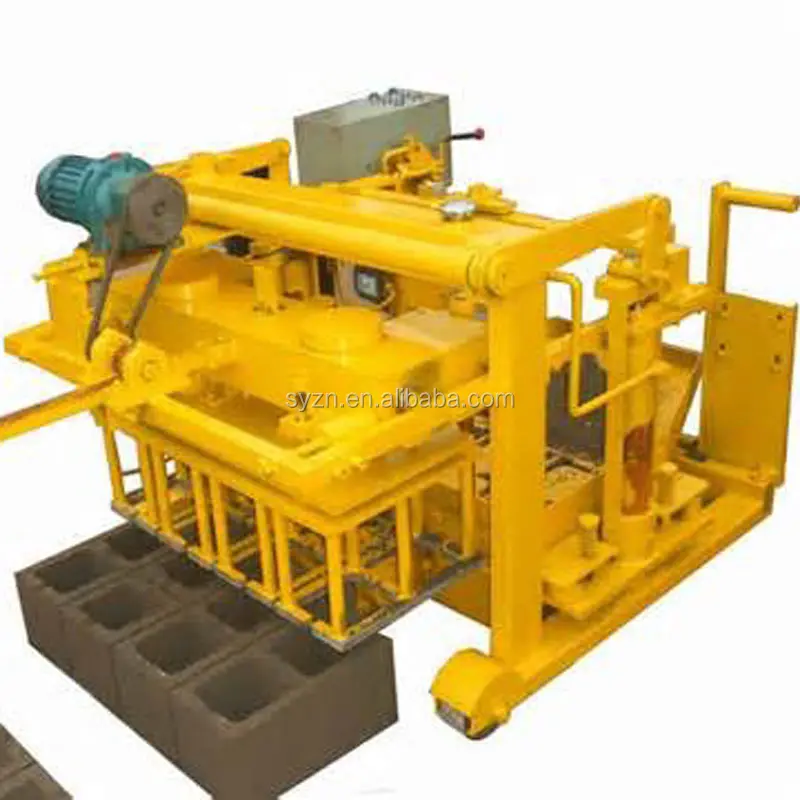
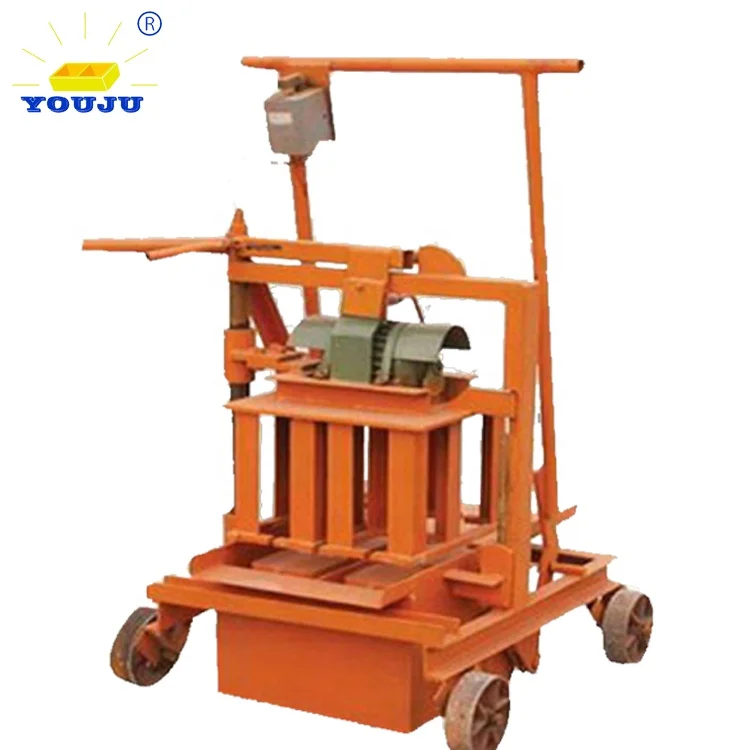 Mobile block machine