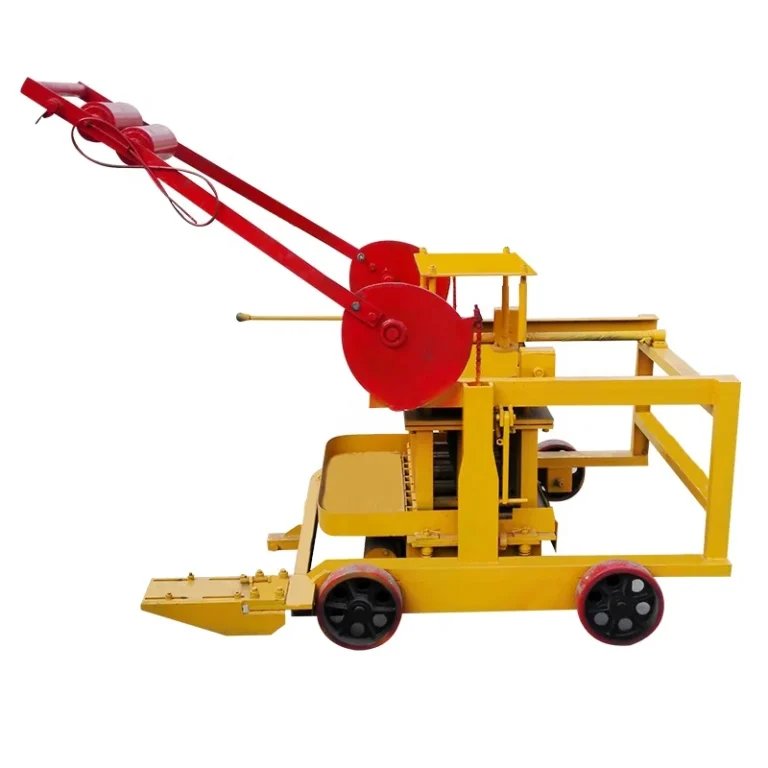
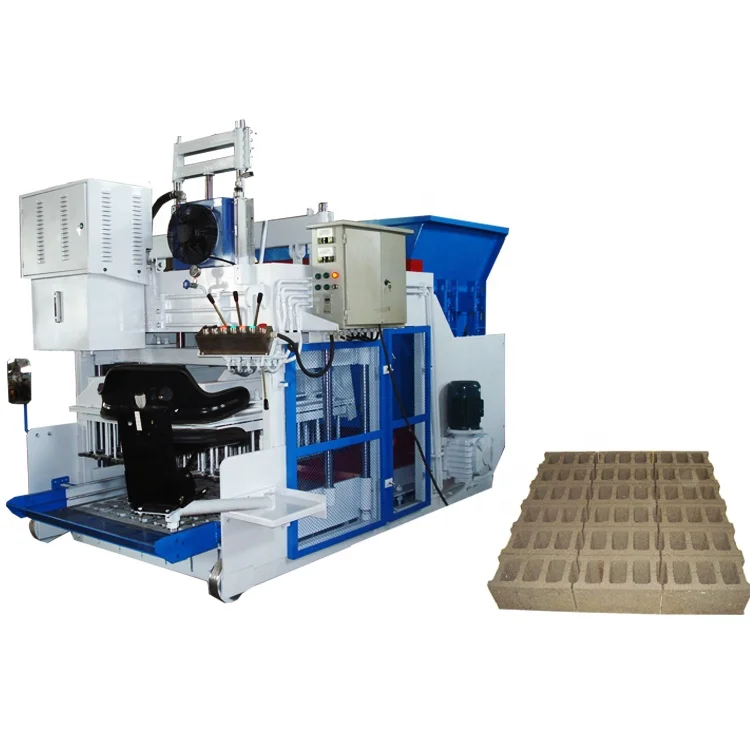
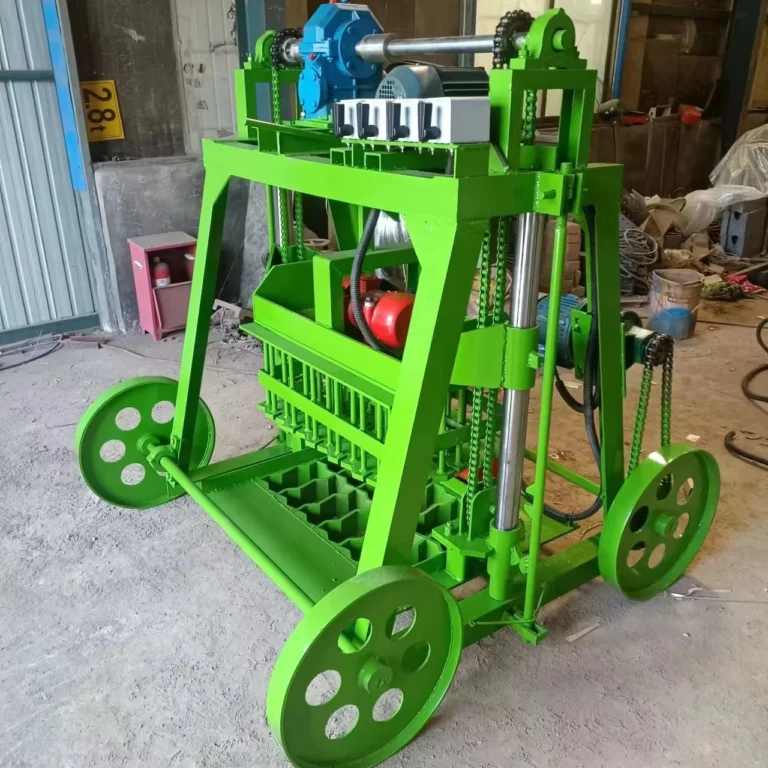
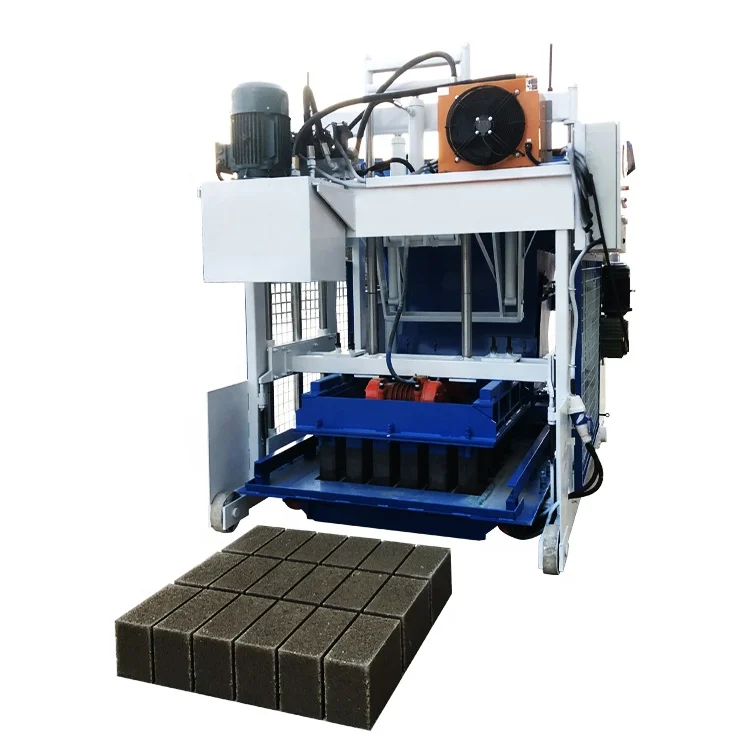
Pallet-Free Production — The QMJ2-45 lays hollow bricks directly on the ground, so buyers avoid the ongoing cost and logistics of pallet fleets that mobile operations cannot justify.
Technical Specifications
| Parameter |
Value |
| Model |
QMJ2-45 |
| Product Type |
Mobile Concrete Block Making Machine |
| Machine Type |
Mobile / Egg-laying (no pallet required) |
| Automation Level |
Manual / Semi-manual |
| Mould Change |
Yes, supports multiple hollow brick formats by changing moulds |
| Output Capacity |
160 pcs/h based on 400×200×200mm hollow block (25–30s cycle, 2 pcs/mould) |
| Output Capacity |
4800 pcs per 8-hour shift based on 400×150×200mm hollow block (3 pcs/mould) |
| Output Capacity |
320 pcs/h based on 400×100×200mm hollow block (25–30s cycle, 4 pcs/mould) |
| Molding Cycle |
25–30s |
| Pallet Required |
No |
| Power Source |
Electric |
| Labour Requirement |
1–3 workers |
| Key Features |
Egg-laying design, manual/semi-manual operation, pallet-free production |
| Standards |
ISO 9001:2000, CE |
Application Suitability
| Application |
Material or Output |
| On-site hollow brick production |
Concrete mix with crushed stone, sand, and cement |
| Construction contractors at job sites |
Hollow bricks in 200mm, 150mm, and 100mm widths |
| Entrepreneurs starting first block operation |
Low-volume hollow brick production without fixed plant |
| Remote or temporary project locations |
Pallet-free hollow block production on prepared ground |
What "1,200 Blocks a Day" Leaves Out About Mobile Block Making Machines
Capacity figures mean nothing unless they name the exact block format, mould cavity count, and cycle time behind the number.
A buyer once told me he ordered a mobile block making machine quoted at a high daily output, only to discover the figure assumed a small solid brick he never intended to sell. When he switched to the 400×200×200mm hollow block his market actually demanded, output dropped by more than half because each cycle produced fewer pieces and the cycle itself ran longer. Sellers who quote a single number without naming the format are leaving the buyer to discover the real capacity on the first day of production [NEED_CITE: common block machine capacity quotation practices in export markets]. The QMJ2-45 data sheet states output separately for each hollow block width, so there is no guesswork about what an eight-hour shift delivers.

Pallet-Free Egg-Laying Design for Ground-Level Production
The QMJ2-45 operates as an egg-laying mobile block making machine, meaning it deposits each freshly formed hollow brick directly onto a prepared ground surface and then advances forward for the next cycle. This eliminates the entire pallet investment — no pallet purchase, no pallet storage area, no pallet return loop, and no pallet-related maintenance. For contractors working on a building site or entrepreneurs with limited yard space, removing pallets simplifies the operation considerably and keeps capital outlay focused on the press itself.
Multiple Hollow Block Widths on a Single Machine Frame
The machine accepts mould changes to produce hollow bricks in 200mm, 150mm, and 100mm widths, all on the same 400mm length and 200mm height frame. A buyer serving a market where partition walls use 100mm blocks while external walls require 200mm can cover both from one QMJ2-45 without buying a second press. Mould swaps are manual, and the time required depends on operator familiarity, which is why first-time buyers should plan the initial change during commissioning rather than mid-shift [NEED_CITE: mould change procedures for egg-laying block machines].
Reading the Cycle Time and Output Figures Honestly
The stated molding cycle of 25–30 seconds determines how many times per hour the press completes a full press-and-release sequence, and the cavity count in each mould determines how many blocks drop per cycle. For the 400×200×200mm hollow block the mould holds 2 pieces, yielding 160 pieces per hour and 1,280 pieces per eight-hour shift. For the narrower 400×150×200mm format the mould holds 3 pieces, pushing shift output to 4,800 pieces. And for the 400×100×200mm format the mould holds 4 pieces, producing 320 pieces per hour. These figures assume a consistent mix and uninterrupted workflow; real-world output also depends on how quickly operators feed material and move the machine forward.
The Hidden Cost of Skipping Voltage and Frequency Confirmation
I once saw a small block machine sit unpowered for weeks after arrival because the buyer’s country ran on 60 Hz while the motor was wound for 50 Hz. The machine was technically functional, but running it at the wrong frequency would overheat the vibration motor within hours. Voltage and frequency must be confirmed against the destination grid before the machine enters production, not after it clears customs. Buyers should also verify whether the control display language matches what their operators can read, since even a simple manual machine benefits from clear start-stop and cycle indicators [NEED_CITE: voltage and frequency standards by export market].
Why Buyers Source This Machine Here
Block machinery is a single focus for Shandong Shiyue Intelligent Machinery, so the QMJ2-45 arrives as a matched system rather than a press separated from its mould and handling options. The machine is configured against the buyer’s actual local aggregate and mix design, not a generic catalogue default. Mould design covers the hollow brick formats the buyer’s market actually sells, and custom mould drawings are available when standard sizes do not match local building codes. Automation level is selectable, so a buyer can begin with the manual QMJ2-45 and move to a semi-automatic or fully automatic line later without replacing the entire operation. Installation support includes on-site commissioning and operator training, ensuring the crew knows how to read cycle times and change moulds from the first day.
Documentation & Verification
- Capacity calculation sheet stating the hollow block format assumed for each output figure
- Mould drawing and format list confirming 200mm, 150mm, and 100mm hollow brick dimensions
- Factory test record showing actual cycle times per format before dispatch
- Voltage and control language confirmation matching the destination country grid
- Operation and maintenance manual covering mould change and daily lubrication points
- CE declaration and ISO 9001:2000 documentation where applicable
Installation, Commissioning & Support
- Level ground surface required for egg-laying operation; no fixed foundation needed for the QMJ2-45
- Electrical supply confirmed for voltage and frequency before the QMJ2-45 motor is energized
- Machine arrives assembled; mould installed and first test run completed during on-site commissioning
- Operator training covers mould change procedure, mix consistency checks, and cycle timing for each hollow block format
- Wear parts list and mould replacement schedule provided with the QMJ2-45 shipment
Before You Send an Inquiry
To size a QMJ2-45 correctly, tell us which hollow block formats sell in your market, your target daily output per format, and the local aggregate you plan to use — sand type, stone size, and cement grade all affect how the vibration force needs to be set. Confirm your site voltage and frequency so the motor can be wound before production begins. If you already have a curing area or plan to cure blocks in place on the ground, let us know the available space so we can estimate how many days of output the area will hold before blocks need to be moved.
Frequently Asked Questions
Q: How is the output capacity calculated, and which block format does each figure assume?
A: Every output figure on this page names the block format, mould cavity count, and cycle time behind it. For example, 1,280 pieces per eight-hour shift is based on the 400×200×200mm hollow block with 2 pieces per mould and a 25–30 second cycle. We do not quote a single generic number and leave the buyer to guess which format it refers to.
Q: What voltage and frequency options are available for the QMJ2-45?
A: The motor can be wound to match the destination country’s grid, but voltage, frequency, and any control display language must be confirmed before the order enters production. Buyers should supply these details during the quotation stage so the correct electrical configuration is built into the machine before shipment.
Q: How long does a mould change take, and are custom hollow brick sizes available?
A: Mould change on the QMJ2-45 is a manual procedure and the time depends on operator experience, which is why we cover it during commissioning. Standard moulds produce 200mm, 150mm, and 100mm wide hollow bricks. Custom mould sizes can be manufactured to buyer drawings when local building codes require non-standard dimensions.
Q: Can the QMJ2-45 be adjusted to work with my local raw materials?
A: Yes. The vibration force and mix ratio need to match the buyer’s local aggregate — sand type, stone size, and cement grade all influence block strength and surface finish. We ask buyers to describe their available materials during the inquiry so the machine can be configured before it leaves the factory rather than adjusted by trial and error on site.

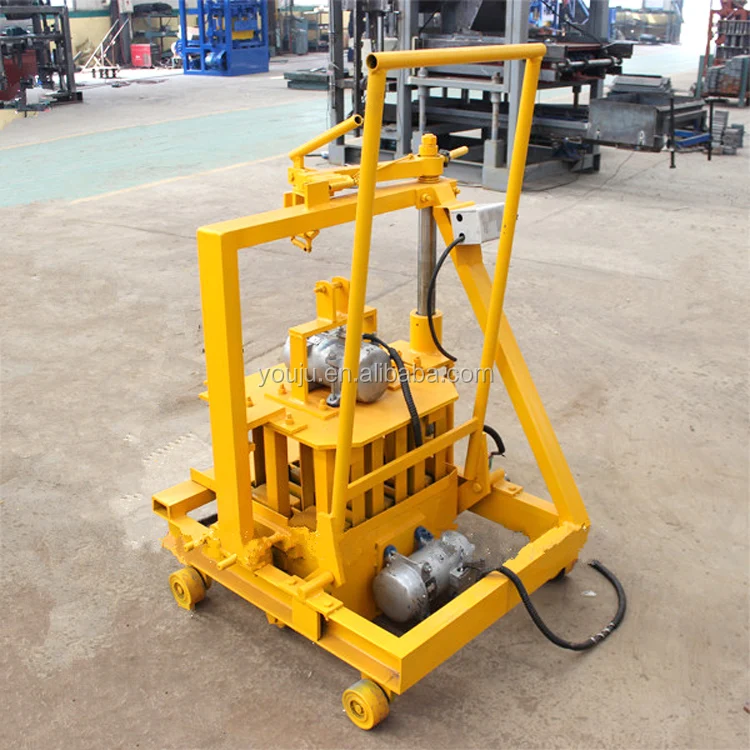
 Mobile block machine