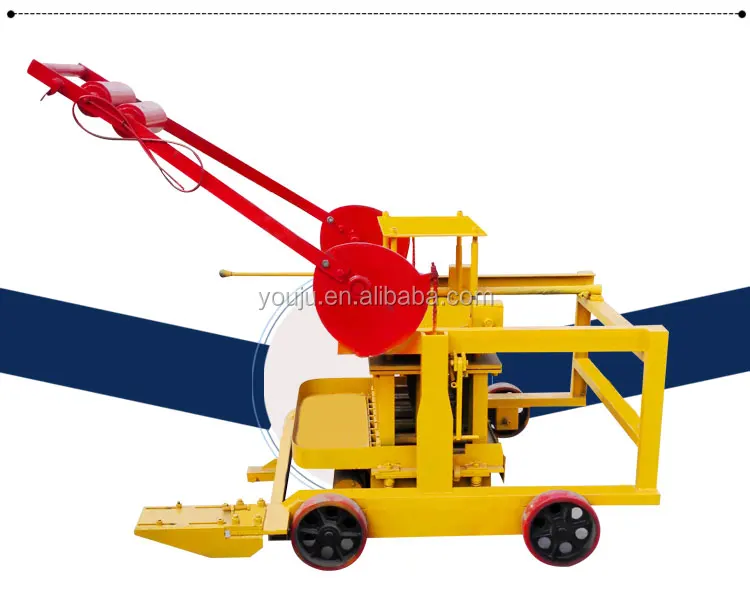
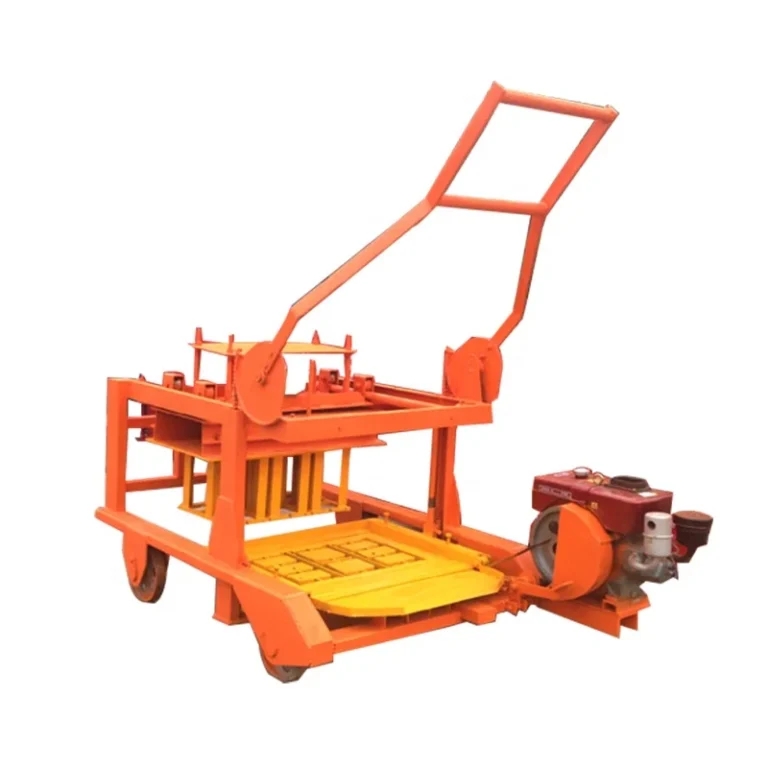
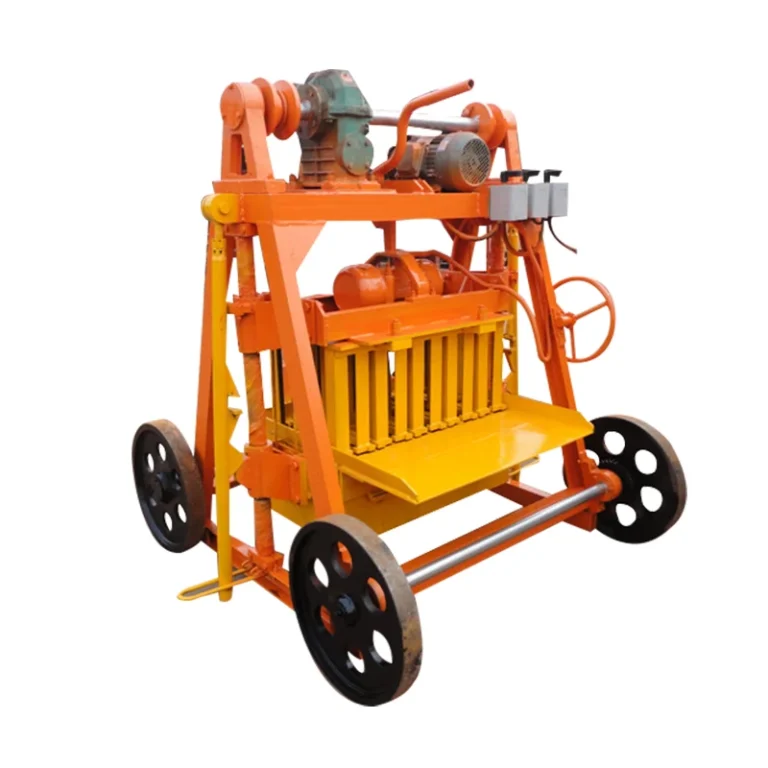
Matched System Design — the QMY12-15 mobile egg laying block making machine is specified with its moulds, hydraulic pressure, and vibration settings calibrated to the buyer’s actual block format and local aggregate rather than shipped as a standalone press.
Technical Specifications
| Parameter |
Value |
| Model |
QMY12-15 |
| Product Type |
Mobile Egg Laying Block Making Machine |
| Overall Dimensions (L×W×H) |
3250×2100×2300 mm |
| Total Mass |
4200 kg |
| Total Power |
16 kW |
| Hydraulic System Pressure |
16–20 MPa |
| Demold Method |
Hydraulic |
| Turning Method |
Hydraulic |
| Excitation Frequency |
3200 Hz |
| Vibration Mode |
Three-dimensional mold vibration |
| Molding Cycle |
10–15 s (basis to be confirmed per block format and material) |
| Molding Capacity |
12 pcs/mould (based on 400×200×200 mm hollow block) |
| Output — 400×200×200 mm Hollow Block |
2880 pcs/h, 23000 pcs/8 hr (based on 15–20 s cycle, 12 pcs/mould) |
| Output — 400×150×200 mm Hollow Block |
3360 pcs/h, 36880 pcs/8 hr (based on 15–20 s cycle, 14 pcs/mould) |
| Output — 400×100×200 mm Hollow Block |
5280 pcs/h, 42240 pcs/8 hr (based on 15–20 s cycle, 22 pcs/mould) |
| Block Compressive Strength |
≥15 MPa (source value — verify against manufacturer catalog) |
| Moving Method |
Automatic hydraulic steering and movement |
| Raw Materials |
Fly ash, cinder, coal gangue, river sand, gravel, cement, industrial waste residue |
| Block Formats |
Hollow block, porous brick, road kerb, road brick, grassing brick (by changing moulds) |
| Control System |
Computer automatic control (PLC type and brand to be confirmed) |
| Voltage & Frequency |
Configurable (to be confirmed before production) |
| Automation Level |
Semi-automatic, mobile egg-laying type, no pallet required |
| Assembly State |
Fully assembled mobile unit |
| Warranty |
1 year for the whole machine (excluding spare parts) |
Application Suitability
| Application |
Material or Output |
| On-site hollow block production at housing project sites |
Crushed stone, river sand, and cement mixes laid directly on prepared ground |
| First block plant for entrepreneurs with limited fixed investment |
Fly ash or cinder blended with cement, no curing racks or pallet circulation required |
| Kerbstone and road brick manufacturing for infrastructure contractors |
Aggregate and cement mixes with mould swap on the same mobile unit |
| Grass brick and porous brick runs for landscaping supply |
Custom mould formats producing permeable pavers from local sand and gravel |
| Small-to-medium block yards adding format variety |
Coal gangue or industrial waste residue incorporated into standard cementitious mixes |
What "23,000 Blocks per Day" Leaves Out for Mobile Egg Laying Machines
Capacity figures are only honest when tied to a specific block format, cycle time, and mould count — everything else is marketing arithmetic.
When I worked technical sales in the Pearl River Delta, I watched a contractor order a mobile block machine based on a single headline output number. The machine arrived, they ran local river sand with high clay content, and the hydraulic pressure combined with vibration force could not compact the mix properly. Daily output fell to roughly half the quoted figure, and the client was ready to reject the machine on the spot. A mobile egg laying block making machine manufacturer that quotes one capacity number for all formats is leaving out the variables that actually determine your daily volume [NEED_CITE: block output calculation methodology by format and cycle time].

Where the QMY12-15 Sits in the Mobile Range
The QMY12-15 occupies the upper tier of Shiyue’s mobile egg-laying lineup. Hydraulic demold and hydraulic steering distinguish it from entry-level models that rely on manual turning and push-along movement. For a buyer surveying the full mobile block machine range, this model is the point where output volume and block density step noticeably above workshop-scale machines while still avoiding the fixed-plant infrastructure of pallet-based lines.
How Format Changes Reshape Your Daily Output
The three output tiers in the specification table illustrate a pattern every mobile machine buyer should internalise. Switching from a 400×200×200 mm hollow block mould to a 400×100×200 mm mould nearly doubles the piece count per cycle because the mould cavity count rises from 12 to 22. The cycle time band stays in the 15–20 second range, but the hourly piece count shifts significantly. This is why a mobile egg laying block making machine manufacturer must state capacity per format — a single headline number tells you nothing about the block you actually sell [NEED_CITE: mould cavity count versus block format in egg-laying machines].
Reading the Hydraulic and Vibration Specs
Hydraulic system pressure at 16–20 MPa works together with three-dimensional mold vibration at 3200 Hz to compact the mix from multiple axes. Single-axis vibration leaves density gradients across the mould cavity — blocks at the edges emerge softer than those at the centre. Three-dimensional vibration addresses this by transmitting force through the mould walls and core simultaneously. The hydraulic demold then extracts the block without shock loading, preserving the green strength the vibration just built. For buyers producing load-bearing hollow blocks, this combination directly influences whether the cured block meets the compressive strength your local building code demands.
The Ground Surface and Mix Variables That Mobile Machines Cannot Ignore
An egg-laying machine deposits blocks directly on the ground and drives away. That means block quality depends on the flatness and bearing capacity of the production surface, the moisture content of the mix, and the clay or silt fraction in locally sourced sand. A mix that works in the factory test may behave differently on a compacted-earth yard during the rainy season. These are variables the machine specification sheet does not capture, and they are the reason commissioning support matters beyond the first day of operation.
Why Shiyue for This Mobile Block Machine
Block machinery is Shiyue’s single focus, so the QMY12-15 is not assembled from unrelated press, mould, and handling components sourced separately. Machine configuration is set against the buyer’s actual mix design and local aggregate rather than a catalogue default. Mould design covers the formats the buyer’s market actually sells, with custom drawings available when standard formats do not match. Automation level is selectable — a buyer can start with this mobile unit and step up to a pallet-based line later without abandoning the original investment. Installation support includes on-site commissioning and operator training so the first production run reflects realistic cycle times.
Documentation & Verification
- Capacity calculation sheet stating output per block format for the QMY12-15
- Mould drawing and format list confirming which moulds ship with the machine
- Hydraulic and electrical schematic for the 16–20 MPa system
- Voltage and control language confirmation document before production starts
- Factory test record on the buyer’s specified block format before dispatch
- Operation and maintenance manual covering hydraulic demold procedures
Installation, Commissioning & Support
- Prepared flat concrete or compacted ground surface for the 3250×2100 mm machine footprint
- Power supply matching confirmed voltage and frequency for the 16 kW total load on a dedicated circuit
- Machine ships fully assembled — no major sub-assembly required on arrival
- First-run commissioning with mix adjustment to match local aggregate and target block density
- Operator training covering hydraulic steering, mould change, and cycle time optimisation
- Wear parts list and mould inventory for the first replacement cycle
What We Need to Size This Machine to Your Project
Tell us which block format you sell most — the 400×200×200 mm hollow block, a thinner partition block, or a paver — and the daily volume your market absorbs. Share your local raw material source and any lab test data on aggregate grading or clay content. Confirm the voltage, frequency, and PLC display language at your site so the QMY12-15 arrives ready for commissioning without electrical rework.
Frequently Asked Questions
Q: How is QMY12-15 capacity calculated — which block format does the hourly output figure assume?
A: Each output figure in the specification table is tied to a specific mould cavity count and a 15–20 second cycle time. The 2880 pcs/h figure assumes a 400×200×200 mm hollow block with 12 cavities per mould. Thinner block formats carry more cavities and therefore higher piece counts per cycle. Always confirm which format underpins any quoted capacity before comparing machines.
Q: What voltage and frequency does this mobile machine require, and can the PLC display be set to my local language?
A: Voltage and frequency are configurable to match your site supply and must be confirmed before production begins. The control system supports language options for the PLC display, also confirmed during the order process. Locking these details in advance prevents commissioning delays caused by transformer rental or rewiring after the machine arrives on site.
Q: How long does a mould change take on the QMY12-15, and what formats are available beyond standard hollow blocks?
A: Mould change involves unbolting the current mould, lifting it clear, and seating the replacement — a task that takes a portion of a shift when done methodically with the right tools. Available formats include porous brick, road kerb, road brick, and grassing brick. Custom mould designs can be produced to buyer drawings when standard formats do not match local market demand.
Q: What ground surface and curing conditions does an egg-laying machine need to produce blocks at full strength?
A: The production surface must be flat, level, and able to bear the weight of freshly formed blocks without settling. Curing typically involves keeping blocks moist for several days depending on ambient temperature and humidity. Because blocks are laid directly on the ground, surface preparation directly affects dimensional consistency and bottom-face quality of every block produced.
Q: Where does the QMY12-15 sit on the Shiyue range — when should a buyer step up to a semi-automatic pallet line instead?
A: The QMY12-15 is the upper tier of the mobile egg-laying range, suited to buyers who need higher output without investing in pallet circulation and curing racks. When daily volume demands exceed what a mobile unit can deliver, or when the product range requires rapid mould changes with minimal downtime, a semi-automatic pallet-based line with stacking and cubing becomes the more practical configuration.

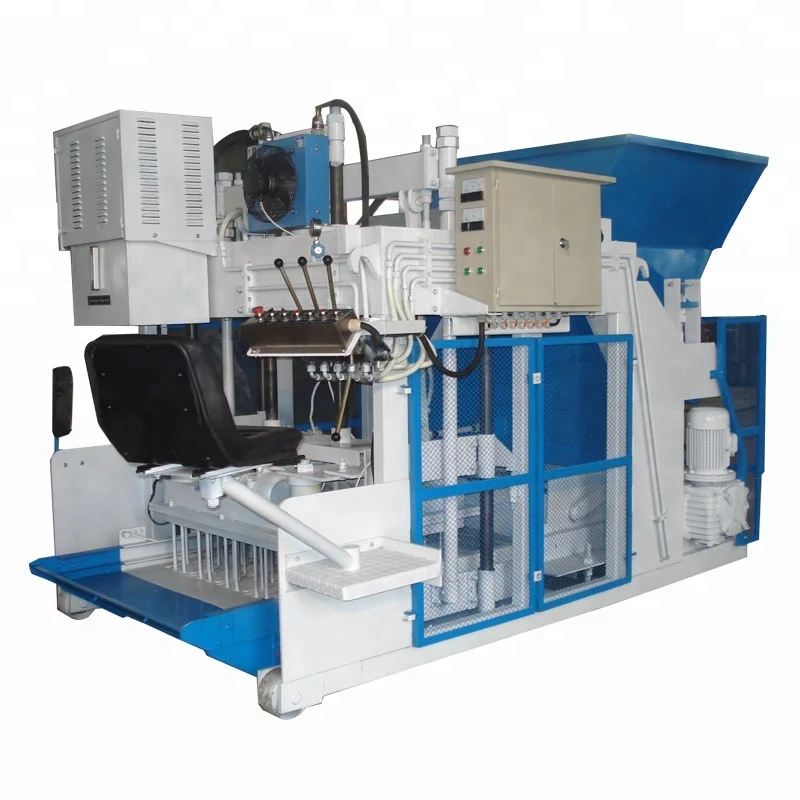
![QMR4-45 Mobile Concrete Block Machine for Hollow Block – Manufacturer8 + 3 + 0 + 9 + 0 = 20 → 20 % 6 = 2 → 句式: [品类词] [机型号或规格] | [站点修饰词] 目标站 shiyueblockmachine.com → 全品类目录类角色 → 池: Manufacturer / Factory Supply / Full Range 20 % 3 = 2 → Full Range Mobile Concrete Block Machine QMR4-45 | Full Range](https://shiyueblockmachine.com/wp-content/uploads/2026/04/H49cf628879e04843a82320591d4387a5Z-768x768.webp) Mobile block machine
Mobile block machine