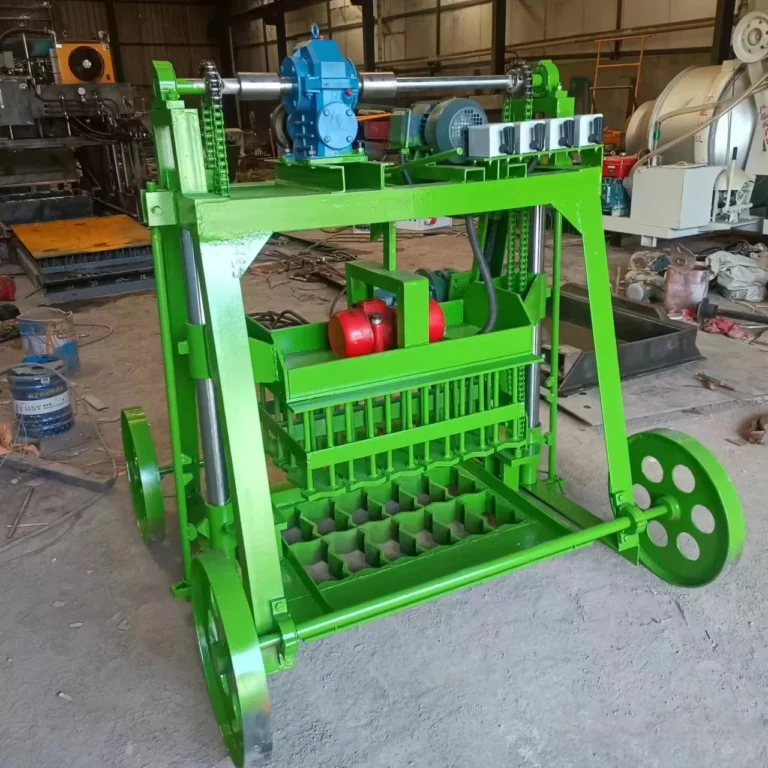
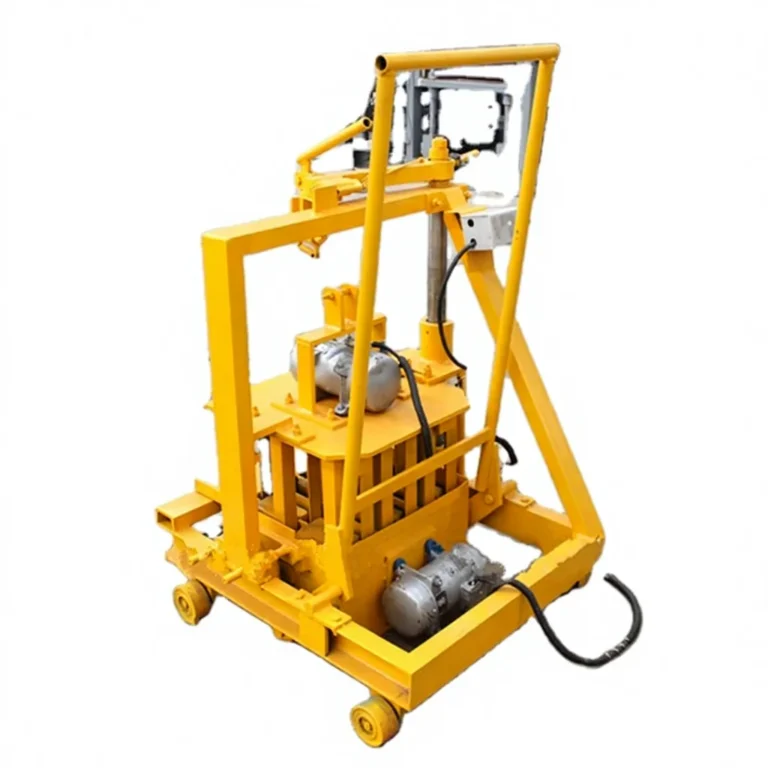
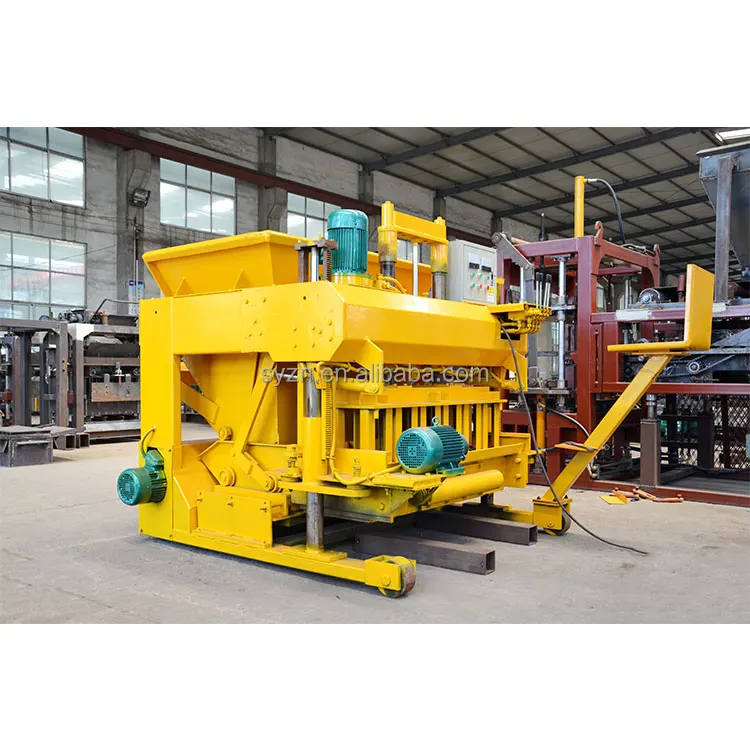
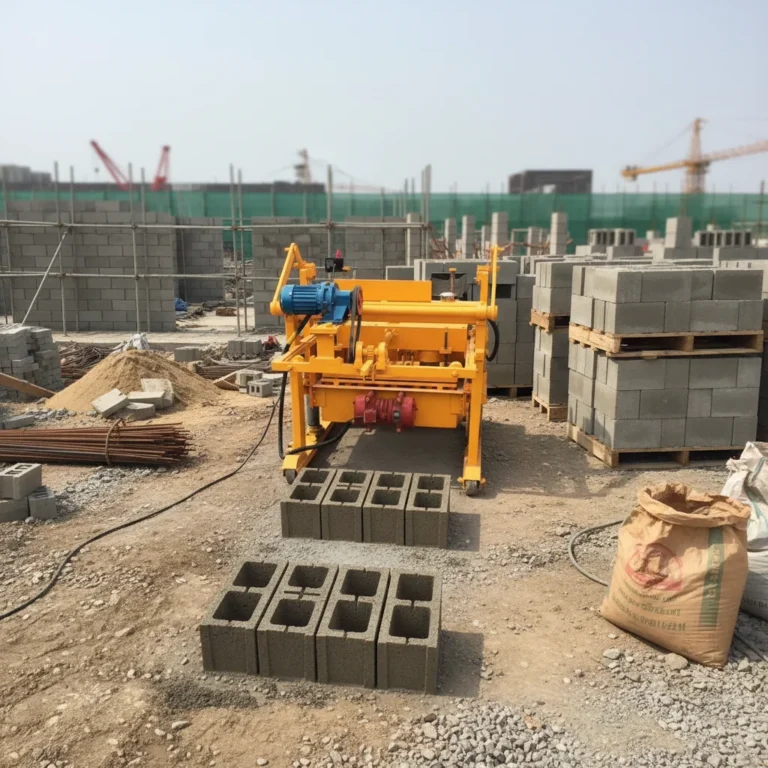
Matched System Spec — The QMY4-30 is configured as a complete mobile unit with moulds, power rating, and cycle times stated per block format, so buyers can compare actual project-site output before committing.
Technical Specifications
| Parameter |
Value |
| Model |
QMY4-30 |
| Product Type |
Mobile Concrete Block Making Machine |
| Machine Type |
Mobile / egg-laying |
| Automation Level |
Semi-automatic |
| Mould Changeable |
Yes (hollow block and solid brick) |
| Rated Power |
5 kW |
| Molding Time |
30 seconds |
| Overall Dimensions |
1200 × 1200 × 1100 mm |
| Net Weight |
950 kg |
| Raw Materials |
Cement, sand, crushed stones, slag |
| Output Capacity |
480 pcs/hour (based on 400×200×200mm hollow block, 4 pcs/mould) |
| Output Capacity |
600 pcs/hour (based on 400×150×200mm hollow block, 5 pcs/mould) |
| Output Capacity |
840 pcs/hour (based on 400×100×200mm hollow block, 7 pcs/mould) |
| Daily Output |
3840 pcs/8 hours (based on 400×200×200mm hollow block) |
| Daily Output |
4800 pcs/8 hours (based on 400×150×200mm hollow block) |
| Daily Output |
6720 pcs/8 hours (based on 400×100×200mm hollow block) |
| Warranty |
Five year guarantee |
Application Suitability
| Application |
Material or Output |
| On-site block production without a fixed plant |
Hollow blocks from cement, sand, and crushed stone |
| Small-scale block manufacturing startups |
Solid bricks and varied hollow block formats via mould change |
| Construction contractors producing locally |
Project-specific volumes using locally sourced aggregate and slag |
| Housing development sites |
Continuous supply of masonry units directly on the building footprint |
What "Pieces Per Hour" Actually Means on a Project Site
Capacity is only meaningful when tied to the exact block format and local mix you intend to run.
Brochure figures often quote the highest possible cycle speed using an ideal, fine-graded river sand that the buyer cannot source locally. When that same Mobile Block Machine manufacturer ships the equipment to a site relying on coarse crushed stone or weathered sand, the vibration force may be insufficient to compact the heavier mix within the stated cycle time. The operator then has to extend the molding time to prevent crumbling, which quietly halves the real daily volume [NEED_CITE: impact of local aggregate grading on block machine cycle times]. This machine lists its output strictly against three distinct hollow block dimensions, preventing that exact miscalculation during the planning stage.

Placing the Mobile Tier Within the Broader Range
Buyers surveying options for a first or replacement machine need to understand where an egg-laying unit sits compared to stationary automatic lines. This mobile tier eliminates the need for a fixed plant, pallet return systems, and dedicated curing racks, keeping the initial investment and site footprint to an absolute minimum. A Mobile Block Machine manufacturer positions this class of equipment for contractors who need masonry units directly on the building footprint without the overhead of a permanent factory.
The Trade-Off Between Mobility and Automation
Choosing a mobile format means accepting a semi-automatic operation where the machine moves forward on its own wheels to lay the next block directly on the ground. This removes the cost and complexity of pallet handling, automatic stacking, and cubing systems found on higher-tier stationary plants. The trade-off is a reliance on manual labor for mixing and feeding the raw materials, making this tier ideal for project sites where infrastructure is temporary and the primary goal is to avoid transporting purchased blocks over long distances [NEED_CITE: site logistics and cost comparison for mobile versus stationary block production].
Reading the Power and Cycle Specifications
The 5 kW rated power and 30-second molding time define the physical limits of the compaction chamber. In mobile block machines, the vibration force and hydraulic pressure must be perfectly matched to the mix design; if the local aggregate is too coarse, the 30-second cycle will not achieve the required density, leading to weak blocks. Furthermore, the 1200 × 1200 × 1100 mm overall dimensions and 950 kg net weight dictate the ground conditions required; the machine must be operated on a flat, concrete-prepared surface to ensure the egg-laying mechanism deposits structurally sound units without shifting during the vibration phase.
The Hidden Cost of Ignoring Site Conditions
Purchasing a mobile unit without verifying the local voltage and frequency often results in burnt-out motors upon first startup, as standard industrial grids vary wildly between regions. Similarly, failing to confirm the control panel language or the specific raw material availability forces the operator to guess the correct water-to-cement ratio, resulting in a high scrap rate of cracked or under-compacted blocks [NEED_CITE: common commissioning failures in exported construction machinery]. These oversights turn a low-investment machine into a prolonged financial drain.
Why Source This Configuration Here
- Single-focus machinery supply: The block machine, mould, and supporting handling tools are specified as one matched system rather than assembled from separate, unrelated vendors.
- Configuration against local materials: The vibration force and mix requirements are set against the buyer’s actual aggregate and target block format, avoiding catalogue defaults that fail on site.
- Format-specific capacity calculation: Line layout and output expectations are stated per block format, ensuring the buyer knows exactly what to expect from their specific hollow block or solid brick choice.
- Selectable automation paths: Buyers can start with this semi-automatic mobile tier and understand the exact upgrade path to stationary pallet-based systems as their market grows.
Documentation & Verification
- Line layout stating the assumed block format and realistic daily output.
- Machine specification sheet confirming the 5 kW power and 30-second cycle.
- Mould drawing and format list for all compatible hollow and solid block options.
- Factory test record using an agreed-upon aggregate sample before dispatch.
- Operation and maintenance manual covering daily grease points and vibration motor checks.
Installation, Commissioning & Support
- Site preparation requires a flat, cured concrete pad to support the 950 kg machine during high-frequency vibration.
- Electrical hookup must match the confirmed local voltage and dedicated circuit requirements for the 5 kW motor.
- First-run commissioning includes adjusting the water-cement ratio to the local sand and crushed stone profile.
- Operator training covers the manual feeding rhythm required to maintain the 30-second molding cycle.
- Spare parts list identifies the specific wear liners and vibration springs needed for ongoing maintenance.
Preparing Your Project Inquiry
To determine if this mobile tier is the correct fit for your operation, please outline the specific block dimensions your local market demands and the type of sand or aggregate available near your project site. We also need to know the local industrial voltage and frequency to ensure the motor is wound correctly before it leaves our facility. Finally, indicate whether you require a continuous daily supply for a single large development or intermittent production across multiple smaller sites.
Frequently Asked Questions
Q: How is the daily output calculated for the QMY4-30?
A: The daily output is calculated based on an eight-hour shift and a specific block format. For example, producing 400×200×200mm hollow blocks yields 3840 pieces per day, while smaller 400×100×200mm blocks increase the volume to 6720 pieces per day. The exact figure depends entirely on the mould installed.
Q: What block formats can this mobile machine produce?
A: The machine features a changeable mould system that allows it to produce various hollow block sizes as well as solid bricks. The buyer must specify the required formats during the ordering phase so the correct mould drawings and physical tooling are supplied alongside the main press unit.
Q: Does the quotation include pallets or handling equipment?
A: Because this is a mobile, egg-laying machine, it lays blocks directly on the ground and does not require production pallets or automatic stacking systems. The quotation focuses on the press, the motor, and the selected moulds, keeping the initial investment aligned with a basic site setup.
Q: What raw materials are required for the mix design?
A: The machine processes standard masonry materials including cement, sand, crushed stones, and slag. However, the exact mix ratio and the required vibration time must be adjusted based on the grading and moisture content of the specific aggregate available at your local project site.
Q: What voltage and control options are available before shipment?
A: The motor and electrical components must be configured to match your local grid. We require confirmation of your site’s voltage, frequency, and preferred control language before manufacturing begins to prevent commissioning delays and motor damage upon arrival.

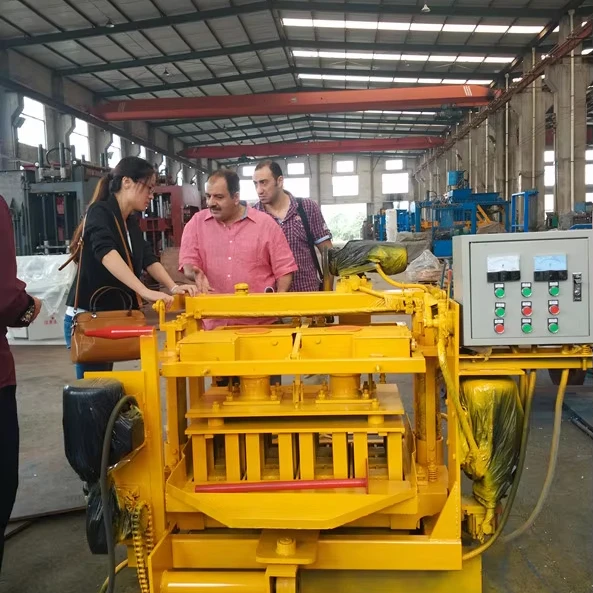
 Mobile block machine