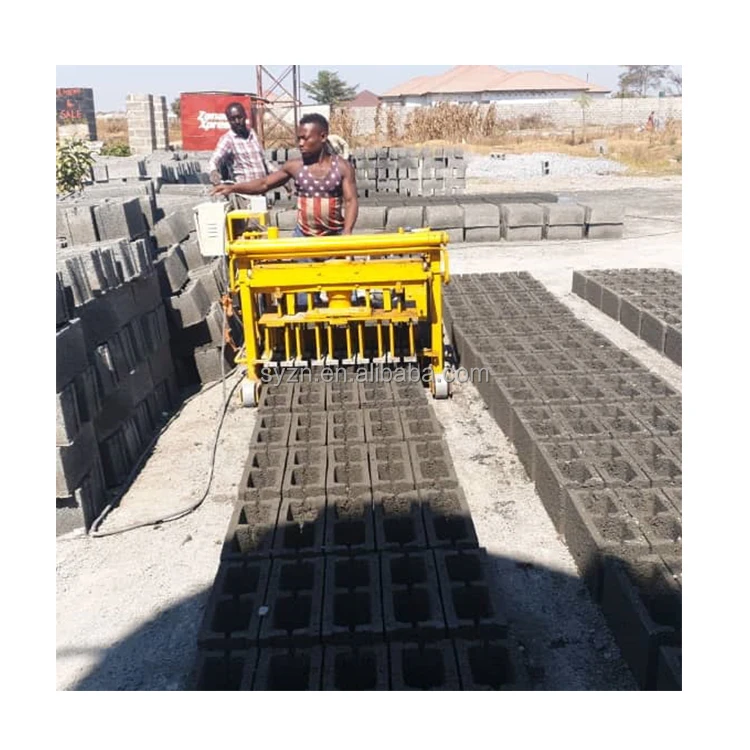
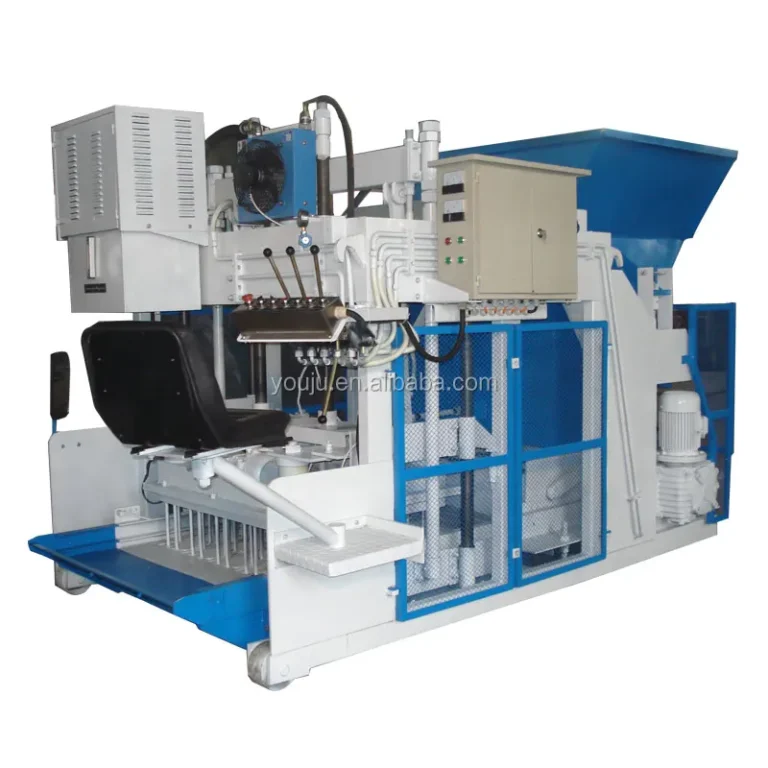
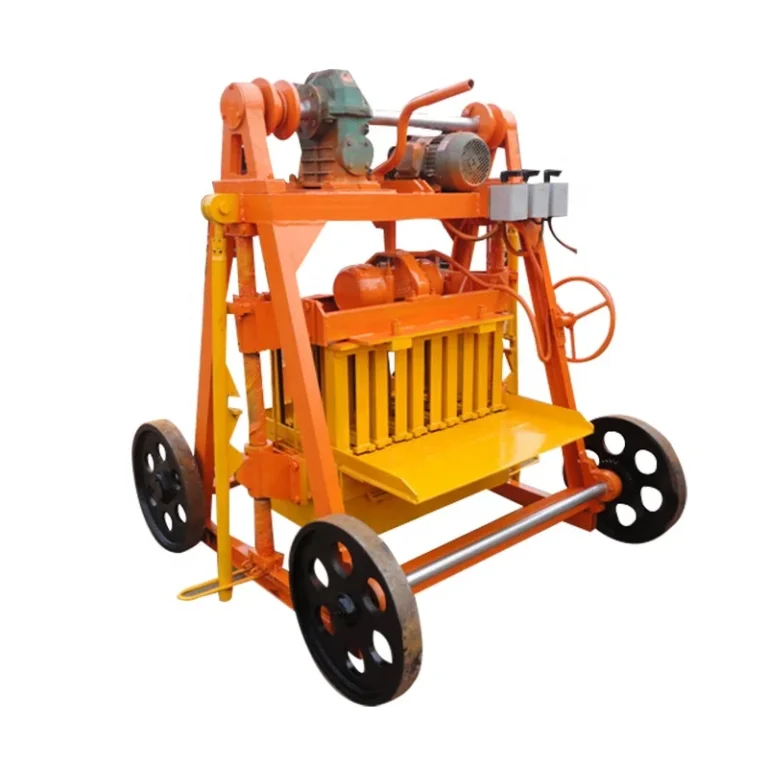
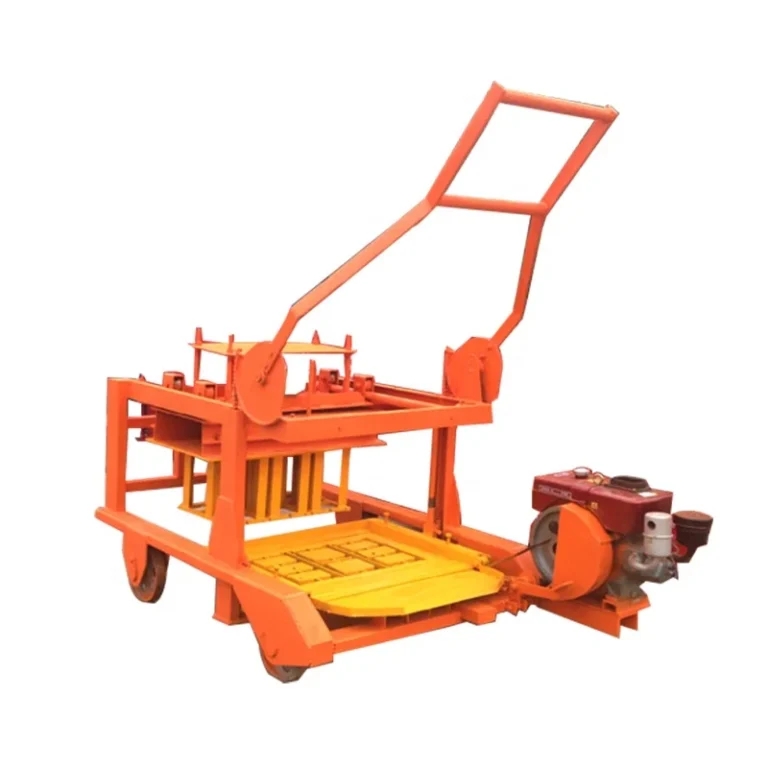
Matched System Supply — the QMR4-45 mobile block making machine is specified as a complete production unit including mould, power source, and operational requirements rather than a standalone press, ensuring every component aligns with your target block format and site conditions.
Technical Specifications
| Parameter |
Value |
| Product Type |
Mobile Egg-Laying Block Making Machine |
| Model |
QMR4-45 |
| Overall Dimensions (L×W×H) |
2420×1320×1650 mm |
| Net Weight |
810 kg |
| Moulding Cycle |
40–45 s |
| Pallet Requirement |
No pallet required (egg-laying type) |
| Rated Power |
6 kW |
| Alternative Power |
Diesel engine option: 6 kW or 6–8 HP |
| Voltage & Frequency |
220 V / 380 V / configurable to local supply (frequency not stated in source — confirm Hz) |
| Output Capacity |
3000 pcs/day (basis: 400×200×200 mm hollow block, 4 pcs/mould, 8-hour shift) |
| Output Capacity |
3500 pcs/day (basis: 400×150×200 mm hollow block, 5 pcs/mould, 8-hour shift) |
| Output Capacity |
4500 pcs/day (basis: 400×120×200 mm hollow block, 6 pcs/mould, 8-hour shift) |
| Automation Level |
Semi-automatic (manual mould change, blocks laid directly on ground) |
| Mould Format |
Hollow block (multiple sizes via mould change) |
| Stacking Method |
Blocks laid directly on concrete floor |
| Standards |
CE |
| Warranty |
One year |
Application Suitability
| Application |
Material or Output |
| On-site construction block production |
Hollow blocks from crushed stone, sand, and cement laid directly on prepared ground |
| Small-scale block plants in off-grid areas |
Diesel-powered hollow block production without reliance on grid electricity |
| First-time block production operations |
Entry-level hollow blocks in 400×200×200, 400×150×200, and 400×120×200 mm formats |
| Remote or rural building projects |
Mobile egg-laying production using locally sourced aggregate and cement |
Why "Pieces per Day" Means Nothing Without the Block Format Attached
Every output figure on this page is tied to a specific block size, mould cavity count, and shift length — because capacity without context is just marketing.
When a Mobile Block Making Machine manufacturer quotes daily output, the number only matters if you know exactly which block format it assumes. I have watched buyers commit to a machine based on a headline capacity number, only to discover on commissioning day that the figure assumed a small solid brick while their market demands 200 mm hollow blocks. The cycle time stays in the 40–45 second range across formats, but the pieces per mould drop from six to four as block size increases, which reshapes the entire daily total [NEED_CITE: block format impact on mobile machine cycle economics].
The QMR4-45 produces 3000 pieces per day in the 400×200×200 mm hollow block format (4 pcs/mould, 8-hour shift), 3500 pieces in the 400×150×200 mm format (5 pcs/mould), and 4500 pieces in the 400×120×200 mm format (6 pcs/mould). These are not estimates — they are calculated from the moulding cycle and cavity count for each specific block size.

Where the QMR4-45 Sits in the Mobile and Egg-Laying Range
The mobile block making machine category spans from lightweight single-cavity units built for backyard production to multi-cavity machines that approach semi-automatic output levels. The QMR4-45 occupies the entry point of the multi-format mobile range, offering mould-change flexibility across three standard hollow block sizes without requiring any pallet inventory. This positions it for buyers who need format variety but are not yet ready to invest in pallet-based semi-automatic lines.
For a buyer surveying options, the decision hinges on whether your daily volume target can be met within a single 8-hour shift at the 40–45 second cycle. If your market requires consistent output above what one shift delivers, the next step up would be a higher-tier mobile unit or a pallet-based semi-automatic press — but for first plants and on-site contractor production, this tier typically covers the requirement without overcapitalization.
Operating Without Grid Power or Fixed Infrastructure
The diesel engine option (6–8 HP) exists because many first-time block producers and remote construction contractors simply do not have stable three-phase power at the production site. The QMR4-45 can be configured with either an electric motor (220 V / 380 V, frequency to be confirmed for your market) or a diesel drive, which means the machine can begin producing blocks before the site electrical infrastructure is fully installed [NEED_CITE: off-grid block production power requirements in developing markets].
The egg-laying design compounds this infrastructure independence. Because blocks are laid directly onto a prepared concrete floor rather than onto pallets, there is no pallet purchase cost, no pallet return loop, and no pallet storage area to plan. The machine moves forward after each cycle, leaving the block in place to cure. This eliminates an entire material handling layer that pallet-based systems require, which matters when your curing area is an open yard rather than a controlled facility.
Reading the Specs That Actually Determine Block Quality
The moulding cycle of 40–45 seconds across all listed hollow block formats tells you something important about how this machine achieves compaction. In egg-laying machines without hydraulic pressure systems, block density depends on vibration force transmitted through the mould box and the weight of the machine itself pressing down during the cycle. The 810 kg net weight of the QMR4-45 contributes directly to the static compaction force, while the vibration system consolidates the mix around the aggregate particles.
The 6 kW rated power drives both the vibration motor and the travel mechanism. When selecting between electric and diesel configurations, the power source must deliver consistent torque through the full moulding cycle — voltage dips on a weak grid can reduce vibration amplitude mid-cycle, resulting in lower block density on one side of the moulding area. Confirming your local voltage and frequency before production prevents this class of commissioning delay [NEED_CITE: voltage stability requirements for vibration block machines].
The 2420×1320×1650 mm overall dimensions define the minimum working envelope. The machine needs a flat, cured concrete surface to travel on, and the floor flatness tolerance directly affects block height consistency — any dip or rise in the ground surface transfers into the block being formed.
The Hidden Cost of Skipping the Configuration Conversation
When a mobile egg-laying machine arrives with the wrong voltage or an unspecified frequency, commissioning stops before it starts. The motor may run, but at the wrong speed, which changes vibration frequency and alters block compaction characteristics. I have seen machines sit idle for weeks while replacement motors ship overseas — not because the machine was defective, but because the electrical specification was never confirmed against the buyer’s actual supply [NEED_CITE: motor replacement lead times for export machinery].
Similarly, when the mix design is not discussed before shipment, the buyer may attempt to run a local aggregate blend that the vibration system was not set up to handle. High-fines materials behave differently in the mould box than clean crushed stone, and a vibration amplitude tuned for one mix may under-compact another. The result is blocks that crumble at the edges or show inconsistent density across the batch, and the buyer blames the machine rather than the configuration gap.
Why Buyers Source This Machine Through a Matched-System Approach
Block machinery as a single focus means the QMR4-45 is specified alongside its moulds, power source, and operational requirements as one matched unit. The mould drawing and format list confirm which block sizes are covered before the machine enters production, so there are no surprises when the first mould change is required on site.
Configuration is set against the buyer’s actual mix design and local aggregate rather than a catalogue default. Voltage, frequency, and control language are confirmed before production begins, which eliminates the most common class of commissioning delays. Installation support includes operator training on mould change procedure and cycle timing, so the crew understands what the 40–45 second cycle means in practice rather than treating it as a suggestion. Mould and wear parts availability is addressed at the point of order, not discovered as a problem when the first replacement is due.
Documentation & Verification
- Line layout showing curing area dimensions matched to QMR4-45 daily output and block format
- Capacity calculation sheet stating the specific hollow block size assumed for each output figure
- Machine specification sheet with rated power, vibration parameters, and confirmed voltage/frequency
- Mould drawing and format list covering all three hollow block sizes included in scope
- Factory test record documenting cycle time and block dimensions before dispatch
- Operation and maintenance manual with mould change procedure and daily inspection checklist
Installation, Commissioning & Support
- Flat concrete floor required across the production and curing area, with surface tolerance verified before the 810 kg machine begins travel
- Dedicated electrical circuit matching confirmed voltage and frequency, or level prepared pad for diesel engine mounting
- Machine delivered as a single unit requiring vibration motor connection and mould installation on arrival
- First-run commissioning includes cycle timing verification and block dimension check against mould drawing
- Operator training covers 40–45 second cycle discipline, manual mould change between hollow block formats, and daily vibration system inspection
- Wear parts list and mould replacement schedule provided at handover for ongoing production continuity
Before You Request a Quotation
To configure the QMR4-45 for your operation, we need to know which hollow block format your market sells most — because the daily output figure changes with every format switch. Share your target block size, your local aggregate type and cement supply, and whether your site has stable three-phase power or requires the diesel engine option. If you are comparing this machine against a higher-output tier, tell us your daily volume target and shift plan so we can confirm whether the QMR4-45 covers it or whether stepping up the range makes more sense.
Frequently Asked Questions
Q: How do I verify daily output against my specific block format and shift length?
A: Each output figure for the QMR4-45 is calculated from the moulding cycle, the number of cavities in the mould for that block size, and an 8-hour shift. Tell us your target block dimensions and planned shift hours, and we provide a capacity calculation sheet showing the exact daily output you can expect — not a catalogue number detached from your actual product.
Q: What voltage and frequency options are available, and how does the diesel option work?
A: The electric drive is configurable to 220 V or 380 V, with frequency confirmed to match your local grid before production begins. The diesel engine option (6–8 HP) replaces the electric motor entirely, which suits sites without reliable power. We need your supply specification or the decision to go diesel before the machine enters build.
Q: What site conditions does egg-laying operation require for consistent block quality?
A: The QMR4-45 lays blocks directly on a concrete floor, so surface flatness across the production and curing area directly affects block height consistency. The floor must be clean, cured concrete — not bare earth — and the curing area must be planned to accommodate the daily output volume without blocking the machine’s travel path.
Q: How does mould change work when switching between hollow block sizes?
A: Mould change on the QMR4-45 is manual, and the procedure is covered in operator training at commissioning. The machine covers 400×200×200, 400×150×200, and 400×120×200 mm hollow blocks via mould swap. We provide the mould drawing and format list with your documentation so your crew knows which moulds are in scope and the change sequence.
Q: When should I step up from the QMR4-45 to a higher-output mobile or semi-automatic model?
A: If your daily volume target exceeds what one 8-hour shift delivers at the 40–45 second cycle for your target block format, or if you need pallet-based production for automated stacking and curing rack handling, the next tier up becomes relevant. Share your volume requirement and we map where the QMR4-45 sits relative to higher-capacity options in the range.

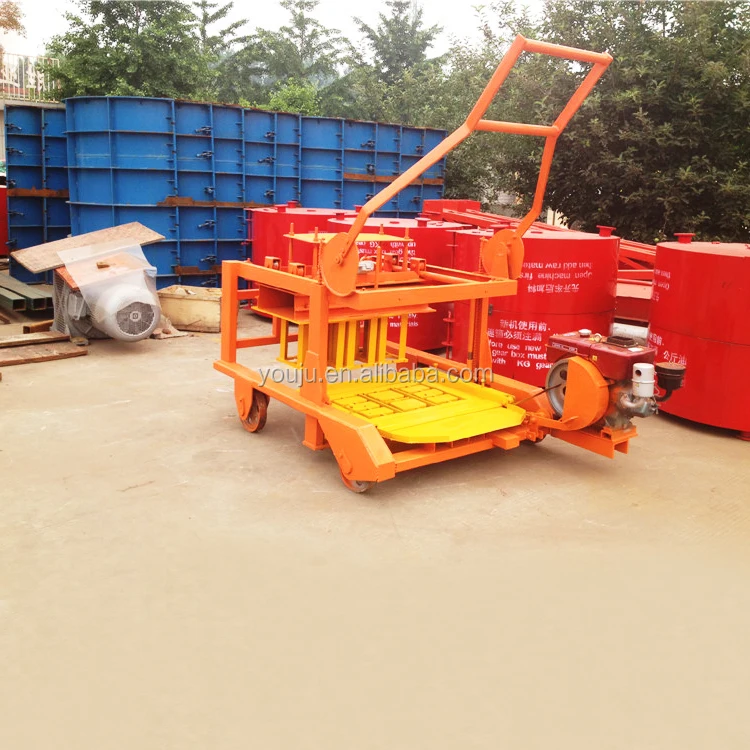
 Mobile block machine