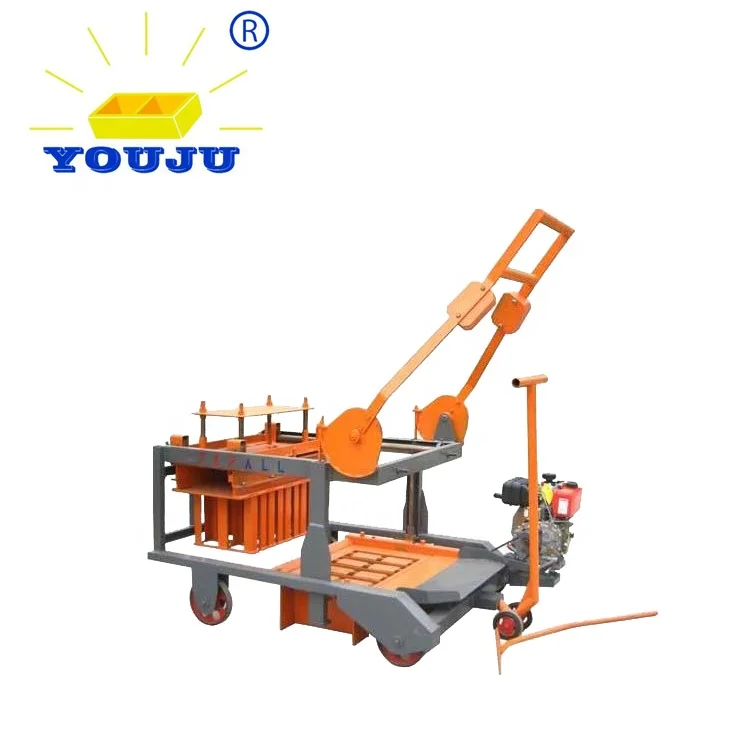
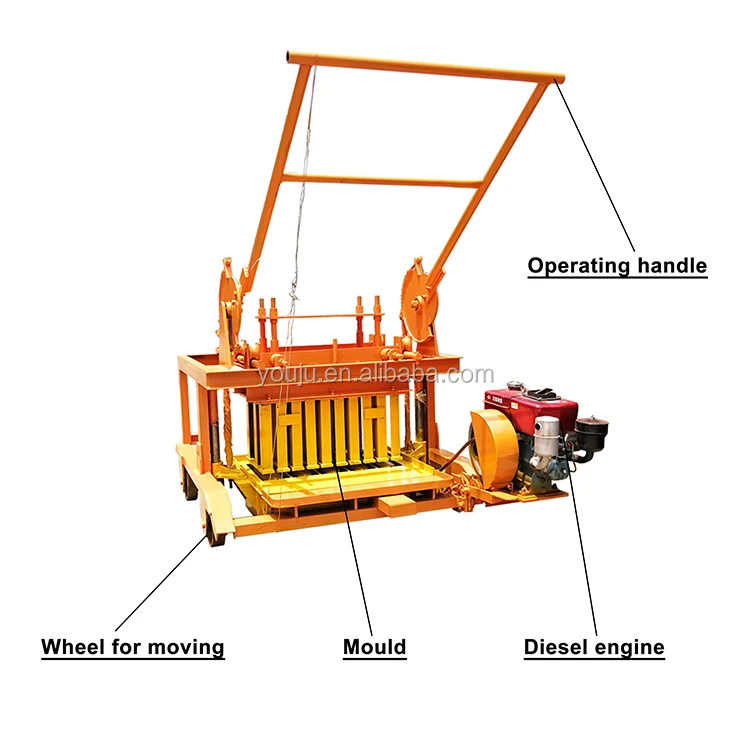
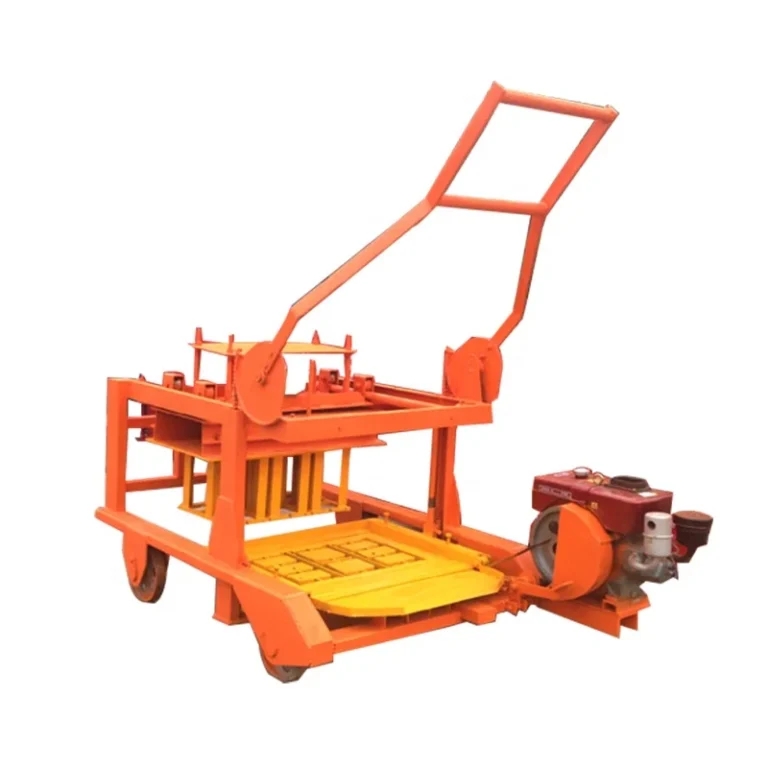
Single-Focus Matched System — Block machinery as our sole product line means the QMR4-45 diesel mobile block machine, its moulds, and any auxiliary components are specified as one coordinated unit rather than sourced from separate suppliers and bolted together.
Technical Specifications
| Parameter |
Value |
| Model |
QMR4-45 |
| Product Type |
Diesel Engine Mobile Concrete Block Making Machine |
| Total Power Source |
Diesel engine |
| Exciting Power |
28.6 kN |
| Excitation Frequency |
4500 r/min |
| Hydraulic Method |
Mold Vibration |
| Molding Cycle |
30 s |
| Capacity |
3000 pcs/day (8 hours) (basis not stated in source — confirm block format / material / thickness) |
| Overall Dimensions (L×W×H) |
1300 x 1500 x 1000 mm |
| Net Weight |
950 kg – 1000 kg |
| Raw Materials |
Concrete, sand, cement, fly ash, lime, gypsum, stone dust, slag, mine tailings, river sand, coal gangue, construction waste |
| Control System |
Manual Transmission / Handle Operation |
| Automation Level |
Manual with vibratory motor and hydraulic pump assist |
| Assembly State |
Mobile (wheel-mounted, self-propelled) |
| Pallet Size |
Not applicable (egg-laying / mobile type, no pallets required) |
| Mould Format |
Customizable per buyer drawing (interlock, paver, hollow block) |
Application Suitability
| Application |
Material or Output |
| On-site housing block production |
Crushed stone, river sand, and cement mixed for hollow or solid wall blocks |
| Remote infrastructure projects |
Fly ash, stone dust, and slag for interlocking paving blocks |
| Mining and industrial zone construction |
Mine tailings and coal gangue recycled into structural blocks |
| Suburban and coastal development |
Local sand and cement for kerbstone and solid block formats |
| First-time entrepreneur block plant |
Widely available raw materials with minimal fixed infrastructure |
What "3000 Pieces per Day" Actually Means for a Mobile Block Machine Manufacturer
A capacity figure without a stated block format is a number waiting to disappoint.
When a mobile block machine manufacturer quotes a daily output, that figure is tied to a specific block size, wall thickness, and mix density. A hollow block requires a different cycle and material volume than an interlocking paver, so the same machine produces noticeably different quantities depending on the format you run. I have seen buyers receive a mobile unit expecting one output level, only to find the real daily yield falls short because the quoted number assumed a format their market does not buy [NEED_CITE:mould format and capacity assumption documentation].

Where the QMR4-45 Sits in the Full Shiyue Range
The QMR4-45 is the entry-point tier for buyers who need production directly on a project site without building a fixed plant. It sits below semi-automatic stationary lines that require pallets, curing racks, and a prepared workshop floor. For contractors running a single housing development or entrepreneurs testing market demand before committing to a larger installation, this mobile block machine manufacturer offers the smallest footprint and lowest infrastructure requirement in the range.
Diesel Drive and Off-Grid Independence
A diesel engine eliminates the need to confirm local voltage, frequency, and phase before the machine ships. On remote sites — desert reclamation, mountain road projects, or coastal developments where grid power is unreliable — the QMR4-45 starts and runs independently. This makes it the practical choice when electrical infrastructure is months away from completion. The trade-off is higher fuel cost per block compared with an electric stationary line, a calculation every buyer should run against their project timeline [NEED_CITE:comparative fuel versus grid electricity cost for mobile block production].
Vibration Force, Cycle Time, and Block Density
The 28.6 kN exciting power at 4500 r/min is calibrated for mobile-class block density. Unlike a heavy stationary press that uses massive hydraulic pressure and a rigid frame to compact material, a mobile egg-laying machine relies on mould vibration to settle the mix into shape. The 30-second molding cycle gives the vibration enough time to consolidate standard concrete mixes, but denser mixes with high stone-dust content may require longer cycles or adjusted water ratios. Hydraulic pressure and vibration force must be matched to the buyer’s actual mix design — specifying a machine for a mix the buyer cannot source locally forces a costly material substitution after arrival.
The Cost of Skipping Mould and Format Confirmation
Ordering a mobile machine without locking down the mould format before production is one of the most expensive oversights in this equipment class. The machine arrives with a default mould that may not match the block shape your local market sells. Swapping to a custom mould after delivery means waiting for a new mould to be manufactured and shipped, while the machine sits idle on site. Confirming mould drawings — interlock, paver, hollow block — against your market’s actual demand before the machine enters production prevents this delay entirely [NEED_CITE:lead time impact of post-delivery mould changes].
Why Source This Machine Through a Single-Focus Block Machinery Maker
Block machinery is the only product line we build, which means the QMR4-45 is not an adapted general-purpose press. The mould, vibration system, and handle mechanism are engineered together so that mould change times and block consistency reflect a matched set rather than assembled components. Configuration is set against the buyer’s local aggregate and target block format, not a catalogue default. Mould design is available to buyer drawings, so the formats your market actually sells ship with the machine. Automation level is selectable — a buyer can start with this manual mobile tier and step up to a semi-automatic stationary line as volume grows. Installation support includes operator training on the specific mix and format the buyer will run.
Documentation & Verification
- Line layout and capacity calculation stating the exact block format assumed for output figures
- Mould drawing and format list confirmed before production against buyer’s market requirements
- Voltage and control language confirmation for any electric auxiliary components
- Factory test record on buyer’s target block format before dispatch
- Packing photographs and customs documentation support for import clearance
Installation, Commissioning & Support
- Site ground must be level and compacted to support the 950–1000 kg machine weight during egg-laying operation
- Diesel engine requires standard fuel supply with no electrical grid connection for primary drive
- Machine arrives wheel-mounted and self-propelled, requiring no crane or forklift for positioning
- First-run commissioning includes vibration frequency adjustment to match buyer’s local aggregate density
- Operator training covers handle operation rhythm, mould change procedure, and daily greasing points
- Wear parts list provided with mould and hydraulic component replacement intervals
Moving Forward With an Inquiry
To configure the QMR4-45 for your project, share the block format your market sells — hollow, interlock, paver, or a custom shape — along with wall thickness and target daily output. Provide your local raw material availability so the mix design can be validated against the machine’s vibration profile. If any auxiliary electric components are involved, confirm your site voltage and frequency to avoid commissioning delays on arrival.
Frequently Asked Questions
Q: What block format does the 3000 pcs/day figure assume?
A: That figure depends on the specific block size, wall thickness, and mix density used during testing. A hollow block, an interlocking paver, and a solid block each require different material volumes and cycle adjustments, producing different daily totals. We provide a capacity calculation document tied to your exact format before order confirmation.
Q: When does a diesel-driven mobile machine outperform a stationary electric line?
A: Diesel drive is the practical choice when grid power is unavailable or unreliable — remote housing developments, mining sites, or regions where electrical infrastructure lags behind construction timelines. The trade-off is higher per-block fuel cost, which buyers should weigh against the value of immediate production capability without waiting for grid connection.
Q: How do I choose between interlock, hollow block, and paver moulds?
A: The decision depends on what your local construction market actually purchases. Interlocking blocks suit housing projects that minimize mortar use, hollow blocks serve standard wall construction, and pavers address road and landscaping demand. We confirm mould drawings against your market research before the machine enters production.
Q: What ground preparation does a mobile egg-laying machine require?
A: The production surface must be level, compacted, and clean of loose debris so blocks release consistently from the mould. A separate curing area with shade and water access is needed nearby. The machine moves under its own wheels, so no fixed foundation or pallet system is required.
Q: When should I step up from the QMR4-45 to a semi-automatic or automatic line?
A: When daily volume demand outgrows mobile egg-laying output, or when your market requires multiple block formats with frequent mould changes, a stationary line with pallet handling and automatic stacking becomes justified. The QMR4-45 serves as a starting tier; buyers can transition to higher automation as their production volume and format range expand.

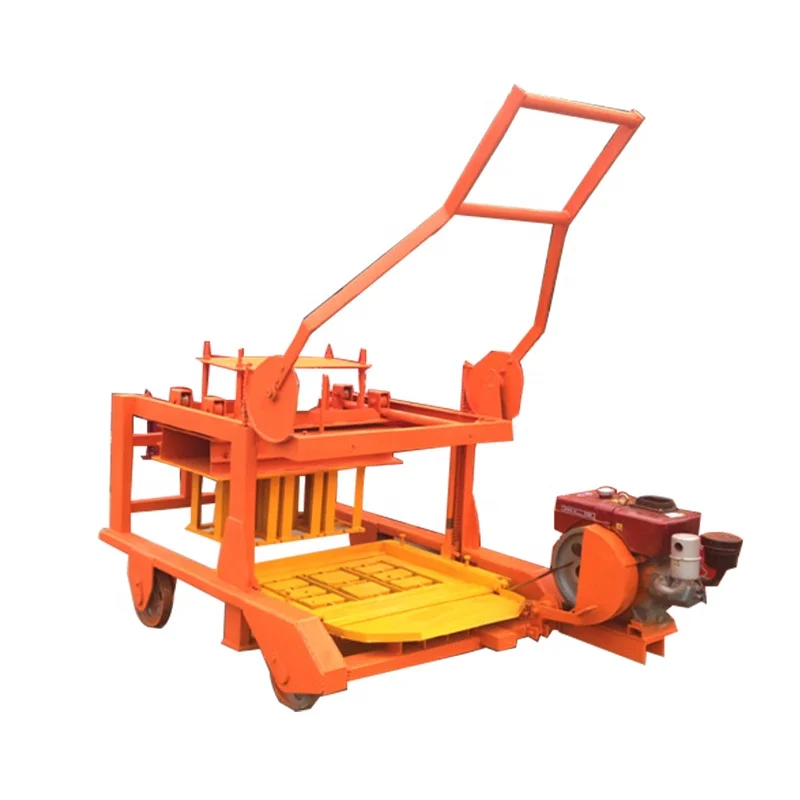
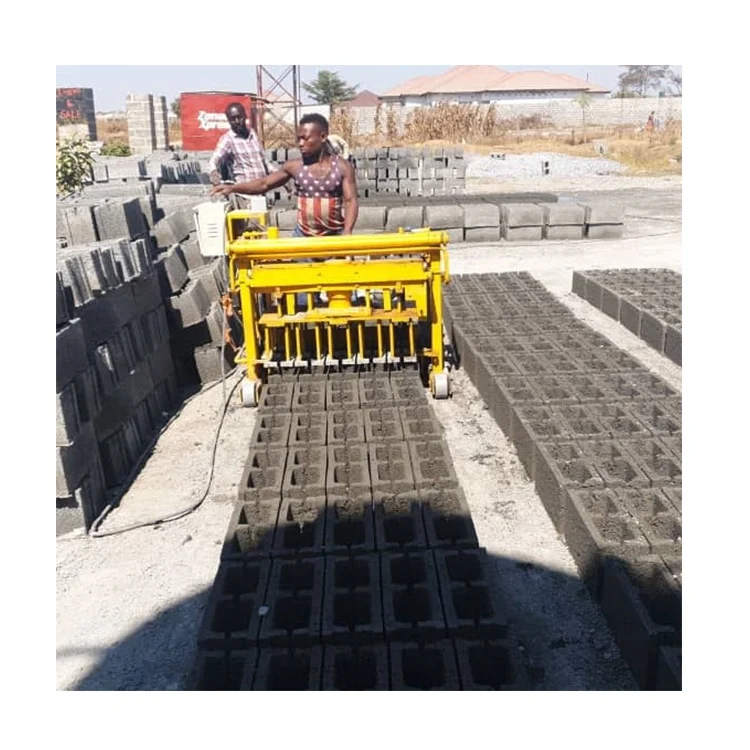 Mobile block machine