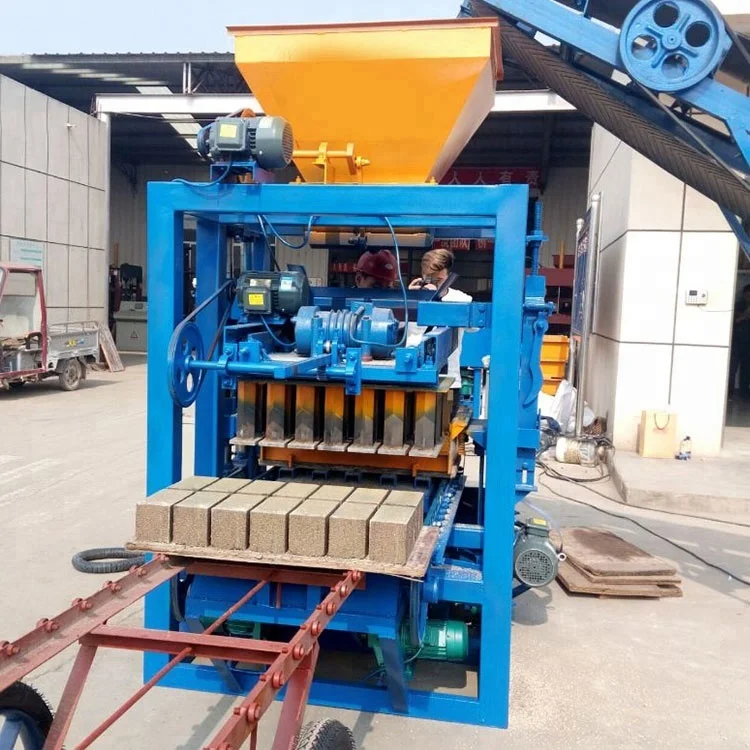
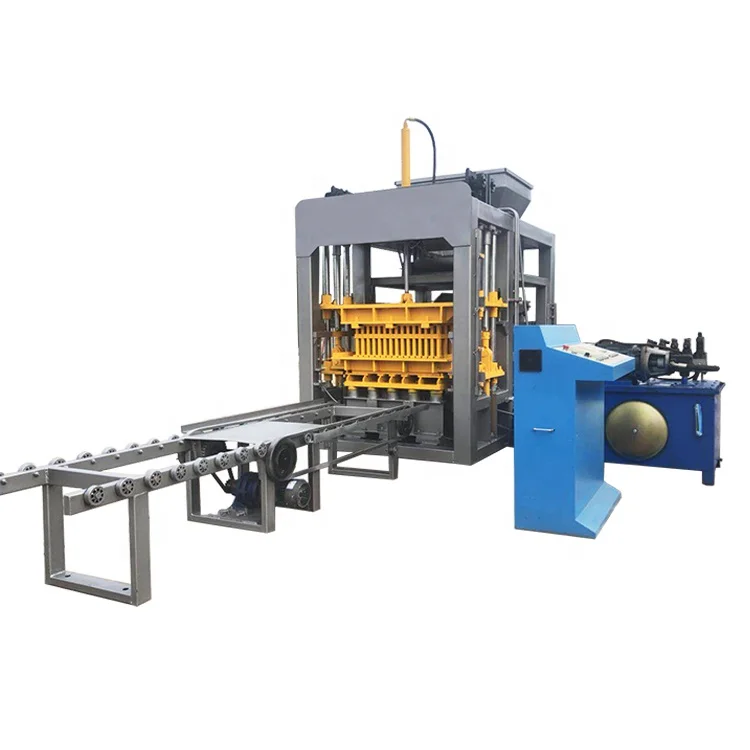
Technical Specifications
| Parameter |
Value |
| Model |
QT6-15 |
| Product Type |
Automatic Concrete Block Making Machine |
| Molding Method |
Vibration combined with hydraulic pressing |
| Rated Pressure |
21 MPa |
| Molding Cycle |
15–20 seconds depending on format and mix |
| Pallet Size |
900 × 700 mm |
| Main Machine Weight |
6,000 kg |
| Output — Hollow Block 400×200×200 mm |
1,440 pcs/h; 11,520 pcs per 8-hour shift |
| Output — Paving Brick 200×100×60 mm |
5,040 pcs/h; 40,320 pcs per 8-hour shift |
| Output — Solid Brick 240×115×53 mm |
7,680 pcs/h; 61,440 pcs per 8-hour shift |
| Control System |
PLC with language to be confirmed before shipment |
| Voltage & Frequency |
Customizable to local grid standard — confirm before production |
| Automation Level |
Automatic line; scalable from simple configuration to full stacking and batching |
| Simple Line Configuration |
JS500 mixer, 8 m belt conveyor, automatic stacker, one hollow block mould, two hydraulic trolleys |
| Optional Additions |
Cement silo, screw conveyor, cement scale, batching machine, pallet feeder, pallet separator |
| Compatible Raw Materials |
Cement, sand, fly ash, stone powder, slag |
| Assembly State |
Stationary production line |
| Warranty |
1 year excluding wear parts |
Application Suitability
| Application Scenario |
Typical Materials and Output |
| Hollow block production for residential and commercial walls |
Cement with fly ash or sand aggregate; 400×200×200 mm format at 1,440 pcs/h |
| Paving brick manufacturing for municipal and private projects |
Crushed stone powder and cement blend; 200×100×60 mm format at 5,040 pcs/h |
| Solid brick production for load-bearing structures |
Sand-cement or slag-cement mixes; 240×115×53 mm format at 7,680 pcs/h |
| Kerbstone and color pavement brick for infrastructure |
Pigmented concrete with stone powder; output varies by mould cavity count |
| On-site block production for large housing developments |
Locally sourced aggregate and cement; stationary line with pallet circulation |
What "1,440 Blocks per Hour" Actually Means on the QT6-15 Automatic Block Machine
Every capacity figure on this page is tied to a specific block format, pallet size, and cycle time — not a single headline number.
I have watched buyers in Latin America sign contracts based on a quoted hourly output, only to discover on commissioning day that the figure assumed a small solid brick while their market actually sells 400 mm hollow blocks. The real daily throughput dropped to less than half of what they planned their business around. The QT6-15 automatic block machine is rated at 1,440 hollow blocks per hour only when running the 400×200×200 mm format with a 15–20 second cycle on a compatible mix. Switch the mould to paving bricks and the number changes completely — not because the machine slows down, but because the pieces-per-pallet count and cycle dynamics differ. This is the difference between planning a plant on honest numbers and planning it on marketing. [NEED_CITE: block format impact on realistic daily output in concrete masonry production]

Where the QT6-15 Sits in the Full Machine Range
Buyers evaluating their first block plant or replacing an ageing line need to understand the tiers before narrowing down. The QT6-15 occupies the mid-range of the automatic block machine lineup, positioned above entry-level semi-automatic machines that require manual pallet handling and below the high-capacity fully automatic lines designed for continuous three-shift operation. Its 900×700 mm pallet and 6,000 kg main machine weight place it in a footprint that fits most mid-size yards without demanding a dedicated industrial plot.
Scaling from Simple Line to Full Automation
A common mistake is buying more automation than the site can absorb in year one, or buying so little that output is bottlenecked by manual stacking. The QT6-15 starts as a simple line — JS500 mixer, 8 m belt conveyor, automatic stacker, and two hydraulic trolleys — which is enough for an entrepreneur proving a local market. As demand grows, the same press accepts a cement silo, screw conveyor, batching machine, pallet feeder, and pallet separator without replacing the core machine. This upgrade path means the investment in the QT6-15 automatic block machine is not a dead end if the business scales.
Reading the Specs That Actually Shape Your Daily Output
The 21 MPa rated hydraulic pressure works together with the vibration system to compact the concrete mix into the mould cavity. Higher pressure alone does not guarantee block strength — the vibration frequency and amplitude must match the aggregate gradation of your local sand or fly ash. A mix that is too dry will not consolidate under pressure, and a mix that is too wet will slump after demoulding. The 15–20 second molding cycle is achievable only when the mix design, vibration force, and hydraulic pressure are all tuned to the same target.
The 900×700 mm pallet size determines how many blocks fit per cycle and how those blocks travel through the curing area. If your existing curing racks or forklift are sized for a different pallet, the entire handling chain breaks down at commissioning. Confirm pallet dimensions against your site before production starts — changing pallet size after the machine is built means new moulds, new racks, and possibly new forklifts. [NEED_CITE: pallet size compatibility with curing infrastructure in block plants]
The PLC control system manages cycle timing, vibration duration, and hydraulic sequence, but the display language must be specified before the electrical cabinet is wired. I once spent three weeks on a site in Ecuador because a 440V machine was connected to a 220V grid and the PLC display was in a language the local operators could not read. Voltage, frequency, and language are not afterthoughts — they are prerequisites for a clean commissioning.
The Cost of Configuring for the Wrong Mix or Grid
When a machine is configured for a raw material the buyer cannot source locally, the result is not a minor inconvenience — it is a production halt. Fly ash availability varies by region, and a mix designed around 60% fly ash will behave completely differently in a market where only river sand is economical. Similarly, arriving at a job site to find the local grid runs at 60 Hz when the machine was built for 50 Hz means the vibration motor runs at the wrong speed, the cycle time drifts, and block density becomes inconsistent. These are not warranty claims — they are configuration errors that fall on the buyer. [NEED_CITE: electrical frequency mismatch consequences in industrial machinery exports]
Why Source This Machine Here
Block machinery is the single production focus, which means the press, mould, pallet, and handling equipment are specified as one matched system rather than assembled from unrelated suppliers. The QT6-15 line configuration is set against your actual mix design and local aggregate, not pulled from a catalogue default. Mould design covers the formats your market actually sells, and custom mould drawings are available when standard formats do not match local building codes. The automation level is selectable — start with the simple line and add pallet automation and batching as volume justifies it. Factory testing runs your specific block format and mix before the machine leaves the workshop, so cycle time and block strength are verified against your requirements, not generic standards.
Documentation & Verification
- Line layout showing capacity calculation per block format with cycle time assumptions
- Machine specification sheet confirming voltage, frequency, and PLC language before production
- Mould drawing and format list for all block types on the 900×700 mm pallet
- Factory test record demonstrating cycle time and block strength on your mix design
- Hydraulic and electrical schematic for local maintenance reference
Installation, Commissioning & Support
- Foundation plan matched to the 6,000 kg main machine weight and vibration load profile
- Electrical supply confirmation for the specified voltage and frequency before cabinet wiring
- Machine shipped in dismantled state with reassembly guide and numbered components
- On-site commissioning includes PLC parameter tuning to your actual mix and block format
- Operator training covers mould change procedure, daily maintenance, and cycle adjustment
- Wear parts list and mould spares provided with first shipment for immediate replacements
What to Include in Your Inquiry
To size the QT6-15 line correctly for your operation, provide the block formats your market sells and the daily volume you need to hit. Share your local raw material sources — whether fly ash is available, what type of sand or stone powder you use, and the cement grade. Confirm your site’s voltage, frequency, and the language your operators need on the PLC display. If you already have curing racks, forklifts, or a mixer in place, send the dimensions and specifications so the pallet and line configuration can be matched to your existing infrastructure.
Frequently Asked Questions
Q: How does the QT6-15 compare to smaller and larger models in the range?
A: The QT6-15 sits in the mid-tier, offering higher output than entry-level semi-automatic machines while requiring a smaller footprint and lower investment than high-capacity fully automatic lines. Its 900×700 mm pallet and scalable configuration suit buyers who need more than manual output but are not yet ready for a three-shift continuous operation.
Q: What block formats are included in the quoted capacity figures?
A: Each capacity number on this page is tied to a specific format: 1,440 pcs/h for 400×200×200 mm hollow blocks, 5,040 pcs/h for 200×100×60 mm paving bricks, and 7,680 pcs/h for 240×115×53 mm solid bricks. Realistic daily output depends on the format you actually run and the cycle time your mix allows.
Q: Can I start with a semi-automatic configuration and upgrade later?
A: Yes. The simple line includes a JS500 mixer, belt conveyor, and automatic stacker. As volume grows, you can add a cement silo, batching machine, pallet feeder, and pallet separator to the same QT6-15 press without replacing the core machine or moulds.
Q: What plant footprint does the QT6-15 line require?
A: The stationary line footprint depends on the automation level chosen. The simple configuration with mixer, conveyor, and stacker fits a moderate yard. Adding batching, silo, and pallet circulation extends the layout. A line layout document with exact dimensions is provided during the proposal stage.
Q: How is pallet size confirmed against my existing curing racks and forklift?
A: The 900×700 mm pallet must match your curing rack spacing and forklift tine width. Before production, share your existing handling equipment dimensions so the pallet specification and line layout are adjusted if needed. Retrofitting pallet size after the machine is built affects moulds, racks, and handling equipment.

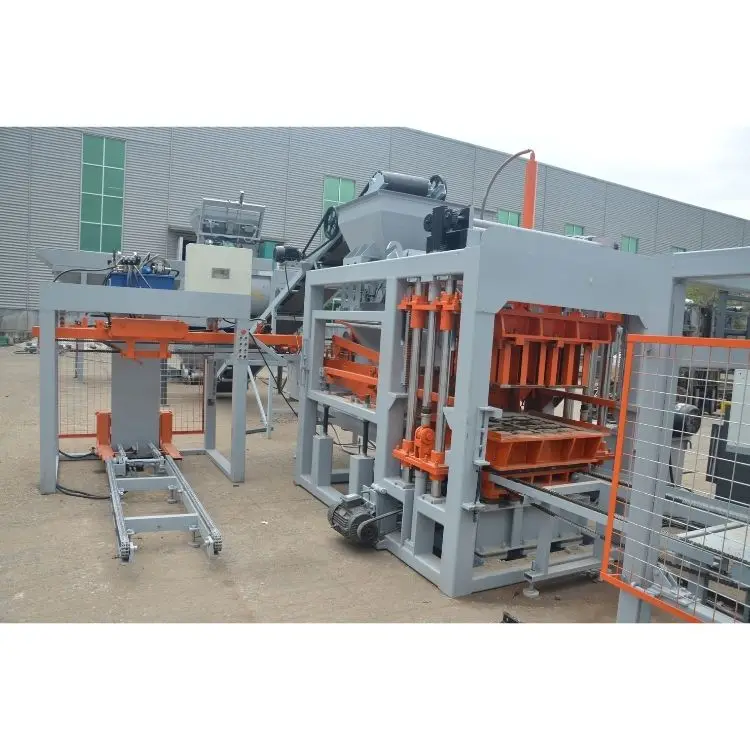
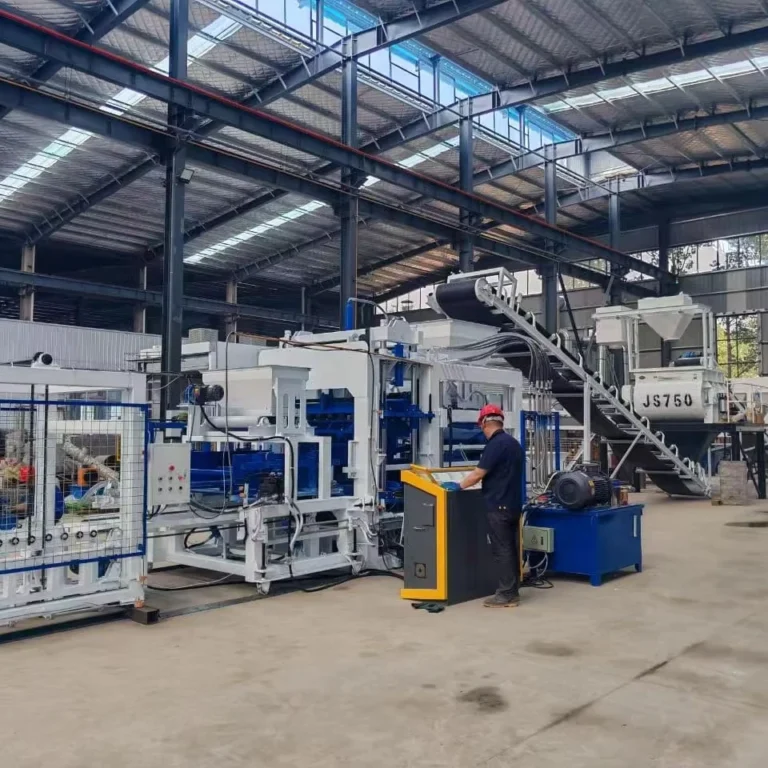 Automatic block machine