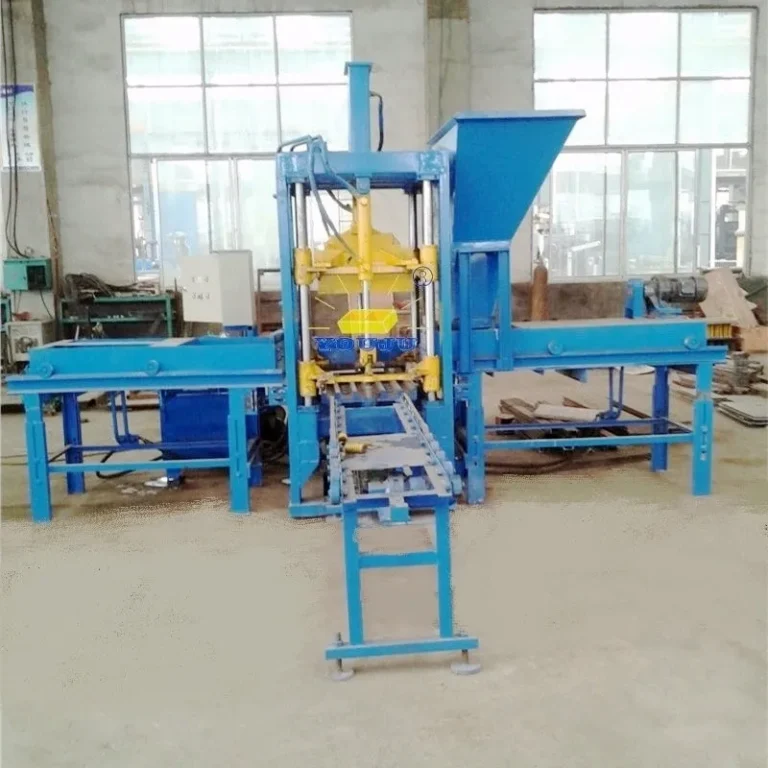
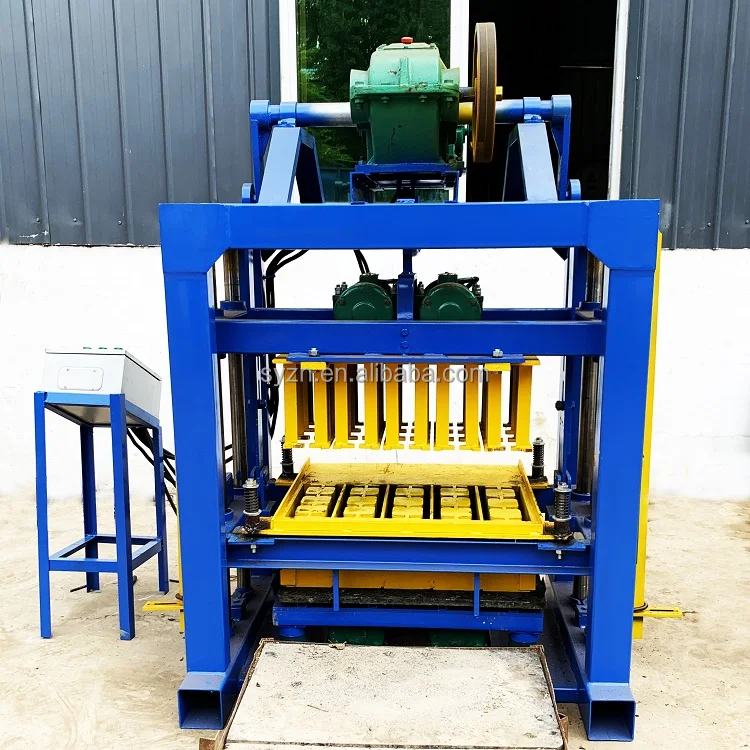
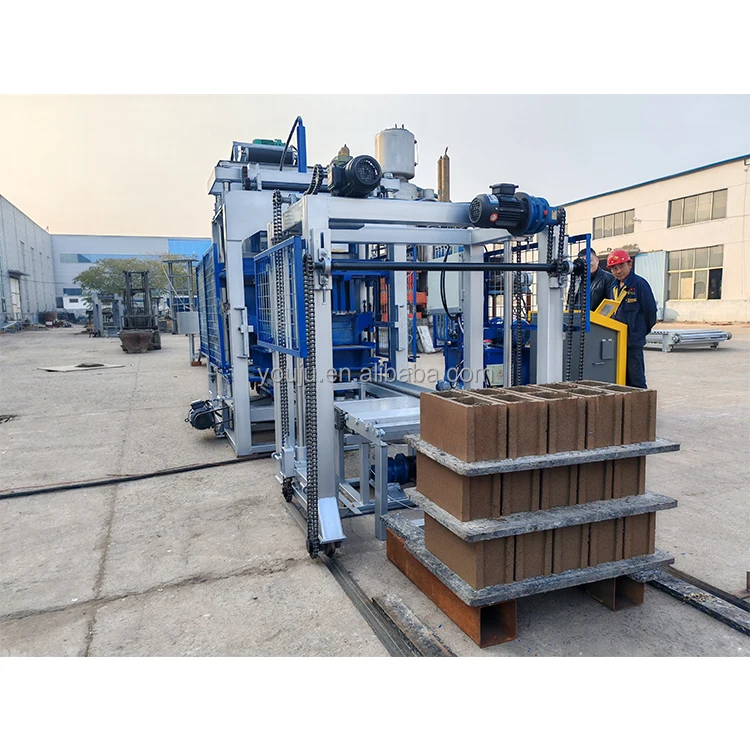
Clear starting point in the range — the QTJ4-40 sits at the small-plant / low-investment tier, letting buyers map machine, pallet and curing area before stepping to higher output tiers.
Technical Specifications
| Parameter |
Value |
| Model |
QTJ4-40 |
| Product Type |
Stationary Block Making Machine |
| Main Vibration Form |
Platform Vibration |
| Vibration Frequency |
2800 r/min |
| Pallet Size |
850×450 mm |
| Per-hour Output (400×200×200 mm hollow block, 4 pcs/mould) |
360 pcs/h |
| Per-day Output (400×200×200 mm hollow block, 4 pcs/mould) |
2880 pcs / 8 h |
| Per-hour Output (400×150×200 mm block, 5 pcs/mould) |
500 pcs/h |
| Per-day Output (400×150×200 mm block, 5 pcs/mould) |
4000 pcs / 8 h |
| Per-hour Output (225×112.5×60 mm brick, 9 pcs/mould) |
900 pcs/h |
| Per-day Output (225×112.5×60 mm brick, 9 pcs/mould) |
7200 pcs / 8 h |
| Raw Material Ratio (reference) |
cement 8–10%, sand 30–40%, stone 50–60% (approx. 1:4:5) |
| Machine Weight |
1 T |
| Overall Dimensions (L×W×H) |
1350×1460×1800 mm |
| Recommended Factory Area |
200 m² |
| Worker Requirement |
1–3 people |
| Automation Level |
Semi-automatic (top die push/pull with automatic scraper) |
| Control System |
Manual / semi-automatic (source value — verify against manufacturer catalog) |
| Applied Products |
hollow/solid blocks, pavers, interlocking blocks, curbstone, colored pavers |
| Raw Materials |
concrete, cement, fly ash, crushed stone, sand, dust, gravel, slag |
| Standards |
CE (referenced via certification image; specific scope and certificate number not stated in source) |
Application Suitability
| Application |
Material or Output |
| Hollow block production for small masonry contractors |
Crushed stone, sand, cement at approx. 1:4:5 ratio |
| Solid block runs for local building material distributors |
Concrete and fly ash blends |
| Interlocking brick and colored paver batches |
Cement, sand, pigment with fine aggregate |
| On-site block production by housing project contractors |
Locally sourced gravel, sand and cement |
| First-plant entrepreneurs testing regional demand |
Standard concrete mixes on 850×450 mm pallets |
What "2880 Blocks per Day" Actually Assumes
Capacity numbers are only meaningful when tied to a specific block format and mould count.
A single headline figure like "2800 pcs / 8 hours" hides the fact that output shifts dramatically depending on whether the line is running 400×200×200 mm hollow blocks at 360 pcs/h or 225×112.5×60 mm bricks at 900 pcs/h. Buyers who compare machines on a single number often discover, after installation, that the format they actually sell was never the basis for the quoted capacity [NEED_CITE: block machine capacity disclosure standards]. That mismatch delays project timelines and forces unplanned overtime. The stationary block making machine for sale here lists each format separately so buyers can size the QTJ4-40 against the product they will actually ship.

Where the QTJ4-40 Sits in the Output Range
The QTJ4-40 occupies the entry tier of the stationary block machine lineup. Semi-automatic operation with top die push/pull and an automatic scraper keeps labour at one to three people, making this the typical starting point for entrepreneurs and small contractors who want to produce blocks without investing in a fully automatic stacking and cubing line. Buyers who later need higher throughput can move up to automatic tiers without changing pallet format, because the 850×450 mm pallet size is shared across several models in the range.
Matching the Machine to the Buyer’s Actual Block Format
Choosing a stationary block making machine starts with the block the local market buys. A contractor supplying hollow blocks for wall construction needs the 400×200×200 mm mould at 2880 pcs/day, while a paver producer running 225×112.5×60 mm bricks targets 7200 pcs/day on the same press. Confirming the target format before ordering ensures the mould, pallet and curing area are specified as one system rather than assembled piecemeal after arrival [NEED_CITE: mould and pallet compatibility in block production].
Vibration, Pressure and Pallet Size in Practice
Platform vibration at 2800 r/min compacts the mix from below while the top die push/pull mechanism applies downward force — together they determine block density and edge definition. The 850×450 mm pallet size was chosen to match small-plant curing areas where floor space limits rack length. A 200 m² recommended factory area covers the press, raw material stock, pallet return and a basic curing zone. The reference raw material ratio of cement 8–10%, sand 30–40%, stone 50–60% provides a starting mix; local aggregate grading and moisture content must be verified on site before locking in cycle times.
The Cost of Skipping Format Confirmation
When a buyer orders on headline capacity without confirming the block format, the mould may arrive for a product the local market does not purchase, forcing a second mould order and weeks of idle production. Pallets sized without regard to the curing area already on site lead to double-handling as workers restack blocks onto local racks. Voltage and frequency left unconfirmed until after shipment can delay commissioning while a transformer or motor swap is arranged [NEED_CITE: voltage and frequency standards by export market].
Why Source This Stationary Block Making Machine Here
Block machinery is the single focus, so the QTJ4-40 press, mould, pallet and handling are specified as one matched system. Configuration is set against the buyer’s actual mix design and local aggregate rather than a catalogue default. Mould design covers the formats the buyer’s market sells, with custom drawings available. Automation level is selectable — a buyer can start semi-automatic on the QTJ4-40 and step up later. Installation support includes operator training so the crew can run the machine independently from day one.
Documentation & Verification
- Line layout and capacity calculation stating the block format assumed for each output figure
- Machine specification sheet with pallet size, vibration frequency and overall dimensions
- Mould drawing and format list covering hollow, solid, paver and interlocking profiles
- Voltage and control language confirmation document signed before production
- Factory test record run on the buyer’s target block format before dispatch
- Packing photographs and customs documentation support for container loading
Installation, Commissioning & Support
- 200 m² factory area with level concrete floor to support 1 T machine weight and pallet return path
- Power supply confirmed for local voltage and frequency before motor assembly
- Machine ships partially assembled; on-site bolt-up and pallet alignment included in commissioning
- First-run parameter tuning on buyer’s raw material to verify block density and cycle time
- Operator training covers mould change procedure, scraper adjustment and daily lubrication points
- Wear parts and mould availability list provided with spare part numbers and lead times
What to Prepare Before Requesting a Quote
Send the block format and dimensions that represent the largest share of local sales, the target daily output for that format, and the raw materials available within a practical transport radius. Include the site’s voltage, frequency and the language needed on any control display. If the curing area or forklift is already in place, share the pallet dimensions in use so the 850×450 mm pallet can be confirmed or adjusted.
Frequently Asked Questions
Q: How is the quoted capacity verified and for which block format?
A: Every output figure is tied to a specific block size and mould count — for example 360 pcs/h on 400×200×200 mm hollow blocks with 4 pcs per mould. The capacity calculation document supplied with the quotation states the format assumed so buyers can compare machines on equal terms.
Q: Where does the QTJ4-40 sit among automatic, semi-automatic and mobile tiers?
A: It sits at the small-plant semi-automatic tier with top die push/pull and automatic scraper, requiring one to three workers. Buyers needing higher throughput or reduced labour can move to automatic tiers that share the same pallet format.
Q: What plant footprint and curing area are required for a stationary line at this tier?
A: The recommended factory area is 200 m², covering press placement, raw material stock, pallet circulation and a basic curing zone. Pallet size 850×450 mm is chosen to fit typical small-plant rack layouts.
Q: Which voltage, frequency and control language options are available for my market?
A: Voltage and frequency must be confirmed before production so the motor and control panel match the site supply. Display language is agreed at the same stage to avoid commissioning delays after arrival.
Q: How do I choose between starting semi-automatic now and upgrading later?
A: The QTJ4-40 allows a buyer to begin with semi-automatic operation and add automatic pallet feeding or stacking later. The pallet size remains constant across tiers, so existing curing racks and forklifts stay in use.

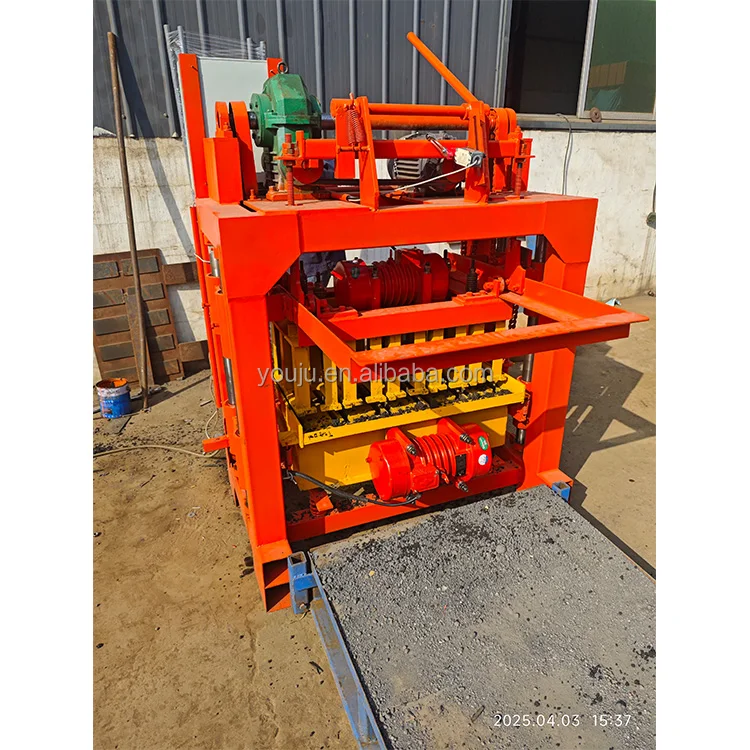
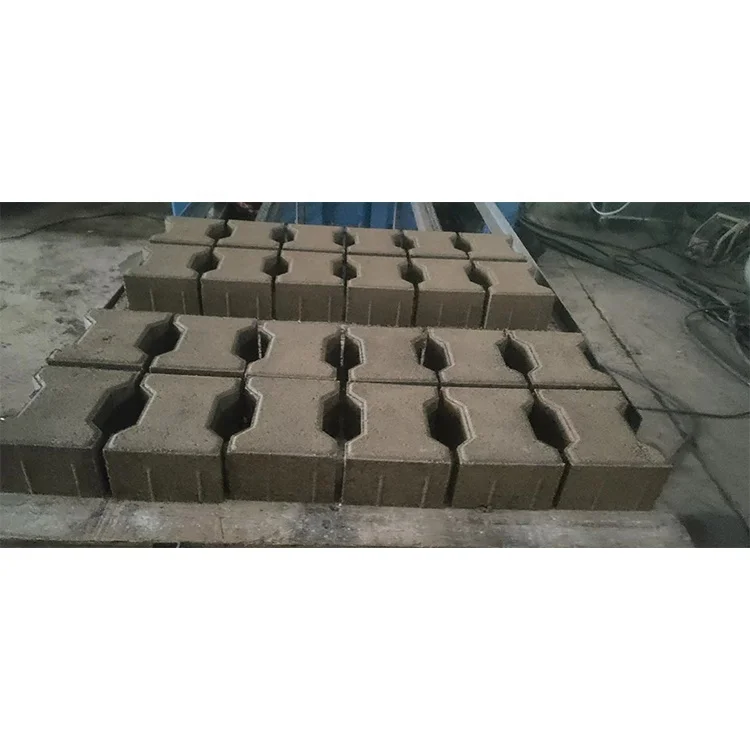 Stationary block machine