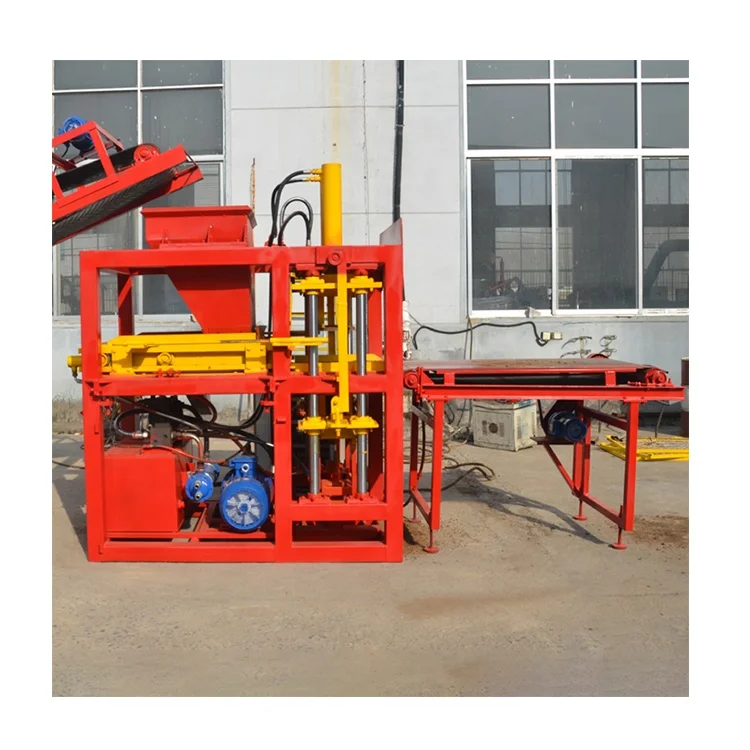
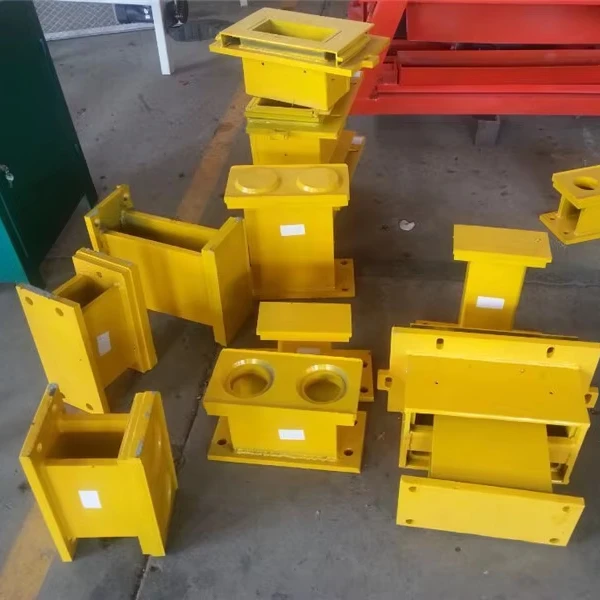
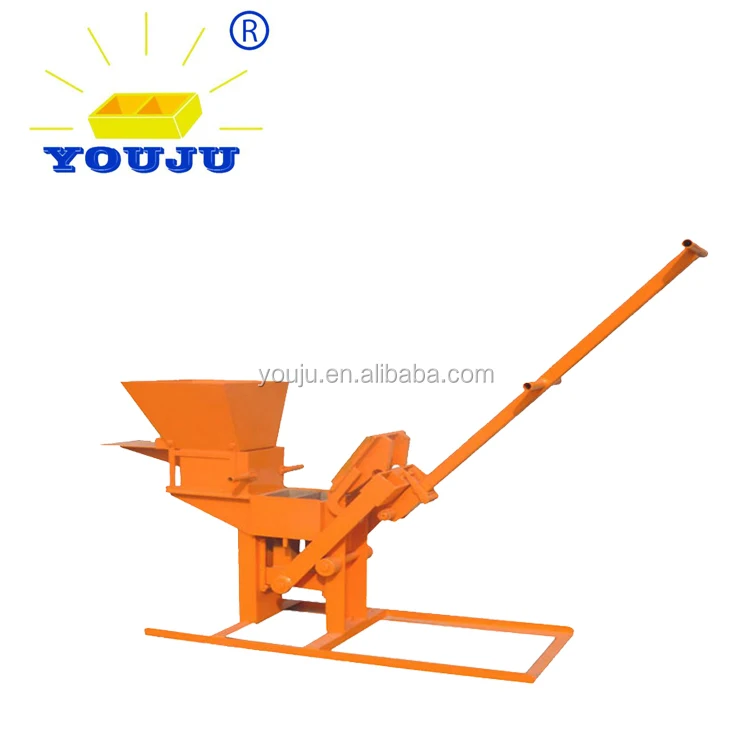
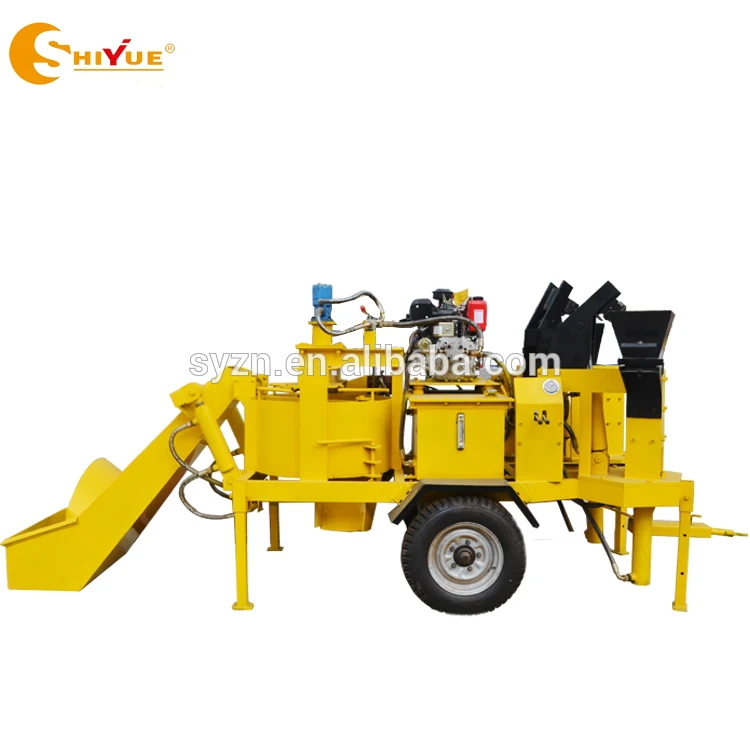
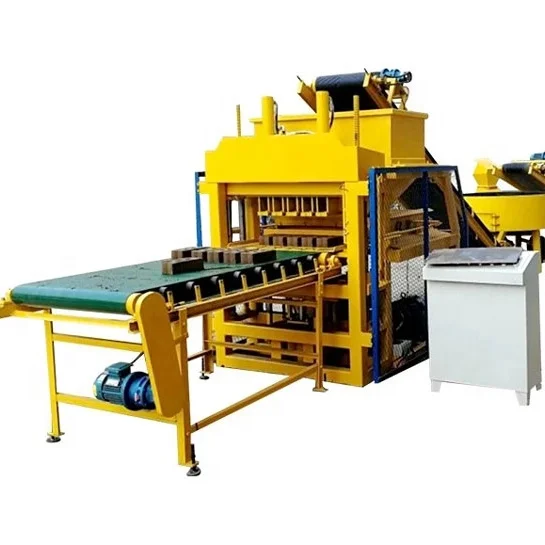
Integrated mobile system — mixer, engine, and press share one frame so you can move between sites without splitting the line.
Technical Specifications
| Parameter |
Value |
| Model |
M7MI TWIN SUPER |
| Product Type |
Mobile Clay Interlocking Brick Making Machine |
| Production Capacity |
3200 pcs / 8 hr (basis: 300×150×100 mm interlocking block, 2 pcs per mould, 20 s cycle) |
| Hourly Output |
400 pcs / h (basis: 300×150×100 mm interlocking block) |
| Molding Cycle |
20 s (basis: 300×150×100 mm block) |
| Qty per Mould |
2 pcs |
| Block Size |
300 × 150 × 100 mm |
| Integrated Mixer |
Pan mixer |
| Power Source |
Diesel engine |
| Frame Type |
Mobile frame |
| Assembly State |
All-in-one mobile unit (mixer, engine, press integrated) |
| Automation Level |
Manual / mobile egg-laying |
| Voltage & Frequency |
N/A (diesel-powered) |
Application Suitability
| Application |
Material or Output |
| On-site housing project block production |
Local clay or stabilized soil, interlocking 300×150×100 mm format |
| Mobile deployment across multiple job sites |
Relocated without dismantling fixed plant infrastructure |
| Small-to-medium contractor block making |
Daily volumes matched to single-shift site output |
| First block plant for entrepreneurs |
Low initial investment, diesel-powered, no grid dependency |
What the Mould-Change Claim Actually Means for Your Format Flexibility
A mobile clay interlocking brick making machine manufacturer that quotes format flexibility must show you the mould drawings and change procedure before you commit.
Capacity numbers on a spec sheet mean little if the machine cannot switch formats within a realistic window. Contractors producing interlocking blocks on a housing site often assume they can add a kerbstone or paver mould later with a simple swap, only to find the changeover takes the better part of a shift. When you evaluate a mobile egg-laying unit, ask which interlocking profiles are engineered, how the mould seats on the press table, and whether alignment pins or bolt patterns are standardised across formats. A machine locked to one profile defeats the flexibility promise [NEED_CITE: mould interchangeability standards for mobile block presses].

How the M7MI TWIN SUPER Fits the Machine Range
Buyers surveying their first or replacement machine need to place themselves on a range that spans mobile, semi-automatic, and fully automatic tiers before narrowing down. The M7MI TWIN SUPER sits at the mobile entry point, designed for contractors who produce blocks on their own site and move the unit when the project ends. It carries its own pan mixer and diesel engine, so there is no separate batching station to install or grid connection to arrange. For a buyer comparing this tier against a semi-automatic stationary line, the trade-off is footprint and relocation speed versus raw output volume and automation depth.
Where This Mobile Unit Sits Against Higher Tiers
A semi-automatic or fully automatic line adds pallet feeding, stacking, and curing rack handling around the press — stations that the M7MI TWIN SUPER does not include because the egg-laying method deposits blocks directly onto the ground. This keeps the initial investment and site preparation minimal, but it also means output stacking and curing logistics remain manual. If a contractor anticipates growing into higher daily volumes or a broader format range, the decision comes down to whether the mobile unit covers the current project and a replacement is planned later, or whether a stationary line from the same range should be specified from the start [NEED_CITE: mobile versus stationary block production site requirements].
Diesel Power, Pan Mixer, and Cycle Time: What They Mean on Site
The integrated diesel engine removes grid dependency, which matters on greenfield housing sites where reliable three-phase power may be months away. The pan mixer sits on the same frame as the press, so batched material travels a short distance and moisture loss during transfer is minimised — a practical advantage when local clay dries quickly in open conditions. A 20-second molding cycle (basis: 300×150×100 mm interlocking block) yields two pieces per press, translating to 400 pieces per hour under continuous operation. Hydraulic pressure and vibration force are not published in the available source data; confirming these values against your local clay’s plasticity index is necessary before the mix design is finalised. The egg-laying method means no pallets are consumed, eliminating a recurring cost but requiring a level, compacted ground surface for consistent block geometry.
The Hidden Cost of Skipping a Raw Material Sample
Sending a soil sample to the machine builder before finalising the press configuration seems like a delay, but skipping it leads to far costlier problems on site. I have seen clay interlocking brick machines arrive at a project location, produce flawless blocks during the factory test, and then crack at every edge once local soil goes through the press. The reason is almost always a mismatch between the vibration force and the clay’s sand-to-fines ratio — the press was tuned for a different material. Correcting this after arrival means adjusting hydraulic pressure settings, sometimes replacing the mould wear plates, and retraining operators on a new cycle timing. A sample tested against your actual excavation material costs a fraction of a re-commissioning visit [NEED_CITE: soil plasticity testing for compressed earth block production].
Why Source This Mobile Unit Through a Single-System Supplier
Block machinery as a sole focus means the press, mould, and mixer are specified as a matched system rather than assembled from unrelated suppliers. Configuration is set against the buyer’s actual mix design and target block format, not pulled from a catalogue default. Mould design covers the interlocking profiles the buyer’s market sells, including custom drawings when a housing authority specifies a non-standard block dimension. The automation level is selectable within the broader range, so a contractor can start with this mobile unit and move to a semi-automatic line when volume grows. Installation support includes operator training on the egg-laying method and mould change procedure, backed by a wear parts list so first replacements are ordered before they are needed.
Documentation & Verification
- Line layout and capacity calculation stating 300×150×100 mm block format per output figure
- Machine specification sheet confirming diesel engine rating and pan mixer capacity
- Mould drawing and format list for available interlocking profiles
- Factory test record demonstrating 20-second cycle and block quality before dispatch
- Operation and maintenance manual covering egg-laying ground preparation requirements
Installation, Commissioning & Support
- Level, compacted ground surface required for consistent egg-laying block geometry
- Diesel fuel supply and daily consumption rate confirmed before first shift
- Pan mixer and press alignment verified on site after transport vibration
- Operator training on 20-second cycle rhythm and raw material feed timing
- Mould wear plate inspection schedule set from first production day
- Spare hydraulic seals and mixer blades included in first-order consumables list
What to Include in Your Inquiry
To size the right mobile clay interlocking brick making machine for your project, share the interlocking block dimension your market requires, the daily volume you expect across a single shift, and the source of your clay or stabilised soil. If the site has no grid connection yet and diesel is the only option, state that upfront so the engine rating can be matched. Mention whether you anticipate adding a second format later, so the mould change system can be specified accordingly.
Frequently Asked Questions
Q: How is the daily output figure for the M7MI TWIN SUPER calculated?
A: The published 3200 pieces per 8-hour shift assumes a 300×150×100 mm interlocking block, 2 pieces per mould, and a continuous 20-second molding cycle. Any change in block format, material, or mould count per press alters that number. We provide a capacity calculation tied to your exact block dimension and confirmed cycle time before order.
Q: Where does this mobile unit sit compared to semi-automatic machines in the range?
A: The M7MI TWIN SUPER is the mobile, diesel-powered, egg-laying entry point — no fixed plant, no pallets, no grid power needed. Semi-automatic and automatic tiers add pallet handling, stacking, and higher output for stationary plants. The choice depends on whether you need site mobility or higher daily volume from a fixed location.
Q: Can I add other block formats to this machine later?
A: The press accepts different moulds, but which interlocking profiles are engineered and how long the swap takes depends on the mould design supplied. Ask for the format list and changeover procedure during inquiry so you know whether your future block dimension is covered and whether the change fits within a normal shift.
Q: What site preparation does the mobile unit need before it starts producing?
A: You need a level, compacted ground surface where the egg-laying press deposits blocks, plus a clear area for curing. No fixed foundation or three-phase power is required because the diesel engine and integrated pan mixer make the unit self-contained. Ground condition directly affects block dimensional consistency.

 Clay interlocking brick