Matched System — the LY2-40 sits at the base of the Shiyue block machine range, specified as a single unit with its moulds, recommended mixer and manual pallet workflow so buyers can see exactly where the manual tier begins before stepping up to powered models.
Technical Specifications
| Parameter |
Value |
| Model |
LY2-40 |
| Product Type |
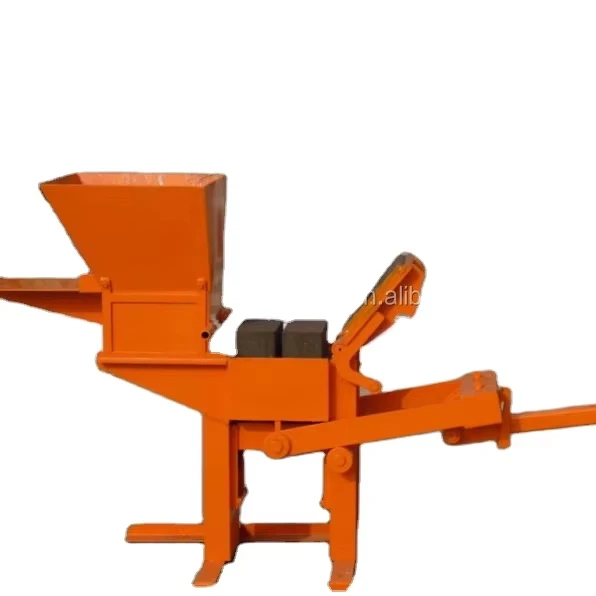
Manual Clay Interlocking Brick Making Machine |
| Total Power |
No power required, completely manual operation |
| Overall Dimensions (L×W×H) |
1600 x 700 x 1200 mm |
| Net Weight |
200–240 kg |
| Molding Cycle |
30–40 seconds per cycle |
| Output Capacity |
400–1000 pcs/day (basis not stated in source — confirm block format, wall thickness and material before quoting) |
| Automation Level |
Fully manual, no hydraulic or electric drive |
| Lifting System |
Manual lever operation |
| Mobility |
Steel wheels for on-site repositioning |
| Mould System |
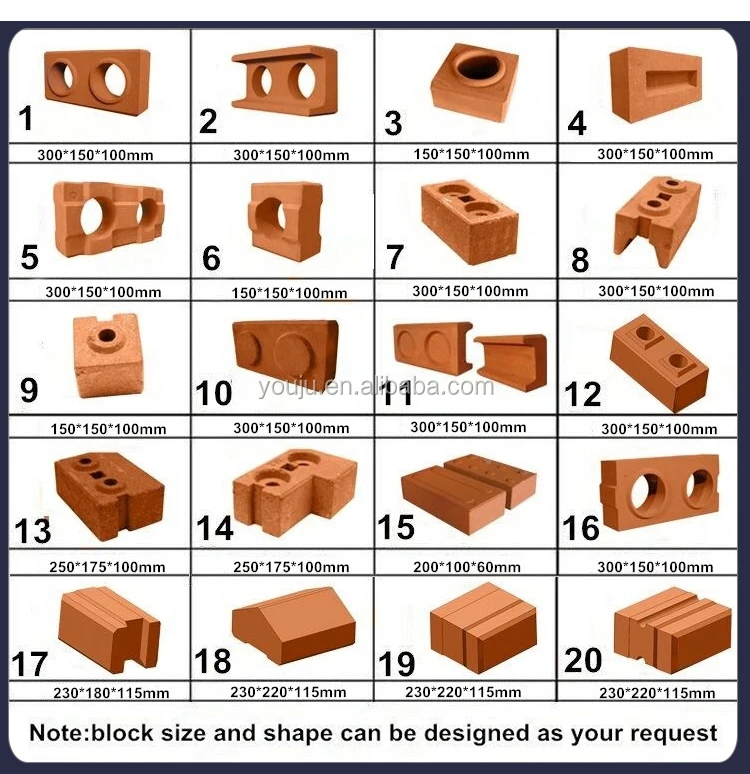
Changeable moulds for various interlocking brick formats |
| Recommended Mixer |
JFA-1 or JQ350 |
| Warranty |
1 year |
Application Suitability
| Application Scenario |
Typical Material / Output |
| Off-grid rural housing projects |
Local clay and laterite soil, small daily runs of interlocking wall bricks |
| Remote development and contractor sites |
On-site clay brick production without grid electricity |
| First-time block plant startups |
Low-capital entry with manual interlocking brick output before scaling |
| Building material distributors testing market demand |
Pilot runs of clay interlocking formats before committing to powered lines |
| Community and NGO-led construction programs |
Zero-power brick making in areas with unreliable or absent electrical supply |
What "400 to 1000 Pieces per Day" Actually Means for a Manual Clay Interlocking Brick Machine
Daily output depends entirely on which interlocking brick format you press and how your crew manages the manual cycle.
A Manual Clay Interlocking Brick Machine manufacturer quoting a single daily number without naming the brick size, wall thickness and soil type leaves the buyer guessing. The LY2-40 lists 400 to 1000 pieces per day, but that spread exists because a thin-walled interlocking paver cycles differently from a full-height load-bearing wall brick. Add in soil moisture variation, manual lever speed differences between operators and mould change downtime, and the real output on your site may sit at either end of that range — or outside it. I once watched a crew in West Africa lose an entire afternoon because the local red soil had higher sand content than expected; bricks crumbled at the edges straight out of the mould, and daily output collapsed until we adjusted the moisture window and mould gap on-site [NEED_CITE: soil moisture and clay content testing before brick machine commissioning].
Where the LY2-40 Sits in the Full Block Machine Range
The Shiyue range runs from this fully manual tier through semi-automatic models with powered vibration and hydraulic pressing, up to high-capacity automatic lines with PLC control and auto-stacking. The LY2-40 occupies the entry point, meaning it requires no electrical infrastructure and no fixed plant layout. For a buyer surveying options, this is the machine that proves whether your site conditions — soil type, available labour, curing space — can support block production at all before you commit capital to a powered tier. Understanding where each tier sits prevents the common mistake of buying a semi-automatic machine for a site that has no reliable three-phase power.
How the Manual Tier Defines Your Upgrade Path
Starting with the LY2-40 does not lock you into manual production permanently. The range is structured so that a buyer who begins with this machine and later adds a semi-automatic or automatic press can reuse knowledge gained from the manual tier — particularly around mould handling, soil mix behaviour and curing logistics. The changeable mould system means you can test which interlocking brick formats sell in your local market at minimal cost [NEED_CITE: block format demand assessment for new market entry]. When you are ready to move up, the format knowledge transfers directly; only the pressing mechanism and cycle speed change.
Reading the Specs That Matter for Manual Pressing
The 30–40 second molding cycle sets the rhythm for everything else. In a manual machine, this cycle includes filling the mould, closing the lid, pulling the lever to compress, and releasing the brick — all by hand. That cycle time, multiplied by the number of cavities in your chosen mould and the hours your crew can sustain the pace, gives you realistic daily output. The steel-wheel mobility matters because the LY2-40 can be rolled to wherever the soil pile and curing area are, eliminating the need for a fixed conveyor or pallet return system. At 200–240 kg net weight, it is heavy enough to resist movement during lever compression but light enough for two workers to reposition across a job site. The recommended JFA-1 or JQ350 mixer determines how quickly you can feed the press with properly blended clay; a mismatch here bottlenecks the manual cycle no matter how fast your crew works.

What Happens When You Skip the Range-Matching Step
Buyers who jump straight to a powered machine without confirming their site can support it face compounding problems. Voltage incompatibility stalls commissioning for weeks. A machine sized for a block format the local market does not buy sits idle while the buyer sources a new mould. Automation features that require skilled PLC operators go unused because the crew was trained only on manual equipment [NEED_CITE: common commissioning delays for block machinery in off-grid locations]. These are not defects in the machines; they are failures to match the buyer’s actual conditions to the correct tier in the range.
Why Source This Tier From a Range-Focused Supplier
Block machinery is the single focus here, so the LY2-40 is specified alongside its compatible moulds, recommended mixer and manual pallet workflow as one coherent setup rather than assembled from separate vendors. The configuration conversation starts with your actual soil type, target brick format and site conditions — not a catalogue default. Mould design covers the interlocking profiles your market demands, including custom drawings if your region uses a non-standard locking geometry. The automation level is selectable within the range, so you can start with this manual press and step up to semi-automatic or automatic models later without switching suppliers. Installation guidance covers first-day soil testing and cycle pacing so your crew reaches stable output without a prolonged learning curve.
Documentation & Verification
- Line layout showing LY2-40 placement relative to curing area and manual pallet flow
- Capacity calculation sheet stating which interlocking brick format the daily figure assumes
- Mould drawing and format list with available interlocking profiles and change procedure
- Machine specification sheet confirming manual cycle time, dimensions and weight
- Recommended mixer integration note for JFA-1 or JQ350 with the LY2-40 press cycle
Installation, Commissioning & Support
- Level ground required; the 1600 x 700 mm footprint needs no concrete foundation for manual operation
- No electrical connection needed; the LY2-40 runs entirely on manual lever compression
- Arrives fully assembled; steel wheels allow immediate repositioning on-site after unloading
- First-day commissioning includes soil moisture testing and mould gap adjustment for local clay
- Operator training covers manual cycle pacing, mould change procedure and brick release technique
- Wear parts list covers lever pivot bushings and mould liner replacement intervals
Before You Request a Quote
Send the specific interlocking brick format and wall thickness you need to produce, along with a description of your local clay or soil type and any lab results you have. Confirm whether your site has access to grid power for the recommended mixer or if you need a diesel-driven alternative. State your available curing area dimensions so the pallet workflow can be sized accordingly.
Frequently Asked Questions
Q: Where does the LY2-40 manual tier sit compared to semi-automatic and automatic block machines in the range?
A: The LY2-40 is the entry point — fully manual, zero power, designed for sites with no electrical infrastructure. Semi-automatic models above it add powered vibration and hydraulic pressing for higher output, while automatic tiers include PLC control, auto-stacking and pallet return systems. The range lets you match investment to your actual site conditions before committing to a higher tier.
Q: How do I verify the real daily output based on my specific interlocking brick format?
A: Request a capacity calculation sheet that names your exact brick format, wall thickness and assumed soil type. The 400–1000 pieces per day range exists because different formats cycle at different speeds through the manual lever. Your supplier should calculate output per format, not give a single blanket number that hides the assumptions behind it.
Q: Can I start with the LY2-40 and upgrade to a powered model later within the same range?
A: Yes. The range is structured so that format knowledge, mould familiarity and curing logistics you develop on the manual tier transfer directly when you move to a semi-automatic or automatic press. The interlocking profiles you validate on the LY2-40 can be specified again on higher-output models, so your market learning carries forward.
Q: What site conditions and space does the manual tier require compared to higher-output tiers?
A: The LY2-40 needs only level ground and enough space for soil stockpiling, the recommended mixer, manual curing racks and brick storage. No concrete foundation, three-phase power or fixed conveyor layout is required. Higher tiers demand progressively more infrastructure — dedicated power circuits, fixed plant footprints, pallet return conveyors and larger curing areas to absorb their faster output.
Q: What mould formats are available and how long does a mould change take?
A: The LY2-40 supports changeable moulds for various interlocking brick profiles. Mould availability depends on your target market’s demand; custom drawings are possible for non-standard locking geometries. Change time on a manual press is measured in minutes rather than hours since there are no hydraulic lines or electrical connectors to disconnect — but exact procedure and timing should be confirmed with the supplier for your specific format pair.

 Clay interlocking brick