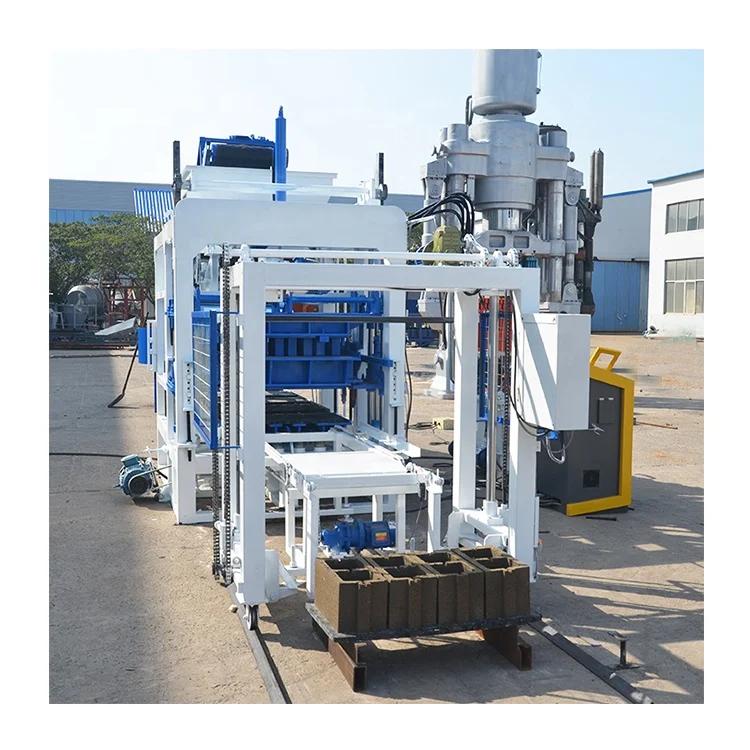
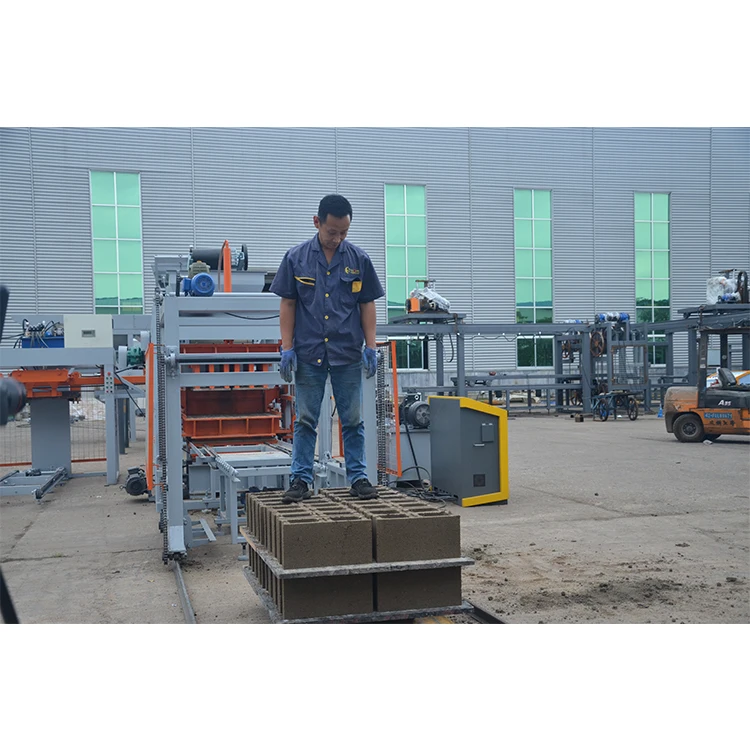
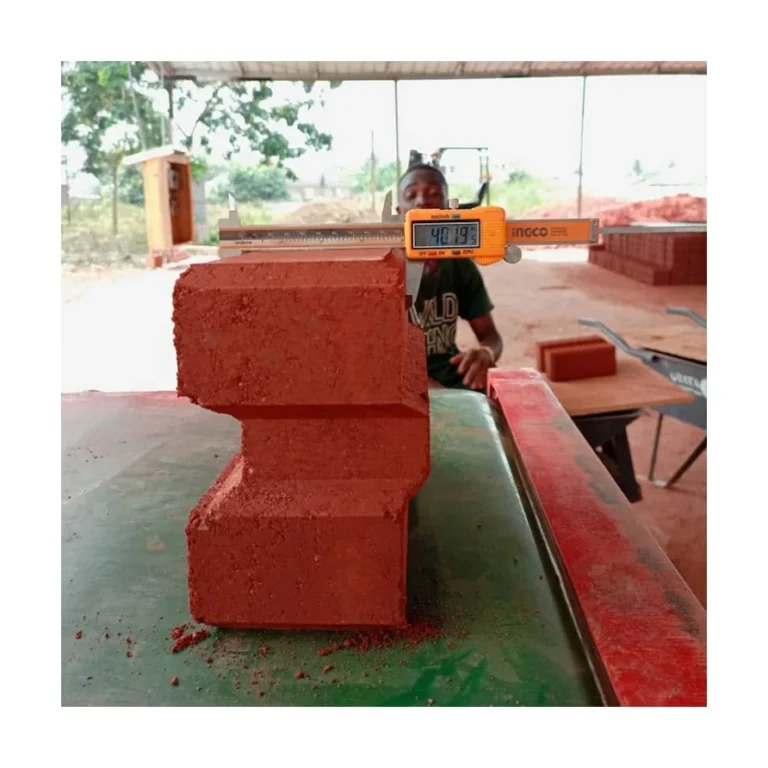
Machine, mould and handling specified as a matched system — the LY4-10 hydraulic interlocking brick machine is positioned within our full range so buyers can compare investment tiers before committing to a plant layout.
Technical Specifications
| Parameter |
Value |
| Model |
LY4-10 |
| Product Type |
Hydraulic Interlocking Brick Making Machine |
| Rated Power |
11 kW |
| Hydraulic Pressure |
25–32 MPa |
| Molding Cycle |
7–10 seconds (basis not stated in source — confirm block format and material) |
| Output per Cycle |
4 pcs (basis not stated in source — confirm interlocking brick format) |
| Machine Weight |
1500 kg |
| Overall Dimensions (L×W×H) |
2260 × 1500 × 2380 mm |
| Voltage |
Customized to buyer’s local voltage and frequency |
| Control System |
Automatic operation with PLC (brand and language configurable) |
| Material Compatibility |
Clay and cement |
| Mould Format |
Interlocking brick |
| Automation Level |
Automatic feeding, pressing and lifting |
| Warranty |
1 year (excluding wearing parts) |
Application Suitability
| Application |
Material or Output |
| Interlocking brick production for housing projects |
Clay and cement mix, on-site or small fixed plant |
| Ecological brick manufacturing |
Geo-concrete blends with local aggregate |
| Building material distributors adding formats |
Interlocking brick alongside existing block range |
| Contractor-run site production |
Mobile or semi-fixed setup with clay-cement mix |
What "Seven Seconds per Cycle" Actually Means for Your Daily Output
Cycle time only becomes daily capacity once the brick format, shift length and pallet handling method are defined.
Many quotations list a molding cycle without stating which interlocking brick size that figure assumes. A 7–10 second cycle on a small solid interlock will produce far more pieces per shift than the same cycle on a large hollow interlock requiring longer vibration. When the format is not declared, buyers end up comparing machines on a number that does not reflect their actual product. I have seen project schedules slip because the daily output assumed in the business plan was based on a cycle time tied to a completely different brick. [NEED_CITE: block format assumptions in capacity quotations]

Where the LY4-10 Sits in the Complete Block Machine Range
The LY4-10 occupies the mid-tier position for interlocking brick production, bridging the gap between entry-level semi-automatic machines and high-capacity fully automatic lines. For a buyer surveying options, this interlocking brick making machine manufacturer offers the LY4-10 as a step up from mobile egg-laying units that require manual pallet handling, while staying below the investment and footprint of a continuous automatic plant. The 11 kW rated power keeps electrical infrastructure requirements manageable for smaller workshops.
Comparing Tiers Before You Commit to a Plant Layout
Choosing between semi-automatic and automatic tiers is not just about the press itself — it determines whether pallet feeding, stacking and curing rack handling are manual or mechanised. A buyer starting with the LY4-10 can run semi-automatic pallet handling initially and plan for automatic stacking later, provided the line layout reserves space and the PLC supports the upgrade path. This tier comparison is the reason we present the full range before narrowing to a single model. [NEED_CITE: automation upgrade paths in block production lines]
How Hydraulic Pressure and Molding Cycle Shape Brick Density
The 25–32 MPa hydraulic pressure range is significant for interlocking formats because the interlocking lips and grooves demand higher compaction than standard hollow blocks to maintain dimensional accuracy. If pressure is too low, the interlock features crumble during demoulding or curing. The 7–10 second molding cycle allows the hydraulic ram and vibration to work together, but only when the cycle is matched to the clay-cement mix and brick thickness. A thicker interlocking paver will need the upper end of that cycle range to achieve full compaction throughout the cross-section.
The Cost of Skipping the Voltage Conversation
Voltage and frequency confirmation seems like a minor detail, yet it regularly delays commissioning. A machine wired for 380V/50Hz arriving at a site with 440V/60Hz supply will not run without transformer replacement or motor rewinding. The PLC display language is equally practical — if the operator cannot read the fault messages, every minor alarm becomes a service call. These issues are avoidable when voltage, frequency and language are locked in before production begins rather than discovered at the container door. [NEED_CITE: voltage and frequency standards by export market]
Why Buyers Source the Full Range Here
Block machinery is the single focus of this workshop, so the LY4-10 is specified alongside its mould, pallet and handling equipment as one matched system rather than assembled from separate suppliers. Configuration is set against the buyer’s actual clay-cement mix and local aggregate, not a catalogue default. Mould design covers the interlocking formats the buyer’s market sells, with custom drawings available. Automation level is selectable, allowing a start at semi-automatic with a defined upgrade path. Installation includes operator training so the crew understands mould change procedures and daily maintenance from the first shift.
Documentation & Verification
- Line layout showing the LY4-10 footprint with pallet flow and curing area
- Capacity calculation stating the exact interlocking brick format assumed
- Hydraulic and electrical schematic matching your confirmed voltage
- Factory test record on your clay-cement mix before dispatch
- Mould drawing and interlocking format list with dimensional tolerances
- Wear parts list with first-replacement intervals for hydraulic seals and mould liners
Installation, Commissioning & Support
- Foundation pad sized to the 2260 × 1500 mm footprint with anchor bolt plan
- Dedicated circuit rated for the 11 kW motor plus control system inrush
- Machine arrives assembled; hydraulic lines and PLC connected on-site
- First-run parameter setting for your specific clay-cement ratio and brick thickness
- Operator training covering mould change, daily lubrication and fault code reading
- Spare hydraulic seals and mould wear inserts included for initial production period
What to Include in Your Inquiry
To size the LY4-10 correctly within the range, share your target interlocking brick dimensions, the clay-cement mix ratio you plan to use, and your local voltage and frequency. Let us know whether pallet handling and stacking will be manual or if you want to plan for automatic upgrades. Site dimensions and curing area layout help us confirm that the machine footprint and pallet size fit your existing space.
Frequently Asked Questions
Q: How is daily output calculated for the LY4-10, and which brick format does it assume?
A: Daily output depends on the specific interlocking brick format, shift length and pallet handling method. The 7–10 second cycle and four-piece-per-cycle figures are starting points; a capacity calculation must state the exact brick dimensions and material to be meaningful. We provide this calculation with every proposal so you can compare tiers on realistic numbers.
Q: Where does the LY4-10 fit compared to semi-automatic and fully automatic tiers?
A: The LY4-10 sits in the mid-tier, offering automatic feeding, pressing and lifting while leaving pallet handling configurable. It requires less investment and floor space than a fully automatic line with stacking and cubing, but delivers higher consistency than entry-level mobile or egg-laying machines that rely on manual pallet movement.
Q: What voltage options are available, and is the PLC language set before shipment?
A: Voltage and frequency are customised to the buyer’s local supply. The PLC display language is confirmed during the order process so operators can read menus and fault codes in their working language from day one, avoiding commissioning delays caused by miscommunication at the control panel.
Q: Does the quotation cover pallet handling and stacking, or only the press?
A: The standard LY4-10 quotation covers automatic feeding, pressing and lifting. Pallet feeding, stacking and curing rack handling are specified separately based on your automation preference. This approach lets buyers start semi-automatic and add mechanised handling later without replacing the press itself.

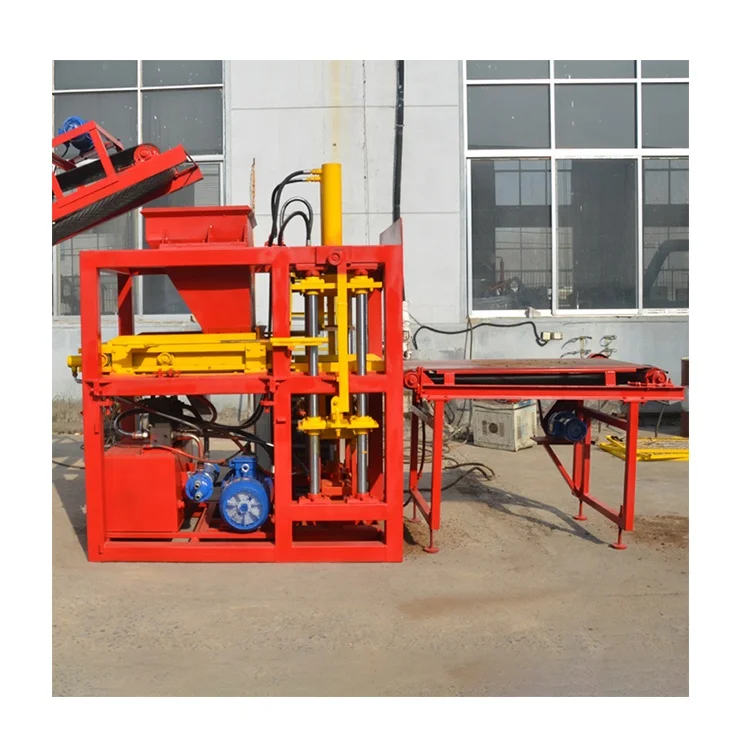
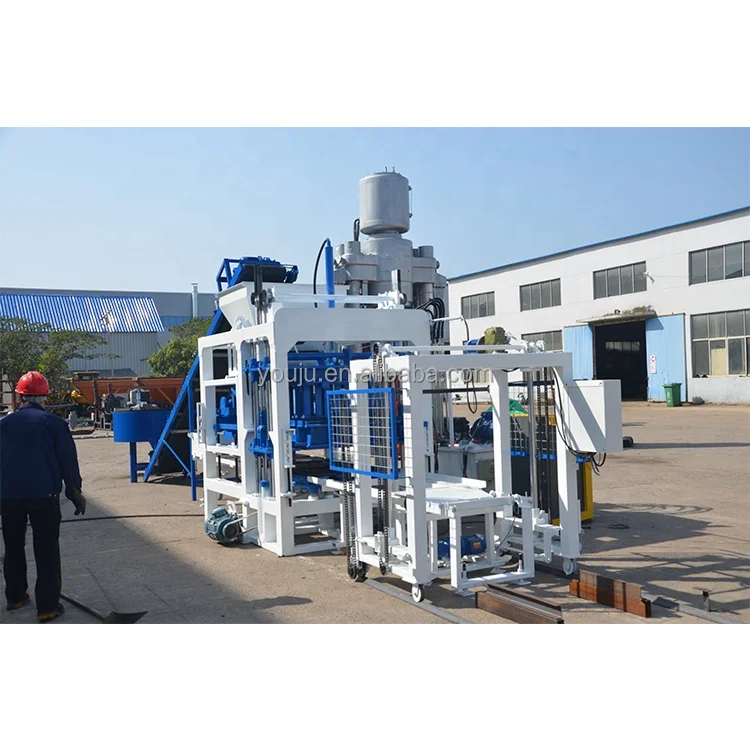 Semi automatic block