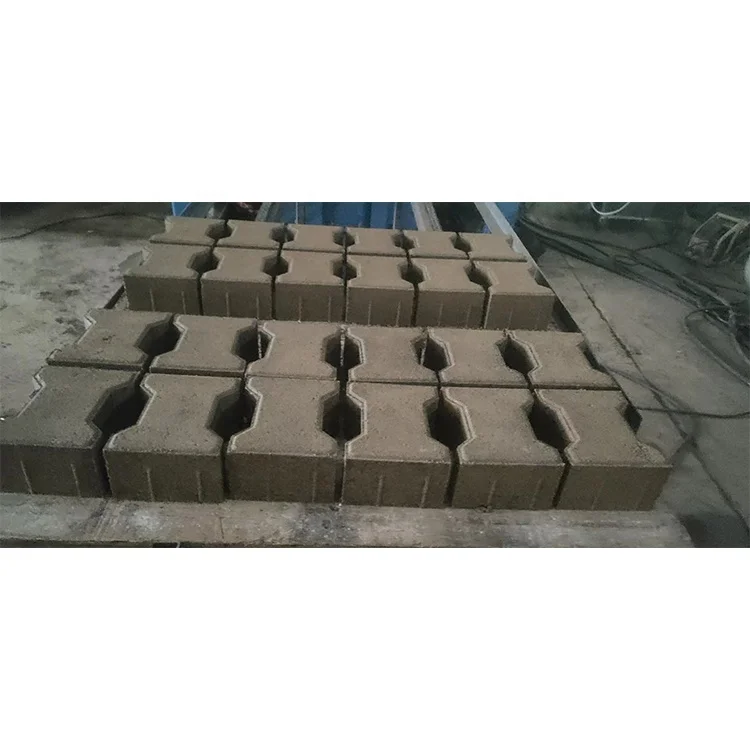
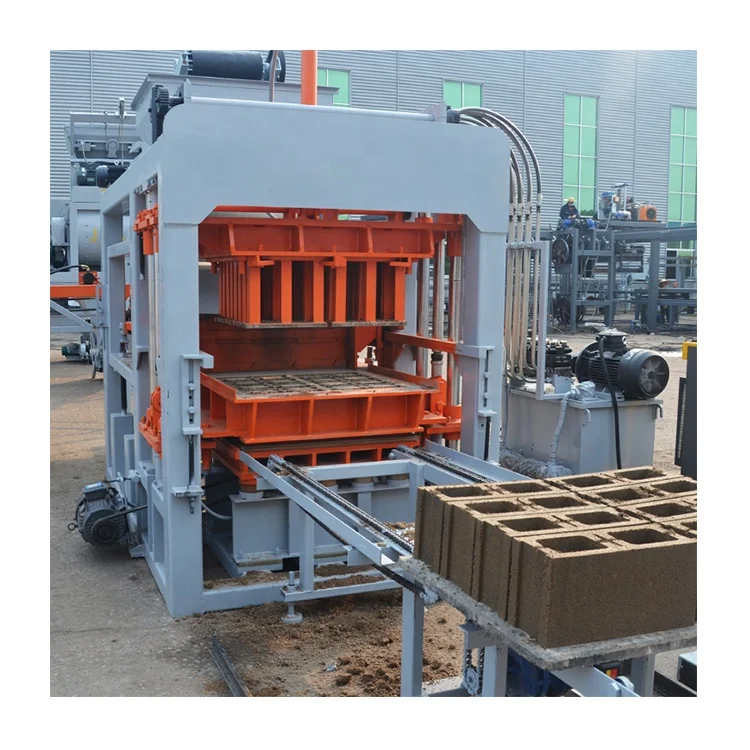
Matched System Specification — the QT4-16 is configured as one coordinated block making unit with mould, pallet and hydraulic settings aligned to your chosen format rather than shipped as a generic press.
Technical Specifications
| Parameter |
Value |
| Model |
QT4-16 |
| Product Type |
Automatic Hydraulic Concrete Block Making Machine |
| Overall Dimensions (L×W×H) |
7400 × 1950 × 2800 mm |
| Rated Pressure |
21 MPa |
| Main Vibration Form |
Platform Vibration |
| Vibration Frequency |
2800–4500 r/min |
| Vibration Force |
40 kN |
| Pallet Size |
900 × 550 mm |
| Molding Cycle |
15–20 s (basis not stated in source — confirm block format, material and thickness) |
| Total Mass |
5 T |
| Demolding Method |
Hydraulic |
| Factory Area |
600 m² |
| Control System |
PLC intelligent control with man-machine interface, logic control, malfunction diagnosis and remote control function |
| Raw Materials |
Crushed stone, sand, cement, fly ash, gravel, slag and similar aggregates |
| Voltage & Frequency |
Configurable to destination market (to be confirmed before production) |
Application Suitability
| Application |
Material or Output |
| Hollow block production for wall construction |
Crushed stone, sand, cement and fly ash blends |
| Solid block manufacturing for load-bearing structures |
Dense aggregate mixes with cement binder |
| Paving block and colored paver production |
Fine aggregate with pigment and cement |
| Interlocking block and kerbstone forming |
Coarse aggregate blends suited to outdoor use |
Why "15–20 Seconds per Cycle" Needs a Format Attached
A cycle time only matters once you know which block it produces.
Many concrete block making machine manufacturer catalogues list a single cycle figure and let the buyer assume it applies to every format. In practice, a hollow block, a solid paver and an interlocking brick each demand different vibration durations, pressure holds and demolding speeds. Without a format-specific capacity breakdown, daily output projections fall short once the line is running. I have seen buyers plan production shifts around a generic number, only to find their actual pallet output noticeably lower on thicker formats [NEED_CITE: block format effect on cycle time in hydraulic presses].

Where the QT4-16 Sits in the Full Range
The QT4-16 occupies the mid-tier of our block machine lineup. It pairs hydraulic pressing at 21 MPa with platform vibration, making it suitable for buyers who need more consistency than a manual egg-layer provides but are not yet ready for a high-capacity fully automatic line. The 900 × 550 mm pallet supports multiple mould configurations, so a single press can cover hollow blocks, pavers and kerbstones within one plant layout.
Automation Level and the Upgrade Path
This machine ships with PLC-based intelligent control including a man-machine interface and remote diagnostic capability. For buyers starting with semi-automatic pallet handling, the control architecture leaves room to add automatic stacking and cubing later. The concrete block making machine manufacturer approach here is to let you begin with a configuration that matches current labour availability, then expand automation as daily volume grows [NEED_CITE: automation upgrade paths in block production lines].
Pressure, Vibration and the Density Equation
Block strength comes from the interplay between hydraulic pressure and vibration force — neither works alone. The QT4-16 delivers 21 MPa rated pressure alongside 40 kN vibration force at an adjustable 2800–4500 r/min. Higher frequency compacts fine aggregate effectively for smooth paver faces, while lower frequency with sustained pressure suits hollow blocks where wall thickness must remain uniform. Matching these settings to the buyer’s local aggregate gradation is what separates consistent output from a batch of under-strength rejects. The 15–20 second molding cycle applies to a reference format; denser mixes or taller blocks extend that window, which is why the capacity calculation must state the assumed product before the quotation is finalised.
The Cost of Skipping the Voltage Conversation
Shipping a block press without confirmed voltage and frequency is a gamble that delays commissioning by weeks. I recall a unit sent to West Africa where the supply standard was assumed rather than verified — 415 V hit the main motor and damaged it on first energisation, leaving the site idle while a replacement was sourced. Every QT4-16 now goes through an electrical checkpoint where voltage, frequency and PLC display language are confirmed against the buyer’s written specification before the cabinet leaves the factory [NEED_CITE: voltage and frequency standards by export market].
Buying From a Single-Focus Source
Our workshop builds block machinery exclusively, which means the QT4-16 press, its moulds, pallets and handling equipment are specified as one system rather than sourced from separate vendors. Configuration starts with your target block format, local aggregate and daily volume — not a catalogue default. Mould design covers the formats your market actually sells, including custom drawings when standard options do not match. Pallet dimensions are chosen to align with your existing curing area and forklift capacity. Factory testing runs your chosen mould on-site before packing, so you receive photographs and a test record before the container is sealed.
Documentation & Verification
- Line layout and capacity calculation stating the exact block format assumed for the QT4-16
- Machine specification sheet with confirmed voltage, frequency and PLC display language
- Mould drawing and format list showing every block type covered by the quoted configuration
- Factory test record with pallet photographs taken during pre-shipment production runs
- Hydraulic and electrical schematic for local maintenance teams
- Packing photographs and customs documentation support for smooth port clearance
Installation, Commissioning & Support
- Foundation plan matched to the 7400 × 1950 mm footprint and 5 T operating mass of the QT4-16
- Electrical supply checklist confirming voltage and dedicated circuit rating before the press is energised
- On-site assembly guidance covering hydraulic line connections and platform vibration alignment
- First-run commissioning with parameter tuning for your specific aggregate mix and block format
- Operator training covering PLC interface navigation, mould change procedure and fault diagnosis
- Wear parts list identifying hydraulic seals, vibration springs and mould liners with reorder codes
What to Include With Your Inquiry
A useful inquiry names the block formats you intend to produce, the daily volume you need per format and the aggregate materials available locally. Include your site voltage and frequency, the PLC language your operators prefer and the dimensions of your existing curing area so the pallet and handling configuration can be matched. If you already operate a mixer or batching station, note its capacity so the concrete block making machine manufacturer can confirm the upstream feed will keep the QT4-16 running without idle gaps.
Frequently Asked Questions
Q: How is the QT4-16 output capacity verified per block format?
A: Each quotation includes a capacity document that states the assumed block format, dimensions and mix for every output figure. The 15–20 second molding cycle is a reference value; actual cycle time varies with block thickness and material density, so the breakdown is recalculated once your target format is confirmed.
Q: When should a buyer move beyond the QT4-16 to a higher tier?
A: If your daily volume requires continuous pallet cycling beyond a single shift, or if you need fully automatic stacking and cubing from day one, a higher-capacity automatic line becomes the better fit. The QT4-16 suits mid-volume plants and buyers planning a phased automation approach.
Q: What electrical details are locked down before shipment?
A: Voltage, frequency and PLC display language are confirmed in writing before production begins. The electrical cabinet is then checked item by item during factory testing so the machine arrives ready for connection — no rewiring or component swaps on site.
Q: How is pallet size matched to the buyer’s existing setup?
A: The 900 × 550 mm pallet is the standard for the QT4-16, but the selection process considers your curing rack dimensions and forklift capacity. A mismatch here causes bottlenecks after the press, so pallet specification is confirmed alongside the mould configuration.
Q: What falls outside the standard quotation?
A: The press, mould and PLC control are included. Upstream equipment such as mixers, batching systems and pallet feed conveyors, as well as downstream stackers and curing racks, are quoted separately so buyers can integrate the QT4-16 with existing plant infrastructure or build a complete line from one source.

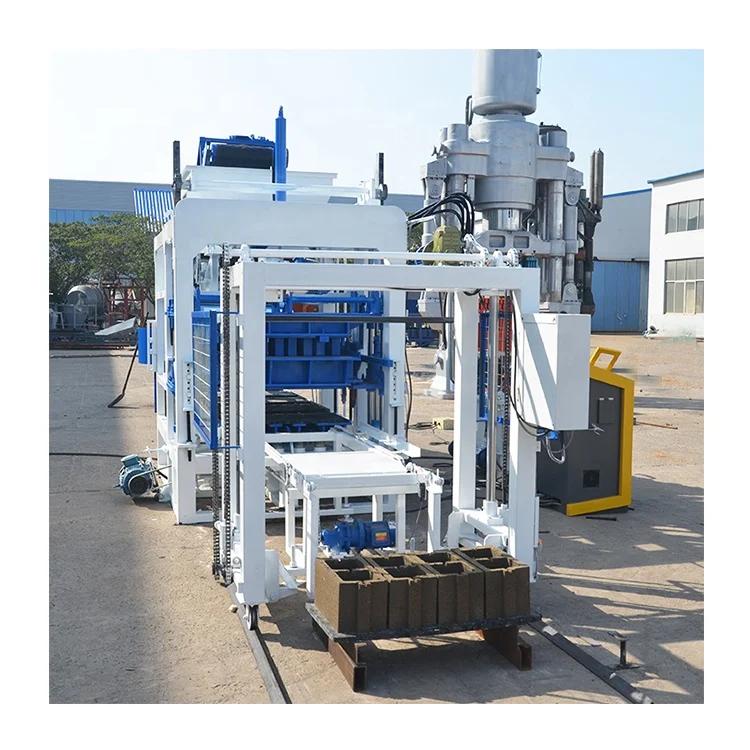
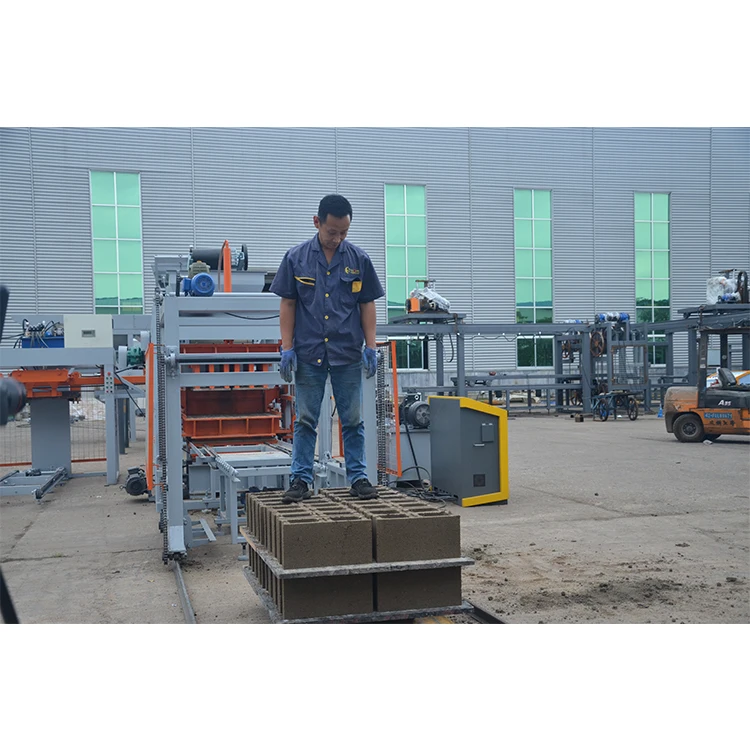 Semi automatic block