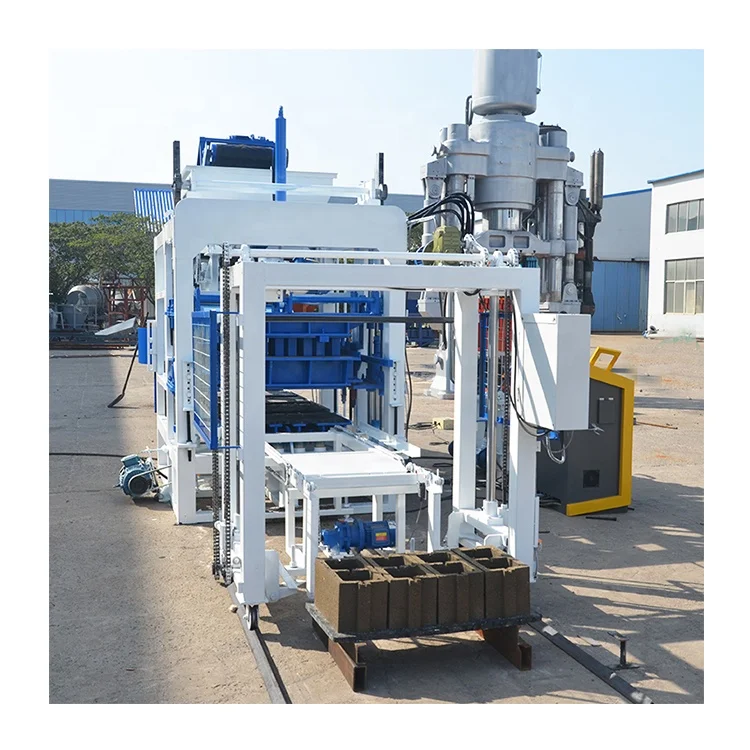
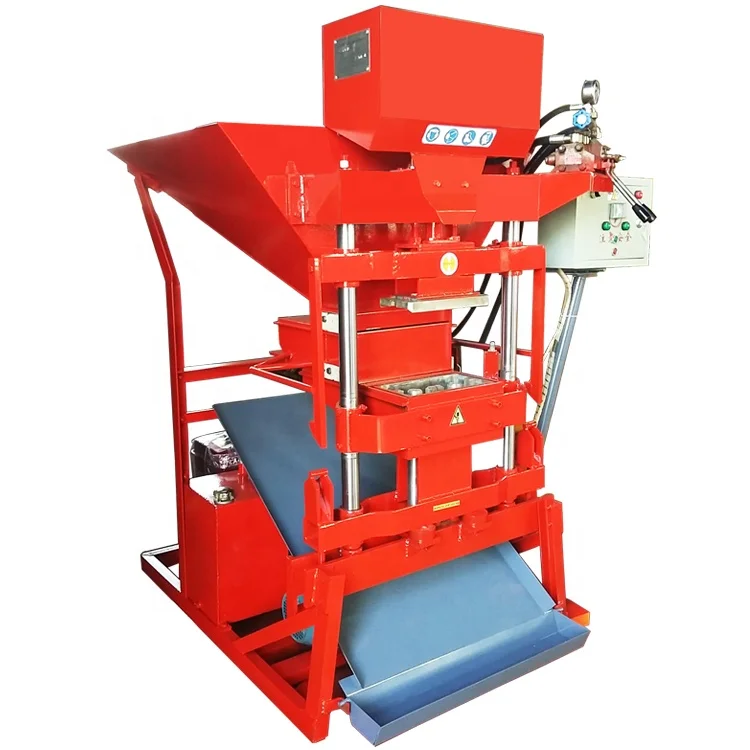
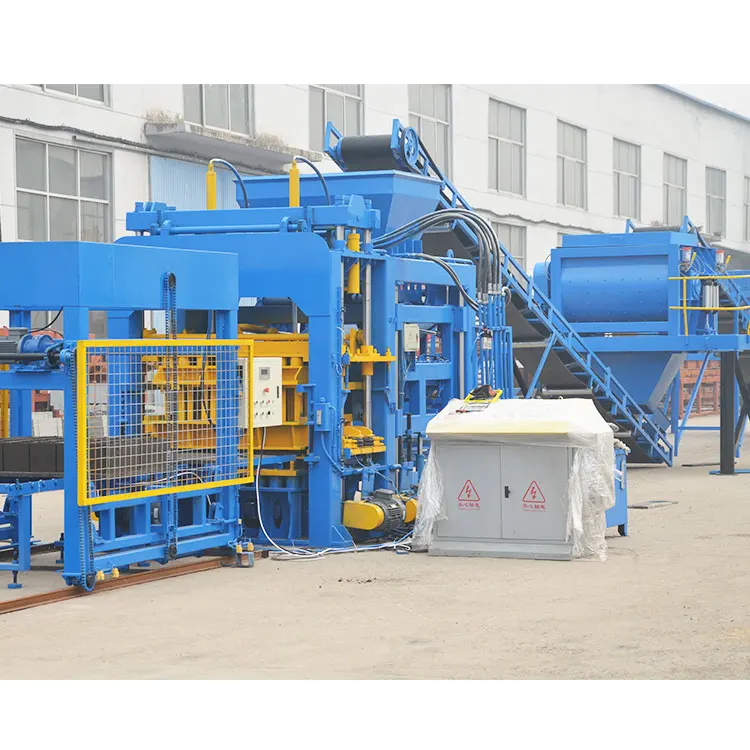
Matched System Sizing — the QT4-18 block machine, mould, pallet and handling equipment are configured together against your target format rather than sourced separately.
Technical Specifications
| Parameter |
Value |
| Model |
QT4-18 |
| Product Type |
Semi-Automatic Concrete Block Making Machine |
| Overall Dimensions (L×W×H) |
2500×1750×2200 mm |
| Rated Pressure |
16 MPa |
| Vibration Form |
Platform Vibration |
| Pallet Size |
950×550 mm |
| Molding Cycle |
18–25 s (basis not stated in source — confirm block format) |
| Overall Power |
27.5 kW |
| Control System |
PLC with frequency converter |
| Electrical Components |
Schneider |
| Mould Lifting Mechanism |
Double-sided synchronous gears |
| Automation Level |
Semi-automatic (manual or machinery pallet handling) |
| Material Feeder System |
Hopper, feeding box, feeding platform, conveyor with distribution belt |
| Supporting Equipment Options |
JQ500 pan mixer, 8 m belt conveyor, stacker, block clamper, trolley, cement silo |
Application Suitability
| Application |
Material or Output |
| Hollow block production |
Crushed stone, sand, cement, and local aggregate blends |
| Solid block manufacturing |
Fly ash, river sand, gravel, and binding agents |
| Paving block and kerbstone forming |
High-density concrete mixes with fine aggregate |
| Interlocking and porous brick runs |
Specialized aggregate gradations for permeability or interlock profiles |
What "Cycle Time" Actually Means for Your Daily Run
A molding cycle quoted without a block format assumption is not a production figure.
The QT4-18 block machine manufacturer lists an 18–25 second cycle, but that range shifts depending on whether you are pressing a standard hollow block, a thinner paving stone, or a tall kerbstone requiring extended vibration. I have seen buyers budget for three shifts of output based on a hollow block cycle, only to discover their actual market mix — solid blocks with a high cement ratio — added seconds per cycle and dropped daily volume noticeably. [NEED_CITE: how block thickness and mix moisture affect vibration dwell time] Always ask which format the cycle time assumes before translating it into a daily target.

Positioning the QT4-18 in a Growing Block Plant
The QT4-18 sits in the semi-automatic tier, meaning the press itself handles feeding, vibration, and demoulding while pallet movement to the curing yard can remain manual or use a basic trolley system. For an entrepreneur setting up a first block plant, this keeps the initial investment contained and leaves room to add an automatic stacker or cubing unit later. The 27.5 kW total power draw stays within the reach of a standard workshop supply without requiring a dedicated high-capacity transformer, which matters in regions where grid connections are metered or limited.
Where Semi-Automatic Meets Market Demand
A construction contractor producing blocks on-site benefits from the 950×550 mm pallet, a size that fits common forklift tines and standard curing rack dimensions. The double-sided synchronous gear mould lifting keeps the mould box aligned during each stroke, reducing edge chipping on interlocking profiles. When the project shifts from hollow blocks to paving stones, swapping the mould is a matter of unbolting the current set and lowering the new one onto the locating pins — the QT4-18 block machine manufacturer designs the change procedure around the same pallet footprint so curing logistics stay constant. [NEED_CITE: typical mould change procedures on platform-vibration presses]
Pressure, Vibration, and Pallet Size in Practice
The 16 MPa rated hydraulic pressure works together with platform vibration to compact the concrete mix. Higher pressure alone would leave voids in a dry mix; vibration alone would not consolidate a stiff kerbstone blend. The frequency converter in the PLC lets the operator tune vibration intensity per format, so a porous brick receives gentler shaking than a dense solid block. Meanwhile, the 950×550 mm pallet must match the curing yard: if your existing racks are built for 850×500 mm pallets, the mismatch forces you to rebuild the yard or buy new racks before the first block cures.
The Cost of Overlooking Pallet and Voltage Alignment
Choosing a pallet size without checking the curing area and forklift capacity leads to pallets that either jam in the rack or require a larger forklift you do not own. Voltage and frequency left unconfirmed until the machine arrives can stall commissioning for weeks while a step-down transformer is sourced locally. I once saw a shipment held at port because the PLC display language was set to a default the on-site electrician could not read, delaying first production and pushing back contractor delivery dates. [NEED_CITE: common commissioning delays from voltage and language mismatches]
Why Source the QT4-18 from a Single-Focus Range
Block machinery is the only product line, so the press, mould, pallet, and handling equipment are specified as one matched set. Configuration starts with your local aggregate and target block format, not a catalogue default. Mould design covers the formats your market actually sells, including custom drawings when standard profiles do not fit. Automation level is selectable: start with manual pallet handling and add an automatic stacker when volume justifies the upgrade. Installation includes operator training so your crew understands the vibration and pressure settings tied to each block type.
Documentation & Verification
- Line layout showing QT4-18 stations and pallet flow path
- Capacity calculation stating the block format behind the cycle time
- Mould drawing and format list with change-over procedure
- Hydraulic and electrical schematic matching your confirmed voltage
- Factory test record on your target block mix before dispatch
Installation, Commissioning & Support
- Foundation pad sized to 2500×1750 mm footprint with anchor bolt plan
- Dedicated 27.5 kW circuit with voltage and frequency confirmed pre-production
- Machine shipped in main assembly with bolt-on feeder and conveyor sections
- PLC display language and Schneider component labels verified before crating
- Operator training covers mould change, vibration tuning, and daily greasing points
- Wear parts list includes platform springs, gear teeth, and hydraulic seals
Next Steps for a Quotation
Share the block formats your market sells most, the daily output you need per format, and the aggregate available within hauling distance of your site. Include your workshop voltage and frequency, the pallet size your curing yard already accommodates, and whether you plan to handle pallets manually or add a basic stacker. With that information, a capacity calculation and matched equipment list can be prepared.
Frequently Asked Questions
Q: How is QT4-18 daily output calculated, and which block format does the cycle time assume?
A: The 18–25 second cycle is a range; the exact figure depends on block thickness, mix moisture, and vibration dwell. Daily output is derived by multiplying the confirmed cycle for your chosen format by the number of pallets per hour and the effective shift length. Ask for the calculation tied to your specific block drawing.
Q: Where does the QT4-18 sit within the full block machine range?
A: It occupies the semi-automatic tier, suited to first-time plant owners and on-site contractors who want the press automated but prefer manual or trolley-based pallet handling. When daily volume outgrows manual pallet movement, the line can accept an automatic stacker and cubing unit without replacing the press.
Q: How are pallet size and material confirmed against my existing setup?
A: The standard 950×550 mm pallet is checked against your curing rack spacing and forklift tine width before the order is finalized. If your yard uses a different dimension, the pallet specification is adjusted so the QT4-18 feeds a size your team can already handle and stack.
Q: What automation level does the QT4-18 ship with, and what is the upgrade path?
A: The machine ships with PLC-controlled feeding, pressing, and demoulding, while pallet transfer remains semi-automatic. An automatic stacker, block clamper, or full cubing system can be added later as production volume grows, using the same pallet footprint and control interface.
Q: How is the machine configured against my local aggregate rather than a catalogue default?
A: Before production, your aggregate sample and target block strength are reviewed. Vibration intensity, hydraulic pressure dwell, and feeder belt speed are then set to match that mix, and a factory test on the confirmed blend is recorded before the machine is crated.

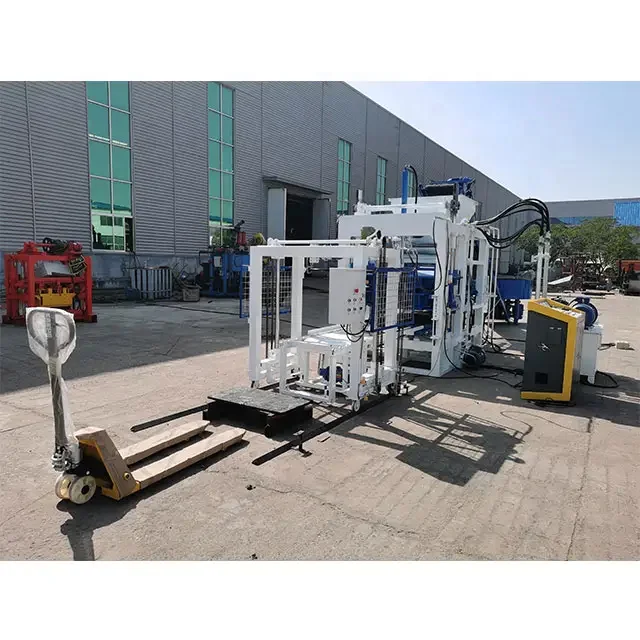
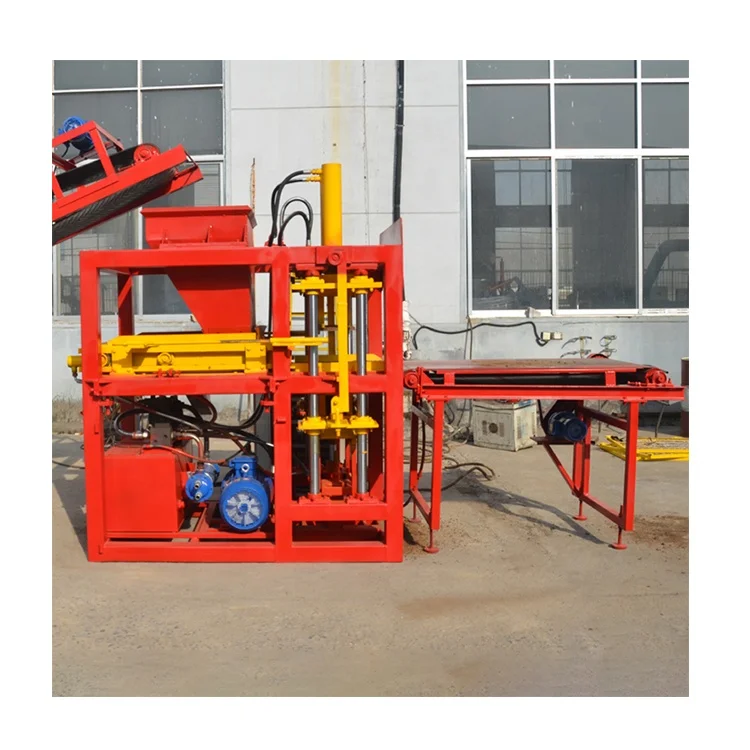 Semi automatic block