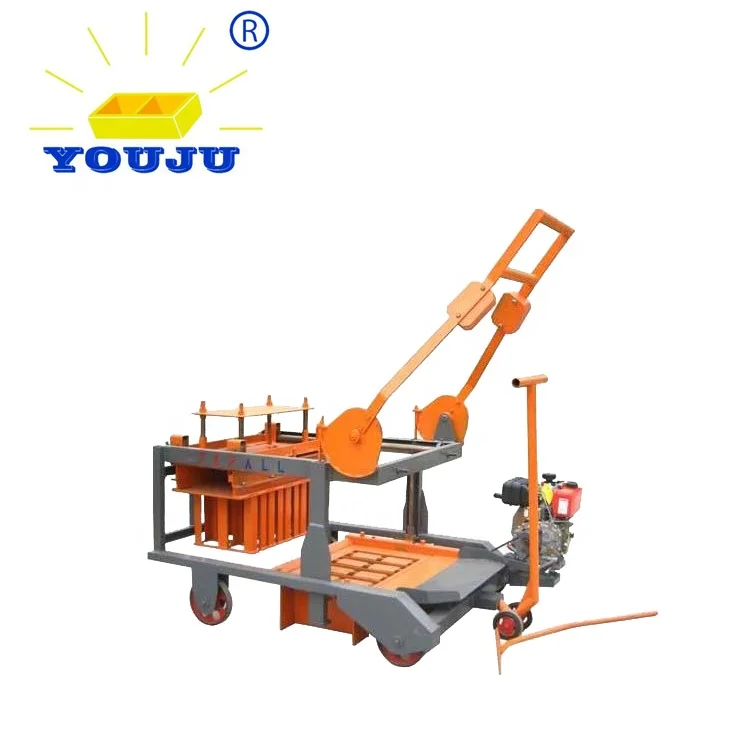
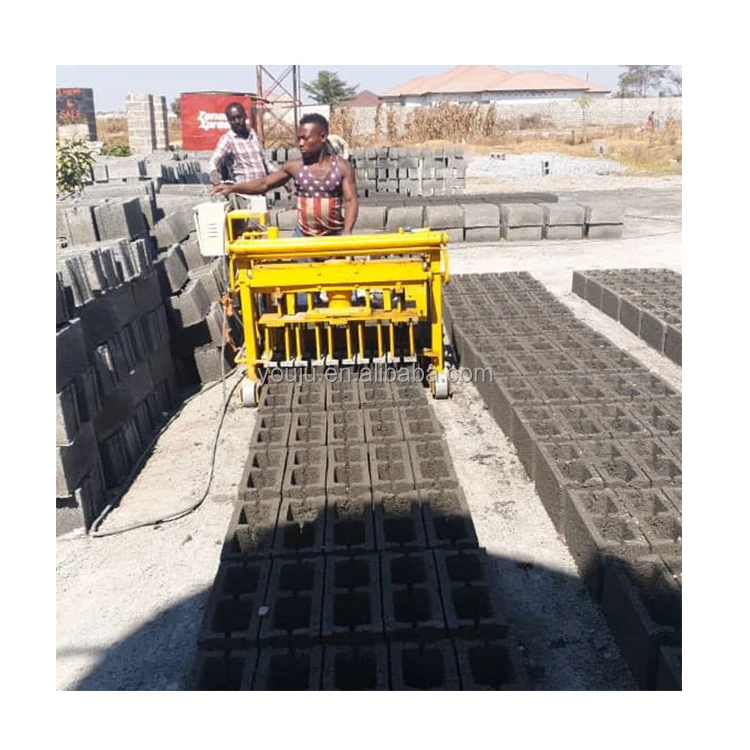
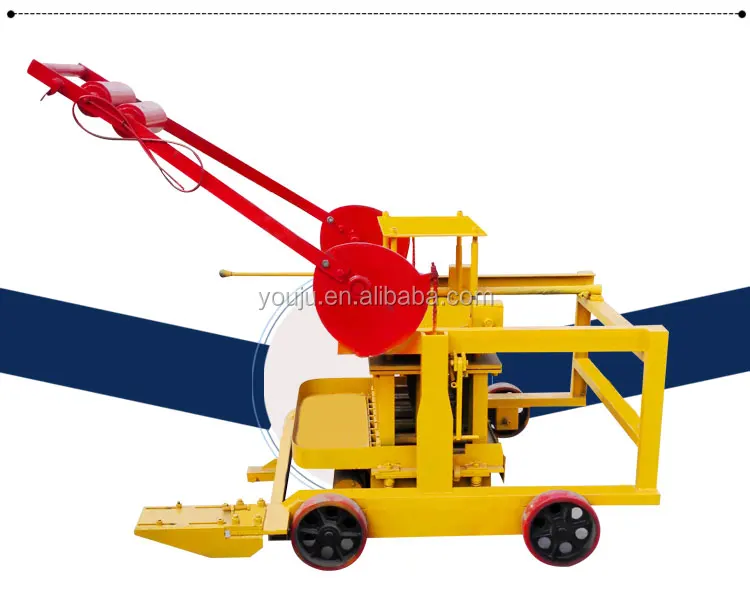
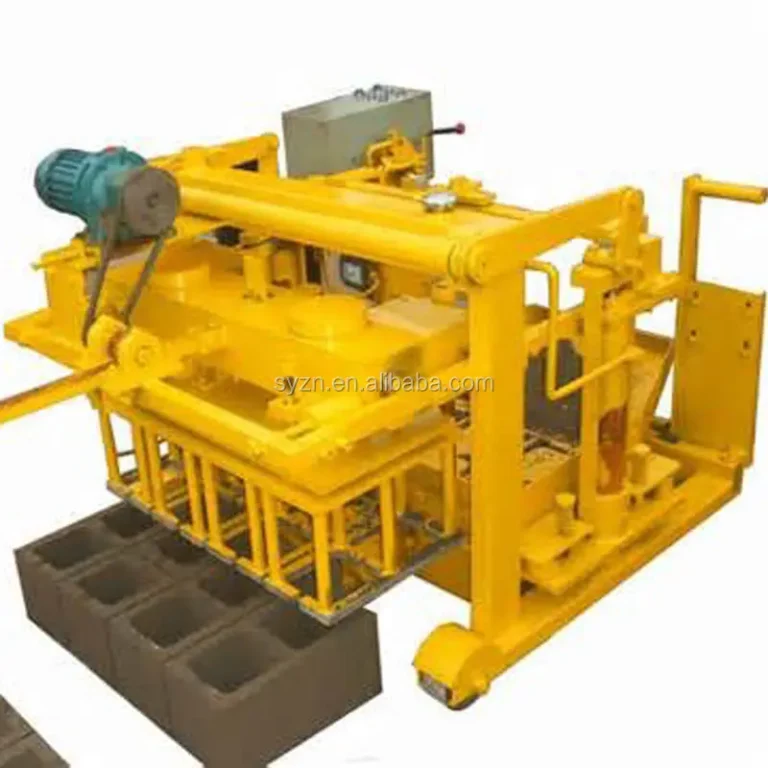
Matched System Design — the QMR4-45 is specified as a complete mobile block making unit with machine, mould and on-ground curing method defined together, not sourced as separate components.
Technical Specifications
| Parameter |
Value |
| Model |
QMR4-45 |
| Product Type |
Mobile Egg Laying Block Making Machine |
| Overall Dimensions (L×W×H) |
2420×1320×1650 mm |
| Net Weight |
810 kg |
| Moulding Cycle |
40–45 s |
| Pallet Size |
No pallet required |
| Rated Power |
6 kW |
| Diesel Engine Option |
6 kW or 6–8 HP |
| Voltage |
220 V / 380 V / configurable to local supply (frequency to be confirmed before dispatch) |
| Output (400×200×200 mm hollow block, 4 pcs/mould, 8-hour shift) |
3000 pcs/day |
| Output (400×150×200 mm hollow block, 5 pcs/mould, 8-hour shift) |
3500 pcs/day |
| Output (400×120×200 mm hollow block, 6 pcs/mould, 8-hour shift) |
4500 pcs/day |
| Automation Level |
Manual egg-laying mobile type |
| Assembly State |
Integrated mobile unit, no fixed plant or concrete floor required |
| Stacking Method |
Manual, egg-laying on ground |
| Mould Format |
Hollow block (400×200×200 / 400×150×200 / 400×120×200 mm); other formats available via mould change |
| Warranty |
One year for the whole machine |
| Hydraulic Pressure |
Not stated in source — confirm with supplier |
| Vibration Force |
Not stated in source — confirm with supplier |
| Certification |
Not stated in source — confirm CE or equivalent with supplier |
Application Suitability
| Application |
Material or Output |
| On-site hollow block production at housing project sites |
Crushed stone, sand, cement and water mix laid directly on compacted ground |
| First plant setup with limited capital and unreliable grid power |
Diesel-driven production of 400×200×200 mm to 400×120×200 mm hollow blocks |
| Contractor relocating between project sites |
810 kg mobile unit producing multiple hollow block formats from one machine base |
| Building material distributors adding mobile production |
Pallet-free egg-laying operation eliminating curing rack and pallet investment |
Why the Voltage Question Must Come Before the Shipment Date
Confirming your site voltage, frequency and control panel language before production starts prevents weeks of idle equipment on arrival.
A mobile block machine manufacturer ships units to regions where grid standards vary widely, and the QMR4-45 is available in 220 V or 380 V configurations. Yet frequency matters just as much as voltage — a motor wound for 50 Hz running on a 60 Hz supply will overheat, and a 60 Hz motor on 50 Hz will lose torque and stall under load. I once saw a mobile egg-laying machine sit unpacked on a job site for three weeks because the local supply did not match the factory configuration, and the crew waited for a step-down transformer to arrive by sea freight. That delay cost the contractor more than any price negotiation ever saved [NEED_CITE: voltage and frequency standards by export market]. When you source a mobile block machine, the electrical confirmation should sit on the same checklist as the mould format and daily output target.

Pallet-Free Egg Laying and What It Removes From Your Budget
The QMR4-45 lays blocks directly onto compacted ground, which means you do not purchase production pallets, build curing racks, or move stacked pallets through a handling system. For a first-time block plant or a contractor producing on a housing project site, this removes three capital items that a stationary press would require. The trade-off is that ground preparation becomes your responsibility — the surface must be level and firm enough to accept wet blocks without settling unevenly. Each cycle deposits a row of hollow blocks, and the operator walks the machine forward for the next row, leaving blocks to cure in place. A mobile block machine manufacturer that designs for this workflow will specify the ground conditions and curing space you need before the machine leaves the factory.
Diesel Drive for Sites Where the Grid Cannot Keep Up
The 6–8 HP diesel engine option exists for a specific reason: many project sites in developing regions have either no grid connection or a supply that drops below the minimum voltage under load. Running a 6 kW electric motor on a weak feeder line causes repeated trips and motor burnout. The diesel configuration on the QMR4-45 replaces the electric motor entirely, so production does not depend on grid stability. Fuel consumption and engine maintenance become the operating cost instead of electricity and motor rewinding [NEED_CITE: diesel engine maintenance intervals for small industrial equipment]. This option suits remote housing developments, rural infrastructure projects, and any site where connecting a dedicated power line would take longer than the project timeline.
Reading the Specs That Actually Govern Block Quality
The 40–45 second moulding cycle on the QMR4-45 sets the pace for everything downstream — how fast blocks cure, how much ground area you need, and how many shifts you run. This cycle time applies to the hollow block formats listed; denser solid blocks or interlocking pavers may require longer vibration periods to achieve adequate compaction. The rated power of 6 kW covers both the vibration motor and the hydraulic or mechanical press mechanism working together, and undersizing either one leads to blocks that crumble at the edges before they reach curing age. Mould change between the three standard hollow block sizes involves swapping the mould box and adjusting the feed shoe, and the time this takes determines whether you realistically produce multiple formats in one shift or dedicate a full day to each. The 2420×1320 mm footprint means the machine operates in a corridor roughly three metres wide, which defines the minimum lane spacing in your curing yard.
What Happens When Configuration Details Get Skipped
Skipping voltage and frequency confirmation is the most visible failure, but other oversights carry hidden costs on a mobile block machine. If the mould drawing is not reviewed against the block dimensions your market actually sells, you end up producing a format that sits in the yard unsold while you wait for a replacement mould to be manufactured and shipped. When the vibration force and press mechanism are not matched to your local aggregate gradation and cement ratio, blocks may pass a visual inspection yet fail a compressive strength test at 28 days. And if the operation manual arrives in a language your crew does not read, the first mould change takes an entire shift instead of the time the factory quoted [NEED_CITE: machinery documentation language requirements for export equipment].
Why Sourcing This Machine Here Makes Sense
Block machinery is the single focus of this operation, so the QMR4-45 arrives as a matched unit with mould, diesel or electric drive, and ground-curing method specified together. Configuration starts from your actual mix design and local aggregate rather than a catalogue default, which means the vibration setting and cycle time are matched to what you will actually feed the machine. Mould design covers the hollow block formats your market buys, and custom mould drawings are available when your project calls for a non-standard size. The automation level is manual egg-laying by design, keeping capital outlay and maintenance complexity low for contractors and first-plant operators. Pre-dispatch electrical confirmation covers voltage, frequency, and panel language so the machine powers on the day it is unpacked.
Documentation & Verification
- Capacity calculation sheet stating which hollow block format and shift length the output figures assume
- Mould drawing and format list for every block size included in your order
- Voltage, frequency and control language confirmation signed off before production
- Factory test record showing cycle timing on the configured mould before dispatch
- Operation and maintenance manual with wear parts and mould replacement list
- Packing photographs and customs documentation support for your destination port
Installation, Commissioning & Support
- Site ground preparation guidance for level, compacted surface suitable for pallet-free egg laying at 2420×1320 mm machine footprint
- Electrical connection requirements matching the confirmed 220 V or 380 V supply with correct frequency and dedicated circuit for the 6 kW rated load
- Diesel engine commissioning and fuel system bleed procedure when the 6–8 HP option is selected
- First-run cycle timing verification on your chosen hollow block mould to confirm the 40–45 second specification
- Operator training covering mould change procedure, vibration adjustment, and daily maintenance points
- Wear parts list with mould wear indicators and recommended replacement intervals for continuous production
What to Share With Your Inquiry
To configure the QMR4-45 correctly, provide the hollow block dimensions your market requires, the daily output you need on an eight-hour shift, and the exact voltage and frequency available at your project site. If grid power is unreliable or unavailable, state that upfront so the diesel engine option is included from the start. Mention the ground conditions at your curing area and whether any existing equipment — mixers, loaders, or material stockpiles — will feed the machine.
Frequently Asked Questions
Q: How is the QMR4-45 daily output verified for each hollow block format?
A: Output figures are calculated per specific block size, mould cavity count, and an eight-hour shift. The 3000 pcs/day figure applies to 400×200×200 mm hollow blocks at 4 pcs per mould; the 3500 and 4500 pcs/day figures apply to 400×150×200 mm and 400×120×200 mm formats respectively. Any different format requires a new calculation based on its cavity count and cycle time.
Q: Which voltage and frequency are available, and is the diesel option suitable for my site?
A: The machine is configurable to 220 V or 380 V, and frequency must be confirmed before production to match your local grid. The 6–8 HP diesel engine option replaces the electric motor entirely, making it suitable for sites with no grid connection or unreliable supply that cannot sustain a 6 kW continuous load without voltage drop.
Q: What block formats can the QMR4-45 produce and how does mould change work?
A: Standard moulds cover three hollow block sizes from 400×200×200 mm down to 400×120×200 mm. Mould change involves removing the current mould box, fitting the replacement, and adjusting the feed shoe position. Custom mould drawings are available for non-standard formats based on your market requirements.
Q: What ground preparation is needed for pallet-free egg laying operation?
A: The curing area must be level and compacted so that wet blocks do not settle unevenly after being laid. The machine footprint is 2420×1320 mm, and you need lanes wide enough for the machine to travel plus spacing between rows for air circulation during curing. No concrete floor is required.
Q: How are spare moulds and wear parts supplied after the first replacement cycle?
A: A wear parts and mould list is delivered with the machine, identifying components by part number. Replacement moulds and wear items are manufactured to the same specifications as the originals and shipped directly, so you do not need to source compatible parts from a third-party supplier.

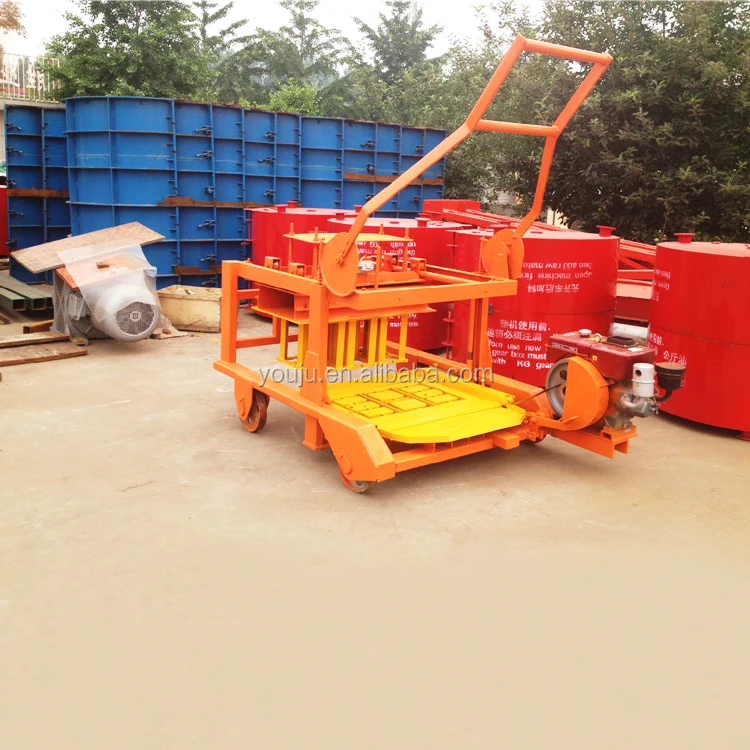
 Mobile block machine