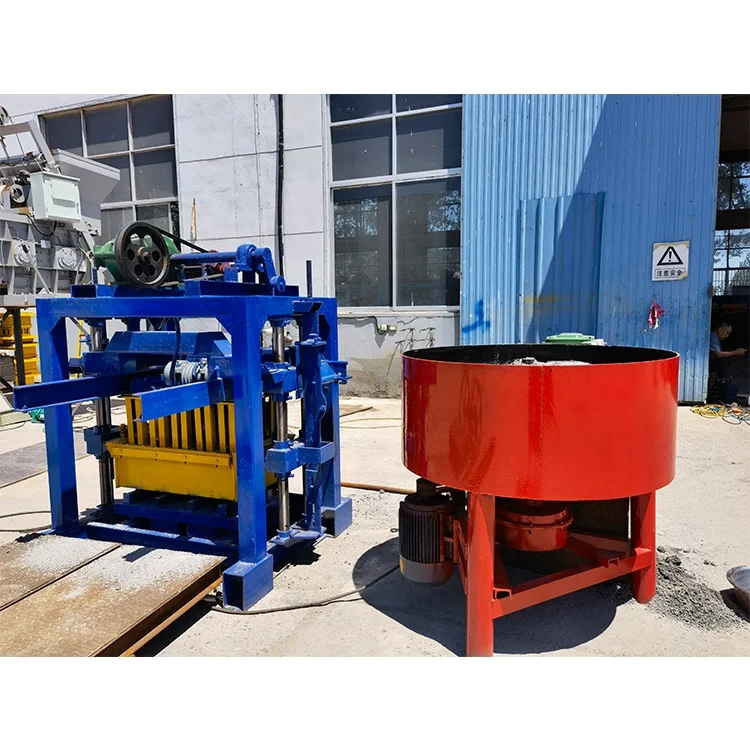
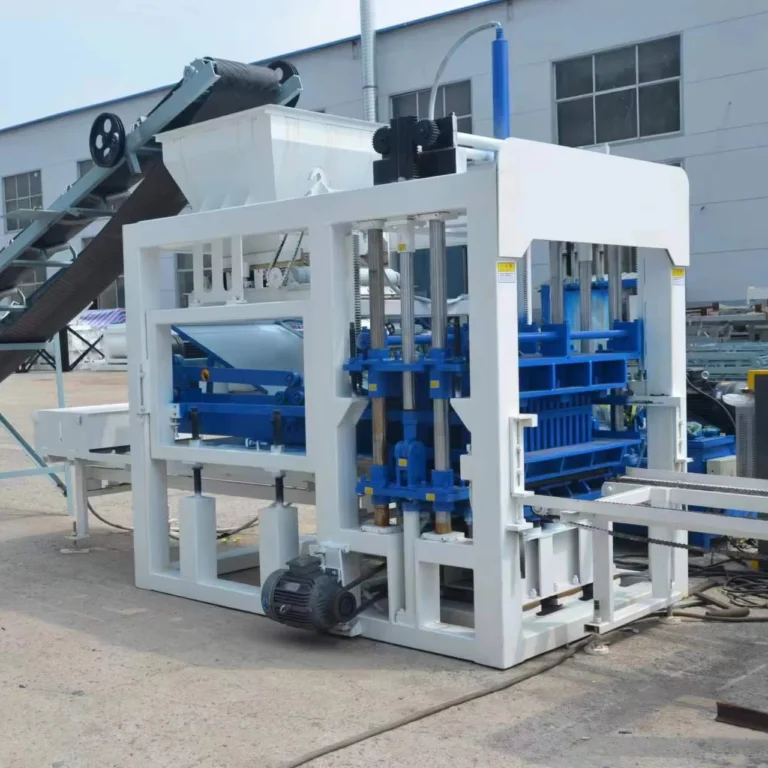
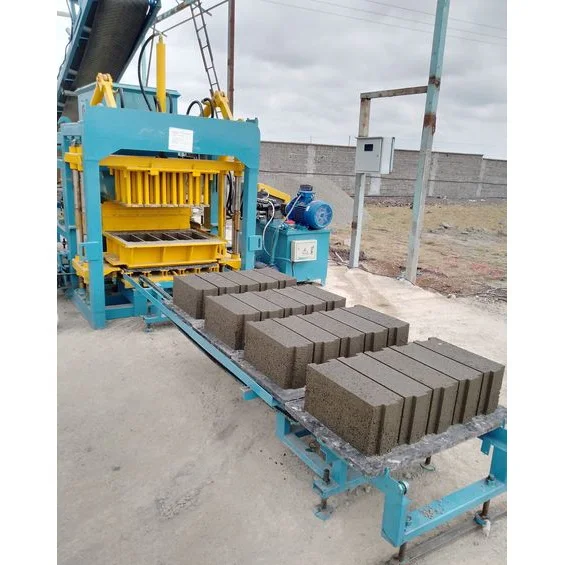
Diesel-powered off-grid capability — the M7MI runs independently of local grid reliability, which matters when you are mobilizing a block plant in a region where power cuts halt production for days at a time.
Technical Specifications
| Parameter |
Value |
| Model |
M7MI |
| Product Type |
Hydraulic Interlocking Clay Block Making Machine |
| Engine |
Diesel Engine |
| Hydraulic Pressure |
16 MPa |
| Molding Cycle |
15–20 s |
| Output Capacity |
1,600 pcs/8hr based on 300×150×100 mm interlocking block at 20 s cycle, 1 pc/mould |
| Overall Dimensions (L×W×H) |
3200×1100×1500 mm |
| Net Weight |
1100 kg |
| Raw Materials |
Clay, soil, concrete |
| Mould Format |
Interlocking block (multiple formats available by changing moulds) |
| Power Source |
Diesel (suitable for sites without electricity) |
| Automation Level |
Manual / Semi-automatic (basis to be confirmed) |
Application Suitability
| Application |
Material or Output |
| On-site interlocking block production |
Clay and soil from project excavation |
| Rural housing developments |
Locally sourced earth mixed with stabilizer |
| Remote infrastructure camps |
Concrete mixes where grid power is absent |
| Small-scale block plants |
Interlocking pavers and wall blocks for local sale |
What "2,200 Pieces per Day" Leaves Out When No Block Format Is Named
Capacity means nothing until you know which block size and cycle time produced that number.
I once watched a buyer in East Africa receive a machine quoted at a daily figure that assumed a thin paver format. His market wanted 300×150×100 mm interlocking wall blocks. The real throughput dropped because each cycle took longer and the mould held fewer pieces. He spent the first month thinking the machine was underperforming when the problem was the quotation itself. This is why any interlocking clay block machine manufacturer worth talking to will break output down per format, per cycle, before you sign anything [NEED_CITE: block machine capacity calculation standards by format and cycle time].

Where the M7MI Sits in the Shiyue Machine Range
The M7MI occupies the entry-to-mid tier of the full Shiyue block machine lineup. It is not a high-capacity automatic line; it is a machine built for buyers who need production capability before infrastructure catches up. The diesel engine removes the single biggest bottleneck in remote project sites — waiting for a grid connection that may take months to arrive. For an entrepreneur launching a first block plant in a rural district, or a contractor who needs interlocking blocks on a housing project far from reliable power, this tier makes sense before stepping up to electric-driven automatic machines.
How Diesel Power Changes Your Site Logistics
Running an interlocking clay block machine manufacturer standard machine on diesel means you carry fuel instead of depending on a transformer and a dedicated three-phase line. The trade-off is real: diesel engines require their own maintenance schedule, and fuel cost fluctuates. But the alternative — a machine sitting idle because the local utility has not extended a line to your site — is worse. Buyers in regions like Tanzania, Mozambique, and Ethiopia have told us that the ability to produce blocks on day one of site mobilization, rather than week eight after electrical work is complete, changes the entire project timeline [NEED_CITE: off-grid construction equipment deployment in East African infrastructure projects].
Reading the Pressure, Cycle, and Weight Numbers
The 16 MPa hydraulic pressure is the force that compacts your clay or soil mix into a block dense enough to carry structural load. Lower pressure means softer blocks that crack during curing or transport. The 15–20 second molding cycle determines how many blocks you actually produce per shift — at 20 seconds with a single-cavity mould, you get roughly 180 pieces per hour, which scales to about 1,600 over an eight-hour day. The 1,100 kg net weight keeps the machine stable during vibration and pressing without requiring a massive concrete foundation, which matters when you are setting up on bare ground at a project site.
The Cost of Skipping the Mould Format Conversation
I have seen buyers pay for a machine, wait through production and shipping, then discover the mould they received makes a block profile their local market does not buy. Interlocking profiles vary by region — some markets expect a specific tongue-and-groove geometry, others need a flat-face block with alignment pins. If the interlocking clay block machine manufacturer you are working with does not ask which profile your buyers want, you will end up ordering a custom mould months after the machine arrives, and your production start date slips again [NEED_CITE: regional interlocking block format preferences in sub-Saharan African construction markets].
Why Buyers Source This Tier From Shiyue
Block machinery is our single focus, so the M7MI is specified as part of a matched system — machine, mould, pallet, and handling — rather than assembled from unrelated suppliers. We configure the machine against your actual soil type and stabilizer ratio, not a catalogue default. Mould design covers the interlocking profiles your market sells, including custom drawings if your region uses a non-standard geometry. You can start with the M7MI in a manual or semi-automatic configuration and step up to a higher automation tier later without replacing your entire setup. Installation support includes operator training on your specific mix and block format.
Documentation & Verification
- Line layout showing M7MI placement with curing area and material flow paths
- Capacity calculation stating 300×150×100 mm block format and 20 s cycle assumption
- Mould drawing and interlocking profile list matching your market requirements
- Diesel engine specification sheet with fuel consumption and service intervals
- Factory test record on your clay or soil mix before dispatch
- Operation and maintenance manual in your operator’s language
Installation, Commissioning & Support
- Level compacted ground sufficient for the 3,200×1,100 mm footprint without a poured slab
- Diesel fuel storage and daily refill plan sized to the engine consumption rate
- Machine arrives assembled; place on prepared ground and connect fuel line before first run
- First-day commissioning includes hydraulic pressure check at 16 MPa and cycle timing verification
- Operator training covers mould change procedure and interlocking profile alignment
- Wear parts list for hydraulic seals and mould surfaces with recommended replacement intervals
What We Need Before Quoting
Send us your target block format and the interlocking profile your market expects, along with a sample description of your local clay or soil. Tell us your project timeline and whether grid power is expected on site at any point. This lets us confirm whether the M7MI diesel configuration is the right entry point or whether an electric machine in a higher tier better fits your long-term plan.
Frequently Asked Questions
Q: How is the 2,200 pcs/day capacity calculated, and which block format does it assume?
A: The 2,200 pcs/day figure was not tied to a specific block format in the source data, so we treat it as unconfirmed. Our verified calculation is 1,600 pieces over eight hours based on a 300×150×100 mm interlocking block at a 20-second cycle with one piece per mould. Always ask any interlocking clay block machine manufacturer to state the format behind the number.
Q: Can the M7MI run on electricity if a grid connection becomes available later?
A: The M7MI is configured with a diesel engine as its power source. Converting to electric drive would require replacing the engine with a motor and adding electrical controls, which is possible but changes the machine configuration significantly. If grid power is expected within your project timeline, discuss an electric-tier machine from the start.
Q: What interlocking block formats and mould options are available for this machine tier?
A: Multiple interlocking profiles are available through mould changes on the M7MI. The specific profiles depend on your market requirements. We supply mould drawings for review before production, and custom interlocking geometries can be designed to your drawings if your region uses a non-standard format.
Q: How does the M7MI fit within the broader Shiyue machine range?
A: The M7MI sits at the entry-to-mid tier, designed for off-grid and small-to-mid-scale production. Higher tiers offer electric power, larger pallet sizes, automatic stacking, and greater output per shift. Buyers who expect grid power and need higher daily volumes should evaluate the next tier up in the Shiyue range.
Q: What site preparation and curing area are needed to support the stated output?
A: You need level compacted ground for the machine footprint and a curing area large enough to hold roughly 1,600 blocks per production day for the required curing period. Plan pallet circulation so that cured blocks are moved out and empty pallets return to the machine without interrupting the molding cycle.

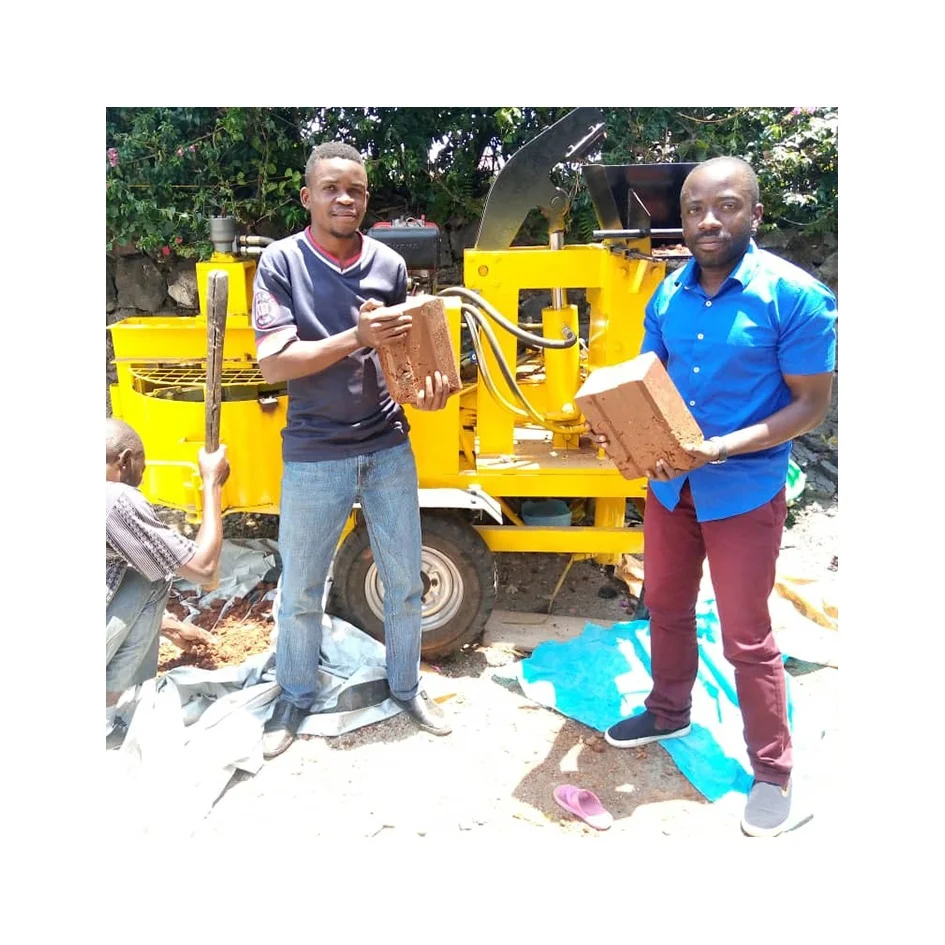
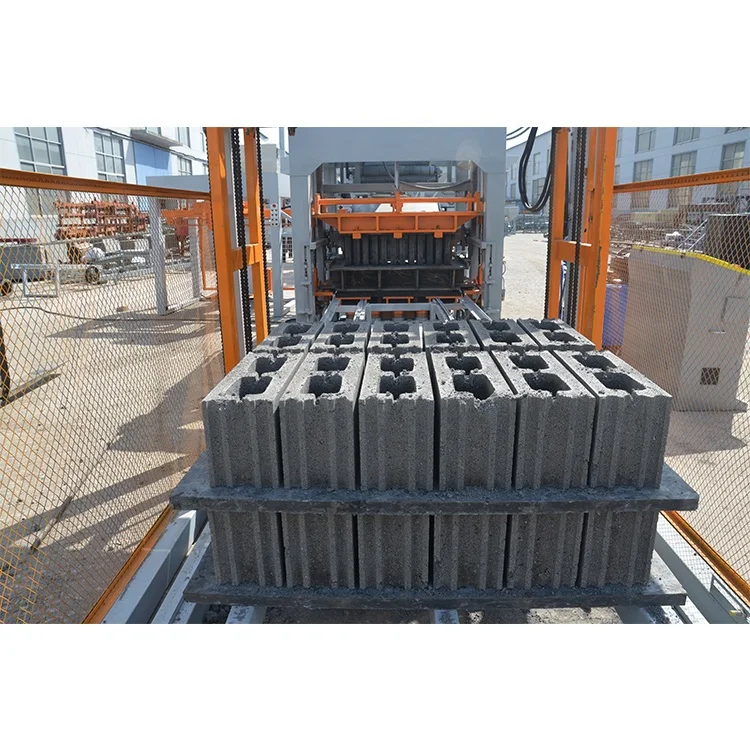 High quality block machine