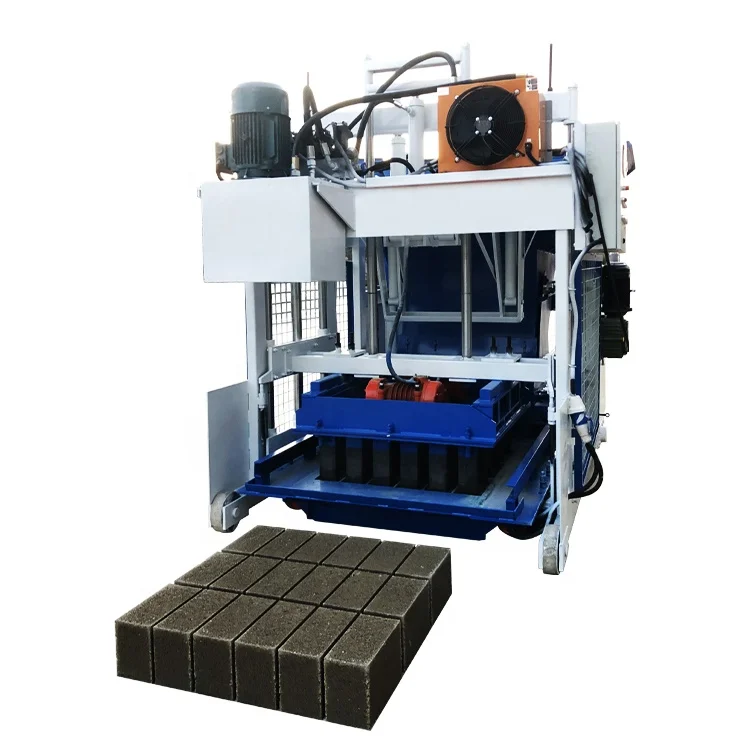
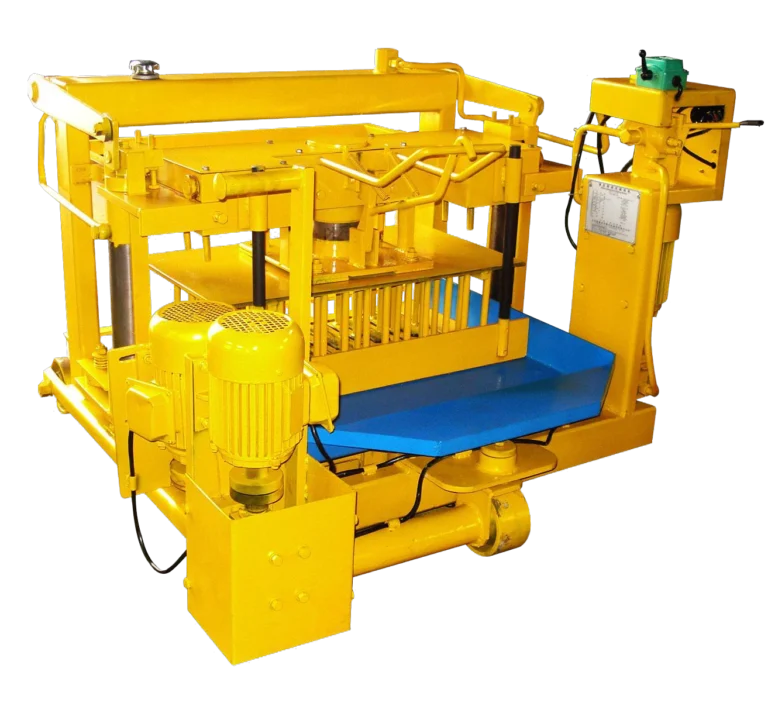
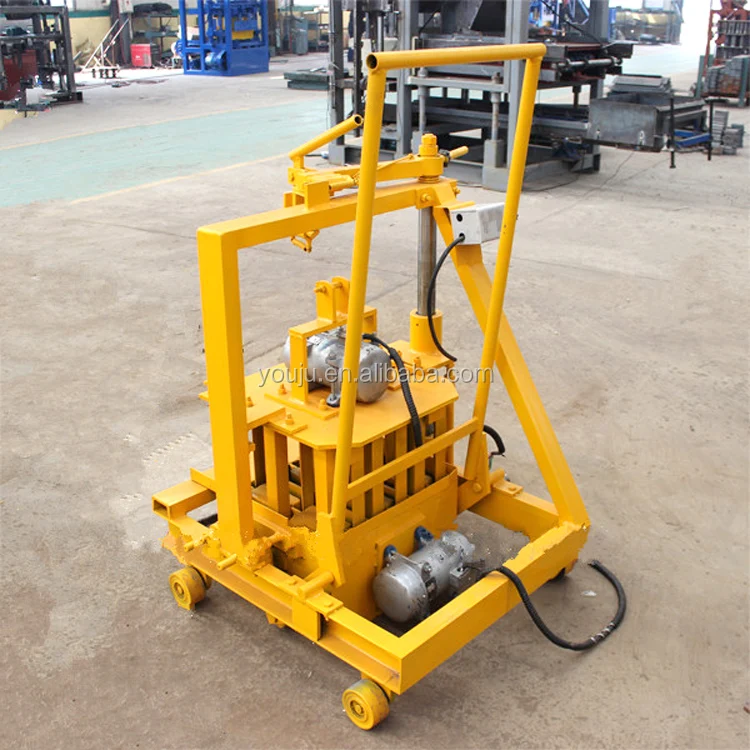
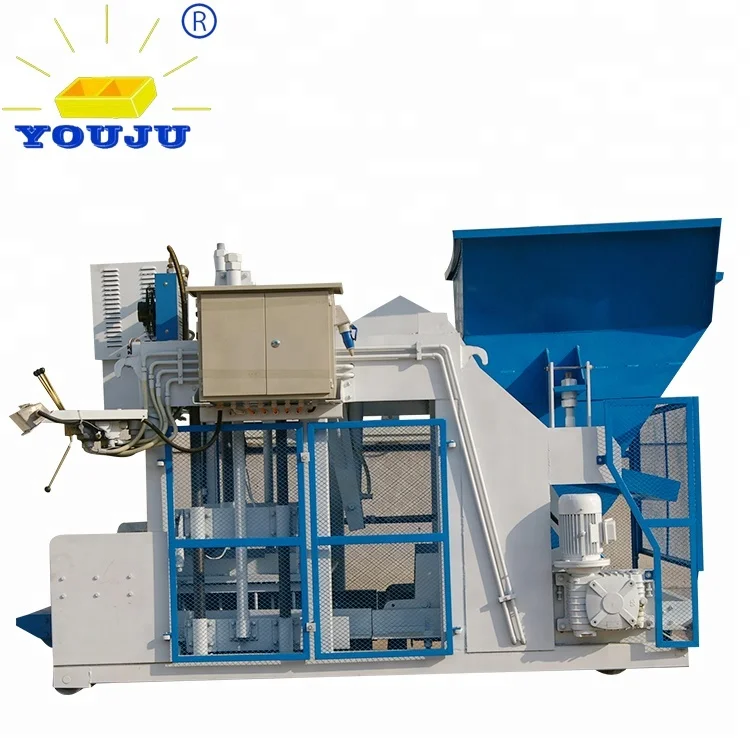
Diesel-powered egg-laying design — the QMJ4-45 produces hollow blocks directly on the ground without pallets, letting buyers start output before the curing area is even paved.
Technical Specifications
| Parameter |
Value |
| Model |
QMJ4-45 |
| Product Type |
Mobile Egg-Laying Block Making Machine |
| Molding Capacity |
4 pcs/mould (basis not stated in source — confirm block format) |
| Hollow Block 400×200×200 mm |
4 pcs/mould, 40–45 s cycle, 3,000 pcs/day (8-hour shift) |
| Hollow Block 400×150×200 mm |
5 pcs/mould, 40–45 s cycle, 3,500 pcs/day (8-hour shift) |
| Hollow Block 400×120×200 mm |
6 pcs/mould, 40–45 s cycle, 4,500 pcs/day (8-hour shift) |
| Compaction Method |
Mould vibration, twice-vibration system |
| Vibration Frequency |
2,400 r/min |
| Demould Method |
Manual |
| Turning Method |
Manual |
| Molding Cycle |
45 s |
| Total Power |
6 kW |
| Power Source |
Diesel / Petrol engine |
| Automation Level |
Manual (egg-laying / mobile) |
| Pallet Requirement |
Not required (egg-laying on ground) |
Application Suitability
| Application |
Material or Output |
| On-site hollow block production |
Cement, crushed stone, sand and water mix laid directly on compacted ground |
| Remote housing project supply |
400×200×200 mm and 400×150×200 mm hollow blocks for wall construction |
| Small-scale contractor yard |
400×120×200 mm partition blocks produced without a fixed batching plant |
| First block plant for entrepreneurs |
Low-volume cement block runs with diesel engine, independent of grid power |
What "3,000 Blocks a Day" Actually Means for the QMJ4-45
The daily figure shifts by a third depending on which hollow block dimension you run.
Sellers quote a single output number and leave it at that. In practice, a mobile egg-laying block making machine for sale rated at one block size will behave very differently when the buyer switches to a thinner partition format. On the QMJ4-45, the 400×200×200 mm hollow block yields around 3,000 pieces across an eight-hour shift, while the 400×120×200 mm format pushes that figure toward 4,500 — same machine, same cycle, different mould. I have watched buyers on West African job sites plan labour and curing space around the larger number, only to discover the gap once the first week’s count came in. [NEED_CITE: block format assumptions in mobile machine output claims]

Where the QMJ4-45 Sits in the Mobile Range
The QMJ4-45 occupies the entry tier of the mobile block machine range. It is an egg-laying unit, meaning the machine moves forward after each mould drop and leaves the block on the ground surface. There are no pallets to buy, no pallet return conveyor to maintain, and no fixed plant footprint to prepare. Compared to semi-automatic stationary presses that require a dedicated curing rack system and pallet circulation, this mobile egg-laying block making machine for sale removes most of the auxiliary infrastructure from the buyer’s first investment.
Footprint and Site Preparation Reality
An egg-laying machine needs a flat, compacted ground surface — not a factory floor. In my experience setting up units across South Asia, the most common delay is not the machine itself but the curing area. Blocks laid on uneven or soft ground crack during the first 48 hours of curing. The QMJ4-45 weighs relatively little and can be pushed manually between mould drops, so the operator simply walks the machine along a prepared strip. A site that is 30 metres long and 10 metres wide gives enough room for a full day’s output to cure in place. [NEED_CITE: ground preparation requirements for egg-laying block machines]
Reading the Specs That Matter on the Ground
The twice-vibration system at 2,400 r/min is the compaction method here. Vibration frequency determines how tightly the cement-aggregate mix settles into the mould corners before the block is released. A higher frequency packs finer aggregate more evenly, which matters when local sand gradation varies from batch to batch. The 6 kW total power draw is modest — the diesel or petrol engine means the machine runs where grid electricity is unreliable or absent entirely. I once visited a site in rural Nigeria where the only power was a generator shared with a welding set; a diesel-engine QMJ4-45 would have kept producing while the welder was active. The 45-second moulding cycle stays constant across the three listed hollow block formats because the mould change swaps the cavity count, not the vibration duration.
When the Wrong Mould Format Cancels Out the Machine
A buyer who orders the QMJ4-45 with only one mould and later discovers the local market demands a different block dimension faces a production halt while waiting for a replacement mould to ship. The mould is the single most format-specific component on any mobile egg-laying block making machine for sale, and lead times for a custom cavity plate can stretch into several weeks. Beyond the mould itself, switching formats mid-shift means the operator must re-learn the demould rhythm — pulling too early on a thinner block risks corner breakage, while waiting too long slows the cycle below the rated 45 seconds. I have seen entire first-month outputs scrapped because the curing crew did not adjust watering schedules for the thinner wall sections of a partition block. [NEED_CITE: mould compatibility and format switching on mobile block machines]
Why Source the QMJ4-45 Through a Single-Focus Block Machinery Supplier
Block machinery is the sole product line here, so the QMJ4-45 is specified alongside its mould, power source and handling context as one matched package rather than assembled from separate vendors. Configuration starts with the buyer’s actual mix design and local aggregate, not a catalogue default — a mix that works in one region may produce crumbly blocks in another if the vibration frequency is not accounted for. Mould design covers the formats the buyer’s market actually sells, with custom drawings available when standard cavities do not match local building codes. The automation level is selectable across the broader range, meaning a buyer can begin with the manual QMJ4-45 and later move to a semi-automatic or automatic line without changing suppliers. Installation support includes operator training on-site, which for an egg-laying machine means teaching the crew how to judge ground readiness and demould timing by hand.
Documentation & Verification
- Machine specification sheet listing each hollow block format with its cycle assumption
- Mould drawing and cavity format list matched to your market dimensions
- Factory test record run on your specified block size before dispatch
- Voltage and engine type confirmation for diesel or petrol power source
- Operation and maintenance manual covering manual demould and vibration motor service
- Packing photographs and customs documentation support for shipment
Installation, Commissioning & Support
- Compacted ground strip at least 30 m long required for continuous egg-laying operation
- Diesel engine filter and fuel line inspection before first start in dusty site conditions
- Manual demould technique training for each hollow block format in the mould set
- Vibration motor bearing lubrication schedule aligned with the 2,400 r/min operating frequency
- Spare mould wear plates and vibration shaft seals included in the first shipment
- Daily mould cleaning routine to prevent cement build-up on the 45-second cycle
Before You Request a Quote
Send the hollow block dimensions your market buys most, the daily piece count you need to meet project deadlines, and a description of your site ground conditions. Confirm whether diesel or petrol fuel is easier to source locally, and whether an electric start option is needed for cold mornings. The more detail on your aggregate type and cement brand, the more accurate the mould configuration will be on arrival.
Frequently Asked Questions
Q: How is daily output calculated for each hollow block format on the QMJ4-45?
A: Each output figure assumes an eight-hour shift with continuous operation on that specific block size. The 400×200×200 mm format yields around 3,000 pieces, the 400×150×200 mm yields 3,500, and the 400×120×200 mm reaches 4,500. These numbers share the same 45-second moulding cycle; the difference comes from how many cavities each mould holds.
Q: What block formats and mould sizes are available for this machine?
A: The QMJ4-45 supports hollow block moulds in at least three standard dimensions as listed in the specifications. Custom mould designs are available to buyer drawings when local building codes require non-standard wall thicknesses or overall dimensions not covered by the default cavity plates.
Q: What ground surface does an egg-laying machine need to operate properly?
A: The surface must be flat, compacted and free of soft spots so that freshly laid blocks do not settle unevenly during curing. A concrete yard is ideal but not mandatory — well-graded and rolled compacted earth works if the curing crew adjusts watering to prevent ground absorption from drawing moisture out of the block base.
Q: How does the QMJ4-45 mobile tier compare to semi-automatic and automatic tiers?
A: The mobile tier eliminates pallets, curing racks and fixed plant infrastructure, keeping initial investment low at the cost of manual demould and lower overall throughput. Semi-automatic and automatic tiers add pallet circulation, stacking and cubing to raise output and reduce labour, but require a prepared building with power supply and more floor space.
Q: Which wear parts and mould spares should ship with the first QMJ4-45 order?
A: Vibration shaft seals, motor bearings and mould wear plates experience the most contact during the 45-second cycle. Ordering one full set of replacement wear plates per mould format and a spare vibration motor coupling with the initial shipment avoids production stops while waiting for parts to arrive from overseas.

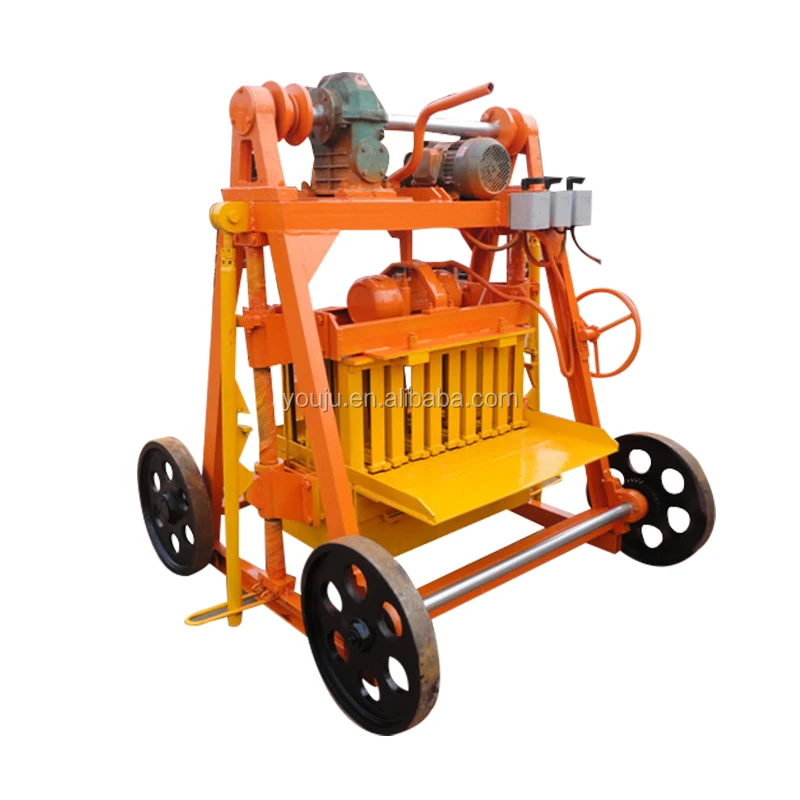
 Mobile block machine