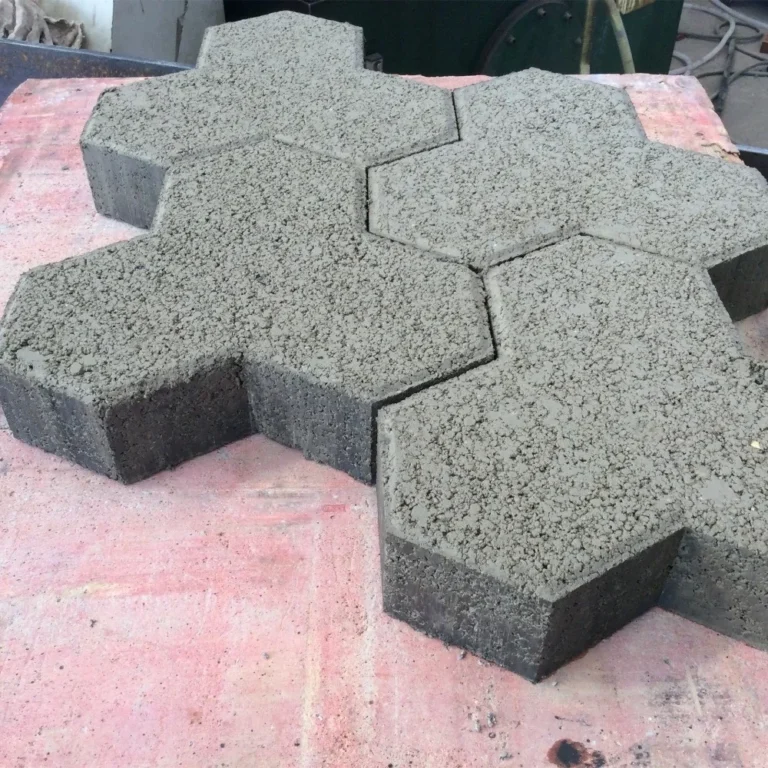
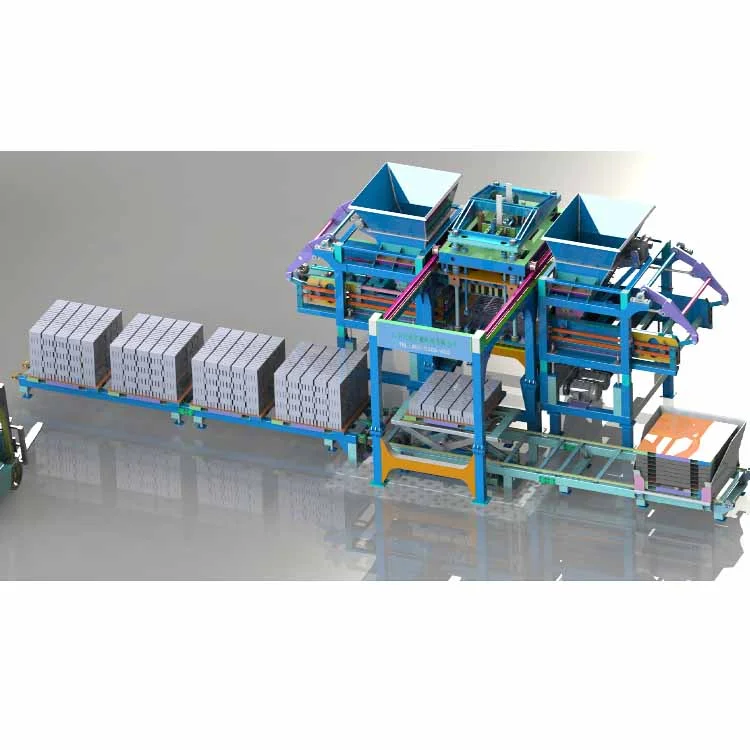
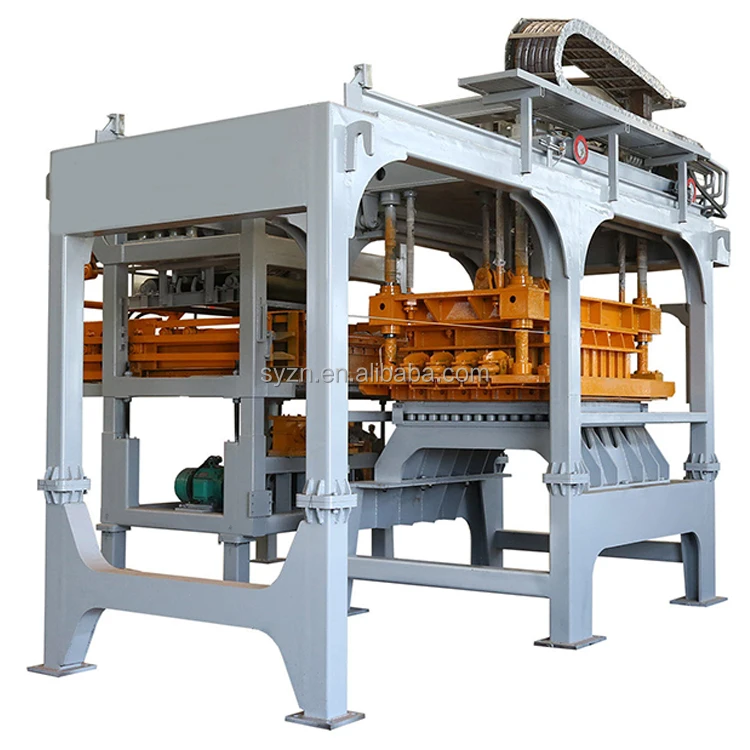
Mid-Capacity Tier Positioning — The QT4-18 sits at a defined point in the stationary block machine range, with output documented per format rather than a single headline figure.
Technical Specifications
| Parameter |
Value |
| Model |
QT4-18 |
| Product Type |
Fully Automatic Concrete Block Making Machine |
| Machine Power |
27.5 kW |
| Hydraulic Pressure |
20 MPa |
| Molding Cycle |
15–25 seconds |
| Machine Weight |
5800 KGS |
| Overall Dimensions |
7100 × 1600 × 2610 mm |
| Main Vibration Form |
Platform Vibration |
| Control System |
Full automatic PLC (type and display language to confirm before production) |
| Voltage |
Configured to buyer’s local voltage and frequency (confirm before production) |
| Mould Format |
Interchangeable — hollow, porous, standard solid, color-face, paving, kerbstone, interlocking |
| Output (Hollow Block 400×200×200 mm) |
4 pcs/mould, 15–20 s cycle, 5,760–7,680 pcs/day |
| Output (Porous Block 240×115×90 mm) |
14 pcs/mould, 15–20 s cycle, 25,200–33,600 pcs/day |
| Output (Standard Block 240×115×53 mm) |
28 pcs/mould, 15–17 s cycle, 59,300–67,200 pcs/day |
| Mould Treatment |
Precise line cutting and carburizing heat treatment |
| Machine Frame |
Welded thick steel rectangle construction |
| Automation Level |
Full automatic |
| Pallet Size |
To confirm with manufacturer |
| Mould Change Time |
To confirm with manufacturer |
| Stacking Method |
To confirm with manufacturer |
| Certification |
CE declaration where applicable |
Application Suitability
| Application |
Material or Output |
| Block and paver production plants |
Hollow and solid blocks from crushed stone, sand, cement, and fly ash |
| Construction contractors producing on-site |
Standard and interlocking blocks using locally sourced aggregate |
| Concrete product manufacturers expanding format range |
Paving blocks, kerbstones, and porous blocks with interchangeable moulds |
| Housing project contractors |
High-volume standard block runs on a fixed plant layout |
| Building material distributors and machinery importers |
Multiple block formats from a single QT4-18 platform |
| Entrepreneurs establishing a first block plant |
Mid-tier automatic line bridging small workshop and high-capacity setups |
Why "Pieces per Day" Means Nothing Without the Block Format
Every capacity figure here is tied to a specific block dimension and mould count — no headline number stands alone.
Buyers often see a concrete block making machine manufacturer quote cycles per hour and assume that rate holds across every product they plan to sell. On a machine of this class, switching from a 400×200×200 mm hollow block to a 240×115×53 mm standard solid block changes the mould cavity count from four to twenty-eight, so the daily piece count shifts dramatically [NEED_CITE: block format assumptions in capacity quotations]. Without knowing which format the number refers to, a buyer cannot compare two machines or calculate the revenue a plant will generate. The QT4-18 output figures above each carry their own block size, cycle window, and cavity count so the comparison starts from an honest baseline.

Where the QT4-18 Sits in the Range
The QT4-18 occupies the mid-capacity tier among stationary automatic block machines. Below it, semi-automatic models require manual pallet handling and typically serve small workshops where investment and output expectations are modest. Above it, higher-tier automatic lines add features such as automatic stacking, cubing, and curing rack handling to serve plants running continuous shifts. Understanding this position helps a buyer surveying options decide whether the QT4-18 matches their current volume or whether a step up or down in the range better fits the project scope. A concrete block making machine manufacturer should make this tier structure clear before a quotation is issued.
Automation Level and Future Line Expansion
The QT4-18 ships as a fully automatic press with PLC control, but the surrounding line — pallet feeding, stacking, curing rack handling — is configured separately to match the buyer’s plant layout and labour plan. Some buyers start with manual pallet handling at the press exit and add an automatic stacker later once production volume justifies the investment [NEED_CITE: phased automation in block plant setups]. This selectable automation level means the QT4-18 can serve as a standalone press in a lean setup or anchor a fully connected line as the plant grows.
Reading the Specs That Actually Shape Block Quality
The 20 MPa hydraulic pressure and platform vibration system work together: hydraulic pressure compacts the mix from above while platform vibration settles the aggregate below, and both must be matched to the buyer’s specific mix design and local aggregate density. A lightweight volcanic aggregate responds differently to vibration than dense crushed limestone, so the same pressure setting will not produce consistent block strength across different materials. The 27.5 kW machine power drives both the hydraulic pump and the vibration motor simultaneously, meaning the electrical supply must sustain that combined load through every 15–25 second cycle without voltage drop. The thick steel rectangle welded frame is designed to resist sustained vibration loading over years of operation, preventing fatigue cracks that would compromise mould alignment. Moulds undergo carburizing heat treatment after precise line cutting, extending service life before re-machining or replacement becomes necessary. Pallet size — to be confirmed before order — must match both the curing area dimensions and the forklift or handling system the buyer already operates.
The Cost of Skipping the Configuration Conversation
When a concrete block making machine manufacturer ships a press configured for a default sand-cement mix and the buyer’s local aggregate is lightweight or high-clay, vibration force and hydraulic pressure will not compact the material properly, resulting in blocks that fail strength tests on arrival [NEED_CITE: aggregate mismatch causing block strength failure]. Mould change time, if not confirmed before purchase, can consume an entire shift and eliminate the format flexibility that justified buying interchangeable moulds. Voltage and PLC display language left unspecified delay commissioning once the machine reaches the site, because the electrician cannot verify the wiring and the operator cannot read the fault codes.
Why Source This Tier From a Single-Focus Manufacturer
Block machinery is the sole product focus here, so the QT4-18 press, its moulds, pallets, and handling equipment are specified as one matched system rather than assembled from separate vendors. Configuration starts from the buyer’s actual mix design and target block format, not a catalogue default. Moulds are designed for the formats the buyer’s local market sells, with custom drawings available when a non-standard size is required. The automation level is selectable, so a buyer can begin with basic pallet handling and add stacking and cubing equipment later. Installation and commissioning support includes operator training on the specific mould set and PLC interface delivered with the machine.
Documentation & Verification
- Line layout and capacity calculation stating which block format each QT4-18 output figure assumes
- Machine specification sheet confirming voltage, frequency, and PLC display language before production begins
- Mould drawing and format list matched to the buyer’s target market products
- Factory test record demonstrating cycle time and block density per format before shipment
- Hydraulic and electrical schematic for on-site troubleshooting during commissioning
- Operation and maintenance manual covering mould change procedure and wear part replacement intervals
Installation, Commissioning & Support
- Foundation pad must accommodate the 7100 × 1600 mm QT4-18 footprint with level tolerance for frame alignment
- Dedicated electrical circuit sized for 27.5 kW continuous draw at the confirmed local voltage and frequency
- Machine ships with frame, hydraulic unit, and vibration platform separated for container loading and on-site assembly
- First-run commissioning includes hydraulic pressure calibration and vibration timing adjustment to the buyer’s mix
- Operator training covers PLC fault codes in the confirmed display language and mould change procedure
- Wear parts list identifies hydraulic seals and mould wear surfaces with recommended replacement intervals
What to Prepare Before Requesting a Quotation
To size the QT4-18 accurately within the range, provide the block formats your market requires, the daily volume you expect per format, and the raw materials available locally including aggregate type and cement grade. Share your site’s voltage, frequency, and preferred PLC display language so the electrical and control configuration is locked before production. If you already operate pallets, forklifts, or curing racks, send their dimensions so the press can be matched to your existing handling infrastructure.
Frequently Asked Questions
Q: How does the QT4-18 fit into the overall machine range — what is above and below it?
A: Below the QT4-18, semi-automatic models serve smaller workshops with lower output and manual pallet handling. Above it, higher-tier automatic lines add stacking, cubing, and curing rack handling for continuous-shift plants. The QT4-18 bridges these tiers as a mid-capacity fully automatic press, suitable for buyers who need more volume than a semi-automatic setup but are not yet ready for a high-capacity line.
Q: Which block formats are included in the capacity figures, and how does output change when switching moulds?
A: Each output figure is tied to a specific format: hollow blocks at 4 pcs/mould, porous blocks at 14 pcs/mould, and standard solid blocks at 28 pcs/mould. Switching moulds changes the cavity count and may adjust cycle time, so daily output shifts accordingly. The capacity calculation document provided with the quotation states the exact output for every format included.
Q: What plant footprint does the QT4-18 need compared to smaller or larger models?
A: The QT4-18 press itself measures 7100 × 1600 × 2610 mm, but the total line footprint depends on pallet handling, stacking, and curing area layout. Semi-automatic setups require less space since pallets are moved manually, while fully automatic lines with stacking and cubing need additional floor area around the press for the handling equipment.
Q: Can I start with a semi-automatic setup and add automation later?
A: Yes. The QT4-18 can be configured with basic manual pallet handling at the press exit, and automatic stacking or cubing equipment can be added later as production volume grows. This phased approach lets buyers manage initial investment while preserving the upgrade path to a fully connected line.
Q: What voltage and control language options are confirmed before production starts?
A: Voltage and frequency are set to match the buyer’s local electrical standard, and the PLC display language is confirmed before the control panel is assembled. Both are documented in the machine specification sheet and locked before production begins, so commissioning is not delayed by electrical mismatches on arrival.

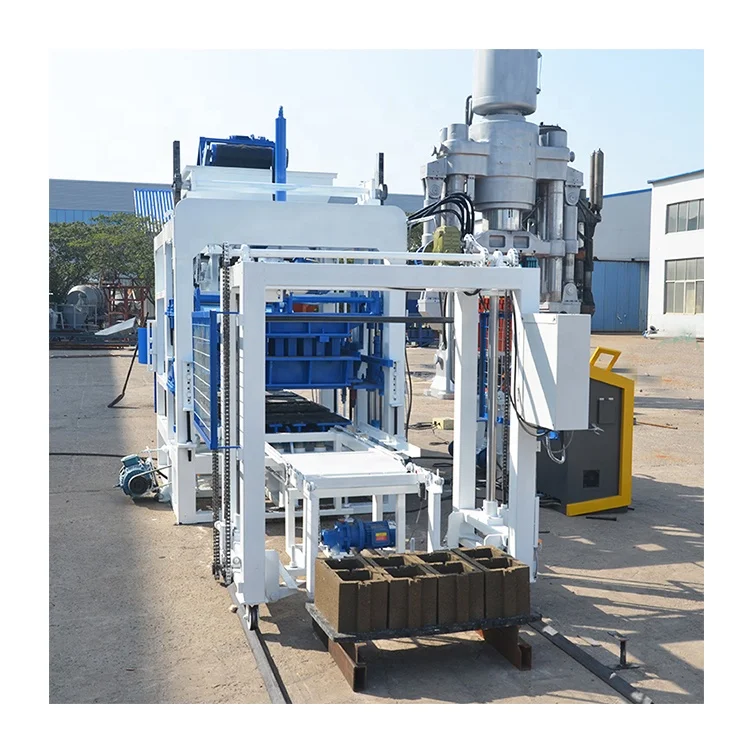
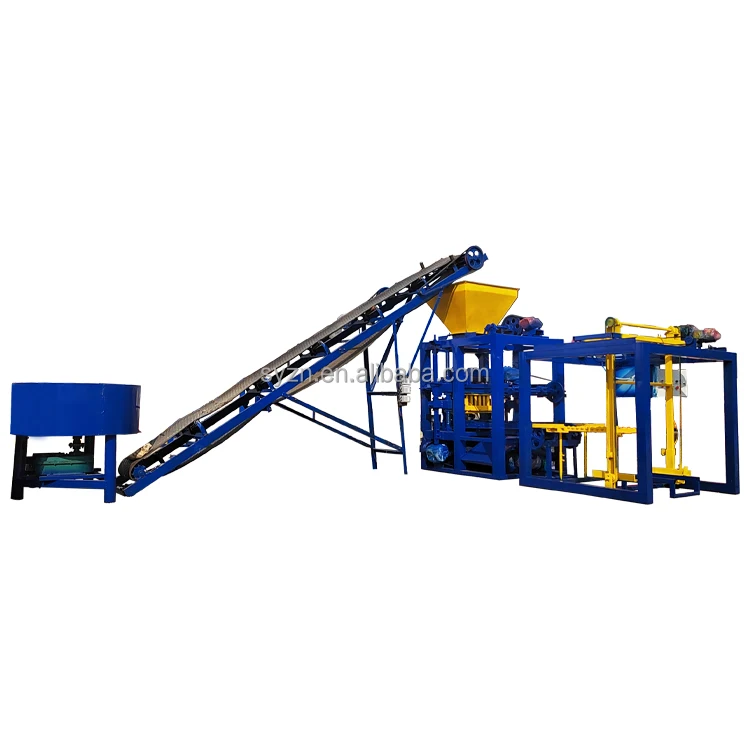 Stationary block machine