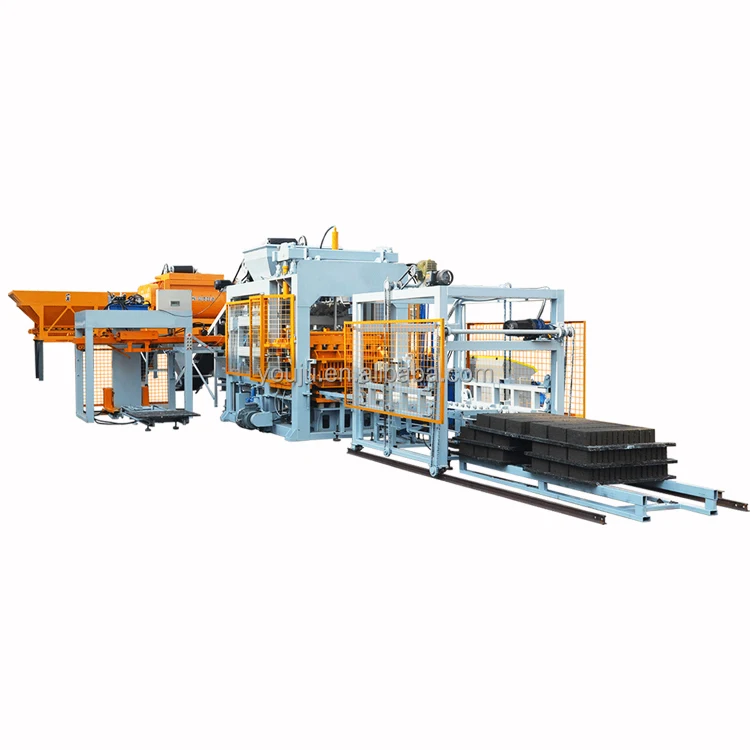
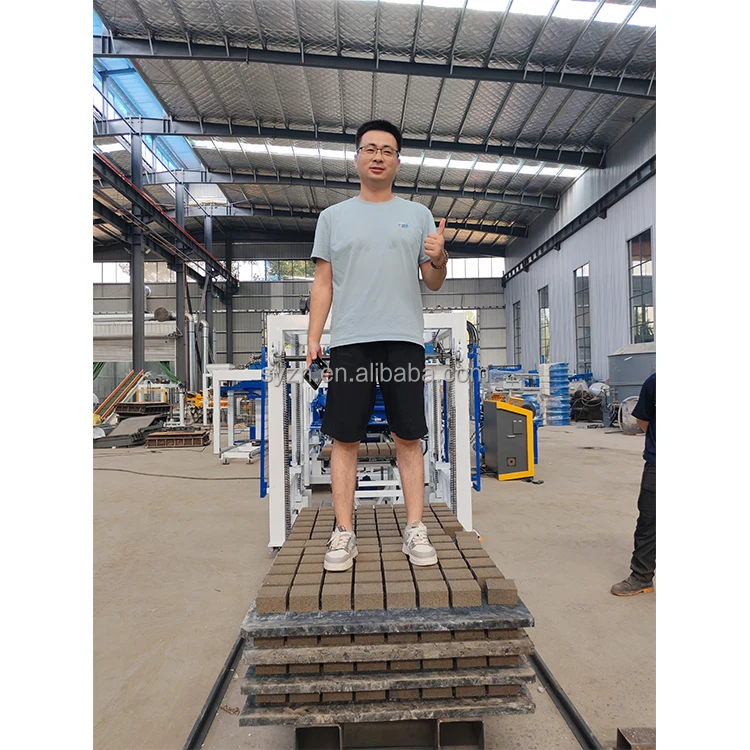
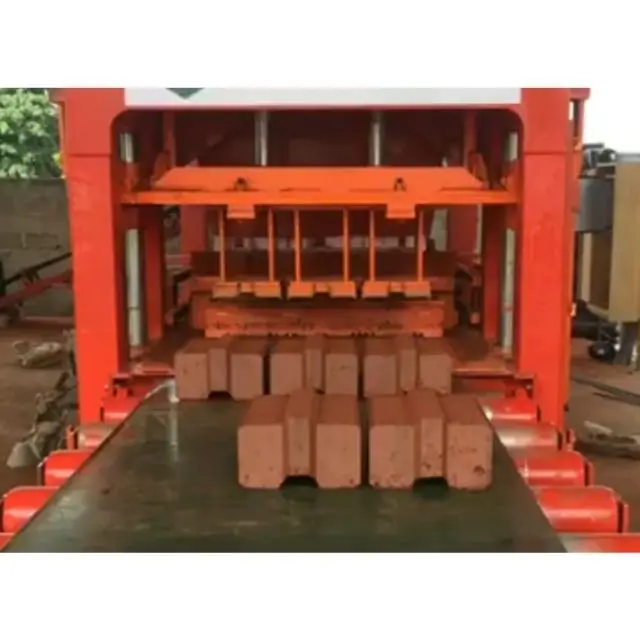
Matched System Sizing — the QT4-18 is configured as a complete press, mould, pallet and handling package against your target block format, not sold as a standalone unit.
Technical Specifications
| Parameter |
Value |
| Model |
QT4-18 |
| Product Type |
Automatic Concrete Block Making Machine |
| Overall Dimensions |
2500 × 1750 × 2200 mm |
| Rated Pressure |
16 MPa |
| Vibration Form |
Platform Vibration |
| Pallet Size |
950 × 550 mm |
| Molding Cycle |
18–25 s (basis not stated in source — confirm block format, material, and thickness) |
| Overall Power |
27.5 kW |
| Control System |
PLC with frequency converter |
| Electrical Components |
Schneider |
| Mold Lifting Mechanism |
Double-sided sync gears |
| Material Feeding System |
Hopper, feeding box, feeding platform, conveyor system |
| Block Receiver |
Chassis, transport system, idlers with motor, reducer and triangular belt |
| Automation Level |
Automatic (one-person operation via PLC) |
| Assembly State |
Composed of mixer, pallet conveyor, molding machine, block conveyor, hydraulic station, electronic console |
| Standards |
CE declaration where applicable |
Application Suitability
| Application |
Material or Output |
| Hollow block production |
Crushed stone, river sand, cement, fly ash |
| Solid block production |
Quarry dust, gravel, cement blends |
| Paving block production |
Fine aggregate with pigment and cement |
| On-site contractor production |
Locally sourced sand and stone dust with Portland cement |
| First block plant setup |
Standard concrete mix designs for regional building codes |
What "18–25 Seconds per Cycle" Actually Means for Your Daily Output
Cycle time is meaningless without naming the block format it assumes.
Many quotations for an Automatic Block Making Machine manufacturer will state a single cycle figure and leave the buyer to extrapolate daily tonnage. In practice, a hollow block with deep cores requires longer vibration and hydraulic hold than a thin paving block, so the real molding cycle shifts across formats. I once saw a site in Southeast Asia where the operator ran pavers on a hollow-block cycle setting all week before anyone noticed the density was off. The QT4-18 quotes an 18–25 second window, but that range only becomes useful once we confirm which block you plan to run and what aggregate you have on hand [NEED_CITE: block format assumptions in manufacturer cycle time claims].

Where the QT4-18 Sits in the Full Machine Range
The QT4-18 occupies the entry-automatic tier. Buyers stepping up from a mobile egg-layer or a semi-automatic press land here when daily volume needs to be consistent but the plant footprint must stay compact. The PLC and frequency converter allow a single operator to manage the full molding sequence, which removes the two-person minimum that semi-automatic lines demand.
Output Tiers and the Decision Between Automatic and Semi-Automatic
Semi-automatic machines shift pallet handling and stacking to manual labour, keeping capital cost down but capping daily consistency. The QT4-18 introduces automatic pallet feeding and block conveyance, so the press is never left waiting for an operator to slide the next pallet into position. For buyers evaluating an Automatic Block Making Machine manufacturer across several output tiers, the question is usually whether the local labour cost justifies the step to automatic pallet handling and PLC-controlled cycling [NEED_CITE: automation tier selection criteria for block plants].
Reading the Specs That Decide Block Quality
The 16 MPa rated pressure and platform vibration work together: pressure compresses the mix while vibration settles fine aggregate into voids. If either force is mismatched to your local sand gradation, block strength becomes unpredictable across a production run. The double-sided sync gear mold lifting keeps the upper and lower mold halves aligned during every cycle, which matters most when running thin-walled hollow blocks where even slight misalignment causes cracking at demolding. The 950 × 550 mm pallet size determines how many blocks form per cycle and must match the curing rack spacing and forklift tine width already in your yard.
The Cost of Skipping Configuration Checks
When voltage and frequency are confirmed after the machine ships rather than before, the PLC and frequency converter may arrive incompatible with local supply, leaving the line idle until a transformer is sourced. I have seen plants lose weeks of production because the control display language was set to a default the operators could not read, turning routine fault codes into guesswork. Pallet specification chosen without regard to curing area dimensions forces a buyer to either rebuild rack spacing or accept hand-stacking — exactly the labour the automatic tier was supposed to eliminate [NEED_CITE: commissioning delays from unconfirmed electrical specifications].
Why Buyers Source This Tier Here
Block machinery is the single focus, so the QT4-18 arrives as a matched system — press, mould, pallet, and handling — rather than components pulled from separate suppliers. Configuration is set against your actual mix design and target block format, not a catalogue default. Mould design covers the formats your market sells, and custom drawings are available when a project specifies a non-standard block profile. Automation level is selectable, meaning a buyer can begin with the QT4-18 semi-automatic and move to full automatic stacking later without replacing the press. Installation support includes on-site commissioning and operator training so the first production week is not spent troubleshooting.
Documentation & Verification
- Line layout and capacity calculation stating the block format assumed for the 18–25 s cycle
- Machine specification sheet matched to your local aggregate and target format
- Mould drawing and format list showing blocks produced per cycle on the 950 × 550 mm pallet
- Voltage, frequency, and PLC display language confirmation record before production
- Factory test record on your specified block format before dispatch
- Operation and maintenance manual with wear parts and mould replacement list
Installation, Commissioning & Support
- Foundation pad sized to the 2500 × 1750 mm footprint with drainage allowance for mixer wash-down
- Dedicated circuit rated for the 27.5 kW total draw with voltage and frequency confirmed to local supply
- Machine shipped in component modules for container loading and reassembled on-site
- First-run parameter setting for vibration duration and hydraulic hold matched to your mix design
- Operator training covering PLC navigation, mold change procedure, and daily greasing points
- Wear parts list identifying hydraulic seals, vibration springs, and mold liner replacement intervals
Before You Send an Inquiry
To size the QT4-18 correctly, share the block formats your market demands, the daily volume you need per format, and a sample description of your local sand and stone aggregate. Confirm the voltage and frequency at your site, the language your operators need on the PLC display, and whether your existing curing racks and forklifts match the 950 × 550 mm pallet.
Frequently Asked Questions
Q: What block format does the 18–25 s molding cycle assume?
A: The quoted range covers multiple formats, but the exact cycle for your hollow block, solid block, or paver depends on wall thickness, mix design, and target density. We calculate output per format once your block drawing and aggregate description are confirmed, so the daily figure in your proposal reflects what you will actually produce.
Q: Where does the QT4-18 sit compared to higher automatic tiers?
A: It occupies the entry-automatic tier with PLC one-person operation and automatic pallet feeding. Higher tiers add automatic stacking, cubing, and curing rack handling for larger daily volumes. The QT4-18 press can serve as a starting point, and automation modules can be added as production grows.
Q: What plant footprint does the QT4-18 require?
A: The machine itself measures 2500 × 1750 mm, but the full line including mixer, pallet conveyor, and block receiver needs additional length. Compared to a mobile egg-layer, you gain output consistency at the cost of a fixed foundation and curing area sized to the 950 × 550 mm pallet.
Q: Can I start with the QT4-18 and add formats later?
A: Yes. The mold lifting mechanism and platform vibration accept additional moulds as your market expands. Custom mould drawings are supported, so you can add interlocking or kerbstone formats without replacing the press, only the mold set and possibly the feeding box configuration.
Q: What electrical details are confirmed before shipment?
A: Voltage, frequency, and PLC display language are verified against your site supply and operator requirements before production begins. This prevents commissioning delays and ensures fault codes and cycle parameters are readable from day one.

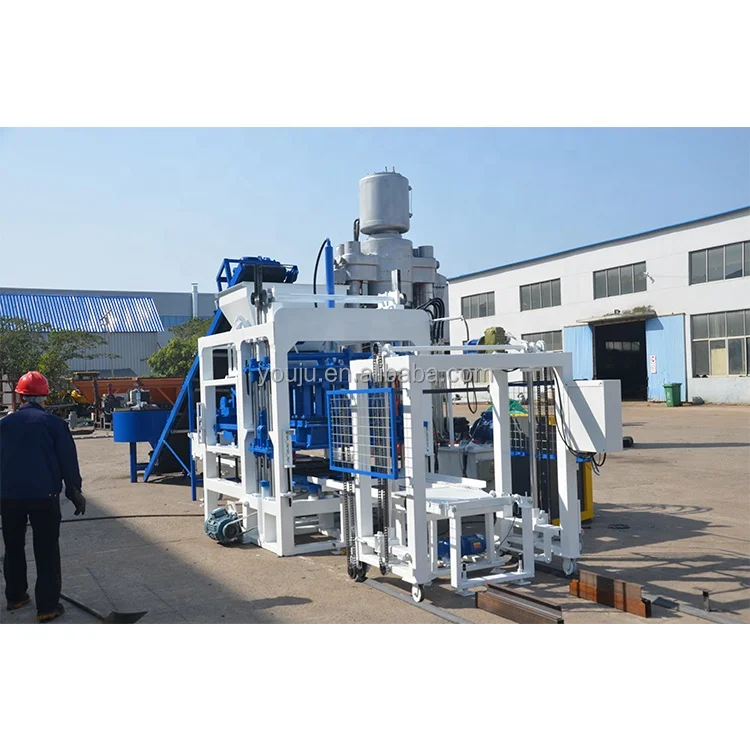 Automatic block machine