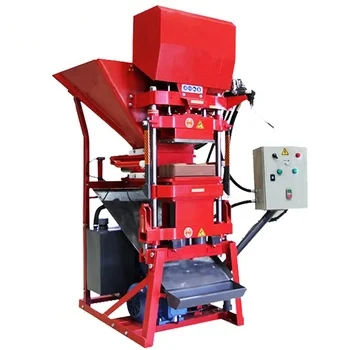
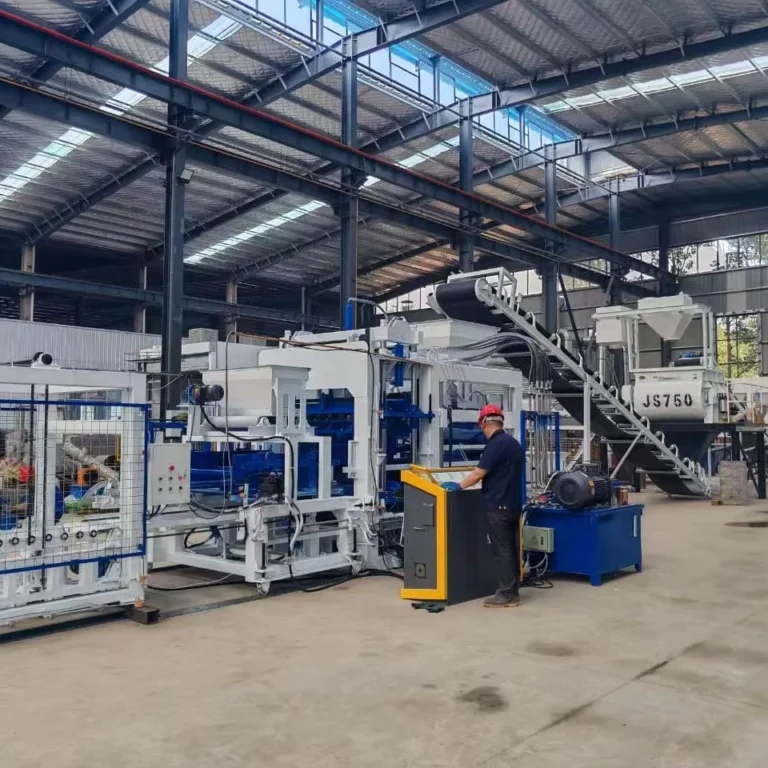
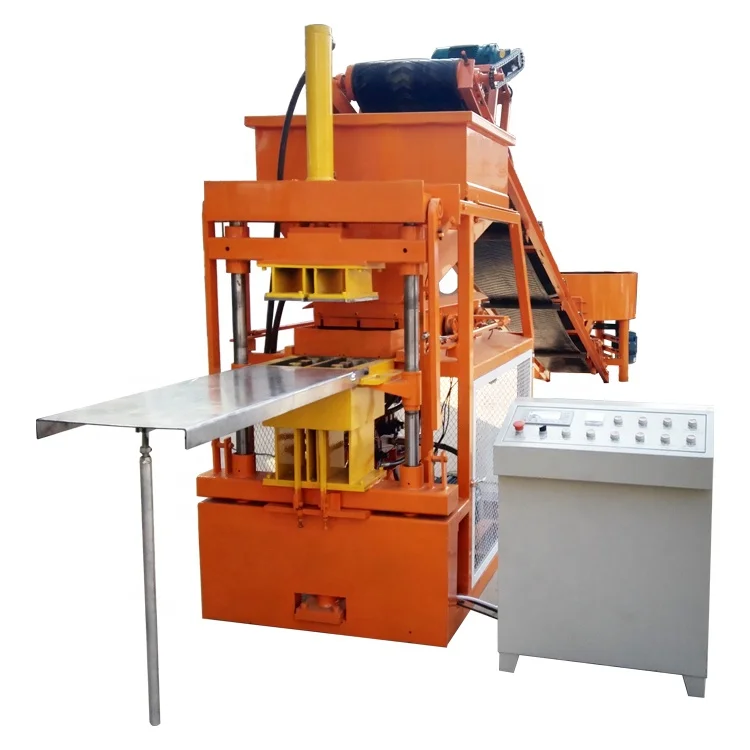
Matched System Sizing — Every QT4-18 configuration is paired with its mixer, conveyor, pallet spec and stacking unit as one calculated line, not a press sold separately from the equipment that feeds and clears it.
Technical Specifications
| Parameter |
Value |
| Model |
QT4-18 |
| Product Type |
Automatic Concrete Block Making Machine |
| Overall Dimensions |
2500 × 1750 × 2200 mm |
| Rated Hydraulic Pressure |
16 MPa |
| Vibration Form |
Platform Vibration |
| Pallet Size |
950 × 550 mm |
| Molding Cycle |
18–25 s |
| Overall Power |
27.5 kW |
| Control System |
PLC control with frequency converter |
| Mould Lifting Mechanism |
Double-sided synchronous gears |
| Electrical Components |
Schneider brand |
| Automation Level |
Automatic (pallet feeder, material feeder, molding, block receiver) |
| Material Feeder |
Distribution belt hopper |
| Standard Supporting Equipment |
JQ500 pan mixer, 8 m belt conveyor, stacker, block clamper, trolley |
| Optional Equipment |
Cement silo, batching plant |
| Mould Included |
One free hollow mould (additional formats available at extra cost) |
| Capacity |
(basis not stated in source — confirm block format, material and thickness before quoting) |
Application Suitability
| Application |
Material or Output |
| Hollow block production |
Cement, crushed stone, sand, and local aggregates |
| Solid block production |
Standard concrete mix designs with locally available fines |
| Paving block production |
Higher-density mix with fine aggregate and pigment where required |
| Interlocking and kerbstone formats |
Custom mould configurations matched to the 950 × 550 mm pallet |
What "Cycles per Hour" Fails to Tell You About an automatic concrete block making machine manufacturer
A cycle time is only meaningful once the block format, mix design and pallet handling rhythm are all stated together.
Catalogues routinely quote the fastest cycle a press can achieve on its smallest mould, then leave the buyer to discover on site that a larger hollow block adds seconds to every cycle and that the pallet return loop cannot keep pace. I have seen plants in the Pearl River Delta and overseas where the press sat idle for several seconds each cycle simply because the belt conveyor and stacker were specified by a different supplier who never saw the line layout. The result is an automatic concrete block making machine manufacturer claiming one output figure while the actual daily count tells a different story [NEED_CITE: common discrepancies between quoted and actual block plant output].

Where the QT4-18 Sits in the Full Range
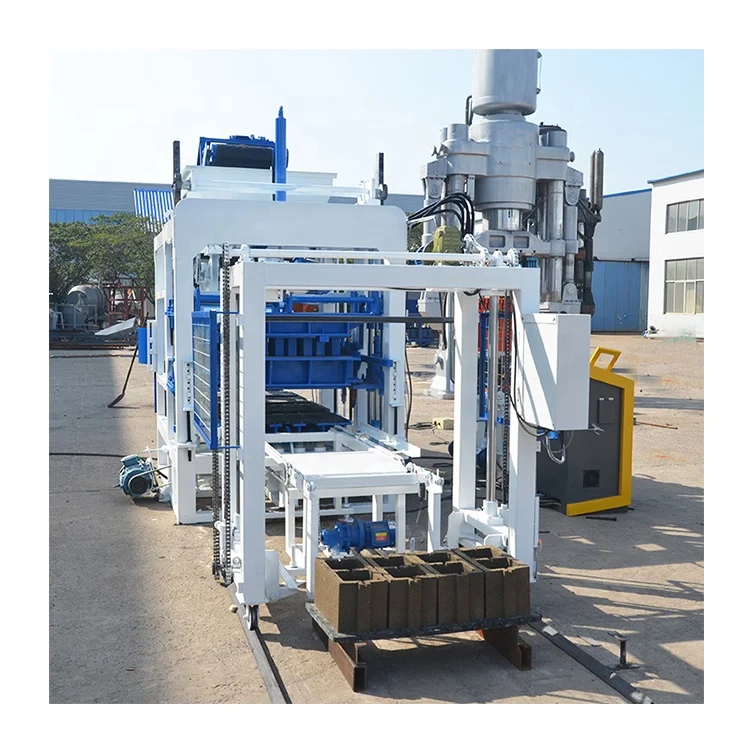
The QT4-18 occupies the mid-tier position in an automatic block machine lineup that stretches from small workshop semi-automatic presses up to high-capacity fully automatic lines. Buyers comparing a first-plant investment against an established producer expanding capacity can use this tier as a reference point for the footprint, power requirement and automation level that separates a single-operator workshop from a multi-station production layout. The 27.5 kW overall power draw and 2500 × 1750 mm press footprint define the minimum building envelope before mixer, conveyor and curing area are added.
Automation That Removes the Operator from the Cycle
Pallet feeding, material distribution, press cycling and block receiving are all handled without manual intervention on this tier, which means the operator’s role shifts from running every stroke to monitoring consistency and managing the curing yard. The PLC with frequency converter regulates the vibration profile across the 18–25 s molding cycle, keeping each stroke within the same energy envelope so that block density does not drift as the shift wears on. Double-sided synchronous gears lift the mould box evenly, reducing the risk of a stuck block that would otherwise force a manual cleanout and cancel several cycles [NEED_CITE: PLC-controlled vibration consistency in block presses].
Reading the Numbers That Actually Matter
The 16 MPa rated hydraulic pressure works together with platform vibration to compact the concrete mix against the mould walls; higher pressure alone does not guarantee strength if the vibration frequency is mismatched to the aggregate size in the buyer’s local quarry. The 950 × 550 mm pallet size dictates how many blocks fit in a single stroke and how the cured product will stack on the racks already in the yard — specifying a pallet that does not match existing forklifts and curing racks creates a bottleneck downstream of the press. The 18–25 s cycle range reflects the difference between a thin paving block and a deeper hollow block, which is why any capacity conversation must start with the format the buyer’s market actually purchases. Schneider electrical components and the distribution belt hopper keep the feeder station aligned with the press rhythm so that material arrives before the mould closes rather than after.
The Cost of Specifying the Press Alone
Quoting a block press without its pallet circuit, mixer capacity and stacking method leaves gaps that surface only after the machine is bolted to the floor. A pan mixer that is too small forces the press to wait for the next batch, and a stacker that cannot clear blocks fast enough leaves the receiver table congested, adding seconds to every subsequent cycle. These mismatches are not visible on a single-machine quotation but they show up immediately in the daily count [NEED_CITE: block line bottleneck analysis from mismatched station capacities].
Why Buyers Place This Tier with Us
Block machinery is the single focus of this operation, so the QT4-18 arrives with its JQ500 mixer, 8 m belt conveyor, stacker and pallet spec calculated as one system rather than sourced from separate catalogues. Mould design covers the formats the buyer’s market sells, and custom drawings are accepted when standard formats do not match local demand. Configuration is set against the buyer’s actual aggregate and mix design, not a default that assumes materials the buyer cannot source locally. Automation level is selectable, so a buyer can commission the line at semi-automatic and add the full pallet feeder and stacker package later as production volume justifies the investment. Installation support includes operator training so the crew understands how the PLC parameters relate to the mix they are running.
Documentation & Verification
- Line layout showing each station and the block format assumed for capacity calculation
- Machine specification sheet covering hydraulic pressure, vibration form and pallet dimensions
- Mould drawing and format list confirming which blocks fit the 950 × 550 mm pallet
- Voltage, frequency and PLC display language confirmation issued before production starts
- Factory test record and packing photographs provided before container loading
- Hydraulic and electrical schematic for the buyer’s maintenance team on site
Installation, Commissioning & Support
- Foundation pad must carry the 2500 × 1750 mm footprint and vibration load without flex
- Dedicated power circuit sized for the 27.5 kW total draw including mixer and conveyor motors
- Machine arrives dismantled for container loading; reassembly and level check done on site
- PLC parameters set to the buyer’s confirmed voltage and frequency before first production run
- Operator training covers mould change procedure and double-sided gear synchronization check
- Wear parts and mould list supplied so the first replacement order can be placed early
Before You Request a Quote
Send the block format your market buys most, the daily output you need to hit, and the aggregate available at your site so the line can be configured around real conditions rather than catalogue defaults. Include your local voltage, frequency and the language your operators read on a screen. State whether you already have curing racks, forklifts and a yard layout, because the pallet size and stacker reach must match what is already on the ground.
Frequently Asked Questions
Q: How is output capacity verified for each block format on this tier?
A: Capacity is calculated per block format, not as a single headline number. The quotation states the cycle time and daily count for the specific hollow, solid or paving block the buyer confirms, so there is no gap between what was quoted and what the line actually produces once installed.
Q: Where does the QT4-18 sit compared to semi-automatic and high-capacity tiers?
A: It is the mid-tier automatic option. Below it sits a semi-automatic range for lower investment and smaller footprints; above it are high-capacity lines with larger pallets and faster cycles. Buyers can start here and add automation stations later if volume grows.
Q: Which automation stations are included in the standard quotation?
A: The standard package covers the pallet feeder, material feeder, press cycle and block receiver. Stacker and curing rack handling are confirmed separately based on the buyer’s yard layout, so nothing arrives that the site cannot accommodate.
Q: What plant footprint does this tier require?
A: The press alone occupies roughly 2500 × 1750 mm, but the full line including the JQ500 mixer, 8 m conveyor and stacking area needs a longer building envelope. A line layout drawing is issued with every quotation so the buyer can plan the slab and curing yard before the machine ships.
Q: Are moulds and pallets quoted as part of the matched system?
A: Yes. One hollow mould is included, and additional formats are added to the same quotation. Pallets are specified to match the 950 × 550 mm size and the buyer’s existing curing racks and forklift, so the whole line works as one unit from day one.

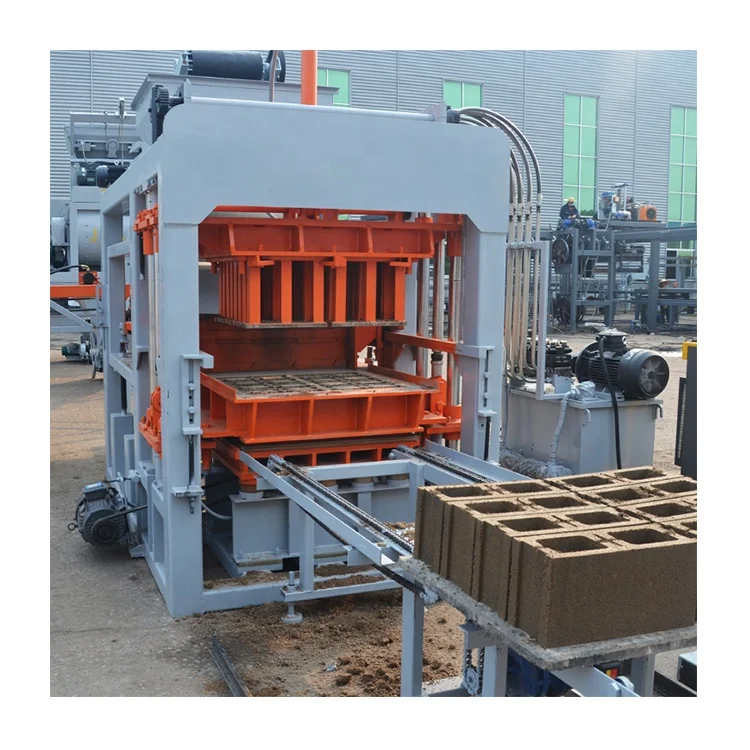 Automatic block machine