

Block Cuber Warranty vs Duty Cycle: Factory-Direct Supplier
A long warranty is meaningless if the machine’s duty cycle cannot withstand your actual production intensity.
Buyers must prioritize mechanical endurance ratings over paper guarantees to ensure continuous operation. A two-year warranty covers manufacturing defects, not the thermal fatigue caused by running an intermittent-duty machine on a continuous three-shift schedule.
I still remember the humidity in that Jakarta warehouse, the smell of fresh concrete mixing with hydraulic oil. I was there for a precast plant expansion, convinced I had secured a great deal on a block cuber because the supplier offered a generous twenty-four-month warranty. The sales brochure looked pristine, and the price was competitive. But within six months of running three shifts a day to meet a tight housing project deadline, the hydraulic seals began to fail. The manufacturer rejected the claim, citing "normal wear and tear" due to excessive operational intensity. We lost two weeks of production waiting for parts, and the repair costs far exceeded the initial savings. That experience shifted my entire approach to equipment procurement. I stopped looking at the warranty certificate first and started asking for the motor nameplate data and hydraulic thermal design specs. [NEED_CITE: distinction between S1 continuous and S3 intermittent duty ratings in IEC 60034-1]

This mismatch between promised protection and actual mechanical limits is a common trap for plant managers and investors. Understanding the technical reality behind block cuber duty cycle vs warranty terms is essential for avoiding costly downtime and hidden repair expenses.
Why Does My Block Cuber Fail Before the Warranty Expires?
Failure often stems from operational intensity exceeding the machine’s designed duty cycle, not manufacturing defects.
Most buyers assume that if a machine breaks down within the warranty period, they are covered. However, warranty terms typically exclude failures resulting from misuse or operating the equipment beyond its specified limits. In the context of concrete block production, "misuse" often means running a machine designed for single-shift operations in a multi-shift environment.
Consider a scenario where a tender-driven project focuses on the lowest upfront cost. The selected equipment comes with a standard two-year warranty but uses non-industrial grade components suited for intermittent use. When the plant ramps up to meet production targets, the annual maintenance cost spikes significantly due to frequent component replacements. The warranty does not cover these wear-and-tear items, leaving the operator with a machine that is technically "under warranty" but practically unusable without constant intervention. [NEED_CITE: industry benchmarks for maintenance costs relative to duty cycle compliance]
Another common issue arises when expanding from a manual to an automatic line. A facility might upgrade its molding capacity but retain a cuber rated for an eight-hour manual pace. When subjected to twenty-four-hour automated requirements, the hydraulic system overheats, leading to premature valve failure and pump degradation. The warranty provider will point to the operational logs showing continuous run times that exceed the machine’s rated capacity.
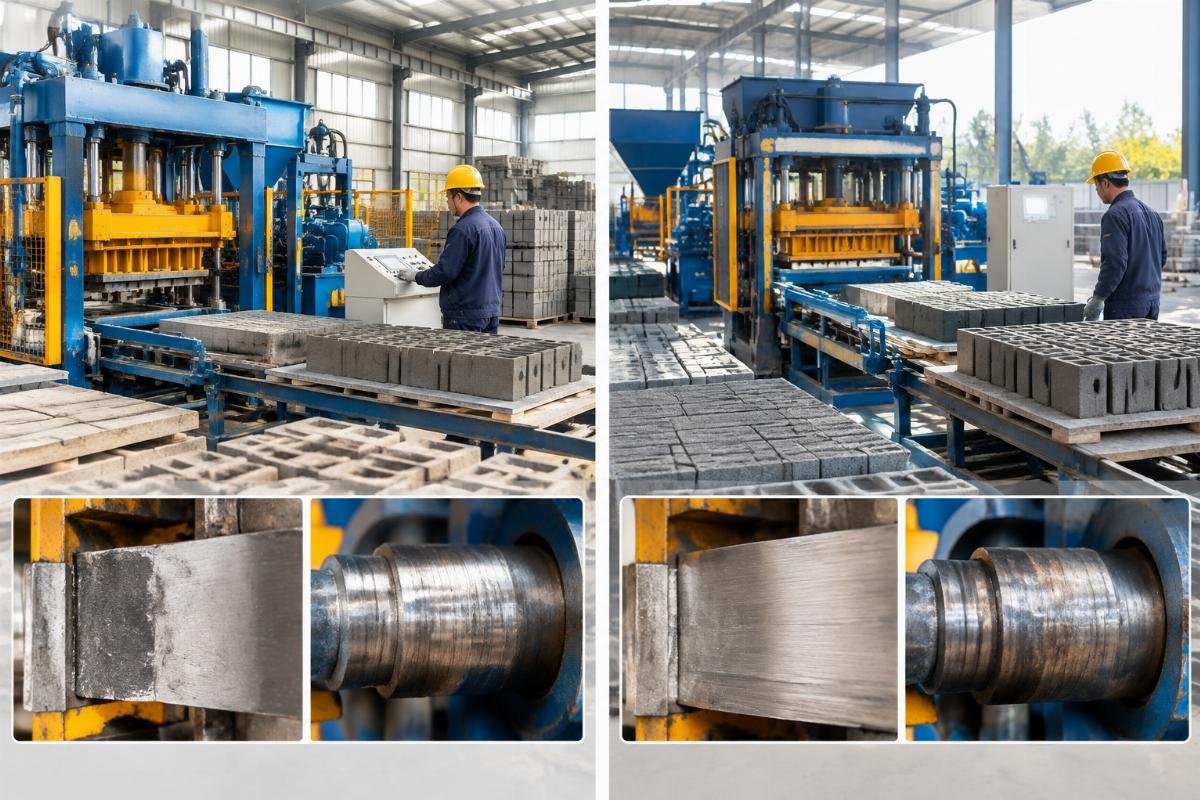
To avoid this, you must verify the machine’s intended usage class. If your production plan involves multiple shifts, the equipment must be engineered for continuous duty. Ignoring this fundamental specification renders the warranty irrelevant, as the root cause of failure is operational mismatch rather than material defect. Evaluating block cuber duty cycle vs warranty coverage requires a clear understanding of your daily production demands.
Understanding Duty Cycle: The Hidden Spec That Dictates Longevity
Learn to distinguish between intermittent (S3) and continuous (S1) duty ratings in technical manuals.
Duty cycle is defined as the ratio of operating time to total cycle time. In industrial machinery, this is often categorized using standard codes such as S1 for continuous duty and S3 for intermittent periodic duty. An S1 rating means the machine can operate at a constant load for an indefinite period without exceeding temperature limits. An S3 rating implies the machine operates for a short duration followed by a rest period to allow cooling. [NEED_CITE: definition of duty types in ISO 8528 or equivalent mechanical engineering standards]
Many suppliers market their equipment as "automatic" without specifying the duty class. This ambiguity can be dangerous for high-volume producers. A machine rated for S3 duty might perform well in a single-shift operation with regular breaks but will suffer from thermal buildup if run continuously. Key components affected include the hydraulic pump, solenoid valves, and structural elements subject to fatigue.
| Component | Intermittent Duty (S3) Limitation | Continuous Duty (S1) Requirement |
|---|---|---|
| Hydraulic Pump | Prone to overheating without rest periods | Designed with enhanced cooling and thermal stability |
| Solenoid Valves | Limited switching frequency lifespan | High-cycle endurance for rapid, continuous actuation |
| Structural Frame | Standard fatigue resistance | Reinforced against constant vibration and load cycles |
| Electrical Motor | Standard insulation class | Higher insulation class for sustained thermal load |
When reviewing specifications, look for explicit mentions of these ratings. If the documentation is vague, request detailed data sheets from the component manufacturers, such as the hydraulic pump and motor suppliers. These documents provide verifiable data on thermal limits and switching frequencies. [NEED_CITE: hydraulic component manufacturer datasheets for thermal limits]
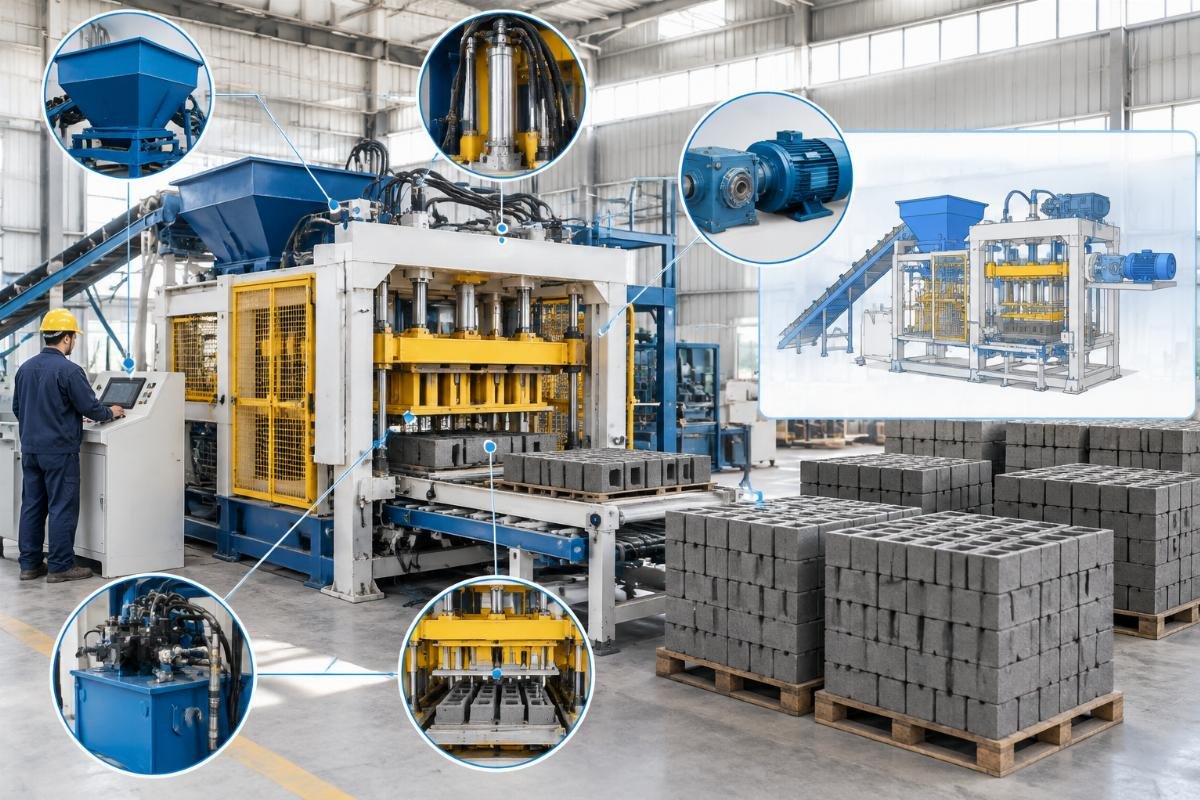
Understanding these technical distinctions allows you to match the machine’s capabilities with your production needs. Focusing on block cuber duty cycle vs warranty details ensures you select equipment that can survive the rigors of your specific operational environment.
How to Match Machine Specs with Your Production Shifts
Calculate your daily mold cycles and compare them against the manufacturer’s rated hourly capacity and thermal limits.
Matching specifications to production shifts requires a quantitative approach. Start by determining your required daily output and dividing it by the number of operating hours. This gives you the average hourly production rate. Next, factor in peak loads and startup/shutdown cycles, which place additional stress on the machinery.
- Determine Daily Mold Cycles: Calculate the total number of blocks or pallets you need to produce per day. Include a buffer for inefficiencies and maintenance windows.
- Assess Hourly Capacity Requirements: Divide the daily target by the planned operating hours. For example, if you plan to run three eight-hour shifts, your machine must sustain the required output rate for twenty-four hours with minimal downtime.
- Verify Thermal Limits: Request the thermal design specifications for the hydraulic system. Ensure the cooling system is sized to handle continuous operation at the calculated load. [NEED_CITE: methods for calculating hydraulic system thermal balance]
- Check Component Ratings: Review the duty cycle ratings for critical components like motors and pumps. Ensure they are rated for continuous (S1) operation if your plan involves multi-shift runs.
A common mistake is assuming that all "automatic" machines are equal. In reality, the internal design determines whether a machine can handle continuous stress. For instance, Shiyue’s QT series PLC lines are engineered for twenty-four-seven duty capacity, providing transparent technical data sheets that align with high-intensity production needs. This level of transparency allows buyers to verify claims before purchase.
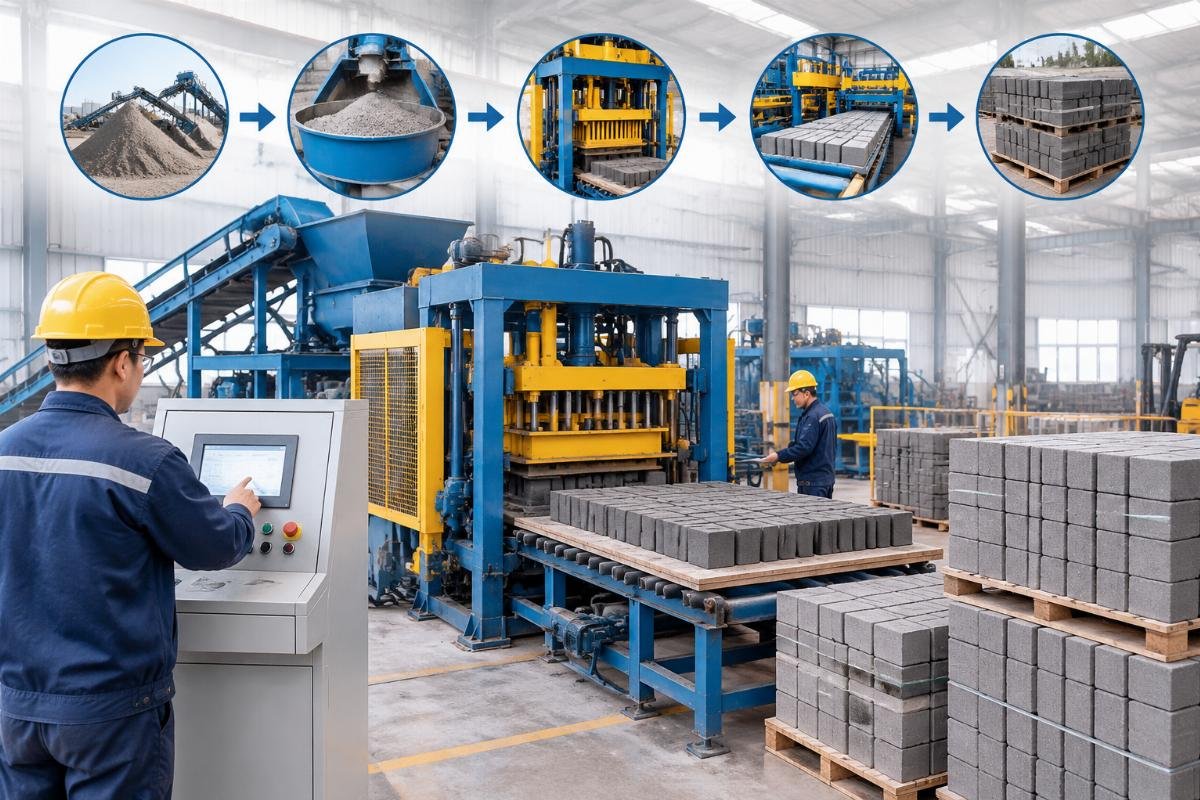
By following these steps, you can ensure that the equipment you purchase is capable of meeting your production goals without premature failure. This proactive approach is far more effective than relying on post-failure warranty claims. The relationship between block cuber duty cycle vs warranty becomes clear when you realize that proper specification matching prevents the conditions that void warranty coverage.
Red Flags in Warranty Terms vs. Technical Reality
Identify clauses that exclude "normal wear and tear" which often covers critical failures in high-use scenarios.
Warranty documents are legal contracts designed to limit the manufacturer’s liability. One of the most common exclusions is "normal wear and tear." While this seems reasonable, the definition of "normal" can vary significantly between manufacturers and operators. For a machine running on a single shift, seal replacement every few years might be normal. For a machine running three shifts, seal failure within months might be considered normal by the manufacturer but catastrophic for the operator.
Review the warranty terms for specific exclusions related to hydraulic systems, electrical components, and structural integrity. Look for clauses that require strict adherence to maintenance schedules. Failure to follow these schedules, even if minor, can be used to void the warranty. [NEED_CITE: common warranty exclusion clauses in industrial machinery contracts]
Additionally, be wary of warranties that require the use of proprietary spare parts or service providers. This can lead to higher long-term costs and potential delays in repairs. A robust warranty should support the use of standard, high-quality components and allow for third-party service if necessary.
| Warranty Clause | Potential Risk | Mitigation Strategy |
|---|---|---|
| Normal Wear and Tear Exclusion | Critical components may be excluded from coverage | Define "normal" based on your specific operational intensity |
| Mandatory Maintenance Schedule | Minor deviations can void warranty | Ensure the schedule is realistic for your production volume |
| Proprietary Parts Requirement | Higher costs and supply chain dependency | Negotiate for compatibility with standard industrial components |
| Service Provider Restriction | Limited availability and higher labor costs | Seek flexibility in choosing qualified service technicians |
Understanding these red flags helps you negotiate better terms or choose a supplier with more favorable policies. It also highlights the importance of selecting equipment that is inherently durable, reducing the need to rely on warranty coverage. When evaluating block cuber duty cycle vs warranty offers, look beyond the duration and focus on the scope and exclusions.
Conclusion
Prioritize mechanical endurance over paper guarantees to ensure sustainable production.
A warranty is only as good as the machine’s ability to operate within its designed limits. By understanding duty cycle ratings and matching them to your production shifts, you can avoid the pitfalls of premature failure and disputed claims. Focus on technical specifications, verify component ratings, and scrutinize warranty terms for hidden exclusions. This approach ensures that your investment delivers consistent performance and long-term value.

Industry expert sharing insights about concrete machinery, block making technology and turnkey production solutions.
View all posts →

Leave a Reply