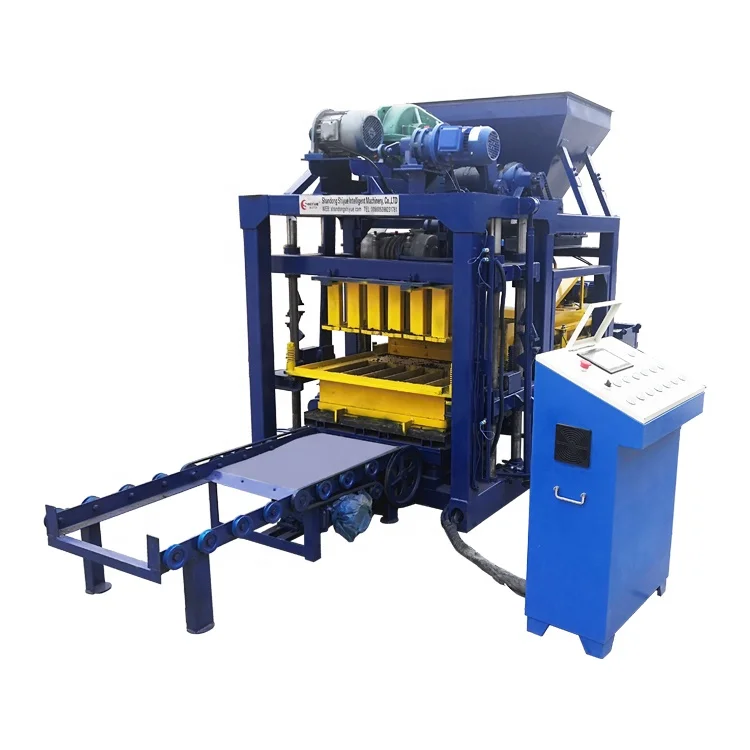
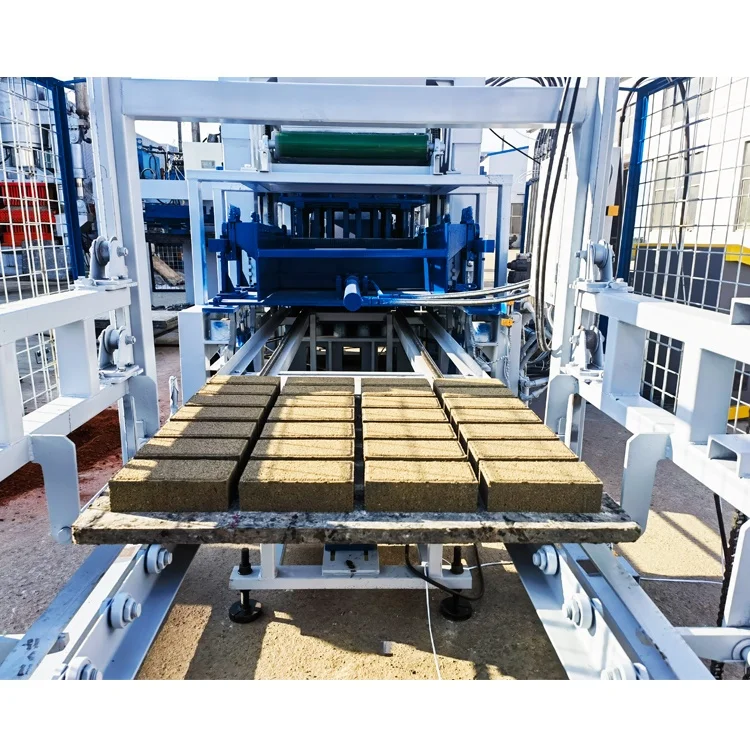
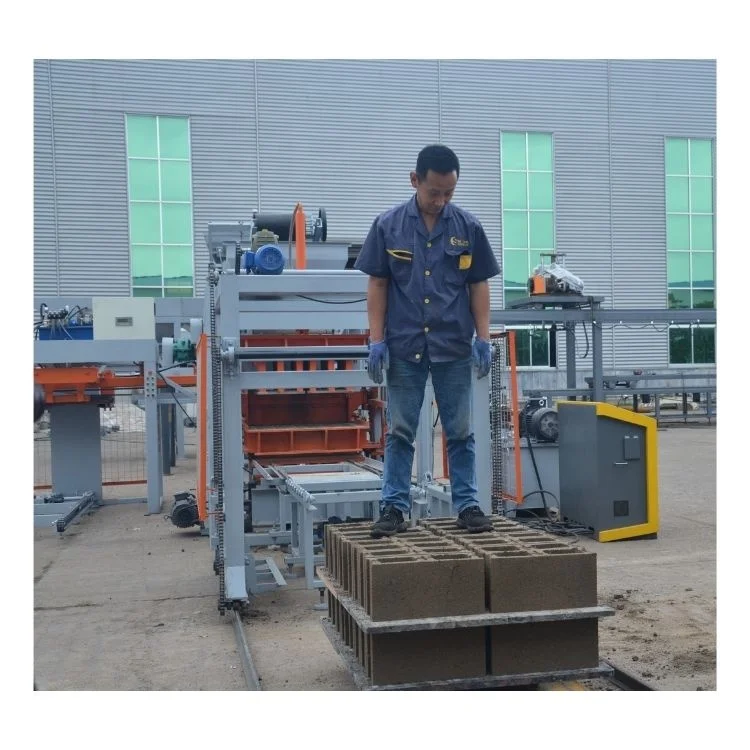
Matched System Design — The QTJ4-40 pairs a dedicated 850 × 450 mm pallet with bed mould vibration and upper compression so every component is sized around the same block format, eliminating the mismatches that plague multi-supplier setups.
Technical Specifications
| Parameter |
Value |
| Model |
QTJ4-40 |
| Product Type |
Semi-Automatic Concrete Block Making Machine |
| Rated Power |
9.5 kW |
| Molding Cycle |
40 s |
| Output Capacity |
2,000–2,500 pcs / 8 hours (basis not stated in source — confirm block format / material / thickness) |
| Theoretical Productivity |
360 pcs/h based on 400×200×200 mm hollow block, 4 pcs/mould; 450 pcs/h based on 400×150×200 mm hollow block, 5 pcs/mould; 800 pcs/h based on 225×112.5×60 mm solid/interlocking brick, 9 pcs/mould |
| Vibration System |
Bed mould vertical vibration + upper mould compression vibration |
| Mould Actuation |
Top die push-pull with automatic scraper |
| Pallet Size |
850 × 450 mm |
| Net Weight |
1 T |
| Overall Dimensions (L×W×H) |
1350 × 1460 × 1800 mm |
| Voltage |
Configured to buyer’s local supply (voltage and frequency to be confirmed) |
| Automation Level |
Semi-automatic |
| Raw Materials |
Concrete, sand, cement, fly ash, lime, gypsum, and compatible aggregates |
Application Suitability
| Application |
Material or Output |
| Small-to-medium hollow block plant |
Crushed stone, sand, and cement mixes producing 400×200×200 mm and 400×150×200 mm hollow blocks |
| Interlocking brick production |
Laterite, fly ash, or sand-cement blends for 225×112.5×60 mm interlocking units |
| On-site construction block making |
Locally sourced aggregate and cement for solid brick runs at building project locations |
| Start-up block manufacturing |
Low-investment entry into paver block and fly ash brick formats with manual pallet handling |
What "2,000 Pieces per Day" Actually Means for Your Block Format
Capacity numbers are only honest when the block format is named alongside them.
A semi-automatic block making machine for sale might be advertised at a single daily figure, yet that figure shifts dramatically depending on whether you are pressing 400 mm hollow blocks or 225 mm solid bricks. One format fills the pallet with four pieces, the other with nine, and the mould change itself can consume a meaningful portion of the shift [NEED_CITE: how block format affects real daily output in semi-automatic presses]. Without a format-stated capacity sheet, buyers routinely discover on site that their expected output was calculated for a product they never intended to sell.

Where the QTJ4-40 Fits in the Machine Range
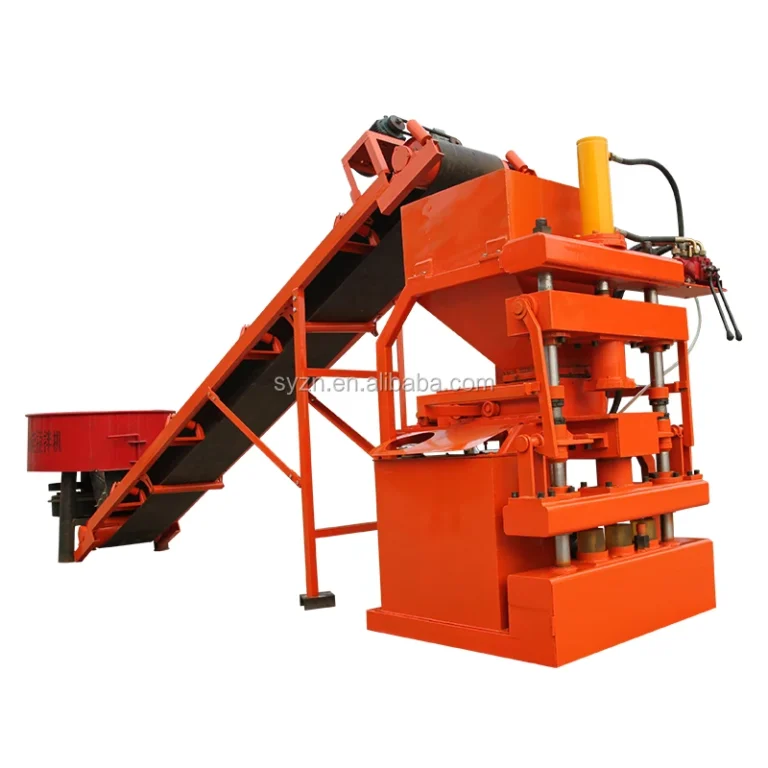
The QTJ4-40 occupies the semi-automatic tier of the block machine range, positioned between entry-level mobile egg-laying units and fully automatic hydraulic lines. It targets buyers who need consistent block density and format flexibility but are not yet ready to invest in automatic pallet stacking and cubing systems. The semi-automatic block making machine for sale here keeps the operator in the loop for pallet handling while automating the mould compression and vibration cycle.
Choosing the Right Tier for Your Plant Footprint
A fully automatic line demands a larger curing area, more pallets in circulation, and dedicated forklift capacity to keep pace with the stacker. The QTJ4-40 compresses that requirement into a 1350 × 1460 mm footprint, making it practical for confined yards or project sites where curing space is still being built out [NEED_CITE: plant footprint and curing area requirements for semi-automatic block production]. Buyers can start at this tier and move up to higher automation as volume grows, preserving the same pallet and mould investment.
How Vibration and Compression Work Together
Block strength depends on the interaction between vibration force and hydraulic compression, not on either parameter alone. The QTJ4-40 uses a dual system: vertical vibration beneath the bed mould settles the aggregate into the cavity, while upper mould compression vibration locks the particles together before the scraper levels the surface. This two-stage action is what produces a consistent density across both hollow and solid formats, provided the mix design matches the local aggregate gradation.
The 850 × 450 mm pallet size is not arbitrary. It defines how many blocks are pressed per cycle and determines the curing rack dimensions and forklift tine spacing you will need downstream. Selecting a pallet size without checking your existing curing infrastructure is a common source of delay after the machine arrives [NEED_CITE: pallet size compatibility with curing racks and forklift equipment]. The 40-second moulding cycle and 9.5 kW rated power keep electrical demand within the range of a standard workshop supply, but voltage and frequency must still be confirmed to match your local grid before production.
The Hidden Cost of Skipping Configuration Details
Ordering a semi-automatic press without confirming pallet material, vibration tuning, or voltage leads to a cascade of on-site problems. The wrong pallet warps under repeated vibration cycles, throwing block dimensions out of tolerance. An untuned vibration setting produces hollow blocks that crack during demoulding or fail compressive strength tests. A voltage mismatch can prevent the motor from reaching rated speed, cutting effective output well below the quoted cycle rate [NEED_CITE: consequences of voltage mismatch on industrial motor performance]. Each of these issues is avoidable when specifications are locked down before the machine leaves the factory.
Why Source This Machine Through a Single-Focus Supplier
Block machinery is the only product category here, which means the machine, mould, pallet, and handling equipment are specified as one matched system rather than assembled from unrelated vendors. The QTJ4-40 is configured against your actual mix design and local aggregate, not pulled from a catalogue default. Custom mould drawings are available so you can produce the exact block format your market demands. Automation level is selectable — a buyer can begin with semi-automatic operation and plan an upgrade path without replacing the core press. Installation support includes operator training so your team understands mould change procedures and daily maintenance from the first production run.
Documentation & Verification
- Capacity calculation sheet stating the block format assumed for each output figure
- Pallet specification confirming 850 × 450 mm dimensions and material grade
- Mould drawing and format list included with the quotation for buyer approval
- Voltage and frequency confirmation record before dispatch
- Operation and maintenance manual with mould change instructions
- Factory test record on your selected block format prior to shipment
Installation, Commissioning & Support
- Foundation pad sized to the 1350 × 1460 mm machine footprint with level tolerance specified
- Dedicated electrical circuit rated for 9.5 kW continuous draw at confirmed local voltage
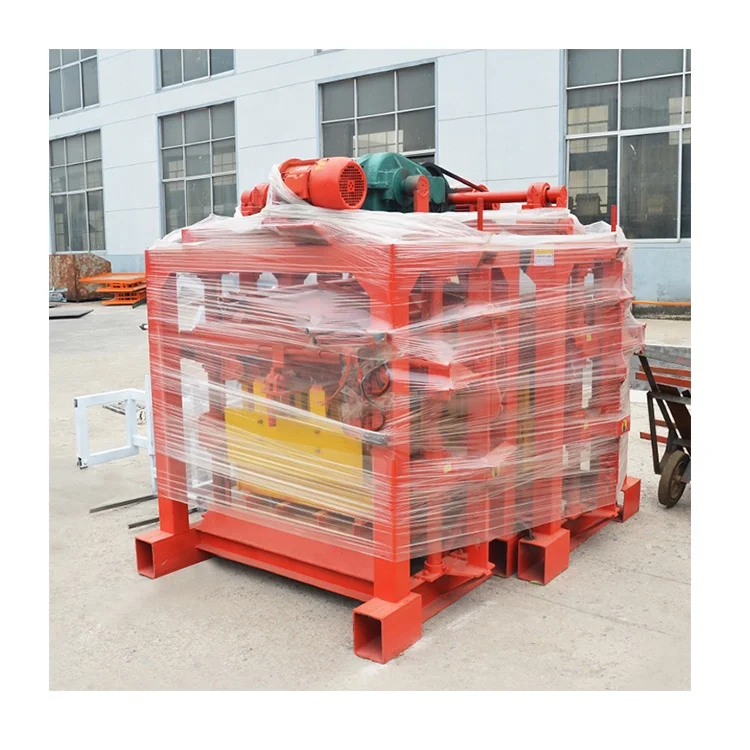
- Machine shipped as a single unit — no major dismantling required for container loading
- First-run commissioning covers vibration tuning matched to your aggregate sample
- Operator training on top die push-pull operation and automatic scraper adjustment
- Wear parts list covering mould liners and vibration springs with reorder references
What to Include in Your Inquiry
To size the QTJ4-40 correctly for your plant, provide the block formats you intend to sell along with their target dimensions and daily volume requirements. Share a sample or description of your local aggregate so the vibration and compression settings can be matched to your actual mix. Confirm your site voltage, frequency, and any language preference for the control interface so the machine arrives ready to run.
Frequently Asked Questions
Q: How is output capacity calculated per block format, and what is the realistic daily production?
A: Output is calculated by multiplying pieces per mould by cycles per hour, then by operating hours. For the QTJ4-40, a 400×200×200 mm hollow block yields 360 pcs/h based on 4 pcs/mould at a 40-second cycle, while a 225×112.5×60 mm solid brick yields 800 pcs/h based on 9 pcs/mould. Realistic daily figures depend on pallet handling speed and operator workflow in semi-automatic mode.
Q: What voltage and frequency options are available for my target market?
A: The QTJ4-40 is configured to the buyer’s local electrical supply. Voltage and frequency must be confirmed before production so the motor and control components match your grid. This step prevents commissioning delays and motor performance issues on arrival.
Q: Which block formats and mould sizes can this machine produce?
A: The machine supports hollow blocks in 400×200×200 mm and 400×150×200 mm, as well as solid and interlocking bricks in 225×112.5×60 mm. Custom mould designs are available for other formats based on buyer drawings, with the 850 × 450 mm pallet size as the fixed constraint.
Q: How does the semi-automatic tier compare to fully automatic lines in terms of labour and footprint?
A: Semi-automatic operation requires manual pallet handling and transfer to the curing area, which means more operator involvement per cycle. The trade-off is a smaller plant footprint and lower initial investment. The QTJ4-40 allows an upgrade path to higher automation as production volume grows.
Q: What is the pallet size, and will it fit my existing curing area and handling equipment?
A: The pallet measures 850 × 450 mm. Before ordering, verify that your curing racks, trolley system, and forklift tine spacing accommodate this dimension. Mismatched pallet sizing is a frequent cause of workflow bottlenecks after machine installation.

 High quality block machine