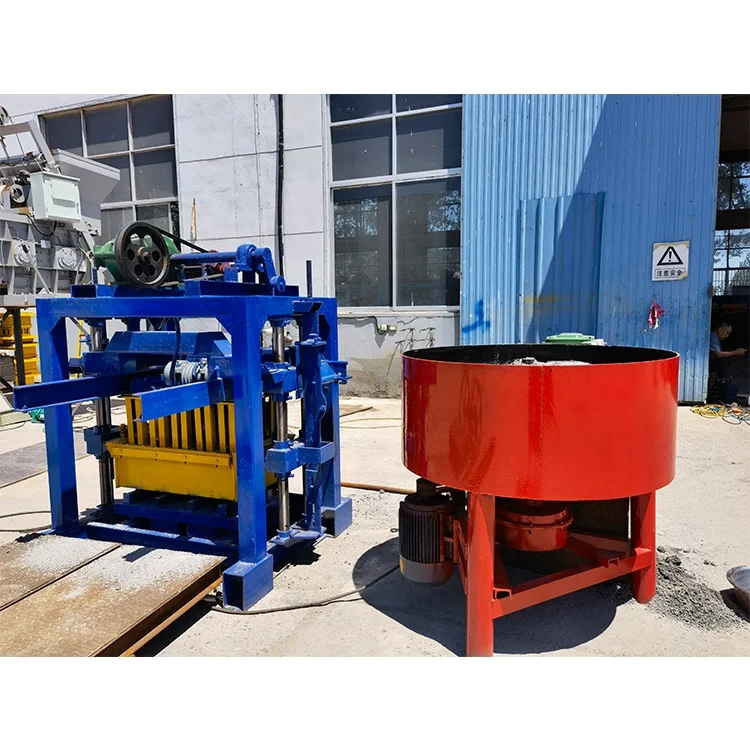
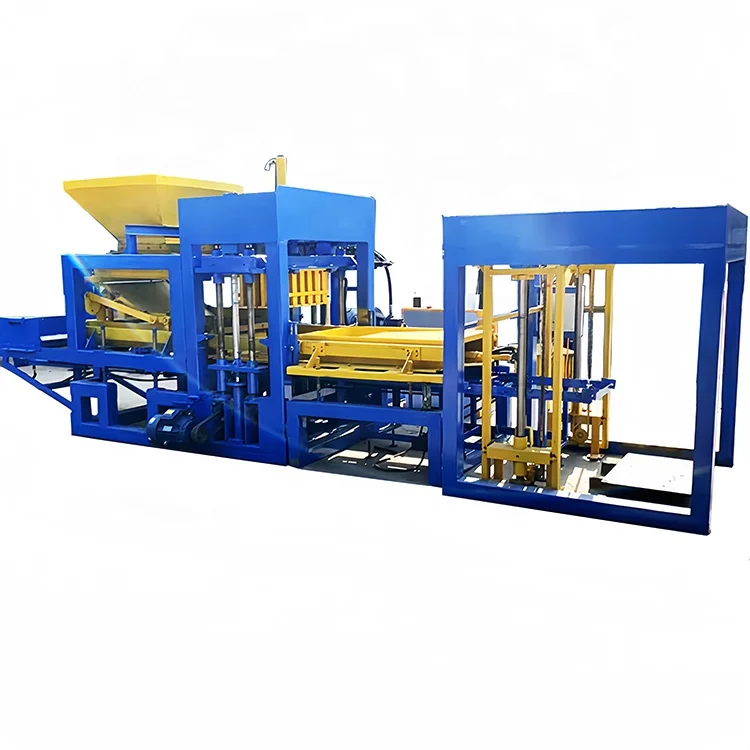
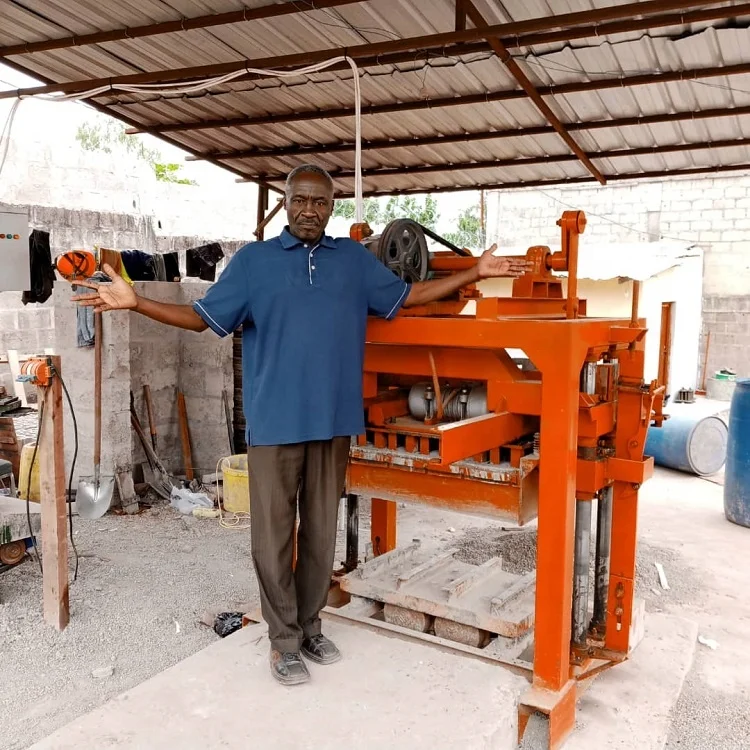
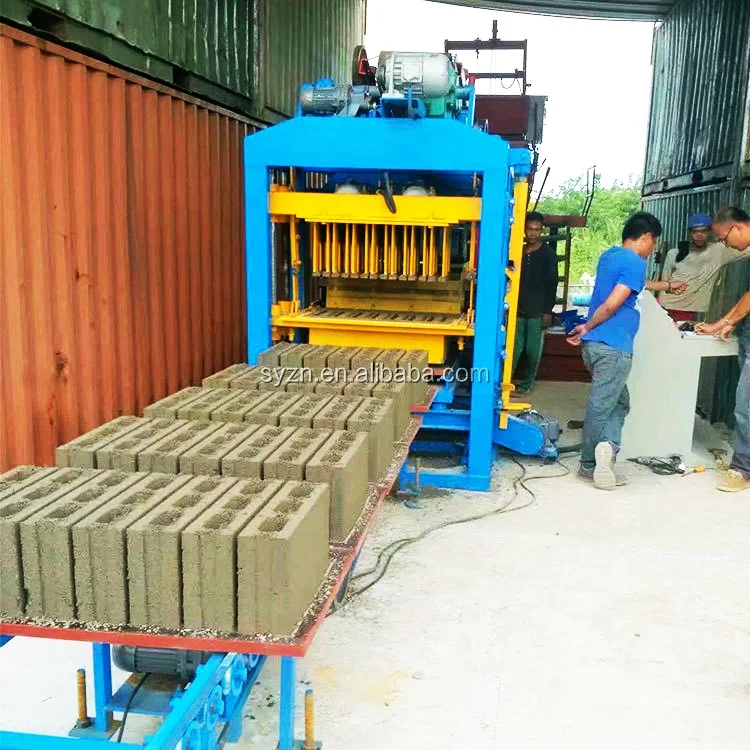
Matched System Supply — the QTJ4-40 is specified as a press-plus-pallet set so cycle times and curing area align from day one.
Technical Specifications
| Parameter |
Value |
| Model |
QTJ4-40 |
| Product Type |
Semi-Automatic Concrete Hollow Block Making Machine |
| Rated Power |
10.4 kW |
| Voltage & Frequency |
According to buyer’s local voltage (basis to be confirmed) |
| Control System |
Semi-automatic operation with top die push-pull mechanism and automatic scraper |
| Overall Dimensions (L×W×H) |
1350×1460×1800 mm |
| Net Weight |
1 T |
| Moulding Cycle |
40 s |
| Output Capacity |
2800 pcs/day (based on 400×200×200mm hollow block, 4 pcs/mould); 3600 pcs/day (based on 400×150×200mm block, 5 pcs/mould); 6400 pcs/day (based on 225×112.5×60mm block, 9 pcs/mould) |
| Theoretical Output per Hour |
360 pcs/h (based on 400×200×200mm hollow block); 450 pcs/h (based on 400×150×200mm block); 800 pcs/h (based on 225×112.5×60mm block) |
| Raw Materials |
Concrete, sand, cement, fly ash, lime, gypsum |
| Pallet Size |
850×450 mm |
| Vibration System |
Bed mould vertical vibration + upper mould compression vibration |
| Automation Level |
Semi-automatic |
| Assembly State |
Stand-alone machine |
Application Suitability
| Application |
Material or Output |
| Small-to-medium hollow block plants |
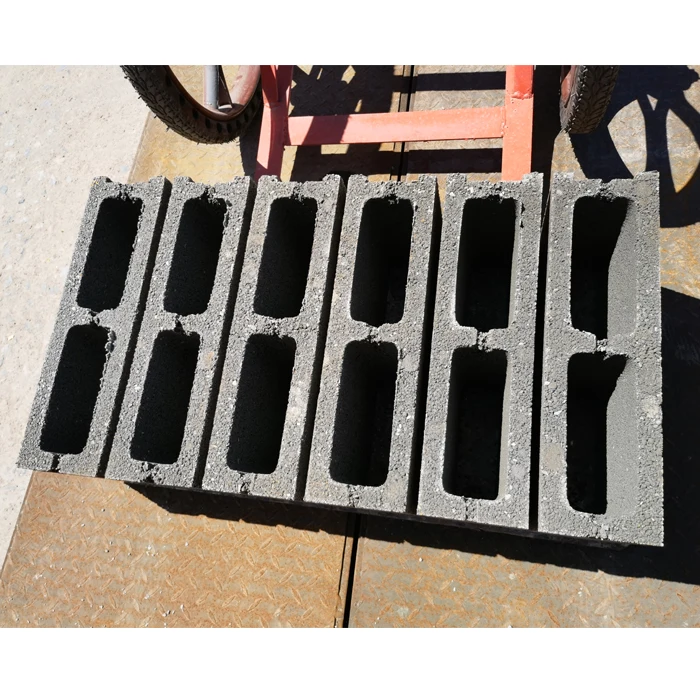
Concrete and sand mix producing 400×200×200mm hollow blocks |
| On-site block production for contractors |
Crusher dust and cement forming 400×150×200mm standard blocks |
| Building material distributors adding format |
Fly ash, lime and gypsum producing 225×112.5×60mm solid blocks |
| First-time block plant entrepreneurs |
Local aggregate and cement in workshop-scale production setups |
What "2800 Pieces per Day" Actually Means on the Floor
A capacity figure without a block format attached is a guess — the QTJ4-40 block machine manufacturer output is always tied to a specific mould and pcs/mould count.
I have watched buyers receive a machine, run it for a week, and call us disappointed because their daily count fell well short of what they expected. The mismatch is almost never mechanical. The machine was rated on a large hollow block while the buyer is running a smaller solid format, or vice versa. With the QTJ4-40, a 400×200×200mm hollow block yields 4 pieces per mould and 2800 pieces per day, while a 225×112.5×60mm block yields 9 pieces per mould and 6400 pieces per day — the same press, very different daily totals. [NEED_CITE: block format impact on daily throughput calculation]

Where the QTJ4-40 Sits Across the Machine Range
The QTJ4-40 occupies the semi-automatic tier, positioned between mobile egg-laying machines and fully automatic hydraulic lines. For buyers surveying options, this tier offers consistent hollow block output without the investment of a full stacking and cubing system. The machine handles pallets manually at the feed end and discharge end, keeping capital cost contained while still delivering the vibration density that a workshop-scale plant needs. The QTJ4-40 block machine manufacturer range places this model as the logical entry point before a buyer steps up to automatic pallet feeding.
Matching Machine Tier to Your Actual Production Volume
Choosing a tier is not about picking the highest output — it is about matching your curing area, your labour availability, and your daily dispatch target. A construction contractor producing blocks on-site often has limited space for wet stacking and a crew of two or three operators, making the semi-automatic footprint of the QTJ4-40 a practical fit. A building material distributor already running an automatic line for pavers may want this model as a secondary press for lower-volume hollow block formats. [NEED_CITE: tier selection criteria for block production plants]
Reading the Vibration System and Cycle Time Together
The bed mould vertical vibration combined with upper mould compression vibration creates a two-directional compaction force. Vertical vibration settles the concrete mix downward into the mould cavity, while upper compression pushes from above, reducing air pockets. This dual action matters most with drier mixes that rely on vibration rather than water content for consolidation. The 40-second moulding cycle is the baseline across formats, though actual cycle time on the floor includes pallet swap and mix feed intervals. The 10.4 kW rated power must be available on a dedicated circuit — shared lines with other heavy equipment cause voltage dips that shorten motor life.
The Pallet Size Decision Most Buyers Overlook
An 850×450 mm pallet may seem like a minor spec until the machine arrives and your existing curing racks are 900 mm wide, or your forklift tines cannot reach the pallet slots on a standard rack. The pallet is the unit of handling from the press all the way through curing and dispatch. If the pallet does not match what you already have in the yard, you either replace your entire rack system or run a mismatched fleet. This is why pallet specification must be confirmed alongside the machine order, not after. [NEED_CITE: pallet compatibility with curing infrastructure]
Why a QTJ4-40 Block Machine Manufacturer That Focuses on Block Lines Matters
The QTJ4-40 is treated as a press within a line, not a standalone catalogue item. Raw material feeding, mixing, pallet handling, and curing rack layout are discussed during configuration so the press is never bottlenecked by upstream or downstream stations. Mould design is matched to the block formats your market actually buys, including custom drawings when standard moulds do not cover your format. Voltage, frequency, and PLC display language are locked before production starts — I learned this the hard way after a 380V machine sat idle for three weeks at a 415V site waiting for transformer parts to arrive by air. Supporting equipment options are quoted explicitly so the scope of supply is clear at order stage.
Documentation & Verification
- Line layout showing capacity per block format for the QTJ4-40
- Voltage and frequency confirmation sheet signed before production
- Factory test record using your specified mould and pallet size
- Pallet specification matched to your curing rack dimensions
- Hydraulic and electrical schematic for the QTJ4-40 semi-automatic system
Installation, Commissioning & Support
- 10.4 kW rated power requires a dedicated circuit matching your confirmed voltage
- 1350×1460×1800 mm footprint needs a level concrete pad with anchor bolt provisions
- Semi-automatic top die push-pull mechanism calibrated on-site during commissioning
- 850×450 mm pallet feed height checked against your existing material handling equipment
- Operator training covering mould change procedure and daily vibration system inspection
What to Prepare Before Requesting a Quote
Share your target block formats with dimensions, your daily output target per format, and the local aggregate and cement type you will be using. Confirm your site voltage, frequency, and preferred control language so the QTJ4-40 can be configured correctly before production begins. Let us know whether you need pallet handling and curing rack support quoted alongside the press, or if your existing infrastructure will cover those stations.
Frequently Asked Questions
Q: How do I read the capacity table for different block formats?
A: Each output figure is tied to a specific block dimension and the number of pieces produced per mould cycle. A 400×200×200mm hollow block produces 4 pieces per mould at 2800 per day, while a 225×112.5×60mm block produces 9 pieces per mould at 6400 per day. Always check which format the capacity figure assumes before comparing machines.
Q: Where does the QTJ4-40 fit compared to automatic and mobile machines?
A: The QTJ4-40 sits in the semi-automatic tier, requiring manual pallet handling at feed and discharge while automating the pressing and scraping cycle. It suits buyers who need consistent output without the investment of a full automatic stacking and cubing line, and who have the labour to manage pallet movement.
Q: Why must voltage and frequency be confirmed before production?
A: The QTJ4-40 is built to your local electrical standard. If the factory assumes 380V and your site runs 415V, the machine will not start until a transformer arrives — a delay I have seen cost buyers weeks of project time. Voltage, frequency, and plug type are locked in writing before the build begins.
Q: What supporting equipment does the QTJ4-40 need to form a working line?
A: At minimum, the press needs a mixer for consistent feed, a pallet supply matching 850×450 mm dimensions, and a curing area with racks sized to those pallets. Raw material feeding, automatic stacking, and cubing are available as add-on stations and should be discussed during configuration so the line is complete at installation.

 High quality block machine