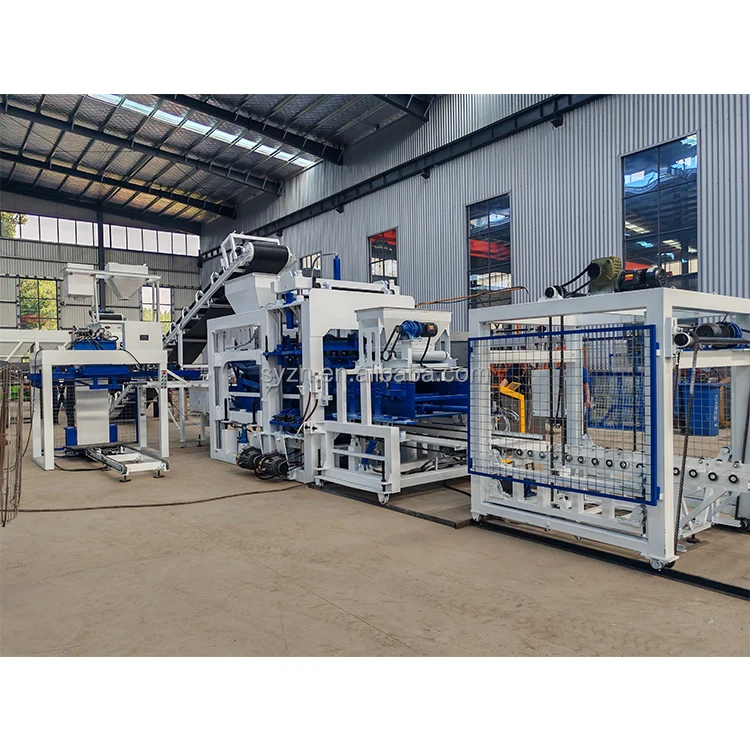
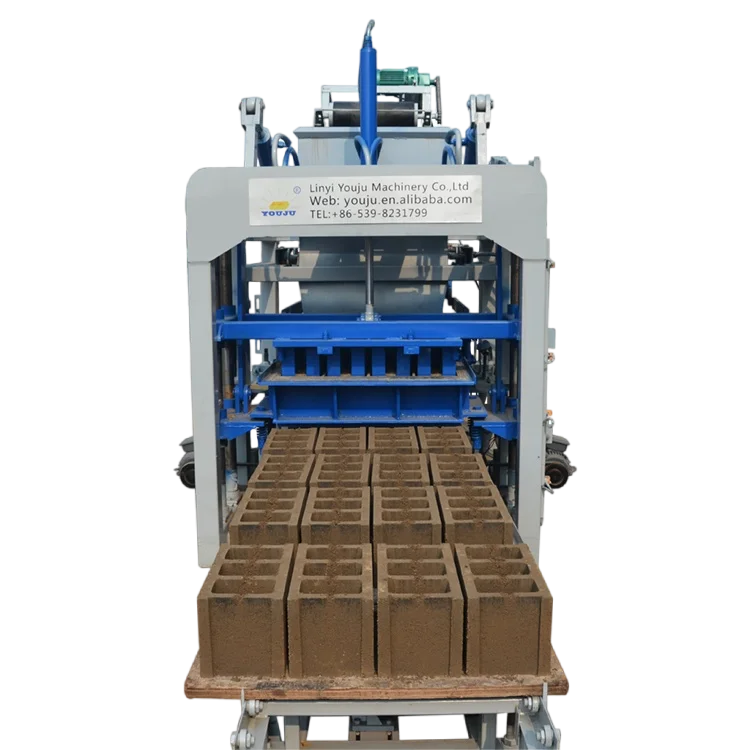
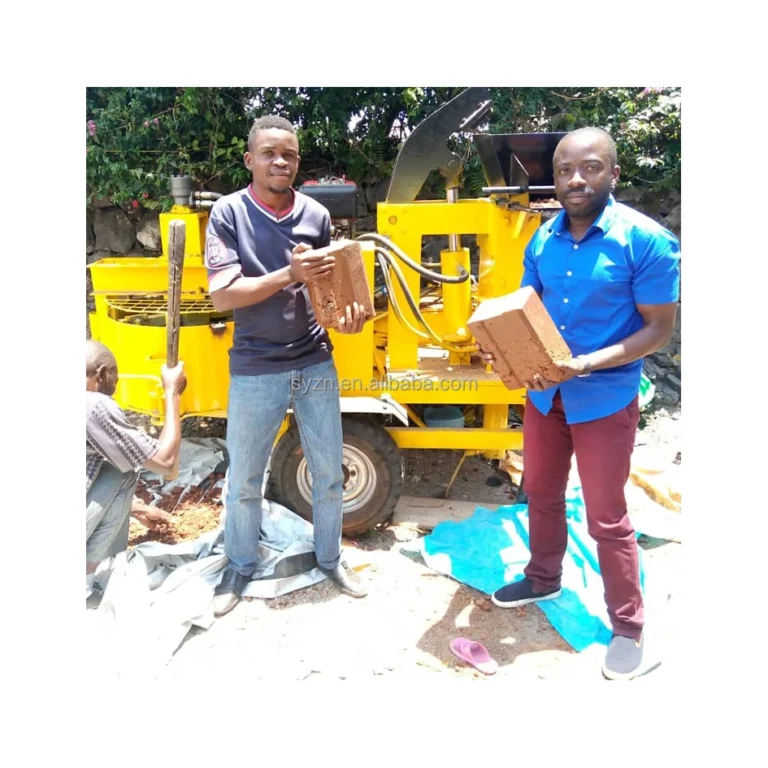
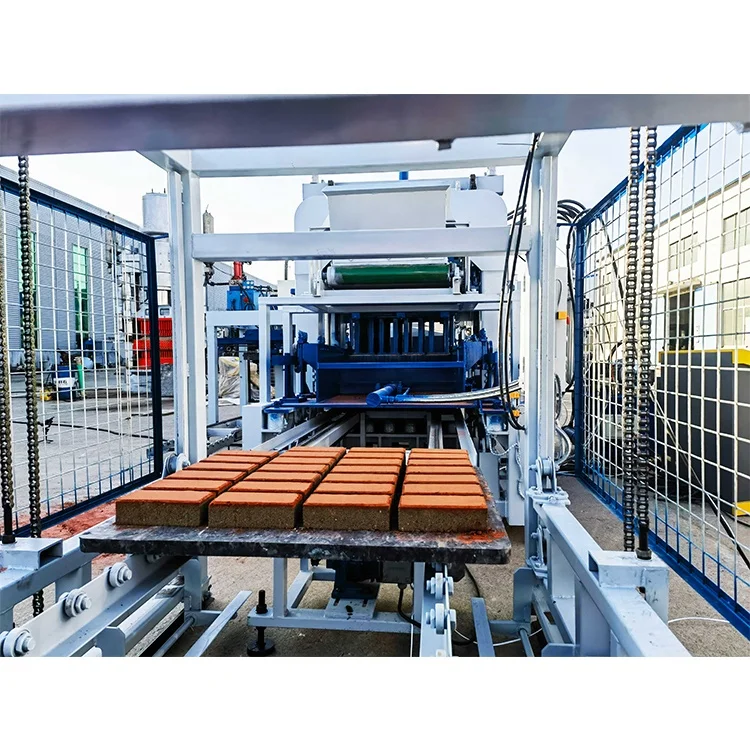
Matched System Design — The QTJ4-26 block making machine is configured with its pallet, mixer, and mould as one verified unit, preventing the mismatched auxiliary gear that stalls new plants.
Technical Specifications
| Parameter |
Value |
| Model |
QTJ4-26 |
| Product Type |
Small and Medium Block Making Machine |
| Overall Dimensions (L×W×H) |
2060 × 1730 × 2580 mm |
| Molding Cycle |
26 s |
| Vibration Frequency |
4200 r/min |
| Exciting Power (Vibration Force) |
35.5 kN |
| Total Power |
14.25 kW |
| Mixer Model |
JQ350 |
| Pallet Size |
850 × 450 × 20 mm |
| Total Weight |
1800 kg |
| Applied Products |
Concrete blocks, hollow block (8 inch, 6 inch), solid brick |
| Raw Materials |
Crushed stones, sand, cement, dust, fly ash, etc. |
| Output Capacity |
480 pcs/hr based on 390×190×190 mm hollow block (basis to be confirmed) |
| Output Capacity |
600 pcs/hr based on 400×150×200 mm hollow block (basis to be confirmed) |
| Output Capacity |
2100 pcs/hr based on 240×115×53 mm solid brick (basis to be confirmed) |
| Automation Level |
Semi-automatic (mould movement automated, manual pallet handling) |
| Hydraulic Pressure |
(basis not stated in source) |
| Voltage & Frequency |
Configurable (basis not stated in source — confirm block format / material / thickness) |
| Control System |
(basis not stated in source) |
Application Suitability
| Application |
Material or Output |
| Small to medium-scale block production plants |
Standard hollow blocks and solid bricks from crushed stone, sand, and cement |
| On-site production by construction contractors |
Hollow blocks and solid bricks mixed with locally sourced aggregates and fly ash |
| First-time block plant entrepreneurs |
Moderate daily output of 8-inch and 6-inch hollow blocks and standard solid bricks |
| Building material distributors serving smaller orders |
Compact runs of concrete blocks switching between hollow and solid formats |
Why the Capacity Figure on the Nameplate Is Not the Whole Story
Many buyers compare machines by a single hourly number, only to find the real daily yield falls short once a specific block format is put into production. The honest way to read capacity is to tie every output figure to the exact block dimension it assumes.
When a QTJ4-26 block making machine for sale is quoted at a certain pieces-per-hour rate, that rate rests on a specific mould and a 26-second cycle. Swap to a smaller solid brick and the hourly count jumps; switch to a thicker paver and it drops. I have watched contractors in South Asia base an entire project schedule on a headline number, then scramble when the 8-inch hollow block they actually needed produced far fewer units per shift than the brochure suggested. The fix is simple: confirm your primary format first, then ask for the capacity calculation tied to that mould [NEED_CITE: capacity calculation methods for concrete block production].

Where the QTJ4-26 Sits in the Full Machine Range
Shiyue offers automatic, semi-automatic, and mobile tiers. The QTJ4-26 block making machine for sale occupies the small-to-medium semi-automatic tier, automating mould lifting and vibration while leaving pallet feeding and stacking to operators. This keeps the initial investment accessible for buyers who do not yet need a fully automatic line but want to move beyond hand-operated presses.
Choosing the Right Tier Before You Commit
If your daily target stays within a single shift and your labour cost is manageable, the semi-automatic tier avoids paying for stacking and cubing systems you will not fully use. However, once you plan a second shift or a curing area that is far from the press, the manual pallet handling becomes a bottleneck. At that point, stepping up to a higher automation tier is worth considering [NEED_CITE: automation level selection for concrete block plants].
Reading the Vibration and Power Data
The 35.5 kN exciting power delivered by dual vibrating motors at 4200 r/min is what compacts the concrete mix against the mould walls. For hollow blocks made with crushed stone and sand, this force is sufficient to achieve consistent density across the block face. Total installed power of 14.25 kW includes the JQ350 mixer, meaning the entire core line can run from a single supply point, which simplifies site wiring for first-time plant owners.
What Happens When Pallet Size Is Ignored
A pallet dimension of 850 × 450 × 20 mm dictates the footprint of every wet block leaving the press. If your existing curing racks or forklift tines were set up for a different pallet, you will spend the first week re-shelving or hand-carrying output. Buyers who confirm pallet compatibility before shipment avoid this entirely [NEED_CITE: pallet handling standards in block production].
Why Buying the Press Alone Is Not Enough
The QTJ4-26 arrives as a matched set: press, JQ350 mixer, and mould for the agreed format. We specify the pallet material and thickness to suit your local curing climate, and the vibration force is verified against your actual mix design — not a generic lab sample. Moulds are produced in-house, so when you need a second format or a replacement wear plate, the drawing is already on file rather than sourced from a third party.
Documentation & Verification
- Line layout drawing showing QTJ4-26 footprint, mixer placement, and pallet flow path
- Capacity calculation sheet listing output per confirmed block format and cycle time
- Mould drawing and format list for every mould included in your order
- Pallet specification covering material grade, thickness, and moisture treatment
- Voltage and control language confirmation signed off before production begins
- Factory test record run on your specified mix and block dimension
Installation, Commissioning & Support
- Foundation pad must be level within tolerance to keep the 1800 kg frame from twisting under vibration
- Dedicated circuit sized for 14.25 kW total draw, matching confirmed voltage and frequency
- Machine ships dismantled to fit container; reassembly and first-block run supervised on site
- Operator training covers 26-second cycle rhythm, mould change sequence, and daily greasing points
- Wear parts list identifies vibration motor mounts and mould liners for first reorder
Starting the Conversation
To size the QTJ4-26 correctly, share your primary block format, target daily output, and the aggregate available near your site. We also need your local voltage, frequency, and preferred control language so the electrical panel is built right the first time. If you already have curing racks or pallets on site, send the dimensions so we can confirm or adjust the pallet spec before production starts.
Frequently Asked Questions
Q: What is the realistic daily output of the QTJ4-26 for my specific block format?
A: The output depends on the exact mould in use. For a 390×190×190 mm hollow block, the machine cycles every 26 seconds, yielding up to 480 pieces per hour under continuous operation. For a 240×115×53 mm solid brick, the same cycle produces up to 2100 pieces per hour. Always confirm the calculation for your primary format before planning shifts.
Q: Where does the QTJ4-26 sit in the full Shiyue machine range?
A: It is the small-to-medium semi-automatic tier. Mould movement and vibration are automated, while pallet feeding and stacking remain manual. If you plan a single shift with moderate output, this tier fits. For multi-shift operations or larger daily targets, a higher automation tier with automatic stacking should be considered.
Q: What voltage and frequency options are available for my country’s grid?
A: Voltage and frequency are configurable before production. We confirm the exact requirement during the quotation stage so the motor, control panel, and wiring match your local supply. This avoids costly rewiring or transformer additions after the machine arrives on site.
Q: Which block formats can the QTJ4-26 produce, and what is the mould change process?
A: The machine handles 8-inch and 6-inch hollow blocks as well as standard solid bricks. Moulds are bolt-on and can be swapped by the operator. We supply a format list and mould drawing with every order so you know the change sequence and the tools required before your first format switch.

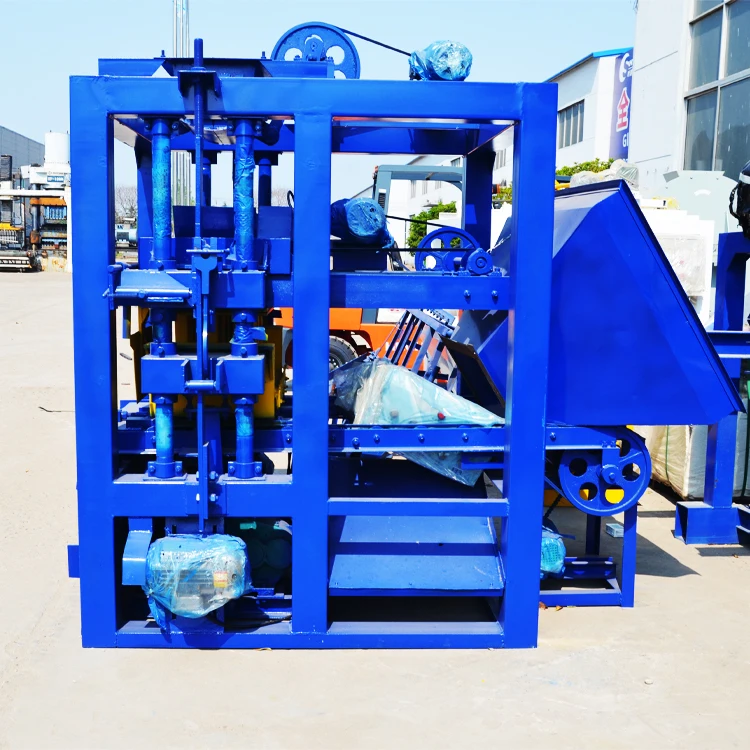
 High quality block machine