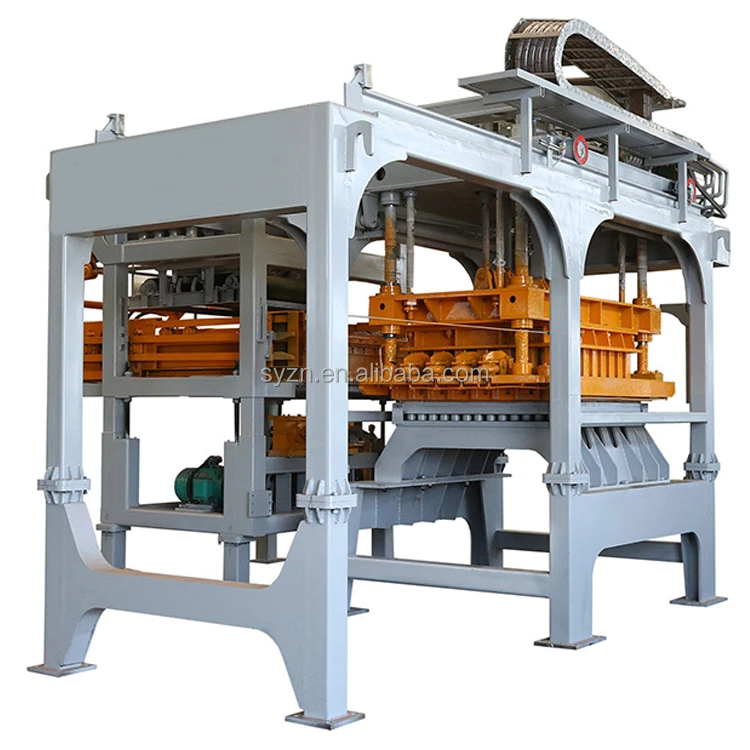
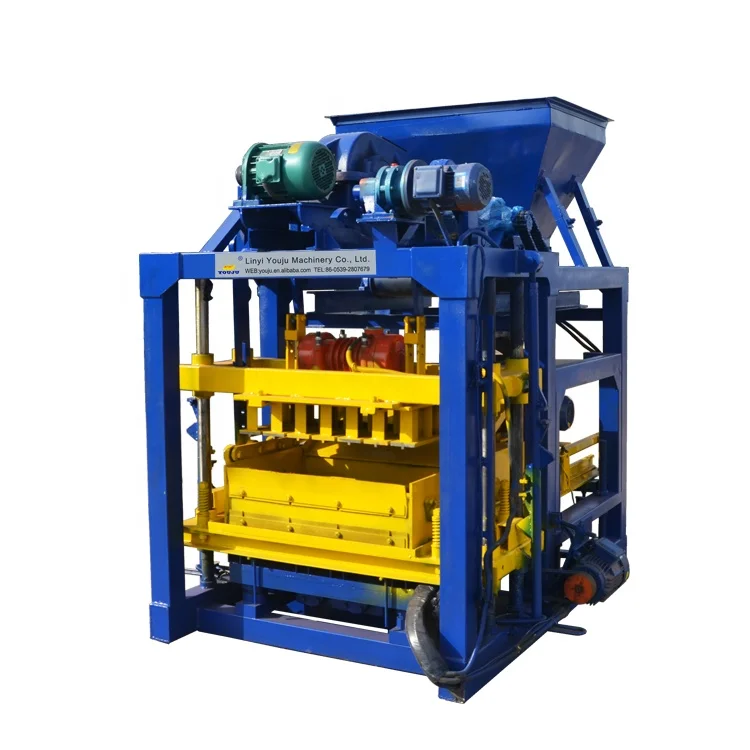
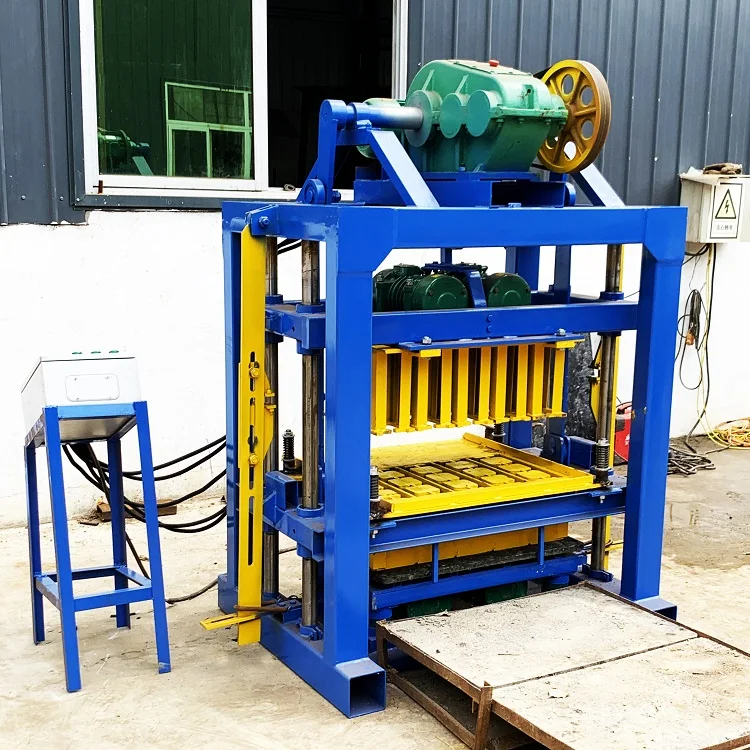
Matched System Configuration — the QTJ4-25 block machine, mould, pallet and handling equipment are specified together as one coordinated unit, preventing the mismatches that stall production lines after delivery.
Technical Specifications
| Parameter |
Value |
| Model |
QTJ4-25 |
| Product Type |
Semi-Automatic Concrete Block Making Machine |
| Rated Power |
17.9 kW |
| Overall Dimensions (L×W×H) |
6400×1500×2700 mm |
| Net Weight |
2500 kg |
| Molding Cycle |
25 s |
| Pallet Size |
850×550×20 mm |
| Vibration Frequency |
2800 r/min |
| Exciting Force |
60 kN |
| Output Capacity |
960 pcs/h, 7680 pcs/day (based on 400×200×200mm hollow block, 4 pcs/mould) |
| Mould Format |
400×200×200mm hollow block (4 pcs/mould); other formats available — cycle time per alternative format (basis to be confirmed) |
| Automation Level |
Semi-automatic |
| Configuration Included |
Host machine, 1 set block mould, JQ350 mixer |
| Hydraulic System |
Equipped with hydraulic station |
| Vibration Type |
Bed mould vertical vibration + upper mould compression vibration |
| Control System |
PLC (brand and language options to be confirmed) |
| Voltage & Frequency |
Configurable to target market (to be confirmed) |
| Stacking Method |
Manual with trolley |
Application Suitability
| Application |
Material or Output |
| Hollow block production for residential and commercial walls |
Crushed stone, cement, sand and aggregate mix |
| Solid block manufacturing for load-bearing structures |
Dense concrete mix with local coarse aggregate |
| Paving block production for walkways and driveways |
Fine aggregate and cement blend with colour pigment option |
| Curbstone forming for road and infrastructure projects |
High-strength concrete mix with larger aggregate grading |
Why the QTJ4-25 Block Machine Manufacturer Quotes Capacity Per Format
A cycle time only matters when tied to the exact block size and mix you will actually run.
Many quotations list a single pieces-per-hour number without specifying which mould or block format that figure assumes. When the buyer switches to the format their market demands, the real output can fall far below expectation. The semi-automatic concrete block making machine for sale under the QTJ4-25 designation states its 960 pcs/h capacity explicitly against the 400×200×200mm hollow block at four pieces per mould. [NEED_CITE: honest block machine capacity calculation standards in export markets] This transparency lets you calculate real daily throughput before the machine ships, not after it arrives and your first production run disappoints.
Where the QTJ4-25 Sits Across the Full Shiyue Range
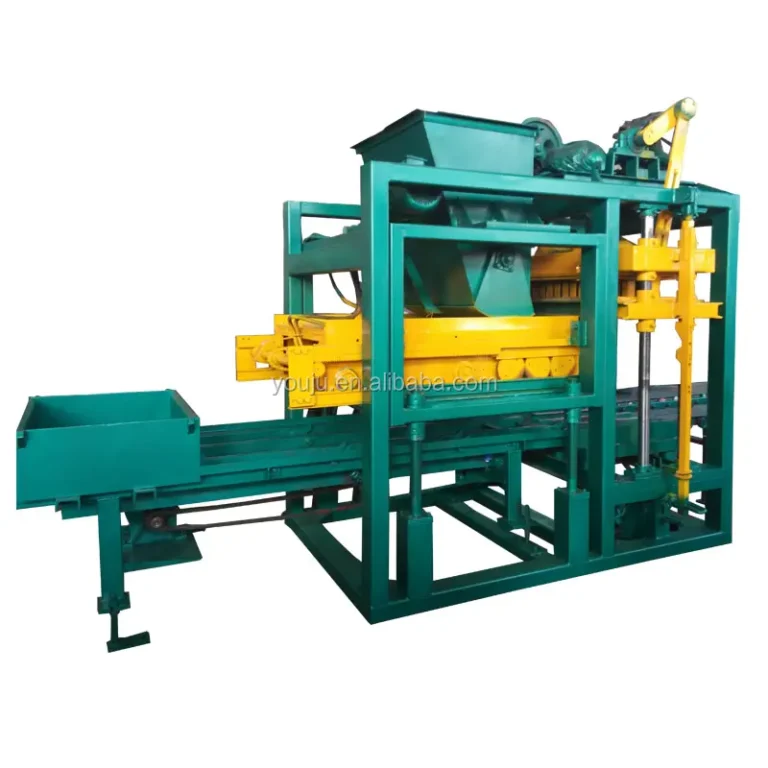
The Shiyue stationary block machine lineup spans from small workshop units to high-capacity fully automatic lines. The QTJ4-25 occupies the entry-to-mid tier, offering hydraulic pressure and dual vibration in a semi-automatic package. Buyers who need dependable daily output without the capital outlay of a fully automatic stacking and cubing system find this tier practical. It leaves a clear upgrade path: as your market grows, you can add automatic pallet feeding and stacking to the same host platform.
Choosing the Right Tier Before You Commit
Selecting a tier is not just about maximum output. A construction contractor producing blocks on-site for a housing project often benefits more from a compact semi-automatic line that fits a limited footprint than from a high-capacity system that demands dedicated curing halls and forklift fleets. The QTJ4-25 semi-automatic concrete block making machine for sale measures 6400×1500×2700 mm overall, fitting into workshop spaces where larger automatic lines simply cannot go. [NEED_CITE: block plant footprint planning for small-to-medium production sites] Matching the tier to your actual site conditions prevents the costly mistake of over-investing in capacity you cannot physically support.
How Vibration Force and Hydraulic Pressure Work Together
The QTJ4-25 delivers a 60 kN exciting force at 2800 r/min through a dual vibration arrangement: vertical vibration under the bed mould combined with compression vibration from the upper mould. This two-direction approach compacts the concrete mix more uniformly than single-source vibration alone. The hydraulic station adds steady high-pressure forming on top of the vibration cycle, which increases block density and reduces the chance of weak edges or crumbling corners. For buyers using locally sourced aggregate with variable particle shapes, the combination of hydraulic pressure and dual vibration provides a wider processing window — the machine can adapt to mix variations that would cause inconsistent results on a vibration-only press.

What Happens When Pallet Size Is Ignored During Selection
The QTJ4-25 runs on 850×550×20 mm pallets. If your existing curing racks and forklift are set up for a different pallet dimension, you face a choice: replace your handling infrastructure or accept manual bottlenecks at the stacking stage. Buyers who skip this check often discover after delivery that their forklift tines do not match the pallet footprint, forcing them to move blocks by hand across the curing yard. [NEED_CITE: pallet handling compatibility in block production lines] Confirming pallet size against your current equipment before order placement avoids this hidden cost entirely.
Why Buyers Source This Machine Through Shiyue
Block machinery is the single focus here, which means the QTJ4-25 host machine, mould, pallet and JQ350 mixer are specified as one matched set rather than assembled from separate suppliers. Configuration starts from your actual mix design and local aggregate, not from a catalogue default. Mould design covers the formats your market sells, with custom drawings available when standard formats do not match. The automation level is selectable — you can begin with manual pallet handling on the QTJ4-25 and add automatic stacking later. Installation support includes operator training so your team can run the machine independently from the first week. [NEED_CITE: block machine manufacturer matching equipment to buyer site conditions]
Documentation & Verification
- Line layout and capacity calculation stating the 400×200×200mm hollow block format assumed
- Machine specification sheet covering all QTJ4-25 hydraulic and electrical parameters
- Mould drawing and format list for hollow, solid, paver and curbstone options
- Pallet specification confirming 850×550×20 mm dimensions and material grade
- Voltage and PLC control language confirmation matched to your market before production
- Factory test record with actual cycle times on your specified block format
Installation, Commissioning & Support
- Foundation plan sized to the 6400×1500 mm footprint and 2500 kg operating weight
- Dedicated power circuit matching the 17.9 kW rated power and your local voltage
- Host machine and JQ350 mixer dismantled for container loading, reassembled on-site
- PLC parameter setting and vibration frequency tuning to your specific concrete mix
- Operator training covering mould change procedures and daily maintenance routines
- Wear parts and mould list with availability timelines for your first replacement order
What to Share When You Start an Inquiry
To size the QTJ4-25 correctly within the full machine range, we need your target block format and the daily output you expect per format. Tell us what raw materials you have access to locally — the type of aggregate, cement grade and sand — so we can confirm the machine against your actual mix. Your site voltage, frequency and preferred PLC display language should be confirmed early to keep commissioning on schedule.
Frequently Asked Questions
Q: How is the QTJ4-25’s capacity calculated, and which block format does the 960 pcs/h figure assume?
A: The 960 pcs/h output is calculated on the 400×200×200mm hollow block with four pieces per mould and a 25-second molding cycle. If you switch to a different format such as solid blocks or pavers, the cycle time and pieces per mould change, which shifts the actual hourly output. We provide a format-by-format capacity table with every quotation.
Q: Where does the QTJ4-25 sit in the full Shiyue machine range, and when should I step up to a higher tier?
A: The QTJ4-25 is positioned in the entry-to-mid tier of the semi-automatic stationary range. It suits buyers who need reliable hydraulic and vibration performance without full automation investment. If your daily output target exceeds what a semi-automatic line supports, or if labour cost in your market makes manual stacking expensive, we recommend reviewing the next tier with automatic pallet feeding and stacking.
Q: What voltage, frequency and PLC language options are available for the QTJ4-25?
A: Voltage and frequency are configured to match your local power supply before production begins. The PLC display language is confirmed at the same stage. Providing these details early prevents commissioning delays after the machine arrives at your site.
Q: Can I start with the QTJ4-25 semi-automatic configuration and upgrade later?
A: Yes. The QTJ4-25 platform supports an upgrade path from manual pallet handling through to automatic stacking and cubing. You can begin with the semi-automatic setup and add automation modules as your production volume grows, without replacing the host machine.

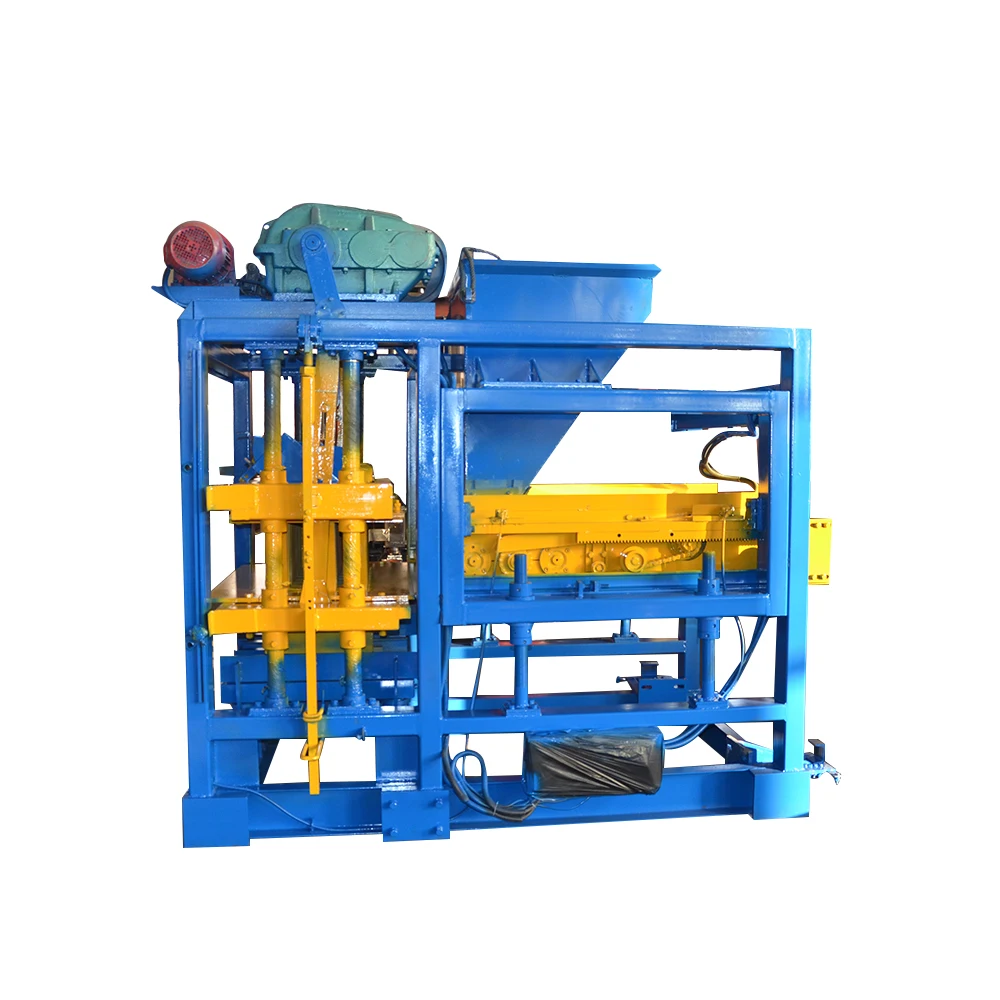
 Stationary block machine