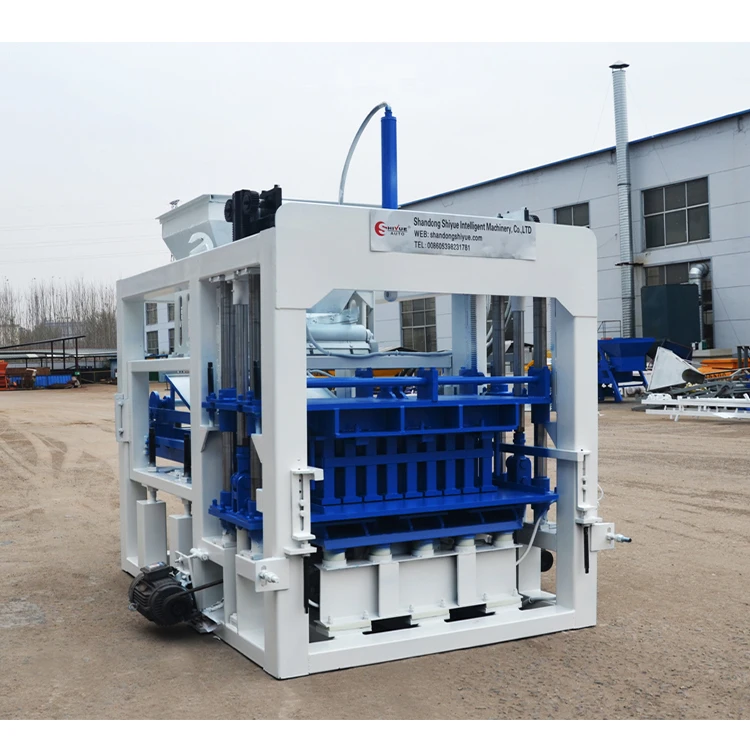
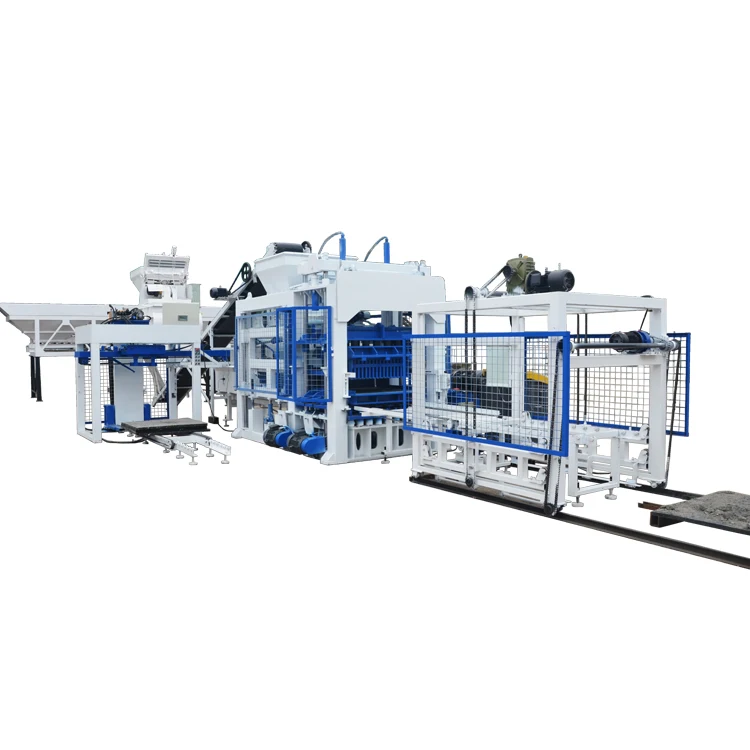
System-Matched Configuration — Every QTJ4-25 we build leaves the factory calibrated to the buyer’s actual raw material profile and local aggregate, not a generic test-floor default.
Technical Specifications
| Parameter |
Value |
| Model |
QTJ4-25 |
| Product Type |
Automatic Concrete Block Making Machine |
| Control System |
PLC controlled, fully automatic |
| Machine Power |
16.58 kW |
| Molding Cycle |
25 seconds |
| Capacity |
4600 pcs / 8 hours (basis not stated in source — confirm block format, material, thickness) |
| Machine Weight |
5000 kg |
| Overall Dimensions (L×W×H) |
6400 × 1500 × 2700 mm |
| Pallet Size |
850 × 480 mm |
| Frame Construction |
Thickened steel |
| Vibration System |
Vibration motor with large vibration box (non-hydraulic) |
| Raw Materials |
Concrete, sand, cement, fly ash, crushed stone, lime, water |
| Block Formats Supported |
Hollow blocks, solid blocks, paver stones |
| Automation Level |
Automatic pallet feeding, material feeding and scraping, block stacking |
| Motor |
Siemens |
| Voltage |
Configured to buyer’s local voltage (value to be confirmed) |
| Warranty |
1 year, free parts supply during warranty period |
Application Suitability
| Application |
Material or Output |
| Medium-scale hollow block production |
Crushed stone, cement, sand, water |
| Solid brick manufacturing for local construction |
Fly ash, lime, sand, cement |
| Paving stone output for municipal and residential projects |
Cement, aggregate, sand blends |
| First-time block plant setup in emerging markets |
Locally sourced sand and laterite mixes |
What "4,600 Pieces per Shift" Actually Means for Your Output
Capacity numbers only hold weight when the block format and mix design behind them are stated openly.
A quoted figure like 4,600 pieces per eight-hour shift can mean very different things depending on whether the reference block is a small solid brick or a large hollow unit. The molding cycle of 25 seconds governs the press rhythm, but actual daily throughput depends on pallet turnaround time, curing logistics, and whether the raw material behaves consistently in the hopper. I have seen automatic concrete block making machine manufacturer catalogs list a single output number across all formats, and buyers end up disappointed when their chosen hollow block format yields noticeably less [NEED_CITE: block format impact on cycle-based capacity calculations]. The honest approach is to confirm which format the capacity figure assumes before signing off on the configuration.

Where the QTJ4-25 Fits in the Full Machine Range
The QTJ4-25 occupies the mid-tier of the automatic concrete block making machine manufacturer lineup. It sits above entry-level semi-automatic machines that rely on manual pallet handling and below high-capacity hydraulic lines designed for continuous multi-shift operation. Buyers setting up a first block plant or replacing aging manual equipment typically land here because the PLC-controlled automation covers pallet feeding, material scraping, and stacking — removing the most labour-intensive stations without requiring the capital commitment of a full hydraulic press line.
Understanding the Automation Boundaries at This Tier
At this tier, the automation covers material flow from hopper to stacking station, but it does not extend to automatic cubing or curing rack handling. That distinction matters when planning the downstream section of the line. If your curing yard uses a forklift to move racks, the 850 × 480 mm pallet size must match the fork dimensions and rack spacing already in place [NEED_CITE: pallet and curing infrastructure compatibility standards]. Buyers upgrading from fully manual operations find the automatic pallet feeder and stacker remove the heaviest physical tasks, while those moving from a semi-automatic setup gain consistent cycle timing that manual feeding cannot match.
Reading the Specs That Shape Real Production
The vibration motor paired with a dedicated large vibration box — rather than a hydraulic vibration system — defines what mix designs this press handles well. Non-hydraulic vibration suits drier, stiffer mixes where the aggregate is relatively uniform. If your local sand contains high clay content or irregular particle sizing, the vibration amplitude and frequency must be matched to that material before the machine leaves the factory. The 16.58 kW total machine power covers all stations simultaneously; confirming that your site electrical supply can deliver this load on a dedicated circuit prevents tripped breakers during startup. The thickened steel frame absorbs the continuous vibration cycles and extends structural life, while the 6400 × 1500 × 2700 mm footprint tells you the minimum bay length needed, excluding mixer and raw material storage areas.
The Cost of Skipping Configuration Verification
When voltage and frequency are assumed rather than confirmed before production, the PLC cabinet may arrive with components rated for a different grid standard. Commissioning stalls while replacement contactors and transformers are sourced locally — a delay that compounds if the PLC display language was also left at a factory default the operator cannot read. Similarly, ordering the standard pallet size without checking it against your existing curing racks means either buying new racks or running the line with mismatched pallets that jam the feeder [NEED_CITE: electrical commissioning requirements for export machinery]. These are not defects in the machine itself; they are gaps in the specification conversation that surface only after the container is opened.
Why Buyers Source This Range Here
Block machinery is the sole focus of this production facility, so the QTJ4-25 press, its moulds, pallets, and handling stations are specified as one matched system rather than assembled from separate suppliers. Configuration starts from the buyer’s actual mix design and local aggregate, not a catalogue default. Mould design covers the formats the buyer’s market actually sells, and custom mould drawings are available when standard formats do not match local demand. The automation level is selectable — a buyer can begin with this automatic tier and plan a future path toward full stacking and cubing. Installation support includes on-site commissioning and operator training so the team running the line understands mould change procedures and daily maintenance from day one.
Documentation & Verification
- Line layout and capacity calculation stating which block format the output figure assumes
- Machine specification sheet with pallet size cross-referenced to curing infrastructure
- Mould drawing and format list confirming supported hollow, solid, and paver types
- Voltage, frequency, and PLC display language confirmation signed before production
- Factory test record using material profile matching buyer’s actual raw inputs
- Operation and maintenance manual covering daily lubrication and mould change steps
Installation, Commissioning & Support
- Foundation must support 5000 kg static load plus dynamic vibration across the 6400 mm frame length
- Dedicated electrical circuit required for the 16.58 kW total load at buyer’s confirmed voltage and frequency
- Machine ships in dismantled sections for container loading; on-site reassembly includes vibration box alignment
- PLC parameters calibrated during commissioning to match buyer’s specific aggregate and mix proportions
- Operator training covers mould change sequence, pallet feeder adjustment, and daily vibration motor inspection
- Wear parts list supplied at delivery identifies mould liners and vibration components for first reorder
Before You Request a Quote
To size the QTJ4-25 accurately within the full machine range, share the primary block format you intend to produce along with target daily output for that specific format. Provide details on your local raw materials — particularly sand type and aggregate grading — and confirm your site voltage, frequency, and preferred PLC display language. If you already have curing racks or forklifts on site, include the pallet dimensions they accommodate so the 850 × 480 mm standard can be validated or adjusted before the configuration is finalized.
Frequently Asked Questions
Q: How is the 4,600 pieces per 8 hours capacity calculated for the QTJ4-25?
A: That figure is based on a 25-second molding cycle, but the specific block format, size, and material assumed are not stated in the source data. A large hollow block yields fewer pieces per cycle than a small solid brick. Requesting a capacity calculation tied to your chosen format and mix design gives a realistic daily output estimate before you commit.
Q: Where does the QTJ4-25 sit compared to semi-automatic and hydraulic machines in the range?
A: It sits in the mid-tier, above semi-automatic models that require manual pallet handling and below high-capacity hydraulic press lines. The PLC-controlled automation covers pallet feeding, material scraping, and stacking, making it suited to medium-scale plants that want consistent output without the investment of a fully hydraulic system.
Q: Can the voltage, frequency, and PLC language be configured for my country?
A: Yes. Voltage and frequency are configured to the buyer’s local grid standard, and the PLC display language is confirmed before production begins. These details must be finalized during the quotation stage to avoid commissioning delays after the machine arrives at your facility.
Q: What plant footprint does the QTJ4-25 require, and can I expand later?
A: The machine itself measures 6400 × 1500 × 2700 mm, but total footprint must include mixer placement, raw material storage, and curing area. The automation level is selectable, so a buyer running this tier can plan an upgrade path to include automatic cubing and curing rack handling as production volume grows.
Q: Which block formats can this machine produce, and does each format change the cycle time?
A: The QTJ4-25 supports hollow blocks, solid bricks, and paver stones through interchangeable moulds. Cycle time may vary by format because different block geometries require different vibration durations and pressure settings to achieve target density and strength consistently.

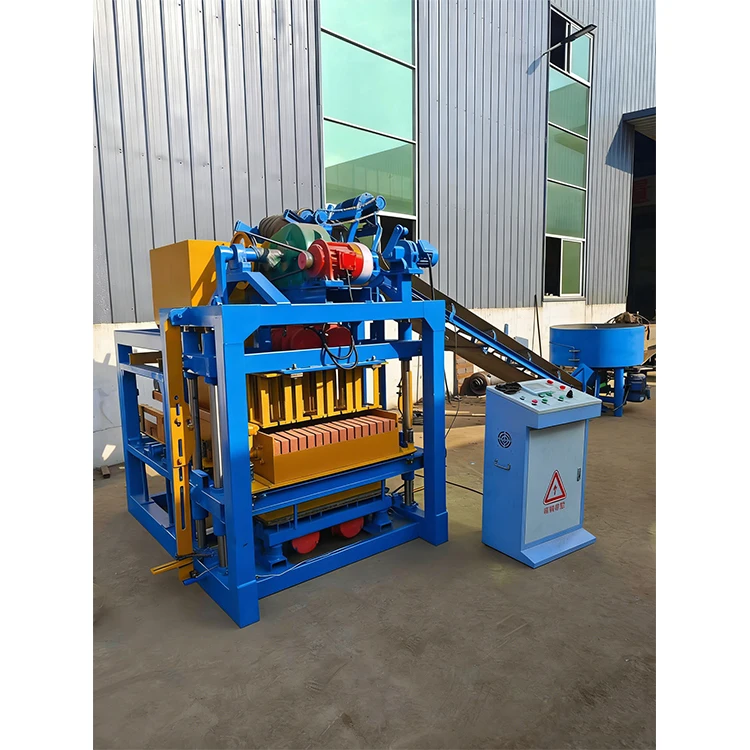
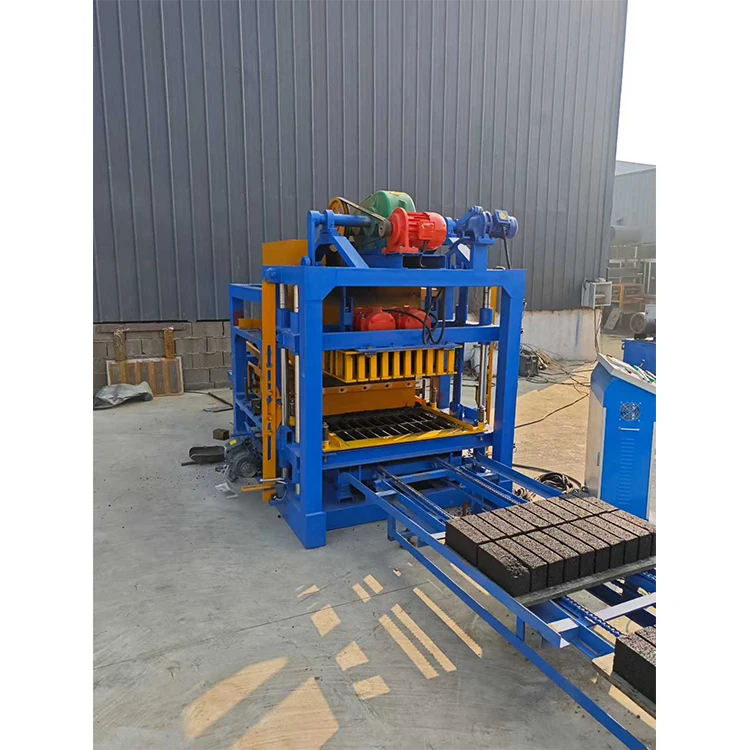 Automatic block machine