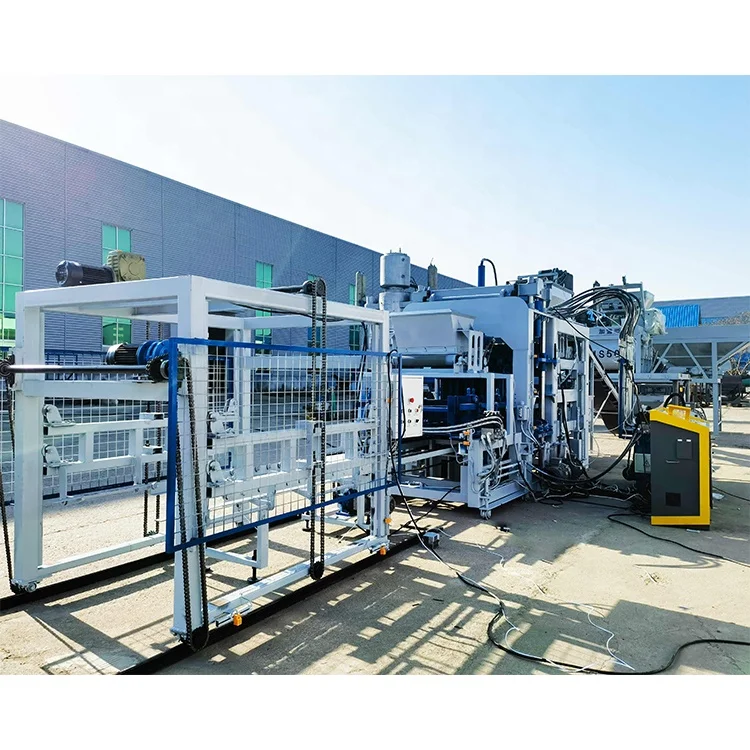
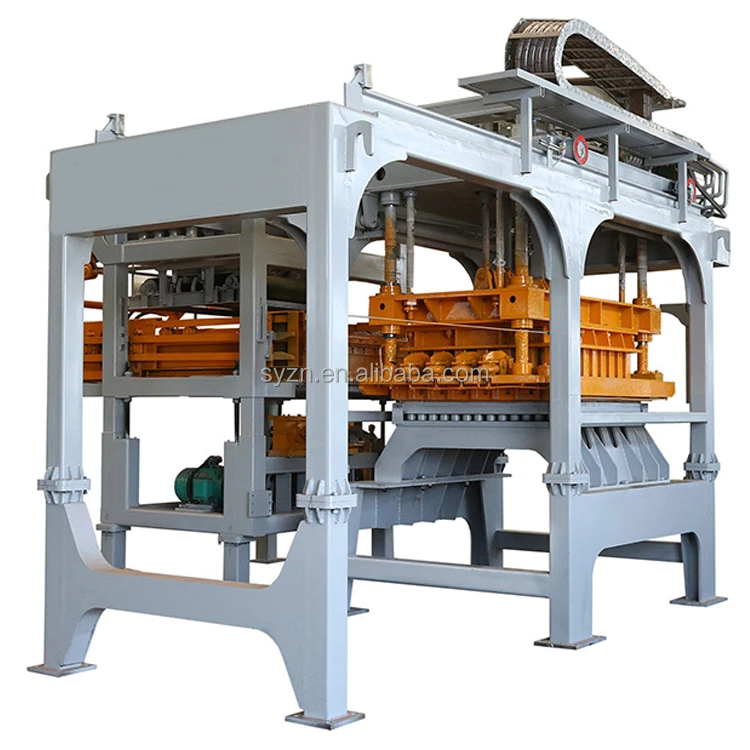
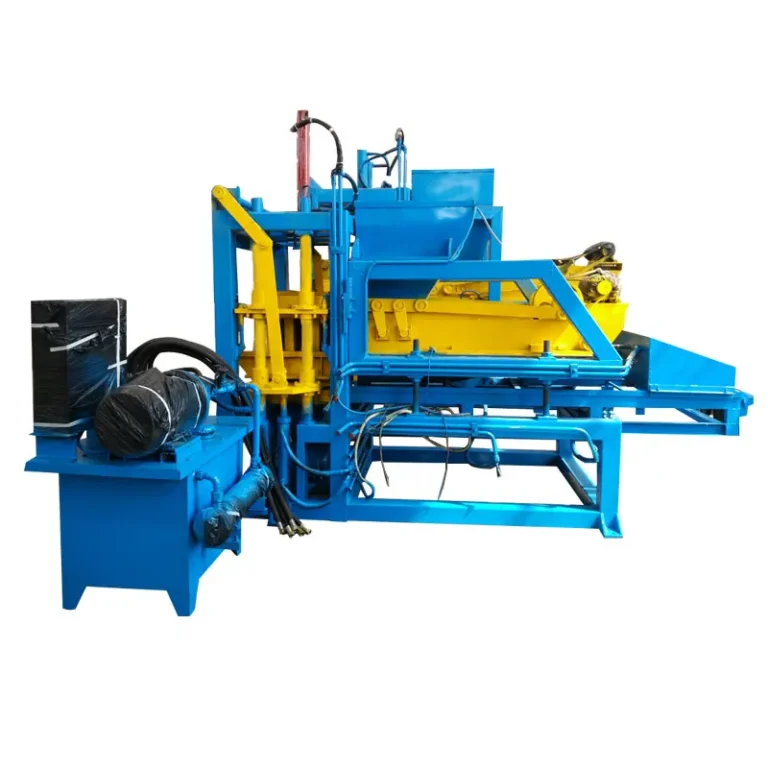
Matched System Approach — every QTJ4-24 ships with pallets, moulds and handling equipment specified as one verified line, not a collection of mismatched components.
Technical Specifications
| Parameter |
Value |
| Model |
QTJ4-24 |
| Product Type |
Semi-Automatic Concrete Block Making Machine |
| Overall Dimensions (L×W×H) |
3600×1700×2560 mm |
| Pallet Size |
850×450 mm |
| Molding Cycle |
24–26 s |
| Overall Power |
11.95 kW |
| Vibration Force |
45 kN |
| Total Mass |
2 T |
| Molding Method |
Mechanical (pressure + vibration) |
| Vibration Configuration |
2×3 kW lower vibrators + 2×1.5 kW upper vibrators |
| Material Distribution |
Full-automatic spiral |
| Reducer for Mold Lifting |
350-type |
| Automation Level |
Semi-automatic |
| Mould Format Options |
Interlocking bricks, hollow bricks, paving bricks, solid bricks |
| Raw Materials |
Cement, sand, stone aggregates |
| Voltage & Frequency |
(basis to be confirmed) |
| Hydraulic Pressure |
(basis to be confirmed) |
| Output Capacity |
(basis to be confirmed) |
| Warranty |
1 year for the whole machine (excluding spare parts) |
Application Suitability
| Application |
Material or Output |
| Hollow block production |
Cement, sand, crushed stone aggregates |
| Solid block production |
Cement, sand, fine aggregates |
| Paving block production |
Cement, sand, coarse stone aggregates |
| Interlocking brick production |
Cement, sand, stone with specific grading |
| Small to medium block plants |
Entry-level stationary production for first-time plant setup |
| On-site contractor production |
Project-based block making without fixed plant infrastructure |
Why "Cycles per Hour" Tells Only Half the Story for a Semi-Automatic Block Machine
Real output depends entirely on which block format you intend to produce.
Many buyers receive a quotation listing cycles per hour as if that number alone defines daily throughput. A 24–26 second molding cycle on the QTJ4-24 means something very different when you are pressing hollow blocks versus thin paving bricks. The mould cavity count, material fill time, and the operator’s pallet handling rhythm all change with the format. When a semi-automatic block machine manufacturer quotes capacity without naming the assumed block type and dimensions, the buyer ends up comparing apples against paving stones [NEED_CITE: capacity quoting standards in block machinery industry]. I have seen contractors arrive at our Linyi workshop expecting twice the output they eventually achieved, simply because their initial comparison ignored format-specific cycle differences.
Where the QTJ4-24 Sits in the Stationary Machine Range
This model occupies the entry tier of stationary block production equipment. It targets buyers who need proven mechanical pressing without the capital outlay of a fully hydraulic, high-output line. The semi-automatic block machine manufacturer configures it for operators who will handle pallets manually while the spiral feeder and vibration system manage material distribution and compaction automatically. For a first block plant or a contractor producing on a project site, this tier keeps initial investment contained while leaving a clear path toward adding automatic stacking and cubing later.
Understanding the Investment Tier and Plant Footprint
The 3600×1700 mm footprint of the QTJ4-24 fits within a modest production bay. Buyers surveying the full stationary range should weigh this against larger hydraulic platforms that require substantially more floor space and heavier foundations [NEED_CITE: typical plant layout requirements for block production facilities]. The 11.95 kW overall power draw also keeps electrical infrastructure requirements manageable for sites with limited supply capacity. When a buyer’s market demands multiple block formats but daily volume remains moderate, this tier avoids paying for automation capacity that will sit idle.
Vibration, Pressure, and the Density Question
The QTJ4-24 uses a dual-layer vibration arrangement — two 3 kW lower vibrators paired with two 1.5 kW upper vibrators — delivering a combined 45 kN vibration force. This configuration compacts material from both directions simultaneously, which matters when local aggregates vary in particle shape and moisture content. The mechanical pressure-and-vibration molding method means block density depends on getting the vibration frequency matched to the buyer’s actual mix design. The full-automatic spiral distribution ensures each mould cavity receives a uniform material charge before vibration begins, reducing density variation between blocks in the same cycle. The 350-type reducer on the mold lifting mechanism handles repeated directional stress, a component that sees constant wear during format changes and daily production runs.
The Cost of Skipping Configuration Verification
When a buyer orders a QTJ4-24 based on catalogue defaults without confirming voltage, frequency, or pallet size against their existing curing area, commissioning stalls the moment the container is opened. The operator faces a control panel in the wrong language, a forklift that cannot handle the quoted pallet dimensions, or a motor wound for a voltage the site cannot supply [NEED_CITE: common commissioning delays in exported block machinery]. These are not manufacturing defects — they are specification gaps that surface only after shipment. The semi-automatic block machine manufacturer must treat voltage confirmation and pallet sizing as non-negotiable steps before production begins, not optional details to settle later.
Why Buyers Source This Tier Here
The QTJ4-24 is specified as part of a matched system: the machine, moulds, pallets, and handling equipment are selected together rather than assembled from separate supply chains. Configuration decisions start from the buyer’s local aggregate and target block format, not a default catalogue setting. Mould design covers the formats the buyer’s market actually demands, with custom drawings available when standard options do not match. The automation level remains selectable — a buyer can begin with manual pallet handling and add automatic stacking as production volume justifies the investment. Installation and commissioning include operator training so the crew understands vibration adjustment and mold change procedures from day one.

Documentation & Verification
- Line layout drawing showing QTJ4-24 placement with pallet flow and curing area dimensions
- Capacity calculation stating the specific block format and dimensions assumed for the quoted cycle
- Mould drawing and format list matching the buyer’s local market product range
- Voltage, frequency, and control language confirmation sheet signed before production starts
- Factory test record with vibration and compaction data on the buyer’s specified mix design
- Packing photographs showing the exact QTJ4-24 configuration loaded for shipment
Installation, Commissioning & Support
- Foundation pad must support 2 T total mass with level tolerance across the 3600 mm length
- Electrical supply must match confirmed voltage and frequency with dedicated circuit for 11.95 kW load
- Machine ships partially dismantled; reassembly on site includes vibration alignment and reducer check
- First production run includes vibration force calibration against the buyer’s actual aggregate and cement mix
- Operator training covers 350-type reducer maintenance and dual-layer vibration adjustment procedures
- Wear parts list identifies vibration motor bearings and spiral feeder components for planned replacement
What We Need to Configure Your QTJ4-24
To move from general enquiry to a firm configuration proposal, we need to know the block formats your market sells and the daily volume you intend to produce. Share your local raw material availability — cement type, sand grading, and stone aggregate source — so the vibration parameters can be set against your actual mix. Confirm your site’s voltage, frequency, and the pallet dimensions that match your existing curing racks and forklift. With these details, the semi-automatic block machine manufacturer can quote a line that performs as expected from the first production day.
Frequently Asked Questions
Q: How is the QTJ4-24 output capacity calculated for my block format?
A: Capacity is calculated by taking the 24–26 second molding cycle and multiplying by the number of cavities in the specific mould for your chosen block format. The daily output figure also factors in pallet handling time and material loading rhythm. We state the assumed block dimensions alongside the capacity number so you can verify it against your actual production target.
Q: When should a buyer move beyond the QTJ4-24 to a higher machine tier?
A: The step up becomes necessary when daily volume requirements exceed what a semi-automatic pallet handling rhythm can sustain, or when your market demands format changes so frequent that manual mold lifting erodes productive hours. Higher tiers add hydraulic pressure, automatic stacking, and faster mold change systems that justify their investment only at sustained higher output levels.
Q: What voltage and control language options are available for my market?
A: Voltage and frequency are confirmed during the quotation stage based on your site’s electrical supply. The control panel language is specified before production so the operator reads instructions in a familiar language upon commissioning. This confirmation step is mandatory and occurs before the QTJ4-24 enters assembly.
Q: What floor space does the QTJ4-24 require with supporting equipment?
A: The machine itself measures 3600×1700 mm, but the working line includes pallet staging, material feed area, and wet block transfer space. Total bay requirements depend on your pallet size and how many curing racks you plan to cycle daily. We provide a line layout drawing showing the complete footprint before the order is confirmed.
Q: Can the QTJ4-24 automation level be upgraded after initial installation?
A: The semi-automatic configuration allows later addition of automatic pallet feeding, stacking, and cubing equipment as production volume grows. The machine’s mechanical platform supports these additions without requiring a full replacement. Planning the upgrade path during initial layout ensures floor space and electrical capacity accommodate future expansion.

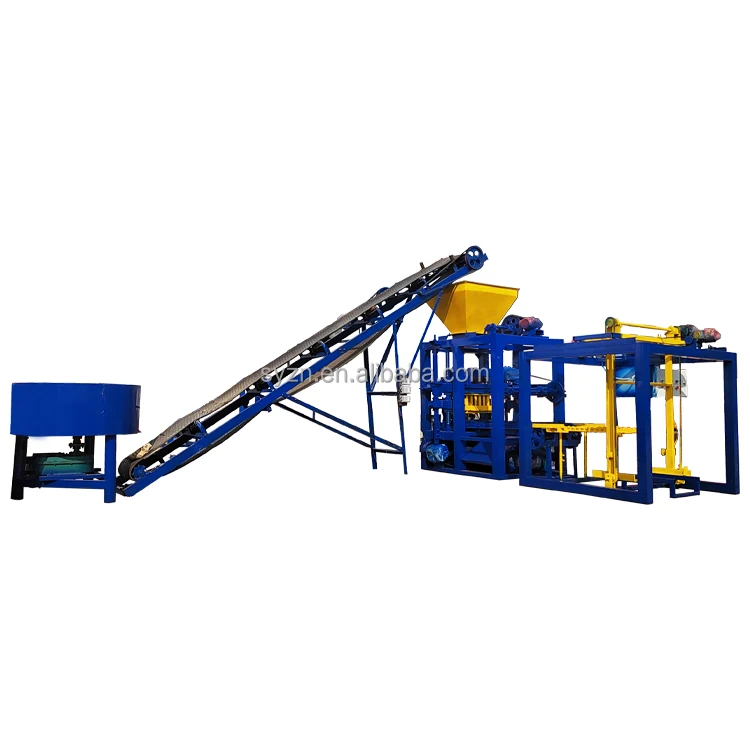
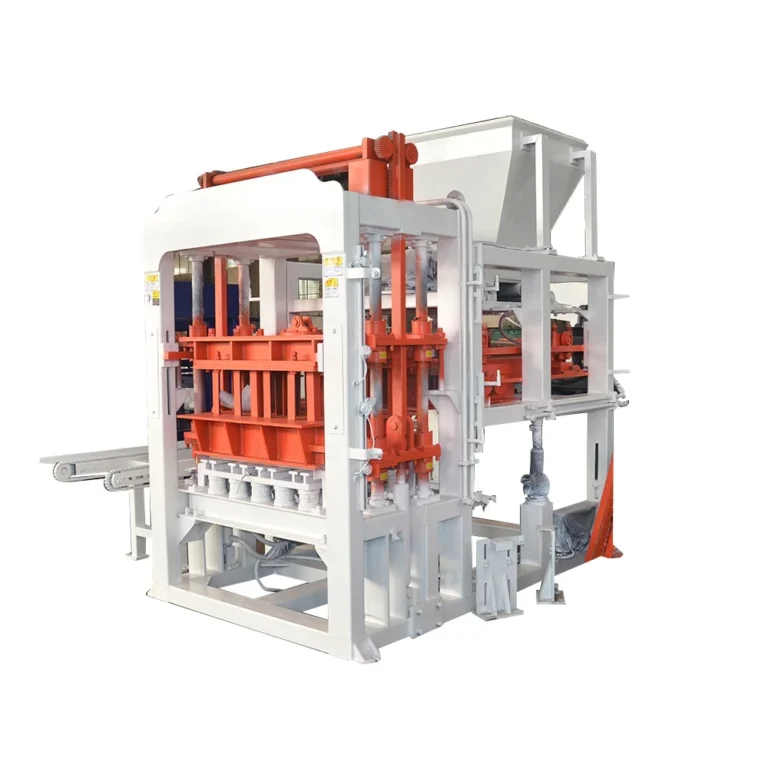 Stationary block machine