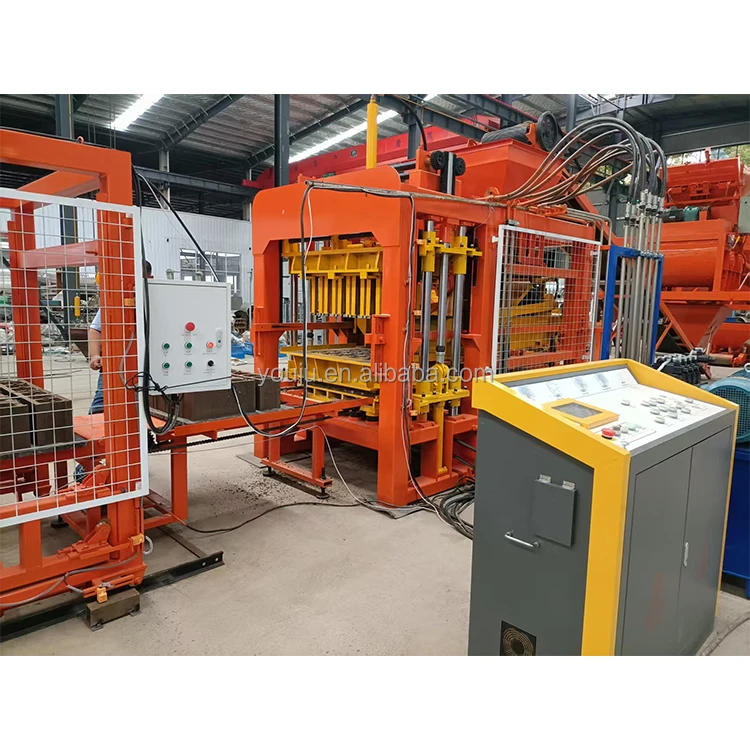
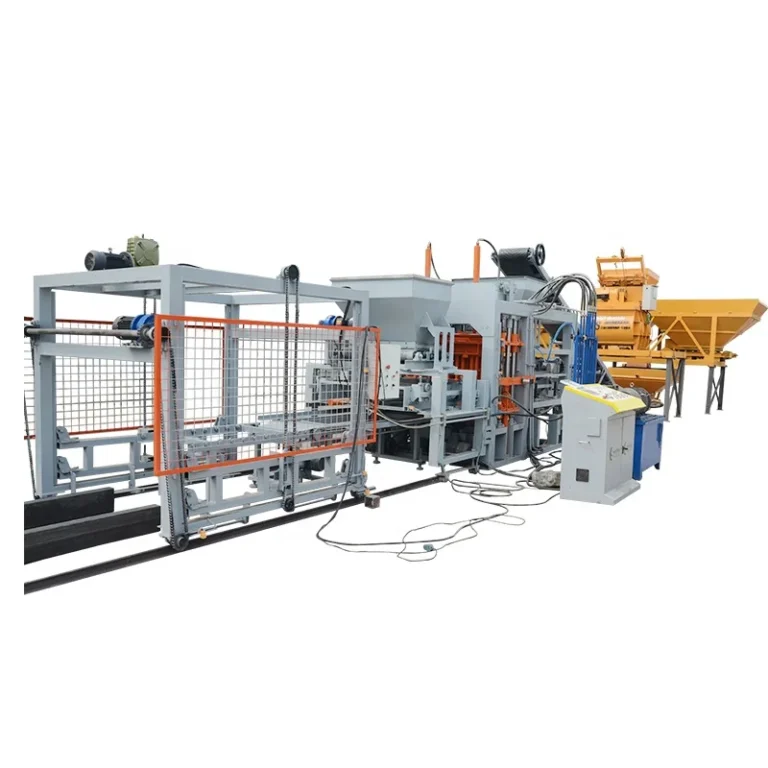
Single-Focus Configuration — every component from the 3600mm frame to the 850×450mm pallet is specified as one matched system rather than assembled from separate suppliers.
Technical Specifications
| Parameter |
Value |
| Model |
QTJ4-24 |
| Product Type |
Semi-Automatic Concrete Block Making Machine |
| Molding Type |
Platform Vibration |
| Overall Dimensions (L×W×H) |
3600mm × 1700mm × 2560mm (working state) |
| Total Mass |
1750kgs |
| Pallet Size |
850mm × 450mm |
| Overall Power |
14.25KW |
| Mould Format (Hollow Block) |
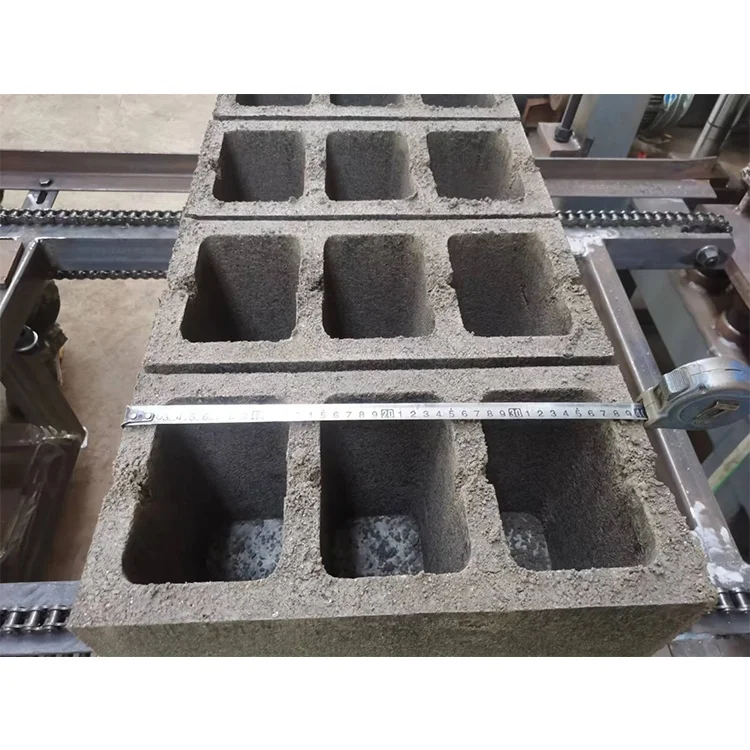
390mm × 190mm × 190mm, 4 pcs/mold |
| Mould Format (Solid Brick) |
240mm × 115mm × 53mm, 21 pcs/mold |
| Vibration System |
Lower platform vibration (two 3kW motors) + Upper platform vibration (1.5kW attached vibrator) |
| Elevating System |
Cone-shape motor, JZQ250 speed reducer, V-belt drive |
| Delivery Device |
Cycloidal pin wheel speed reducer, chains, V-belt, self-conveying frame |
| Frame Construction |
Dragon gate style, super steel, four vertical wear-resisting shafts |
| Control System |
Electronic controlling part (PLC or relay to be confirmed) |
| Voltage & Frequency |
To be confirmed with buyer’s site supply |
| Automation Level |
Semi-automatic (mechanical + electronic combined operation) |
| Supporting Line Equipment |
JQ350 pan mixer, 6m belt conveyor, optional auto stacker, trolley |
| Mould Change Method |
Upper mold separated from mold box via hang pin and balance pin |
| Cycle Time |
(basis not stated in source — confirm block format and material) |
| Output Capacity |
(basis not stated in source — confirm block format and material) |
| Key Features |
Lower and upper dual vibration, dragon gate frame, semi-automatic operation, multiple mould formats |
Application Suitability
| Application |
Material or Output |
| Small-scale hollow block production |
Crushed stone, cement, sand, and water mix for 390×190×190mm hollow blocks |
| Standard solid brick manufacturing |
Cement-aggregate mix for 240×115×53mm solid bricks |
| On-site block production for contractors |
Local aggregate and cement for construction-grade masonry units |
| Entry-level block plant for entrepreneurs |
Various concrete mixes for hollow and solid formats on a compact footprint |
| Building material distributor sourcing |
Multiple block formats for price-sensitive regional markets |
What "Pieces per Hour" Leaves Out About Semi-Automatic Block Machines
Capacity means nothing until the block format and local aggregate are stated on the same line.
Many buyers receive a cycle rate figure and assume it translates directly into a full day of saleable product. In practice, a 390×190×190mm hollow block and a 240×115×53mm solid brick demand very different vibration durations and hydraulic dwell times, so the same semi-automatic block machine manufacturer will quote two very different daily totals from the same press [NEED_CITE: capacity calculation methods for concrete block machines]. I once configured a QTJ4-24 for a buyer in West Africa using the standard cycle time, only to find that the local river sand carried a high clay content. The vibration force could not compact the mix to the required density, and real output dropped to roughly six-tenths of the quoted figure because every third cycle produced cracked or underweight blocks. Since then, I ask for a sample of the actual sand and aggregate before confirming any production estimate.

Where the QTJ4-24 Sits in the Complete Range
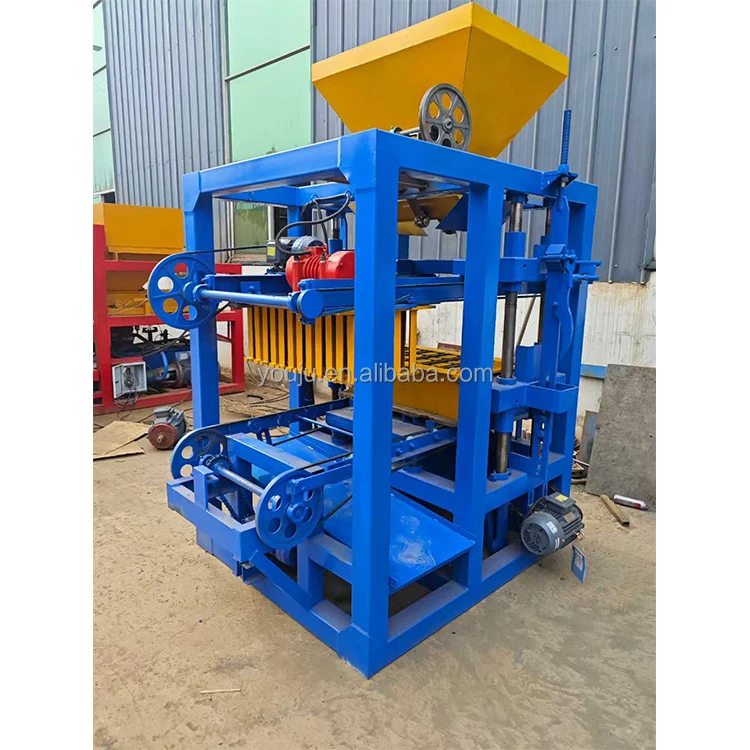
The QTJ4-24 occupies the entry point of the stationary block machine lineup, aimed at first-time plant owners or contractors replacing manual egg-laying machines. It delivers platform vibration through two 3kW lower motors and a 1.5kW upper vibrator, giving the operator consistent block density without the investment required for a fully hydraulic press. Buyers who expect to run multiple shifts daily or produce interlocking pavers at high volume should consider stepping to a higher tier, but for a single-shift workshop making hollow blocks and standard bricks, this model provides a clear starting position. A semi-automatic block machine manufacturer typically designs this tier so that pallet feeding remains manual while the press cycle itself runs electronically, keeping both the purchase price and operator training within reach.
Planning the Plant Footprint Around a Semi-Automatic Press
Before ordering, the buyer needs to know how much floor space the entire line will occupy, not just the press alone. The QTJ4-24 measures 3600mm × 1700mm in working state, but the JQ350 pan mixer and 6m belt conveyor extend the line length considerably. A curing yard for the 850×450mm pallets must sit adjacent to the press, and forklift access lanes need to be factored in [NEED_CITE: concrete block plant layout guidelines for small-scale operations]. Buyers who overlook the curing area often find that finished blocks sit stacked on the press table waiting for space, which negates any cycle-time advantage the machine itself provides.
How Vibration Force, Pallet Size, and Frame Design Shape Daily Output
The dual vibration system — two 3kW motors beneath the platform plus a 1.5kW attached vibrator above — works to compact the concrete mix from both directions, which is essential for achieving uniform density in a 390mm hollow block. The dragon gate frame with four vertical wear-resisting shafts absorbs the repetitive shock loads over long shifts; a lighter frame would gradually develop play at the guide points, leading to uneven block heights. The 850×450mm pallet size was chosen to match common small-plant curing racks and the fork dimensions of standard warehouse forklifts, so a buyer does not need to invest in special handling equipment. Mould change is performed by releasing the hang pin and balance pin that separate the upper mold from the mold box, allowing an operator to switch between hollow block and solid brick formats within a single break period. The overall power draw of 14.25KW means the machine can run on a standard industrial supply without requiring a dedicated high-voltage substation, though confirming the exact voltage and frequency at the site remains essential before production begins.
The Hidden Cost of Skipping Configuration Checks
A machine that arrives with the wrong voltage or an unreadable control language sits idle while transformers are sourced and panels are re-labeled, sometimes for weeks. Buyers who accept a generic capacity number without asking which block format it assumes will discover the shortfall only after raw materials have been purchased and workers hired [NEED_CITE: common commissioning delays in imported concrete block equipment]. Pallets specified without regard to the curing yard layout force manual double-handling, adding labor cost that was never part of the original budget.
Why Buyers Source This Range Here
Block machinery is the single focus of this workshop, so the QTJ4-24, its moulds, pallets, and the JQ350 mixer are specified together rather than pulled from separate catalogs. The configuration is set against the buyer’s actual mix design and local aggregate, not a default brochure setting. Mould formats cover the hollow and solid blocks that regional markets actually sell, and custom mould drawings are available for non-standard formats. The automation level is selectable, allowing a buyer to start with manual pallet handling and add an auto stacker later. Installation support includes operator training at the machine, and the wear parts list is provided so replacements can be ordered before the first failure occurs.
Documentation & Verification
- Line layout drawing showing QTJ4-24, mixer, and conveyor positions with footprint dimensions
- Capacity calculation sheet stating the block format and mix assumption per cycle
- Mould drawing and format list for hollow block and solid brick included with the order
- Pallet specification matched to curing yard layout and forklift size
- Factory test record on the buyer’s confirmed block format before dispatch
- Voltage, frequency, and control language confirmation form signed before production
Installation, Commissioning & Support
- Foundation pad sized to the 3600mm × 1700mm working footprint, leveled within tolerance for the dragon gate frame
- Dedicated circuit rated for 14.25KW total draw with the confirmed voltage and frequency at the buyer’s site
- Machine shipped with elevating system and delivery device in assembled state to reduce on-site work
- First-run cycle adjustment against the buyer’s local aggregate and cement mix at commissioning
- Operator training covering mould change via hang pin, pallet handling, and daily lubrication of the four vertical shafts
- Wear parts and mould list provided so spares are on hand before the first replacement interval
Before You Request a Quote
To receive a configuration that matches your actual production conditions, share the block formats your market demands, the source and type of your local aggregate, and the daily output you need to justify the investment. Include your site supply voltage and frequency, the control panel language your operators read, and the dimensions of your available workshop and curing yard. If you already have a mixer or conveyor in place, provide the model so the semi-automatic block machine manufacturer can confirm interface compatibility.
Frequently Asked Questions
Q: What block formats can the QTJ4-24 produce, and how does output differ between hollow block and solid brick?
A: The standard moulds produce 390×190×190mm hollow blocks at four per cycle and 240×115×53mm solid bricks at twenty-one per cycle. Because the two formats require different vibration durations and compaction pressures, daily output varies significantly between them. A capacity calculation stating the specific format is needed for an accurate figure.
Q: Where does the QTJ4-24 sit in the full machine range, and when should a buyer step up?
A: It is the entry-tier stationary press, suited for single-shift plants producing hollow blocks and solid bricks. Buyers planning multi-shift operation, high-volume paver production, or fully automatic stacking should evaluate the next tier, which offers greater hydraulic pressure and integrated cubing systems.
Q: What supporting equipment is needed for a complete QTJ4-24 line?
A: The standard package pairs the press with a JQ350 pan mixer and a 6m belt conveyor for raw material feed. An optional auto stacker and trolley can be added to reduce manual pallet handling. The line layout drawing shows how each station connects and where cycle times must align.
Q: How do I confirm voltage, frequency, and control language before the machine ships?
A: A confirmation form listing the buyer’s exact site voltage, frequency, and required control panel language is signed before production begins. This prevents commissioning delays that arise when a machine arrives configured for a different electrical standard or with an unfamiliar display language.
Q: What is the plant footprint for a QTJ4-24 line including mixer, conveyor, and curing area?
A: The press itself occupies 3600mm × 1700mm in working state, but the full line extends with the mixer and 6m conveyor. The curing yard must accommodate 850×450mm pallets with forklift lanes. A site layout drawing is provided during the proposal stage to verify total space requirements.

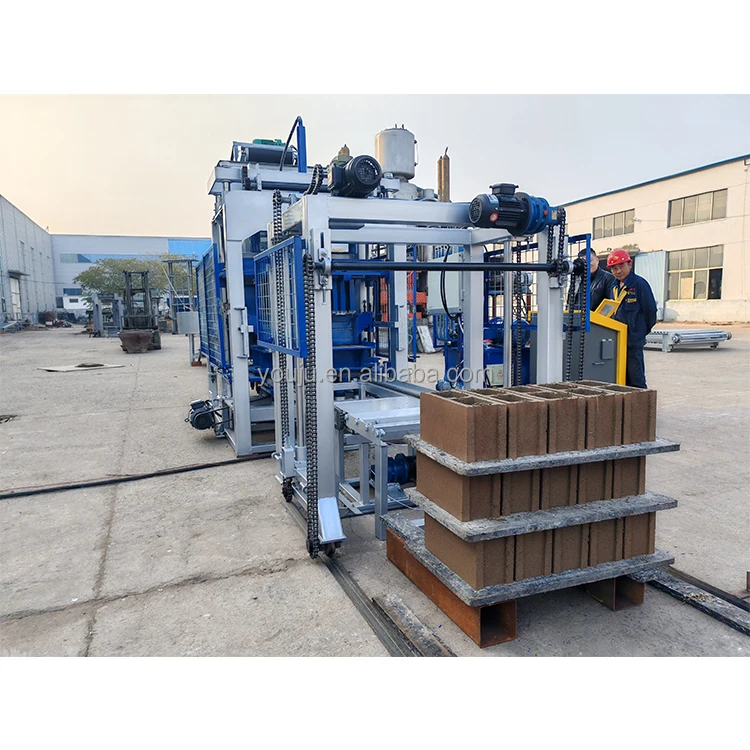 Stationary block machine