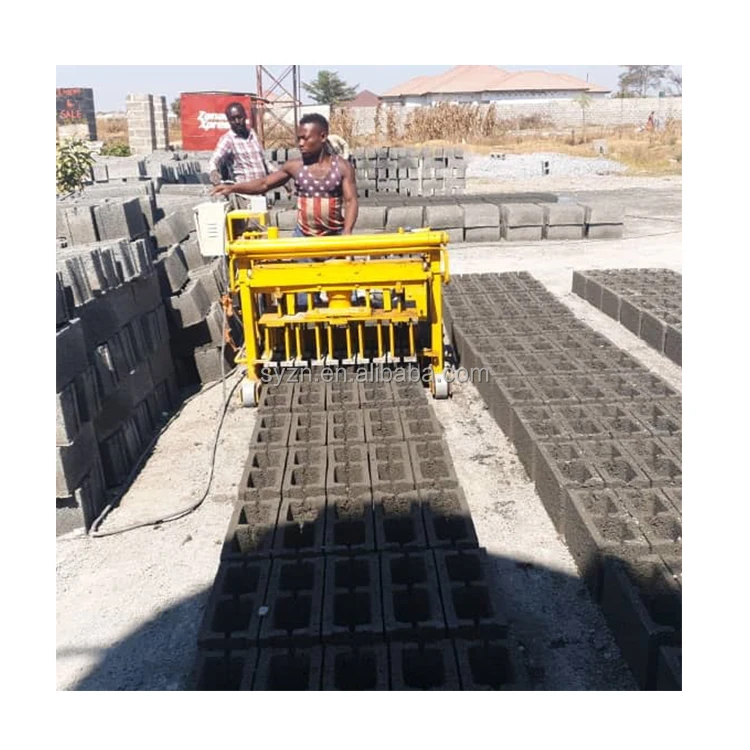
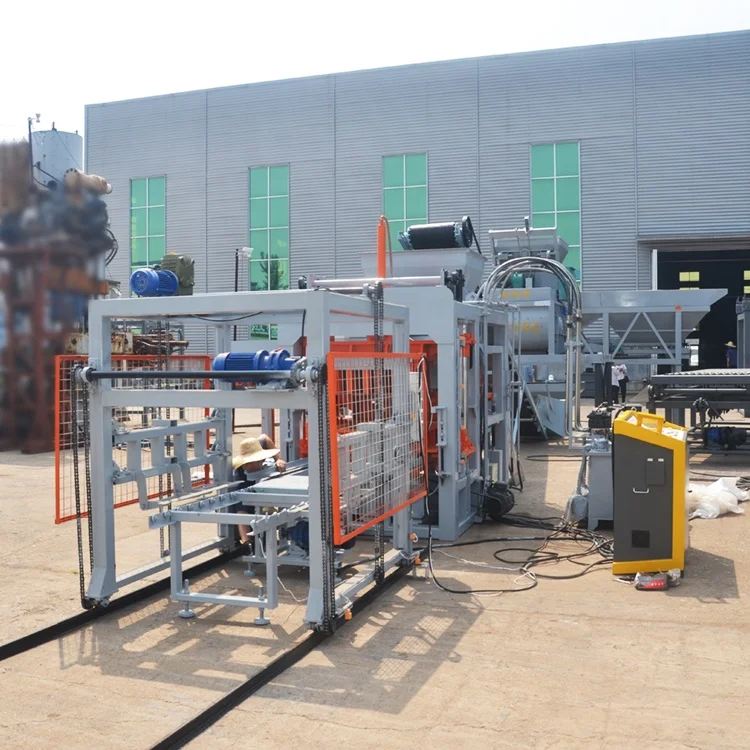
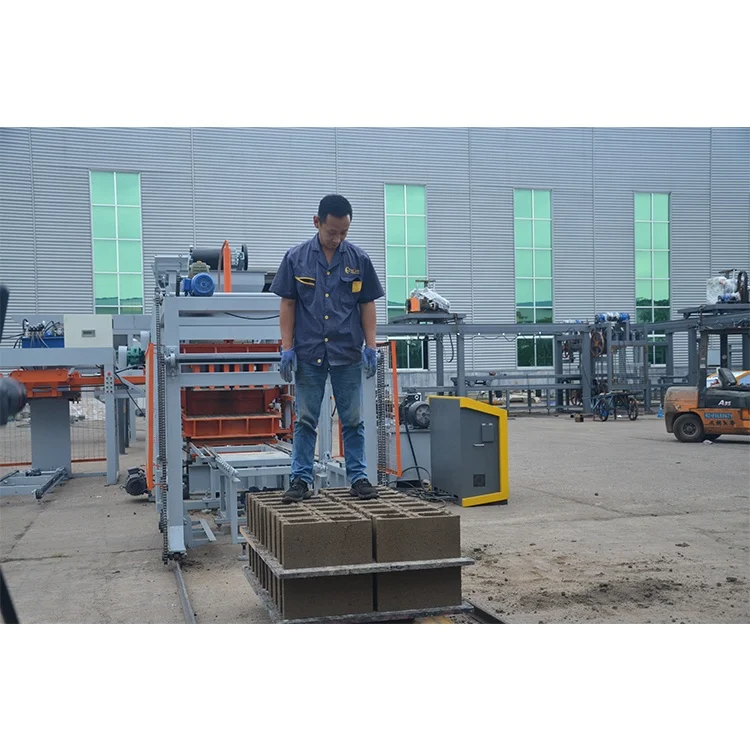
Matched System Design — The QT8-15 block machine is specified as a complete unit with press, pallet, mould and handling configured together, not assembled from separate suppliers after the order is placed.
Technical Specifications
| Parameter |
Value |
| Model |
QT8-15 |
| Product Type |
Hydraulic Concrete Block Making Machine |
| Overall Dimensions (L×W×H) |
8300×1860×3000 mm |
| Rated Pressure |
21 MPa |
| Main Vibration Form |
Platform Vibration |
| Vibration Frequency |
2800–4500 r/min |
| Vibration Force |
45 kN |
| Pallet Size |
950×900 mm |
| Molding Cycle |
15–20 s |
| Demolding Method |
Hydraulic |
| Overall Power |
55.5 kW |
| Total Mass |
8 T |
| Factory Area |
300 m² |
| Applied Products |
Hollow/solid blocks, pavers, interlocking blocks, curbstone, colored pavers |
| Raw Material |
Crushed stone, sand, cement, dust, fly ash, gravel, slag |
| Output Capacity |
(basis to be confirmed — depends on block format and material) |
| Voltage & Frequency |
(configurable, verify against local grid) |
| Control System |
(PLC options available) |
Application Suitability
| Application |
Material or Output |
| Hollow block production |
Crushed stone, sand, cement, fly ash |
| Solid block production |
Gravel, sand, cement blends |
| Paving block manufacturing |
Fine aggregate with cement and pigment |
| Interlocking brick forming |
Crusher dust, sand, cement |
| Curbstone production |
Coarse aggregate with high cement content |
| Colored paver runs |
Standard mix with oxide pigment addition |
Why "Cycles per Hour" Misleads Every First-Time Buyer
Real daily output depends on the block format you actually sell, not the fastest cycle the press can achieve.
Catalogue sheets often quote a single cycle time or hourly figure without stating which block format, pallet fill, or curing method that number assumes. On a recent site visit, a contractor ran hollow blocks for a housing project and found the actual shift output fell well short of the brochure claim because the quoted rate assumed a smaller solid block format [NEED_CITE: block format assumptions in capacity quoting]. The QT8-15 block machine manufacturer specification must state the cycle time against each specific format the buyer intends to produce — hollow, solid, paver, or curbstone — so the daily plan matches the machine reality.

Where the QT8-15 Sits in the Machine Range
The QT8-15 occupies the mid-to-high tier, bridging the gap between small workshop machines and full-capacity automatic lines. It is built for buyers who have outgrown semi-automatic output but are not yet ready to invest in a high-volume plant. The 950×900 mm pallet size is a step up from entry-level models, allowing more blocks per press cycle.
Automation Level and Upgrade Path
Buyers can configure the QT8-15 from semi-automatic pallet handling through to higher automation with automatic stacking. Starting semi-automatic keeps initial investment manageable, and the frame and hydraulic system support future additions. The molding cycle of 15–20 seconds remains consistent across the automation range, since the press itself is identical — only the material flow and pallet handling change [NEED_CITE: automation upgrade paths in block machinery].
How Pressure, Vibration and Pallet Size Shape Block Quality
The 21 MPa rated hydraulic pressure works together with the 45 kN vibration force to compact the mix into a dense, consistent block. Platform vibration at 2800–4500 r/min is adjustable, letting the operator tune the frequency to match the aggregate gradation and moisture content of the local mix. A higher frequency suits fine sand and fly ash blends, while coarser crushed stone benefits from stronger, lower-frequency vibration. The 950×900 mm pallet must align with the curing rack spacing and forklift capacity already on site — a mismatch here means blocks are handled twice before they reach the yard. Hydraulic demolding gives clean block release across hollow, solid, and paver formats, reducing surface damage that rejects product at the stacking point. The 8 T total mass of the QT8-15 provides a stable base that absorbs vibration without transferring it to the foundation, which is critical when the machine runs longer shifts.
The Cost of Skipping the Mix-Design Conversation
When a block machine arrives configured for a standard river-sand mix but the buyer only has access to volcanic aggregate or crusher dust, the vibration and pressure settings produce weak blocks that crack during handling. Reconfiguring on site costs days of trial runs and wasted cement [NEED_CITE: aggregate mismatch in concrete block production]. Sending a raw material sample before production allows the QT8-15 to be set up with the correct vibration frequency and pressure profile from the first cycle.
Why This QT8-15 Block Machine Manufacturer Approach Differs
Block machinery is the single focus here, so the QT8-15 press, mould, pallet, and handling equipment are specified as one matched system. Configuration is set against the buyer’s actual mix design and target block format rather than a catalogue default. Mould design covers the formats the local market sells, and custom mould drawings are available when the standard range does not include a required shape. The automation level is selectable, meaning a buyer can begin with semi-automatic operation and add stacking or cubing equipment later. Installation support includes operator training so the crew understands mould change, pressure adjustment, and daily maintenance before the commissioning engineer leaves site.
Documentation & Verification
- Line layout showing QT8-15 placement within the 300 m² factory area
- Capacity calculation stating the block format assumed for each cycle time
- Mould drawing and format list covering every block type ordered
- Hydraulic and electrical schematic for the 55.5 kW system
- Voltage and control language confirmation signed before production
- Factory test record on buyer-specified block format before dispatch
Installation, Commissioning & Support
- Foundation plan sized to the 8300×1860 mm footprint and 8 T operating mass
- Dedicated electrical circuit rated for the 55.5 kW total power draw
- Machine arrives partially dismantled; reassembly and alignment completed on site
- First-run parameter setting tuned to the buyer’s raw material sample
- Operator training covers mould change, pallet loading, and hydraulic pressure checks
- Wear parts list supplied with the QT8-15 for the first replacement order
What to Include with Your Inquiry
To size the QT8-15 correctly, share the block formats your market demands, the daily volume you need per format, and a sample of the aggregate and sand available locally. Confirm your site voltage, frequency, and preferred PLC display language. If you already have curing racks or forklifts, note their dimensions so the 950×900 mm pallet is verified against your existing setup.
Frequently Asked Questions
Q: How is the QT8-15 output capacity calculated, and which block format is assumed?
A: Output depends on the block format, pallet fill pattern, and molding cycle of 15–20 seconds. We calculate capacity per format — hollow, solid, paver, or curbstone — and state the assumed product in the line layout. A capacity figure without a named format is not meaningful for daily planning.
Q: Where does the QT8-15 sit compared to smaller and larger models?
A: It sits in the mid-to-high tier, above small workshop machines and below full-capacity automatic lines. The 950×900 mm pallet and 8 T frame place it where buyers need more output per shift without moving to a large-scale plant investment.
Q: What pallet size does the QT8-15 use, and is it compatible with my curing area?
A: The QT8-15 uses a 950×900 mm pallet. Before ordering, we confirm this size against your curing rack spacing and forklift capacity so pallets move from the press to the yard without manual rehandling or equipment modification.
Q: Which mould formats are available, and can I order custom moulds?
A: Standard moulds cover hollow blocks, solid blocks, paving blocks, interlocking bricks, and curbstones. Custom moulds can be designed to buyer drawings when the local market requires a format outside the standard range.

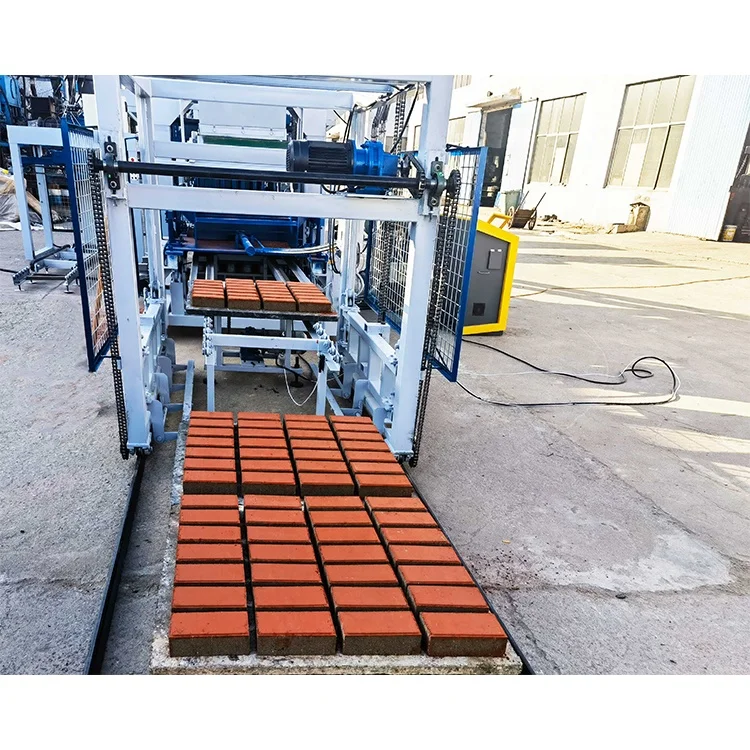
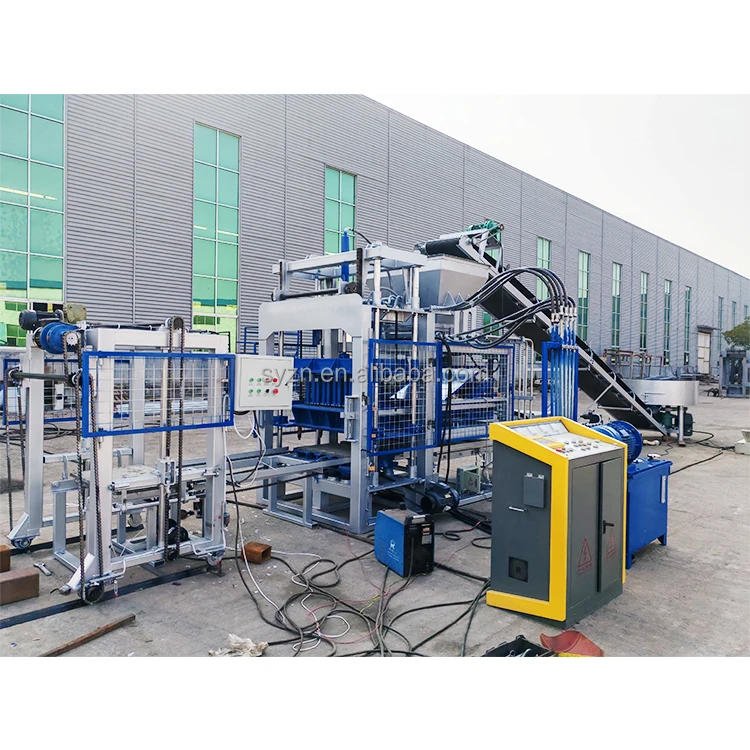 High quality block machine